





 Portuguese
  English
  Spanish
  4 min of reading
  1 comment


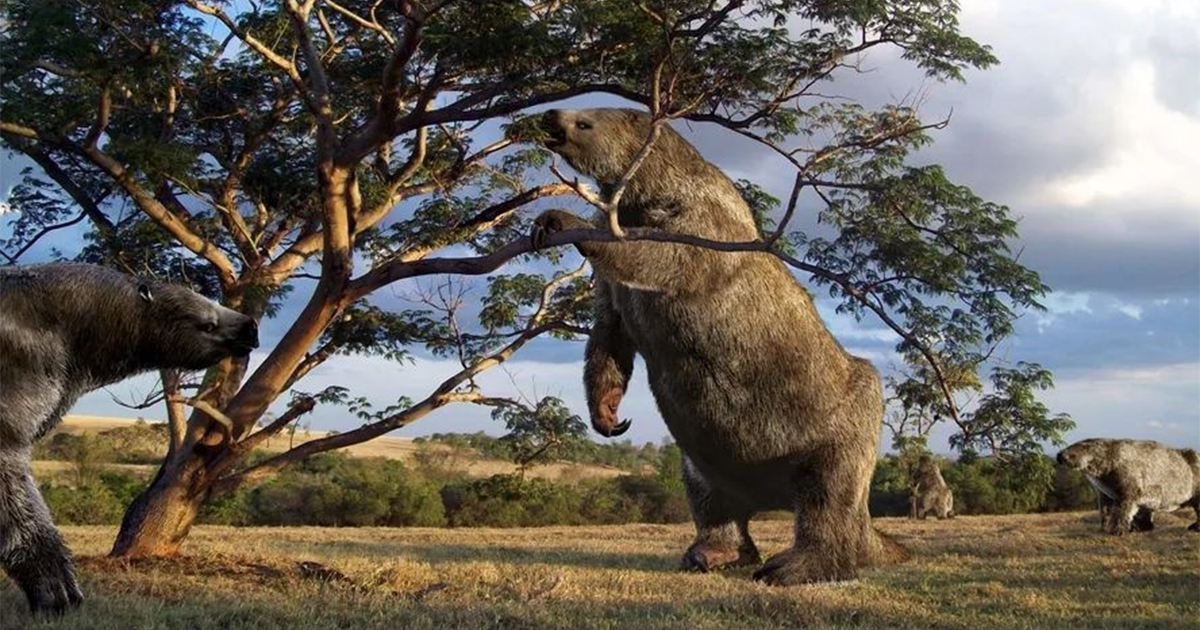


The Megatherium Was the Largest Land Sloth in History: Up to 6 Meters, Over 3 Tons, and a Profound Impact on Pleistocene Ecosystems.
The Megatherium was one of those animals that challenge any modern notion of scale. When sloths are mentioned, the common image is of a small, slow, tree-dwelling animal. However, this association falls apart in the face of this prehistoric giant that lived in South America during the Pleistocene. The Megatherium not only walked on the ground but dominated the landscape, rivaling some of the largest herbivorous mammals that ever existed outside the elephant group.
This is a real animal, widely documented by well-preserved fossils found mainly in Argentina, Uruguay, Bolivia, and Brazil. Its existence helps to explain why South American megafauna was considered one of the most impressive on the planet before the great extinctions at the end of the last Ice Age.
Dimensions That Exceed Any Modern Sloth
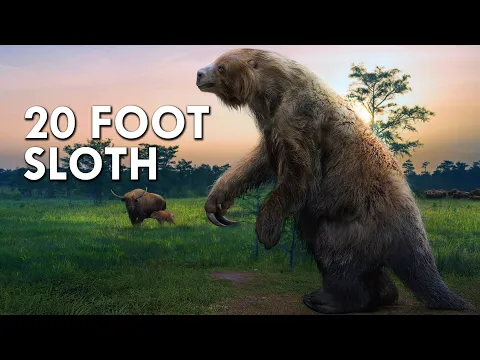
The most accepted data by paleontology indicates that the Megatherium could reach about 6 meters in length, measuring from head to tail. Its estimated weight ranged between 3 and 4 tons, placing it in a body mass category similar to that of a modern rhinoceros or even a young elephant.
-
He started running at 66 years old, broke records at 82, and is now a subject of study for having a metabolic age comparable to that of a 20-year-old, in a case that is intriguing scientists and inspiring the world.

-
Oldest tree on the planet reappears after 130 years of searches: Wattieza, 385 million years old, was 10 meters tall and had no leaves or seeds; Gilboa fossils in New York solved the mystery in 2007.

-
A 48-square-meter house assembled in hours with 4,000 bricks made of recycled plastic that does not absorb moisture, has natural thermal insulation, and costs less than 90,000 reais in a complete kit.

-
Luciano Hang revealed that Havan’s air fleet has already accumulated more than 20,000 landings, 10,000 flight hours, and 6 million kilometers traveled, and he says that without the planes, the company would never have grown so quickly.

When reared on its hind legs, a behavior that occurred frequently, the animal could reach between 3 and 4 meters in height. This posture wasn’t occasional: its anatomy indicates that it spent long periods supported on its back legs and tail, forming a kind of extremely stable “natural tripod.”
This ability allowed the Megatherium to access leaves, branches, and twigs that no other terrestrial herbivore of its time could easily reach.
Body Structure Made for Strength, Not Speed
Unlike modern sloths, adapted to life suspended in trees, the Megatherium had extremely thick bones, robust musculature, and joints designed to support enormous loads.
Its forelimbs were equipped with long, curved claws, which did not serve to climb, but rather to pull down branches, topple small trees, and manipulate vegetation with precision.

These claws were so large that they made ordinary locomotion on the ground unfeasible. Therefore, it is believed that the animal walked by bearing weight on the sides of its feet, preserving the claws and maintaining balance.
The anatomical set makes it clear that the Megatherium was not a fast animal. Its survival strategy did not depend on fleeing, but on size, strength, and natural intimidation.
Feeding and Direct Impact on the Landscape
The Megatherium was predominantly herbivorous, feeding on leaves, branches, fruits, and possibly roots. Its diet required a large daily volume of food, which made it an active agent in transforming the landscape.
By knocking down small trees and pulling up vast amounts of vegetation, it created natural clearings, allowing sunlight to reach the ground. This favored the growth of new plants, altered the plant composition, and benefited smaller species.
For this reason, many researchers classify the Megatherium as a true ecological engineer, similar to the role elephants play today in African savannas.
Cohabitation with Large Pleistocene Predators
During the Pleistocene, the Megatherium shared its territory with formidable predators, such as the saber-toothed tiger and large extinct canids. Nevertheless, a healthy adult represented an extremely risky target.
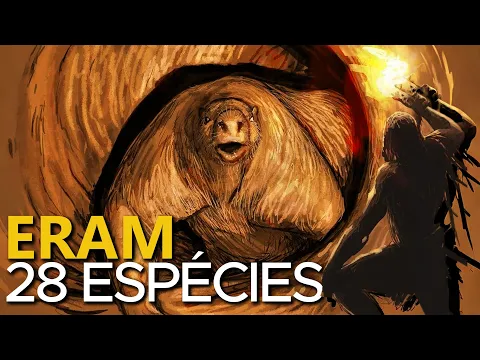

Its colossal size, combined with claws capable of inflicting serious injuries, made direct attacks not advantageous for solitary predators. Calves or weakened individuals were more vulnerable, but an adult Megatherium likely had few natural enemies.
This relative invulnerability helped explain how the species managed to thrive for hundreds of thousands of years in various environments across South America.
Direct Comparison with Modern Animals
To understand how extraordinary the Megatherium was, just compare it with modern animals. A modern sloth weighs on average between 4 and 6 kilograms. The Megatherium could be more than 600 times heavier.
Even when compared to modern cattle, bred with genetic selection and intensive management, the contrast is evident. A large bull rarely surpasses 1 ton, while the Megatherium easily exceeded 3 tons.
This difference shows that the gigantism of the Megatherium was not the result of human intervention but rather of natural evolutionary processes in an environment with abundant resources and few energy limits.
Why the Megatherium Went Extinct
The extinction of the Megatherium occurred about 10 to 12 thousand years ago, coinciding with the end of the last Ice Age. The most accepted causes involve a combination of rapid climate change and increasing human pressure.
With post-glacial global warming, large open areas began to transform, reducing the availability of food on a large scale. At the same time, the expansion of human groups brought new hunting techniques capable of taking down even giant animals.
Large species, with slow reproduction and vast territory needs, were the most affected by this abrupt transition.
The Legacy of the Largest Land Sloth in History
The Megatherium left a legacy that goes far beyond size. It is a symbol of an era when the Earth housed mammals on scales unimaginable today, shaping entire ecosystems simply by its presence.
Its disappearance profoundly altered the environmental dynamics of entire regions, contributing to changes in vegetation and the food chain.
The Megatherium shows that nature has been able to produce creatures much larger than any modern land animal outside the elephant group. More than just a curiosity, it is a reminder that ecological balance depends on a few key factors — climate, food, and external pressure.
When these factors break down simultaneously, not even giants weighing several tons can survive.







Testing