





 Portuguese
  English
  Spanish
  7 min of reading
  2 comments


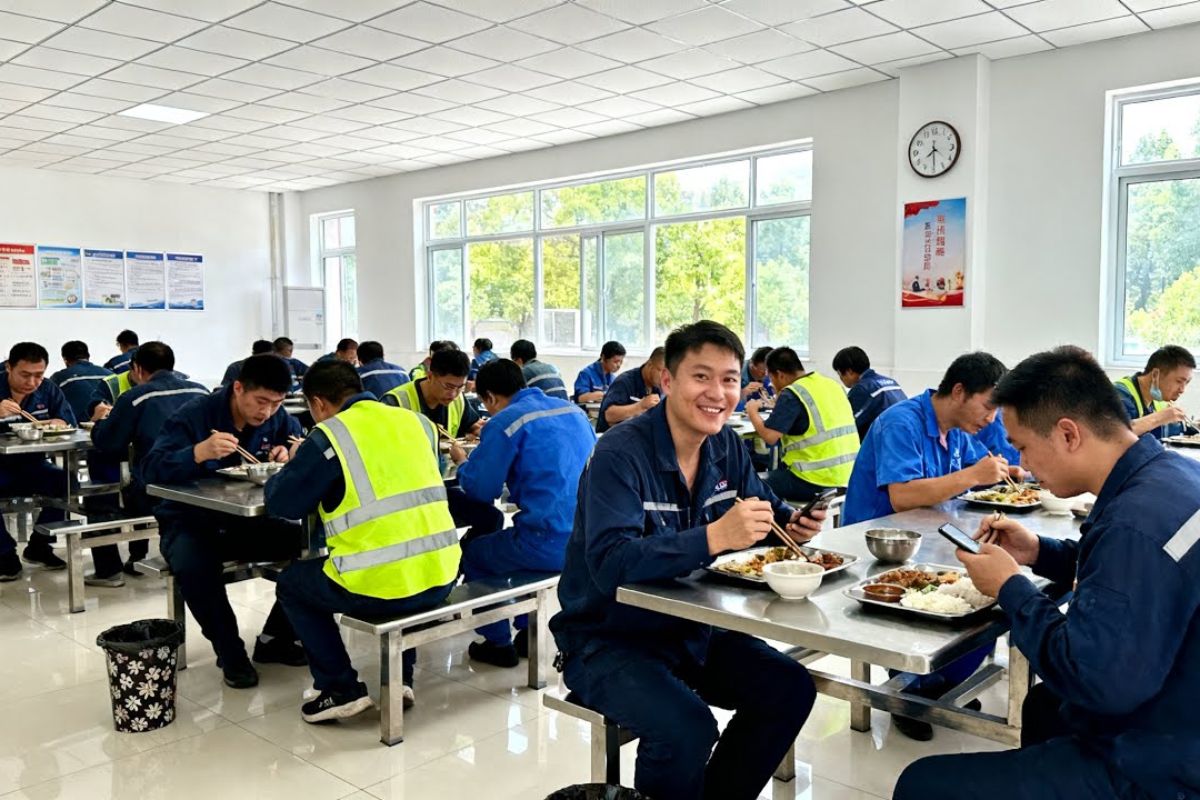


Between Steaming Pots and Timed Lines, the Canteen of the Chinese Factory Welcomes About 300 Workers Daily, Serves Six Dishes, Rice and Noodles, Controls Salt and Pepper, Ensures Rigorous Hygiene and Transforms Rushing Breaks into Home-Cooked Meals That Recharge Energy for the Afternoon Shift After Intense Work
The canteen of the Chinese factory of electrical equipment is the silent meeting point of a fast-paced routine. By the end of the morning, after hours on the production line, the workers cross the yard, swipe their cards at the reader, grab metal trays, and spread across communal tables in search of a hot, cheap, and predictable lunch that does not disappoint.
The dishes are not sophisticated, but they are designed to satisfy quickly and balanced: six Chinese recipes per day, steamed rice, boiled noodles, and cold options that help combat both fatigue from the shift and the heat of the industrial kitchen. Over two days of filming, the routine is repeated with almost military precision, always anchored in the same simple idea: to feed the worker well so that he can return to the production line with some breath.
From the Warehouse to the Canteen: The Daily Path of the Worker

The canteen is located behind the manufacturing area.
-
Italian researchers have detected what appears to be a second Sphinx buried under the sands of Egypt, and satellite scans reveal a gigantic underground megastructure hidden beneath the Giza Plateau for over 3,000 years.

-
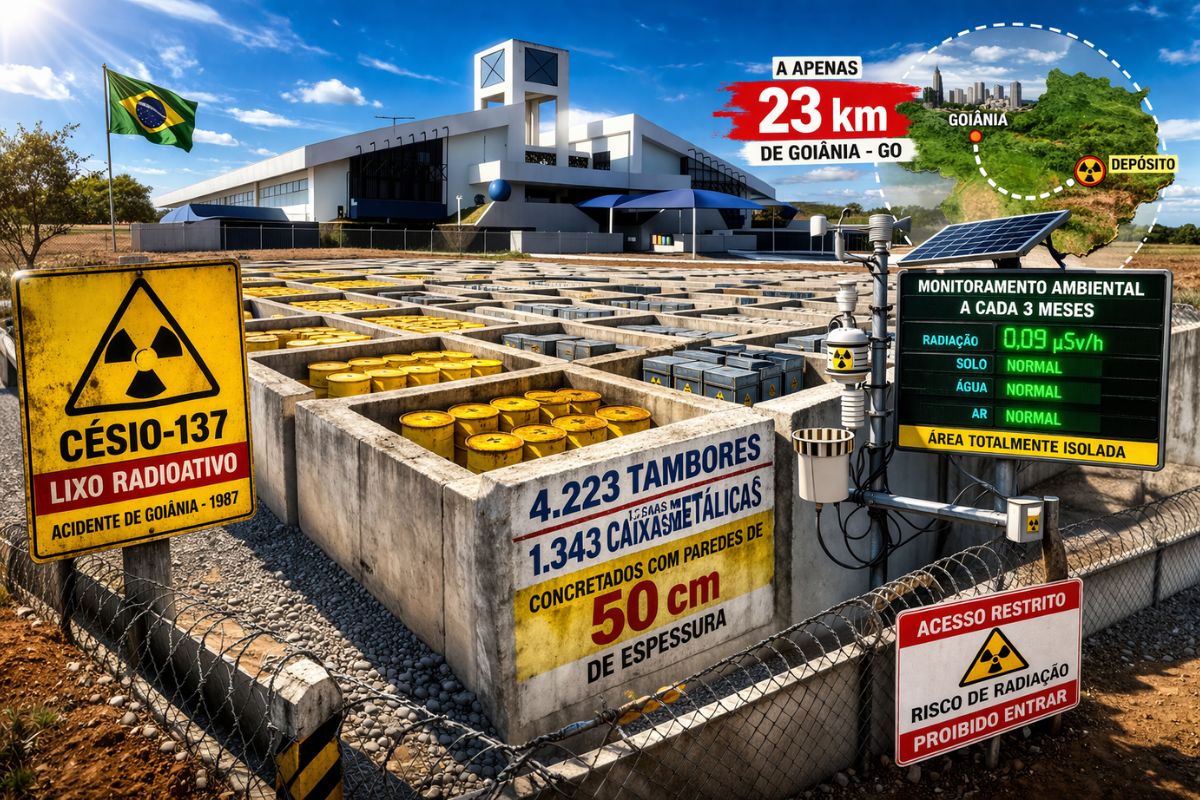
There are 4,223 drums and 1,343 metal boxes concreted with 50-centimeter walls that store the radioactive waste from Cesium-137 in the worst radiological accident in Brazil, just 23 kilometers from Goiânia, with environmental monitoring every three months.
-
Giant Roman treasure found at the bottom of Lake Neuchâtel in Switzerland reveals an advanced trade system, circulation of goods, and armed escort in the Roman Empire about two thousand years ago.

-
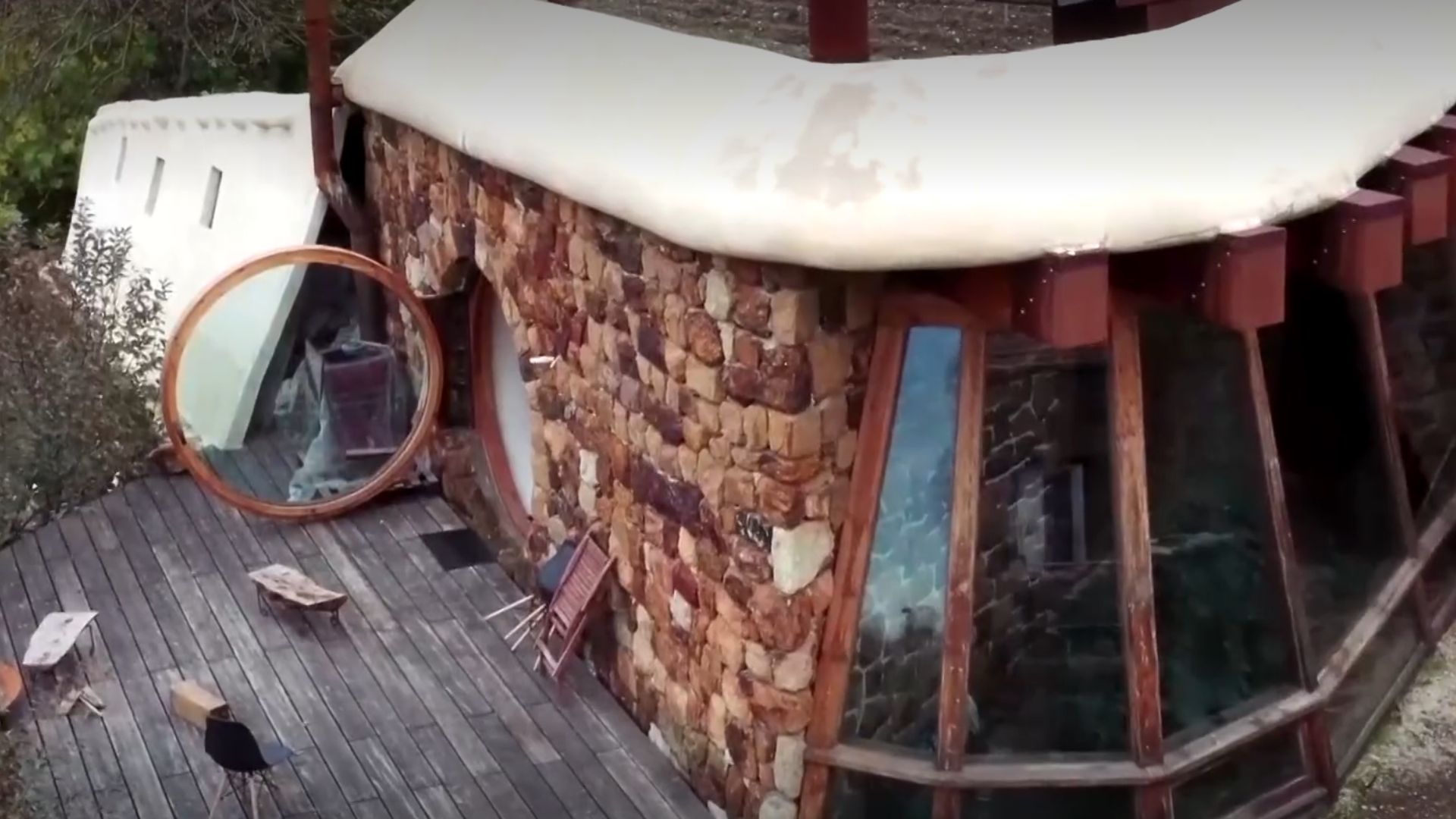
He buried 1,200 old tires in the walls to build his own self-sufficient house in the mountains with glass bottles, rainwater, and an integrated greenhouse.

While the assembly lines are running, trucks unload, between 7:40 AM and 8:30 AM, the fresh ingredients that will be consumed the same day, as emphasized by the chef who has been with the company for sixteen or seventeen years.
As the machines follow the production rhythm, the kitchen organizes its own shift.
Vegetables are washed, chopped, and put to steam, noodle trays are taken to the steaming pan until they are just right, large cuts of meat are blanched in boiling water before being seasoned.
Meanwhile, enormous pots of steamed rice fill the environment with the aroma of home-cooked food on an industrial scale.
As the informal signal for lunchtime approaches, employees start to exit in blocks.
The canteen of the Chinese factory absorbs this small influx of people without visible tumult: quick line, beep of the card, dish selection, generous spoonfuls served in a matter of seconds and everyone looks for a spot at the long tables to eat in groups, almost always with the same combination of rice, meat, tofu, and vegetables.
Timed Kitchen: How the Lunch on the First Day is Born

On the first recorded day, the menu shows the logic of volume, variety, and practicality that guides the canteen.
The noodles are prepared in two stages, first steamed until about seventy percent cooked, then mixed with a rich sauce of shredded pork and bean sprouts and again steamed to achieve a firmer texture.
Next, the heavier proteins come in.
The stewed duck thighs, defined as a dish for the more daring, undergo a long process: pre-boiling in boiling water until tender, shocking in cold water, seasoning, and slow roasting, until the meat gains color and becomes tender enough to be served in generous portions at the counter.
For workers who have spent the entire morning on their feet, this combination of fat, protein, and thick broth acts as immediate fuel.
However, the highlight is a classic of Chinese cuisine: Kung Pao chicken.
Chicken breast cubes are fried at high temperature, coated in a thin sauce that preserves juiciness and then quickly stir-fried with a sweet and slightly spicy sauce.
Chopped carrots are blanched in boiling water, green peppers are added at the end, and the dish is served over rice or alongside noodles.
It’s the kind of dish that whets the appetite just by the aroma, even in a hurried line.
Tofu, Vegetables, and Cold Dishes: The Lightness That Balances the Plate

Beyond the meats, the canteen’s menu reserves a fixed space for dishes that lighten the grease and monotony.
The homemade stir-fried tofu appears as a popular option: soft cubes, moderately salty sauce, crunchy green peppers, and wood ear mushrooms that provide firm texture.
It’s a light, inexpensive dish that is easy to reproduce in large quantities, ideal to accompany rice and absorb some of the sauce from the meats.
The hand-torn cabbage serves as a refreshing counterpoint.
Torn into large pieces, it is quickly stir-fried over high heat to gain the wok aroma, with dried chilies to give a slight heat.
The result is a crunchy, slightly spicy, and non-greasy vegetable that breaks the density of the stewed pork belly with potatoes and other heavier stir-fries.
Another ally of lightness is the stir-fried yam with wood ear mushrooms and cucumber.
The yam, sliced thinly, serves as a crunchy, slightly sweet, and mild-textured ingredient that does not compete with the main seasonings.
For those who spent the entire morning engaged in physical effort, these lighter dishes act as “breath” within the metal tray, making lunch less heavy and more balanced.
Second Day: Fried Roots, Spicy Tofu, and Noodles for Everyone
On the second day of filming, the canteen of the Chinese factory maintains the same service structure but completely changes the main menu.
Pork ribs are combined with fried lotus root strips, coated in starch and fried until a crunchy, golden crust forms while the interior preserves the natural sweetness and crunchiness of the root.
One of the most sought-after dishes is the shredded pork with fish flavor, a classic canteen recipe.
The shredded pork is combined with crunchy wood ear mushrooms, shredded carrot, and shredded green pepper.
Despite not containing fish in the composition, the sauce reproduces a characteristic flavor, making the dish a “canteen favorite” that tends to sell out quickly.
It’s simple, substantial, and designed to fill the rice bowl to the brim.
At the noodle station, three types of sauce are prepared at the same time: sauce with meat, sauce with pork ribs, and sauce with egg, all stir-fried and thickened in large pots.
The stir-fried tomato with egg, another homemade classic, features tomatoes cooked in a thick sauce enveloping soft, fluffy eggs, balancing sweetness, acidity, saltiness, and umami.
The mapo tofu and the cold tofu salad complete the line, offering options that pair with rice or noodles and fit into both meat dishes and lighter fare.
Hygiene, Taste Standard, and Behind-the-Scenes of the Operation
When talking about daily routines, the head chef insists on three points: ingredients arrive in the morning, are prepared immediately, and consumed the same day; everything needs to be well-cooked; nothing can be overly spicy or salty.
The guidance is to treat the menu as home-cooked food, just on a scale for around 300 people.
The canteen of the Chinese factory also maintains a noticeable standard of cleanliness.
The metal trays, rice bins, noodle steamers, and lines of cold dishes are organized so that the flow does not get blocked.
Rice, steamed buns, and porridge are served in a self-service system, while hot dishes are portioned out by kitchen staff, with a generosity that seeks not only to meet caloric guidelines but also to deliver a sense of abundance in a few minutes of break.
From the arrival of the ingredients to the last employee leaving the dining hall, everything is designed to fit into the tight lunch break.
The kitchen operates under the pressure of the clock, the dining room absorbs the turnover of shift groups, and the card system records each meal.
In the end, what appears to the worker is just the scene repeated every day: full tray, metal chair, quick conversation, a few bites of hot food, and back to work.
Hot Lunch as a Small Daily Happiness
For those who spend the entire morning standing in front of machines, the canteen of the Chinese factory represents more than an internal food service.
It is a minimal interval of dignity in a predictable day: well-cooked rice, varied dishes, always tofu, cold options to cut through the grease, simple desserts when available, and the certainty that the stomach will not be empty upon returning to the warehouse.
In that noisy hall, what seems like just an industrial meal serves as a small daily happiness.
Amidst the accumulated fatigue, a hot, honest, and well-prepared dish becomes the emotional and physical foundation to face the rest of the shift.
There, sitting side by side, the workers share tables, food, quick jokes, and a few minutes of pause before getting up for another afternoon of production.
And you, if you had the chance to have lunch in this canteen of the Chinese factory, which dish would you put first on your metal tray?










Eu só acredito vendo! Eu vendo não acredito!! Kkkkkkk Seria cômico se não fosse trágico.
Eu só acredito vendo! Eu vendo não acredito! Kkkkkkk Seria cômico se não fosse trágico.