





 Portuguese
  English
  Spanish
  5 min of reading
  0 comments


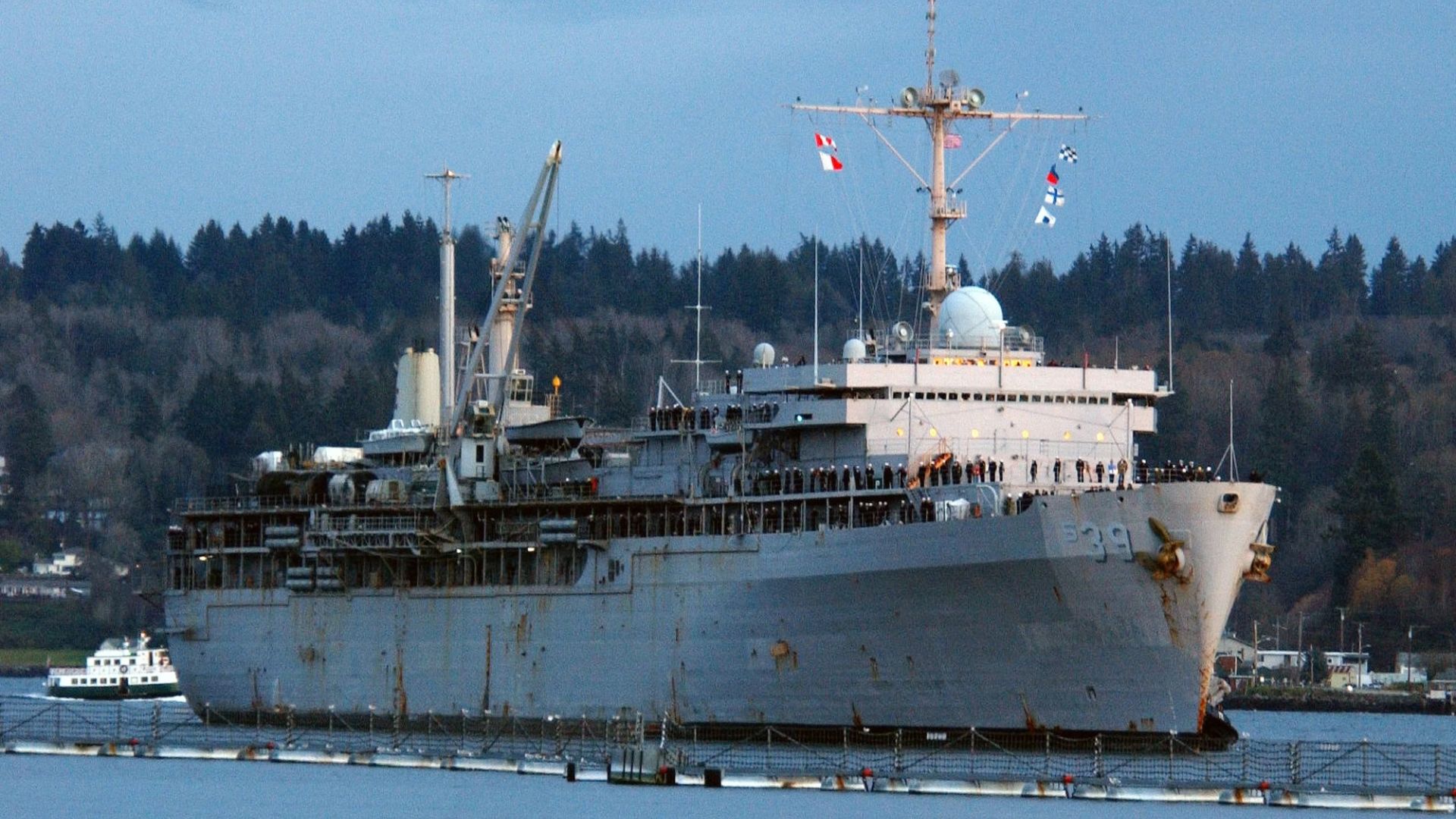
The United States Navy Workshop Operates As A Floating Base Capable Of Keeping Nuclear Submarines Active Away From Shipyards, Bringing Maintenance, Logistics, And Technical Support Directly To The Indo-Pacific And Expanding U.S. Naval Presence Capacity In One Of The Most Disputed Strategic Regions On The Planet.
The USS Emory S. Land (AS-39) serves as an advanced maintenance and logistics support platform for submarines deployed in the Indo-Pacific, in a role less visible than that of aircraft carriers and nuclear submarines, but crucial for keeping high-value assets operational away from large industrial complexes.
Integrated with the Pacific Submarine Force, the ship combines technical capacity, operational accommodation, and supply support to assist attack submarines, guided missile submarines, and, when necessary, surface ships as well.
Direct Support To Submarines In Strategic Areas
In practice, the Emory S. Land brings a package of services to the theater of operations that reduces the need to withdraw units from the front lines merely for intermediate repairs or routine refueling.
-
Spain surprises the world by erecting 62 artificial dunes, mixing sand with natural remains of posidonia, and causing the structure to lose only 1.4% of its volume in 1 year.

-
With 16 Bulava missiles, improvements in acoustic stealth, and a design focused on silent patrols, Russia’s nuclear submarine was born to ensure Moscow’s invisible retaliation and has become one of the pillars of its maritime strength.

-
‘Populous’ city in Rio among the worst in Brazil in national ranking and exposes silent development crisis.
-
Couple buys house in the South Zone of São Paulo, opens a hidden door in the garage, and finds a secret wine cellar with dozens of old wines forgotten since the 1970s.

The United States Navy reports that the ship provides expeditionary maintenance, repairs, “hotel service” for crews in operational support, and logistical support in the areas of the 5th and 7th Fleets, which enhances the autonomy of submarines employed in sensitive regions.
This type of vessel belongs to the category of submarine tenders, designed to function as a link between the shipbuilding industry on land and the daily operations of the submarine force abroad.
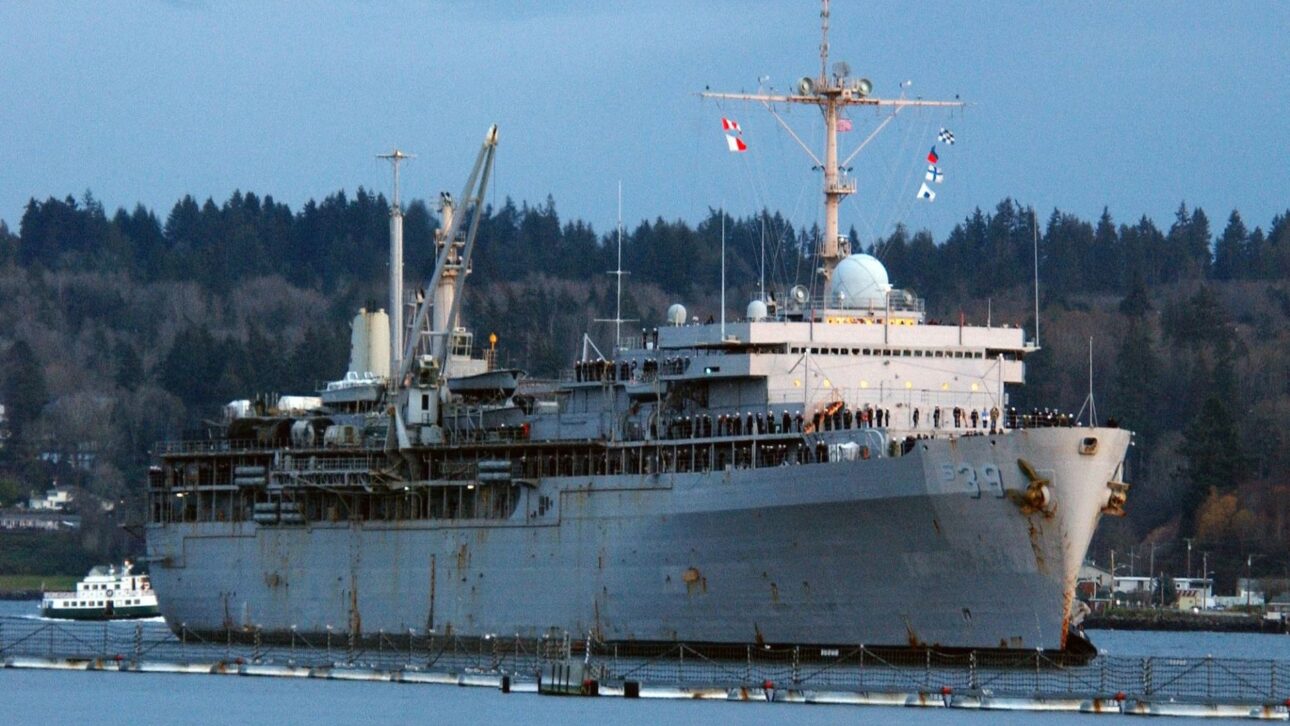
In the general characteristics of the L.Y. Spear class, the Navy reports about 23,000 tons at full load and 193.2 meters in length, while historical literature from the force indicates that the design was sized to accommodate attack submarines and serve up to four units docked simultaneously.
Technical Structure Comparable To That Of A Small City
The uniqueness of the Emory S. Land appears in the set of workshops and onboard systems capable of manufacturing parts, correcting failures, and performing specialized services without relying on a fixed shipyard.
In the official history of the vessel, the Navy states that the ship has a engineering plant similar to that of a small city, as well as maintenance, manufacturing, and service workshops capable of meeting virtually any demands of submarines and some surface ships.
This role is also supported by the crew composition and the management model adopted.
According to the ship’s official page, the AS-39 operates under the administrative control of the Commander, Submarine Force, U.S. Pacific Fleet and operational control of the Commander, Submarine Group 7, based in Yokosuka, Japan, and has around 292 military personnel and approximately 158 civilian mariners from the Military Sealift Command.
Project Origin And Industrial Scale Of Construction
The trajectory of the Emory S. Land began at a time when Washington sought to enhance the sustainment of naval forces in distant areas, particularly to preserve the availability of nuclear submarines without imposing frequent returns to main bases.
The official record states that the keel was laid on March 2, 1976, the launch occurred on May 4, 1977, the delivery to the Navy was completed on March 2, 1979, and commissioning took place on July 7, 1979.
The construction numbers help to measure the scale of the project.
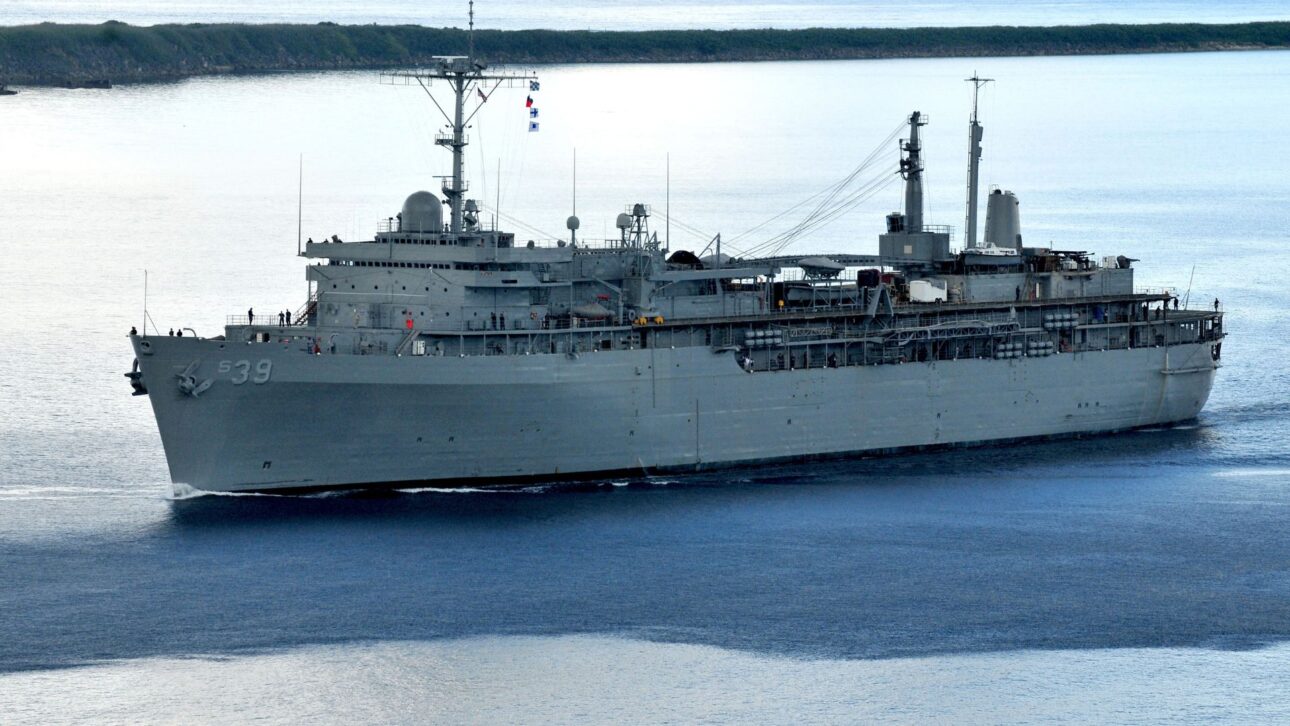
The Navy’s documentation states that 12,500 tons of steel, 142 miles of electrical cables, and 30 miles of piping were needed to build the ship, a volume consistent with the goal of creating a large-scale technical support platform capable of operating away from the naval force’s industrial hubs.
Guam And The Logistics Of Naval Presence In The Indo-Pacific
The operational importance of the Emory S. Land increases when one observes its geographical position and the logistical arrangement of the submarine force in the Pacific.
The United States Navy reports that Guam is home to the only submarine tenders of the force, the Emory S. Land and the USS Frank Cable, both employed to provide maintenance, logistical support, and operational services to submarines and ships in forward areas.
This positioning helps explain why the island has consolidated as a central hub of American naval presence in the Indo-Pacific.
This logic reduces the downtime of strategic platforms and preserves continued presence in a region marked by maritime disputes, critical trade routes, and growing competition among powers.
Instead of moving a submarine to a large shipyard whenever an intermediate need arises, the tender brings repair capacity closer to where the mission occurs, keeping the vessel and its crew closer to the area of operational interest.
Participation In The AUKUS Milestone In Australia
The visibility of the Emory S. Land increased in August 2024, when the Naval Sea Systems Command reported that the ship would participate, at HMAS Stirling in Western Australia, in the first maintenance period of a U.S. attack submarine on Australian territory.
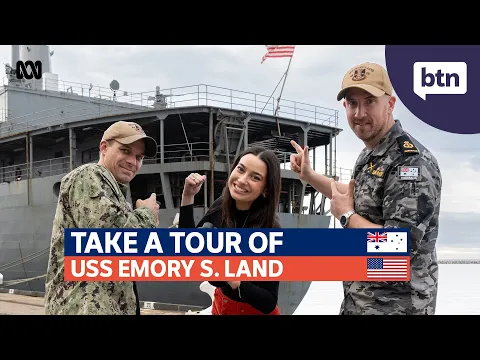

On that occasion, the USS Hawaii (SSN 776) began a Submarine Tendered Maintenance Period, officially described as a significant step within Pillar 1 of AUKUS, aimed at the future Australian capability to operate conventionally armed submarines with nuclear propulsion.
According to the Navy and the Australian government, more than 30 Australian military personnel participated in most of the planned work, after beginning embarked exchange on the Emory S. Land under American supervision.
The process was completed in September 2024, consolidating one of the first concrete results of the technical cooperation envisioned by AUKUS in the submarine field.
Recent Deployment Reinforces The Reach Of The Floating Base
The reach of the vessel became evident upon its return to Guam on April 9, 2025, after a deployment of 11 months that began on May 17, 2024.
In the official mission assessment, the Navy reported that the ship made 17 stops in the Indo-Pacific, strengthened cooperation with allies and partners, and played a significant role in supporting the submarine pillar of AUKUS.
In the final days of this mission, the Emory S. Land also provided logistical support to the USS Minnesota (SSN 783) during a stop in Darwin, in northern Australia.
In a statement from the Indo-Pacific Command, the Navy highlighted that the visit demonstrated the flexibility of the tender to support submarine warfare assets wherever necessary, reinforcing the strategic value of a vessel that rarely gathers the spotlight but frequently determines the fleet’s operational continuity.
In this arrangement, the Emory S. Land remains as a behind-the-scenes asset that supports the United States naval presence in the Indo-Pacific, bringing maintenance, services, supplies, and technical support close to the deployed units and preserving operational availability in one of the planet’s most sensitive regions.






Seja o primeiro a reagir!