





 Portuguese
  English
  Spanish
  4 min of reading
  0 comments


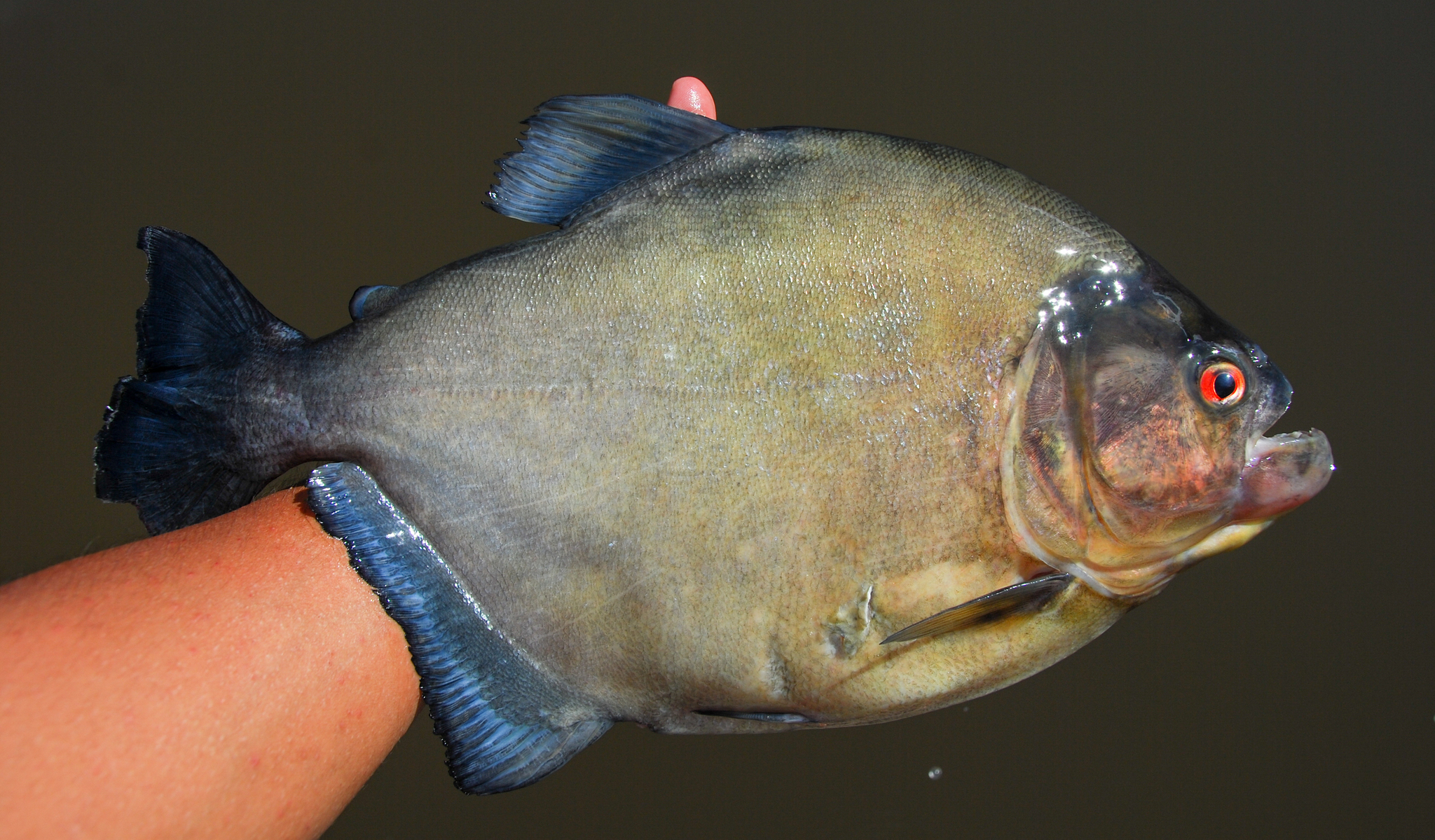
Black Piranha Can Reach 40 Cm, Has Serrated Teeth and Territorial Behavior That Terrorizes Divers in the Amazon.
The black piranha, scientifically known as Serrasalmus rhombeus, is often presented to the public as just another piranha among dozens of Amazonian species. However, contrary to the simplified and sensationalist view popularized by cinema about these fish, this is a real and unique animal: it can reach over 40 cm in length — a size that is very rare among current piranhas —, has serrated dentition and a jaw musculature capable of tearing flesh with ease. This makes it, therefore, the largest representative of the genus Serrasalmus and one of the largest of the piranha group as a whole.
This above-average size, combined with a physiology adapted for ambush, has earned the black piranha a curious title among divers operating in the Rio Negro, Solimões, and their tributaries: the “silent and unpredictable” predator, in contrast to the red piranha (Pygocentrus nattereri), which is more notorious in schools.
Teeth Like Blades and a Bite That Delivers What It Promises
What impresses most in encounters recorded with Serrasalmus rhombeus is not the quantity but the anatomical quality of the animal. Its teeth have a triangular shape, with serrated edges, functioning like small razors.
-
With a cost per shot close to zero, the DragonFire laser could change naval warfare in 2027 and provide British ships with nearly unlimited defense against drones.

-
A British startup creates tires that generate electricity in electric vehicles when passing over potholes, speed bumps, and cracks.

-
Scientists have created robots made with living cells that have their own nervous system, swim on their own, explore the environment, and self-organize without any genetic engineering, and now they want to do the same with human cells.

-
Students create a solar-powered ambulance that operates without a plug, without fuel, and still keeps medical equipment running in remote areas.


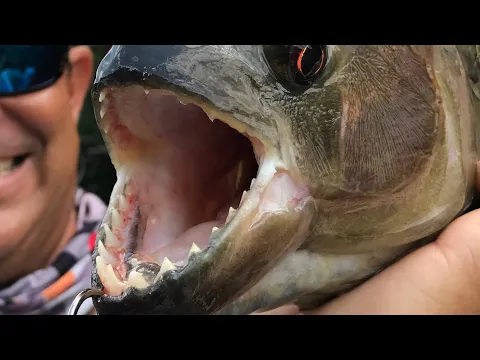

The bite cuts, not just pierces. In laboratory experiments documented by ichthyologists, the jaw pressure and action pattern of the arch show efficiency in:
- cutting muscle tissue
- removing pieces of skin
- fracturing scales and small bony structures
There are reports of riverside fishermen claiming that the black piranha “chirps” the fish before devouring it, as it tends to tear off whole pieces of the hooked animal, including larger fish than itself.
Silence, Ambush, and Attack During Apnea
Contrary to the myth of frenzied attacks in schools popularized by fiction, Serrasalmus rhombeus usually acts in a solitary and silent manner. Divers and aquatic biologists describe a curious pattern: the fish stays motionless, observing, and approaches slowly before the strike.

This furtive behavior has an ecological explanation: it is an ambush predator, which rarely wastes energy.
Another important element is its ability to remain motionless while holding air in its gills longer than normal, allowing it to approach before the attack, something that gave rise to the popular term “apnea attack.”
Not coincidentally, divers operating in the dark rivers of the Amazon and Pará claim that the fear surrounding the black piranha is not in collective attacks, but in the fact that they do not see it until the last moment.
Why Divers Fear the Black Piranha More Than Other Species
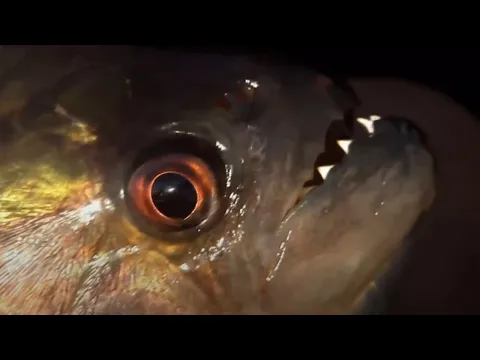
Size and Bite Power: with over 40 cm and musculature concentrated in the head, it can cause serious injuries to hands and feet.
Silence and Solitary Behavior: unlike the red piranha, it does not reveal its presence with large groups.
Localized Attacks: records indicate a preference for cutting exposed body parts — fingers, ears, lips — making the risk specific, yet severe.
There are even protocols adopted by professional divers that avoid short pants, open gloves, or shiny items on their hands, as the light reflection can mimic scales.
Ecology and Feeding Behavior: The Wisdom of the Opportunist
The black piranha is not a killing machine. It is an opportunist, and this completely changes its ecological reading. It feeds on:
- smaller fish
- young of other species
- scales torn from larger fish
- fruits and plant pieces
- occasional carrion
This last item — carrion — is fundamental: what makes this fish feared is not a supposed “unprovoked aggressiveness,” but its efficiency in locating and consuming dead, wounded, or vulnerable tissue. In environments where fishermen clean fish in the water or where injured animals are present, the risk naturally increases.
Distribution, Habitat, and the Role in the Amazonian Food Chain
Serrasalmus rhombeus occurs mainly in the basins of the Amazon and Orinoco, preferring dark, deep waters with low visibility.
Environments with submerged branches and trunks favor its style of ambush hunting. Ecologically, it plays an essential role in controlling populations of weak or sick fish, contributing to the balance of the ecosystem — a point often overlooked in the popular image of piranhas.
The impact of the black piranha on humans is real but limited. There are records of accidents involving fishermen and divers, usually related to improper handling of the animal or the presence of blood in the water.
Even so, there is no history of documented fatal attacks, reinforcing that fear is much more cultural than statistical.
Researchers believe that the fame of this fish says more about human psychology in the face of the unknown than about its real dangerousness.
Efficient Predator, Not a Monster
The black piranha is one of the most fascinating fish in the Amazon. Its size, specialized dentition, and furtive behavior justify its reputation among divers, but do not support the myth of an irrational and murderous animal.
It is an evolutionarily refined and ecologically important predator, whose biology still awakens scientific curiosity.
If there is an element of terror in this fish, it is not in cinematic bloodlust but in what truly frightens humans: what cannot be seen until it is too late.






-

-

-

-

-

-

86 pessoas reagiram a isso.