





 Portuguese
  English
  Spanish
  5 min of reading
  0 comments


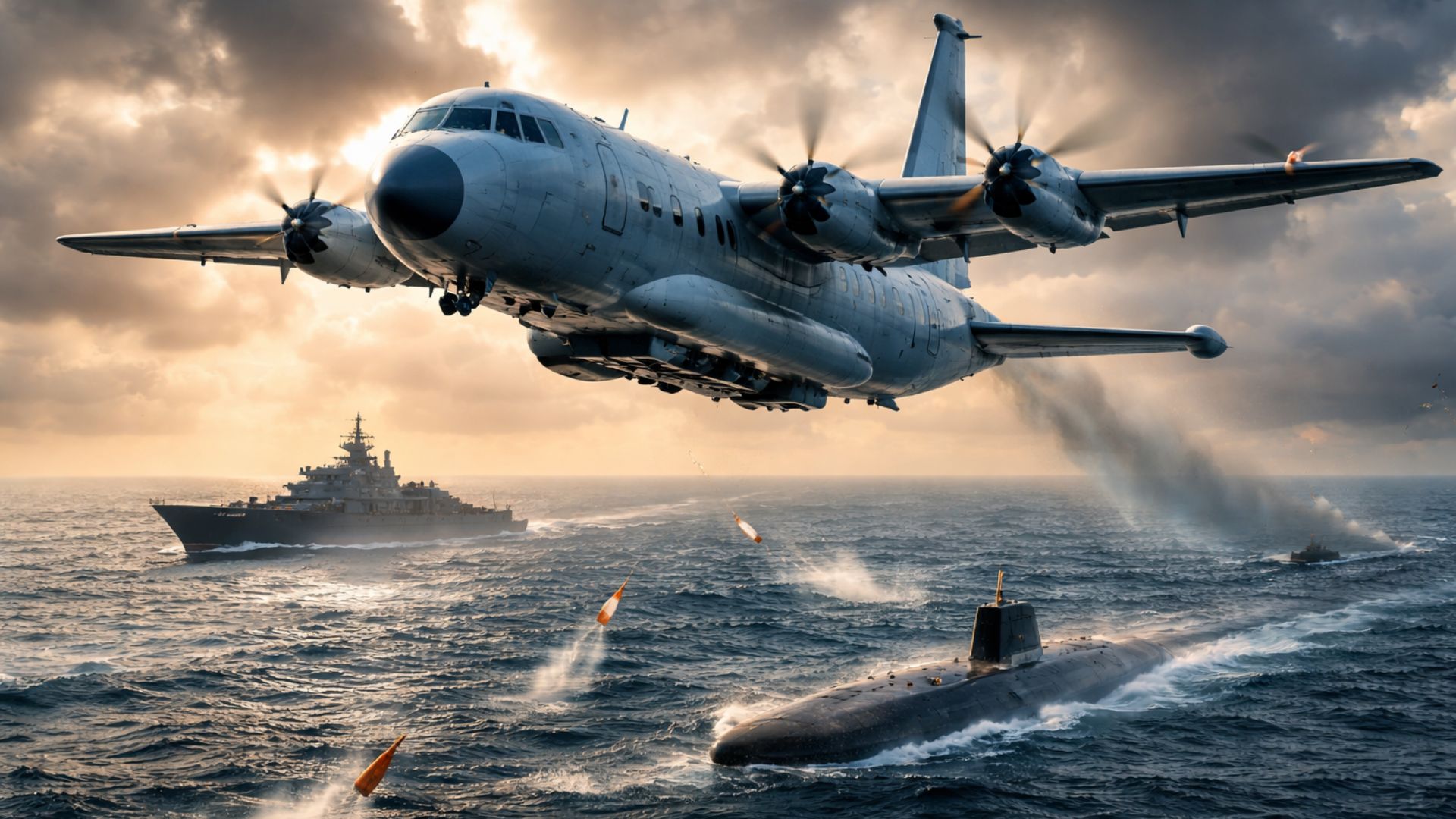
Chinese Naval Aircraft KQ-200 Combines Radar, Optical Sensors, Sonobuoys, and Magnetic Detector to Track Submarines in Open Sea and Enhance Aerial Surveillance Over Strategic Areas in the Pacific. Platform Integrates Larger Network of Anti-Submarine Warfare and Sustains Extended Patrols Far from Shore.
The KQ-200 has established itself as one of the main vectors of Chinese naval aviation for maritime patrol and anti-submarine warfare by combining, in a single cell, surface search radar, electro‑optical sensors, sonobuoys, and a magnetic anomaly detector installed in the tail.
Rather than relying on speed or aerodynamic stealth to attract attention, the aircraft gained relevance by performing a less visible and more complex mission: tracking submarines in open sea, where almost nothing is visible to the naked eye, and each contact requires data cross-referencing before becoming a target.
The use of the model is not only seen in foreign analyses.
-
Spain surprises the world by erecting 62 artificial dunes, mixing sand with natural remains of posidonia, and causing the structure to lose only 1.4% of its volume in 1 year.

-
With 16 Bulava missiles, improvements in acoustic stealth, and a design focused on silent patrols, Russia’s nuclear submarine was born to ensure Moscow’s invisible retaliation and has become one of the pillars of its maritime strength.

-
‘Populous’ city in Rio among the worst in Brazil in national ranking and exposes silent development crisis.

-
Couple buys house in the South Zone of São Paulo, opens a hidden door in the garage, and finds a secret wine cellar with dozens of old wines forgotten since the 1970s.


In an official publication from December 2025, the Ministry of Defense of China showcased Y‑8 anti-submarine patrol aircraft linked to a naval aviation regiment of the Southern Theater Command during maritime training, indicating that the aircraft is integrated into the operational routine of the force.
This record dispels the notion of a merely experimental or rare platform and reinforces the reading that the KQ‑200 is stably integrated into the surveillance and response structure of the Chinese Navy.
How the KQ-200 Searches for Submarines at Sea
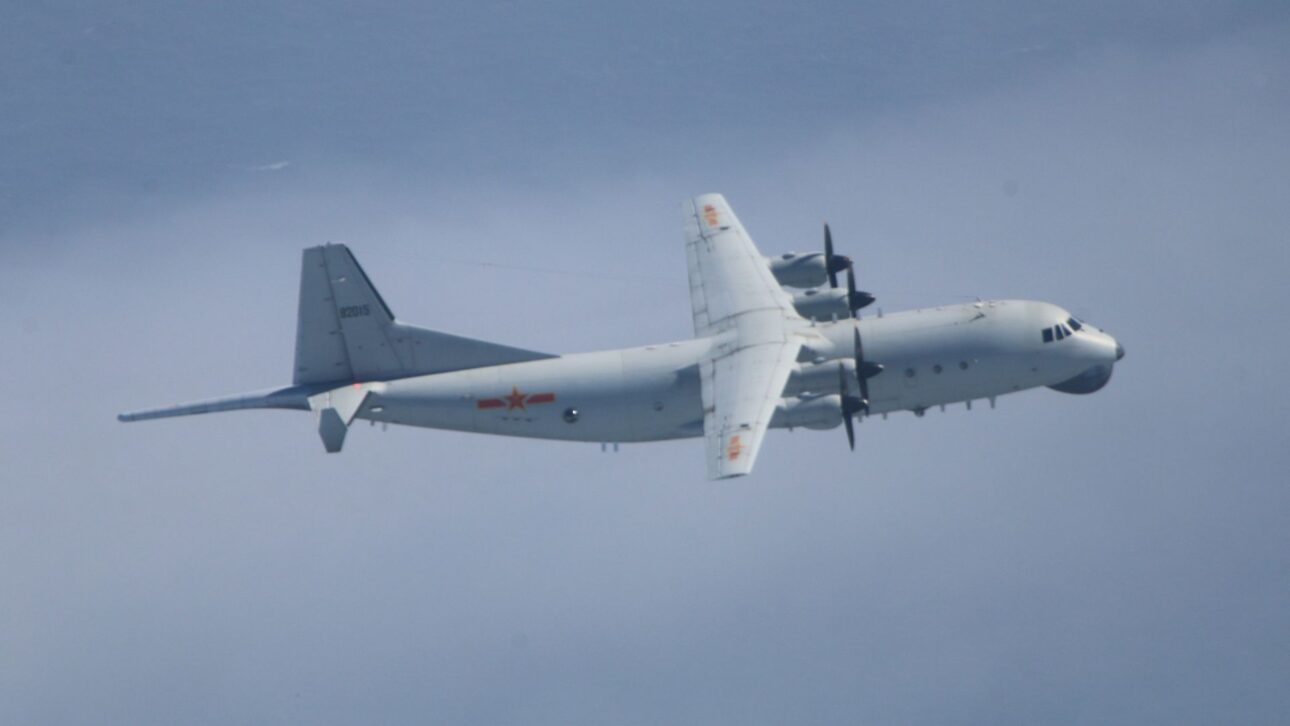
The operational logic of the KQ‑200 is based on the overlap of sensors with distinct functions.
A report prepared for the U.S.-China Economic and Security Review Commission describes the aircraft as a platform in service since 2015 equipped with a magnetic anomaly detector, electro-optical turret with infrared camera, CCD camera, laser rangefinder, and surface search radar installed in a radome under the nose.
In practical terms, this allows for an initial scan over large maritime areas, and then narrows down the search with more specific instruments as the contact gains definition.
This architecture helps to understand why anti-submarine aircraft do not “see” the target as a fighter sees another aircraft.
First, the radar and onboard sensors help to build the surface scenario and identify relevant indications in the environment.
Then, the sonobuoys launched over the sea to collect acoustic signals in the water come into play.
Only when the area has been reduced to a smaller sector does the magnetic detector tend to gain greater significance, as it serves to confirm and more precisely locate the presence of a large submerged metallic mass.
Documents from the U.S. Navy describe this use as a refinement step of the contact, not as an isolated long-range search tool.
Sensors, Sonobuoys, and Armament on the Same Aircraft
The physical configuration of the KQ‑200 reinforces that it was designed to search for and, if necessary, attack.
Technical reports based on images broadcast by CCTV describe four openings for launching sonobuoys and an internal compartment capable of accommodating torpedoes and anti-submarine grenades.
This arrangement places it in a more demanding group of platforms, those that do not limit themselves to monitoring the area but can participate in the complete mission cycle, from initial location to engagement with the contact.
This operational design explains part of the interest surrounding the aircraft.
In open sea, a submarine is rarely found by a single cue.
The work requires correlation between acoustic signals, observation of the environment, persistence of patrol, and the ability to react quickly when the tactical picture clarifies.
At this point, the KQ‑200 functions less as a simple patrol aircraft and more as a specialized aerial node, capable of carrying sensors far from the coast, processing the information collected during the mission, and maintaining pressure on a target designed not to be located.
Range and Endurance Expand Strategic Role
The strategic dimension of the model appears when observing its range and endurance.
The KQ‑200 has an approximate range of 5,000 kilometers and a patrol endurance of around 10 hours.
In testimony presented to the USCC, researcher J. Michael Dahm states that special Chinese aircraft, including the KQ‑200, have appeared in greater numbers in images from air bases in recent years and have become part of a broader set of C4ISR — command, control, communications, computers, intelligence, surveillance, and reconnaissance assets.
The combination of these factors helps to explain why the aircraft gained importance in prolonged missions over sensitive areas of the Chinese maritime environment.
This role becomes clearer when the KQ‑200 is placed within the Chinese anti-submarine system, rather than treated as an isolated entity.
The testimony itself states that the PLA Navy has incorporated Z‑20 helicopters focused on anti-submarine warfare, in addition to surface ships equipped with variable-depth sonar and towed systems.
In this arrangement, the aircraft expands air coverage, moves sensors greater distances, and shortens response times in areas where searches conducted only by ships would be slower or more limited.
Aerial Presence in Sensitive Areas of the Pacific
There is also the geographical component. In the same testimony to the American committee, Dahm notes that PLA special aircraft have been flying with increasing frequency beyond the so-called first island chain.
They have also been observed operating from bases on artificial islands in the South China Sea.
This scenario shows that Chinese special aviation has started to occupy a broader space in maritime monitoring, supporting naval forces, and sustaining situation awareness over disputed areas of the western Pacific.
The interest that the KQ‑200 arouses comes precisely from this contrast.
The platform is derived from a turboprop transport aircraft and maintains a relatively discreet appearance but has been adapted for a highly complex technical task that depends on complementary sensors, persistence in flight, and integration with other naval assets.
It is not just an aircraft for flying over the sea.
It is an instrument created to contest the ocean floor from the air, in a region where submarines, shipping lanes, and persistent surveillance have become central parts of the Chinese military calculation.






-

Uma pessoa reagiu a isso.