





 Portuguese
  English
  Spanish
  6 min of reading
  0 comments


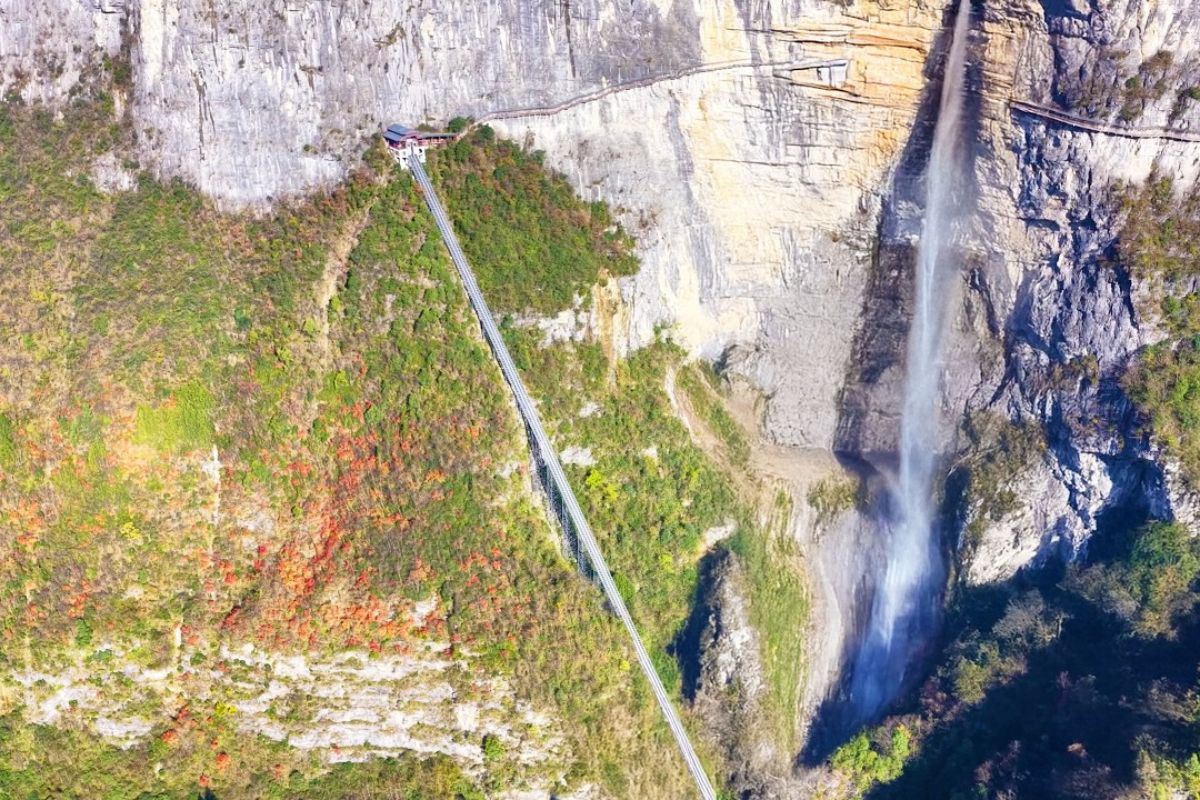
In China, The Inclined Elevator Connects Luyuanping, In Hubei, To The Top Of The Dolina Where The First Village With Elevator In The World Is Located, Shrinking The Journey From Two Hours On Dangerous Trails To Few Minutes And Opening The Isolated Paradise To Controlled Tourism, Without Access Road For Vehicles Until Now.
The inclined elevator that connects Luyuanping, nestled inside a dolina in Enshi, Hubei, to the top of the cliffs has transformed an old two-hour trail into a few minutes and put the first village with an elevator in the world on the map of Chinese tourism engineering.
Until 2016, when the tourism project began to be structured, the population of Luyuanping relied solely on narrow trails and rock climbs to enter and exit the dolina. The construction of 1,800 steps and the world’s longest inclined elevator, measuring about 380 meters in length, changed the routine in Hubei and opened a controlled window for curious visitors about this isolated rural stronghold.
Where Is Luyuanping And Why Is It So Isolated

Luyuanping is located in Enshi, a mountainous region of Hubei province in central China.
-
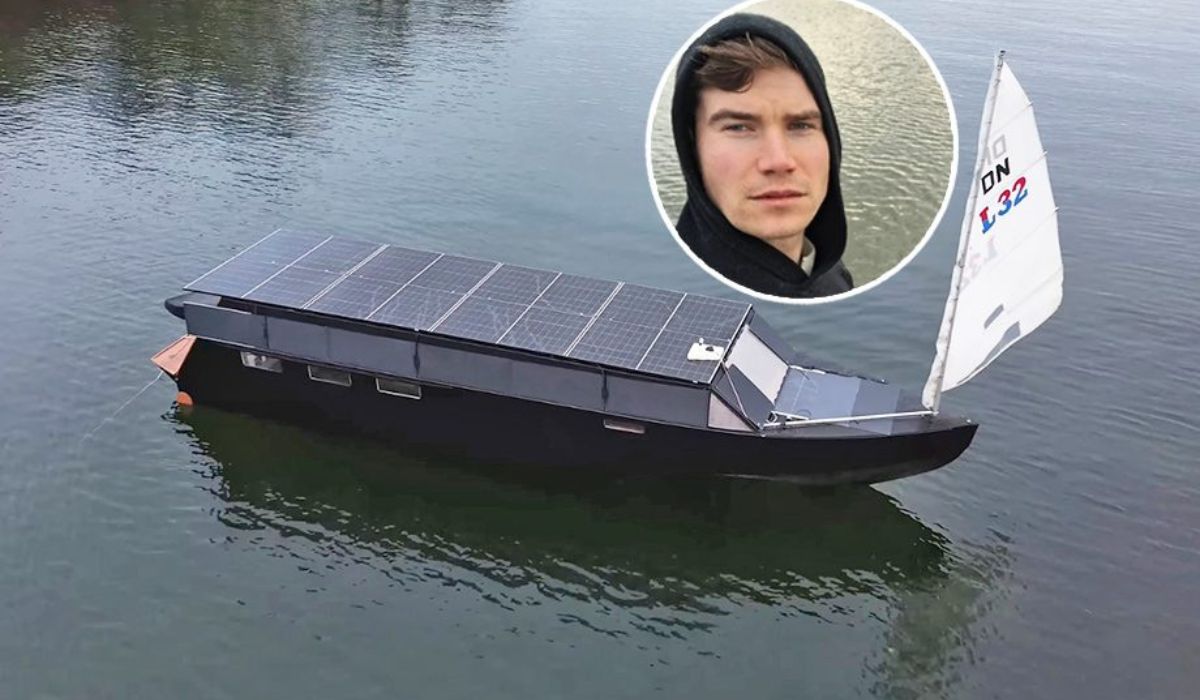
In 200 days, a Finnish man builds with his own hands an 11-meter boat powered by solar energy with “infinite autonomy,” capable of dispensing with refueling and already used as a floating house.
-
Neurologist Richard Restak issues a severe warning to all people over 65: there is a daily habit he recommends completely eliminating from your life because it is destroying your neurons and accelerating memory loss.

-
With 6.1 meters and 33 steps, the spiral staircase of the Loretto Chapel in the United States gained fame worldwide for making two complete 360-degree turns without a central support.

-
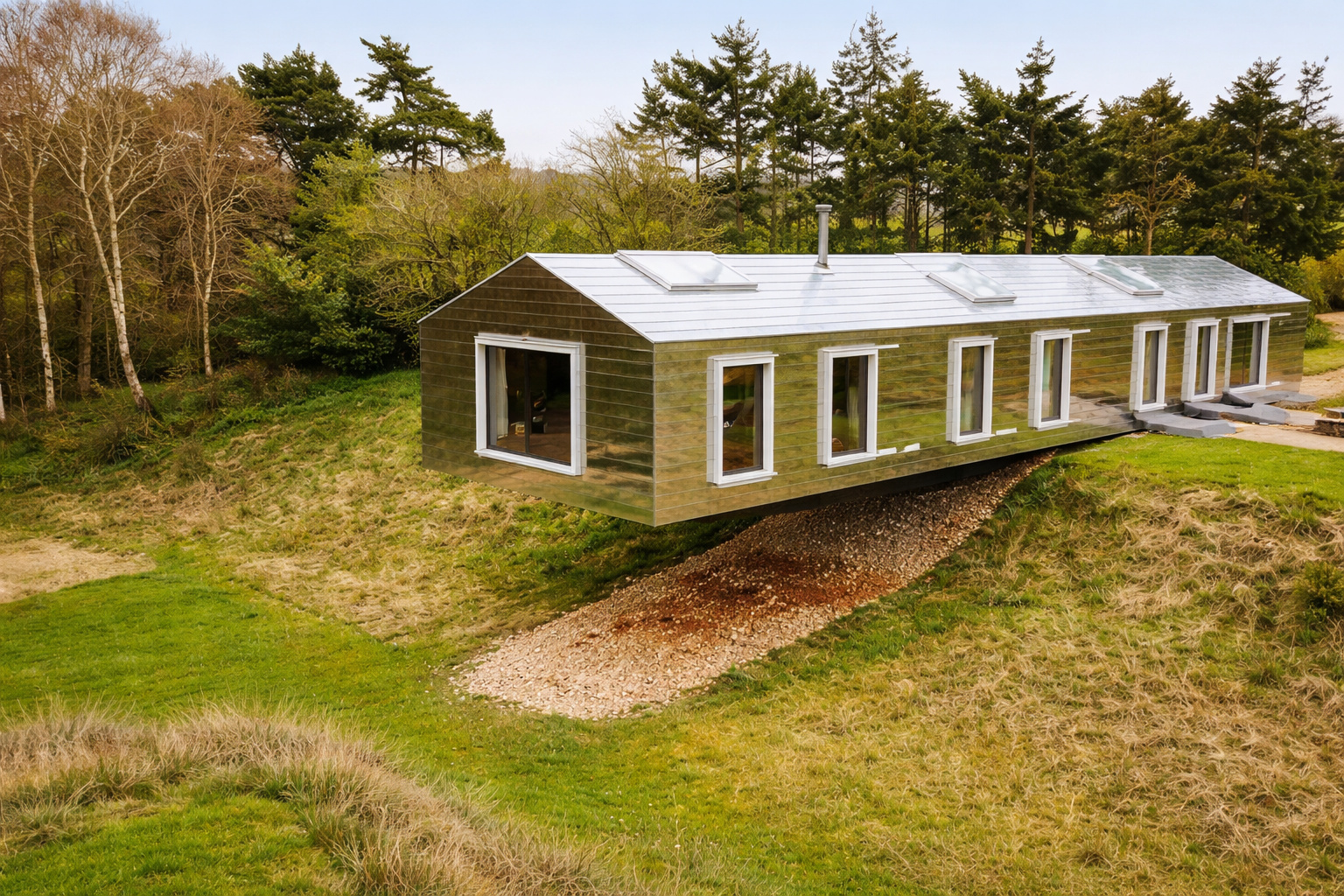
With 30 meters in length, a house in England appears to float in the air and surprises engineers and architects around the world due to its visual effect and construction method suspended over sloped terrain.

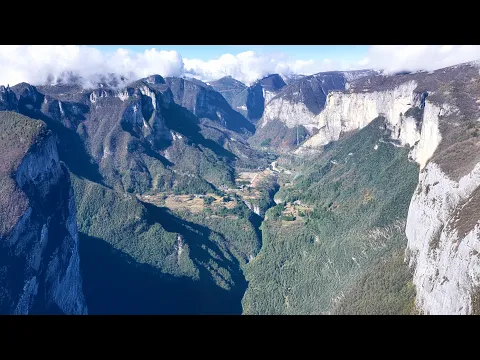
The village lies at the bottom of a dolina at approximately 1,200 meters above sea level, with a vertical drop of about 600 meters to the edge of the plateau.
Surrounding walls of cliffs create a natural barrier that has kept the community off conventional transportation and trade routes for centuries.
In this setting, the absence of a road has always been a structural fact.
Even today, vehicles do not reach the bottom of the dolina: access is through the walkway on the slope, via the 1,800 steps carved into the mountain, and, when operational, by the inclined elevator itself.
This network of pathways reveals why Luyuanping was known for so long only among residents of Hubei and a few researchers of karst topography.
How The Inclined Elevator Changed Access To The Dolina

Before tourism, entering or leaving Luyuanping meant walking along narrow trails, glued to the cliff, on a route that took about two hours between the bottom of the dolina and the top of the mountain.
For school-aged children, the elderly, and people needing to fetch supplies, the physical effort was an unavoidable part of daily life.
The installation of the world’s longest inclined elevator, with 380 meters in length and a vertical height of over 300 meters, shortened this journey to three or four minutes per trip.
In practice, the inclined elevator has become the main transportation axis between the valley and the top, complementing the 1,800-step staircase and the trail system.
Still, the operation relies on constant maintenance, and on days of service or technical adjustments, residents revert to relying solely on the walking path.
The Formation Of The First Village With Elevator In The World

Long before being recognized as the first village with an elevator in the world, Luyuanping had over 300 years of continuous occupation.
The history recorded by the residents dates back to the end of the Ming Dynasty and the beginning of the Qing Dynasty, when the Pei clan left Changde, in Hunan, fleeing from conflicts and searching for a more stable place to farm and live.
The group’s first settlement in Xintian, also in an elevated region, turned out to be inadequate: the intense cold prevented the grains from producing, and the crops could not sustain themselves.
The local narrative tells that a white deer guided the migrants through the mountain into the interior of the dolina where Luyuanping is today.
The place was initially called Luyinping and later renamed Luyuanping. Fertile soil, milder climate, and flat land at the bottom of the valley allowed the community to settle there for centuries.
Over time, the village grew to house around one hundred families.
The decline in the number of residents to just under forty families, or about one hundred people, is linked to the migration of young people in search of work outside Hubei.
The recognition of Luyuanping as the first village with an elevator in the world is recent and came precisely with the construction of the inclined elevator connected to the tourism project.
Rural Life In Luyuanping, Between Self-Sufficiency And Tourism
Despite the arrival of the inclined elevator and the increased circulation of visitors, the routine in Luyuanping is still marked by the logic of working at sunrise and resting at sunset, with a strong emphasis on self-sufficiency.
The families grow corn, potatoes, and various vegetables in the flat areas of the dolina, combining subsistence farming with raising pigs, chickens, geese, and ducks.
The animal husbandry primarily relies on corn and local pasture, without industrial feed, a practice facilitated by the relatively isolated environment.
At the same time, part of this production has begun to supply small restaurants and family-run accommodations geared towards tourism, creating a new source of income for the residents of Luyuanping.
Many young people who had left Hubei to work in other cities are considering returning to explore agritourism businesses and services linked to the first village with an elevator in the world.
Engineering, Cargo Teleferico And Stone Houses In Hubei
Building the inclined elevator in a natural amphitheater of cliffs required unusual logistical solutions. The surrounding mountains of Luyuanping have practically no flat sections, making it difficult to transport thousands of tons of steel and other materials.
The construction resorted to a cargo teleferico to transport structures to installation points on the slope, reducing manual effort in more dangerous sections.
Even with the new infrastructure, traditional architecture remains visible.
The houses of Luyuanping have been built, for decades, with stones taken from the river at the bottom of the valley, stacked one by one, with little use of cement or rebar in most of the old constructions.
The combination of these stone dwellings, the flat bottom of the dolina, and the presence of the inclined elevator has created a setting that today serves as a showcase of rural China in Hubei, blending agricultural past and recent engineering work.
Dolina Landscape, Waterfalls and Karst Fissure
Besides the infrastructure, what attracts visitors to the region is the landscape itself.
Luyuanping is set in a typical karst topography, with a deep dolina, narrow fissures, and nearly vertical cliffs that close the horizon in all directions.
Along the rocky walls, several waterfalls cascade at different levels, fed by water flowing from fissures and underground aquifers.
At the bottom of the valley, a clear river cuts through the village and reinforces the image of an isolated refuge.
Among the highlighted attractions is the so-called deep fissure of the valley, where visitors walk along wooden walkways between wet cliffs and observe a large waterfall crashing almost straight down into the Deer’s Drinking Pool, linked to the legend of the animal that led the Pei clan to Luyuanping.
In this crossing, the constant presence of the inclined elevator in the background reminds that the first village with an elevator in the world emerged from a modern adaptation to a geography that has remained almost intact for centuries.
An Isolated Paradise That Needs To Balance Access And Preservation
From a tourism perspective, Luyuanping is presented as an “isolated paradise,” but the combination of closed dolina, cliffs, and limited infrastructure in Hubei demands care in managing the flow of visitors.
The same inclined elevator that facilitates access can, if poorly planned, stimulate a volume of people incompatible with the capacity of the territory and the community.
For researchers and public managers, the case serves as a laboratory on how to integrate a traditional village into the tourism circuit without distorting its way of life.
Monitoring the impact on trails, walkways, stone houses, and water sources will be crucial for the first village with an elevator in the world to continue being a reference, and not a warning, in terms of preservation.
In practice, following experiences like that of Luyuanping helps to understand how infrastructure projects in sensitive areas can combine local development and environmental protection.
For readers interested in nature tourism, geography, or planning, it is worth closely following the visitation rules, studies on the dolina, and the outcomes of the inclined elevator in Hubei before planning a trip and, above all, when discussing access policies to other “hidden paradises” around the world.






-

-

3 pessoas reagiram a isso.