





 Portuguese
  English
  Spanish
  4 min of reading
  0 comments


Brazil Shows Strength in the Largest University Rocket Competition in the World
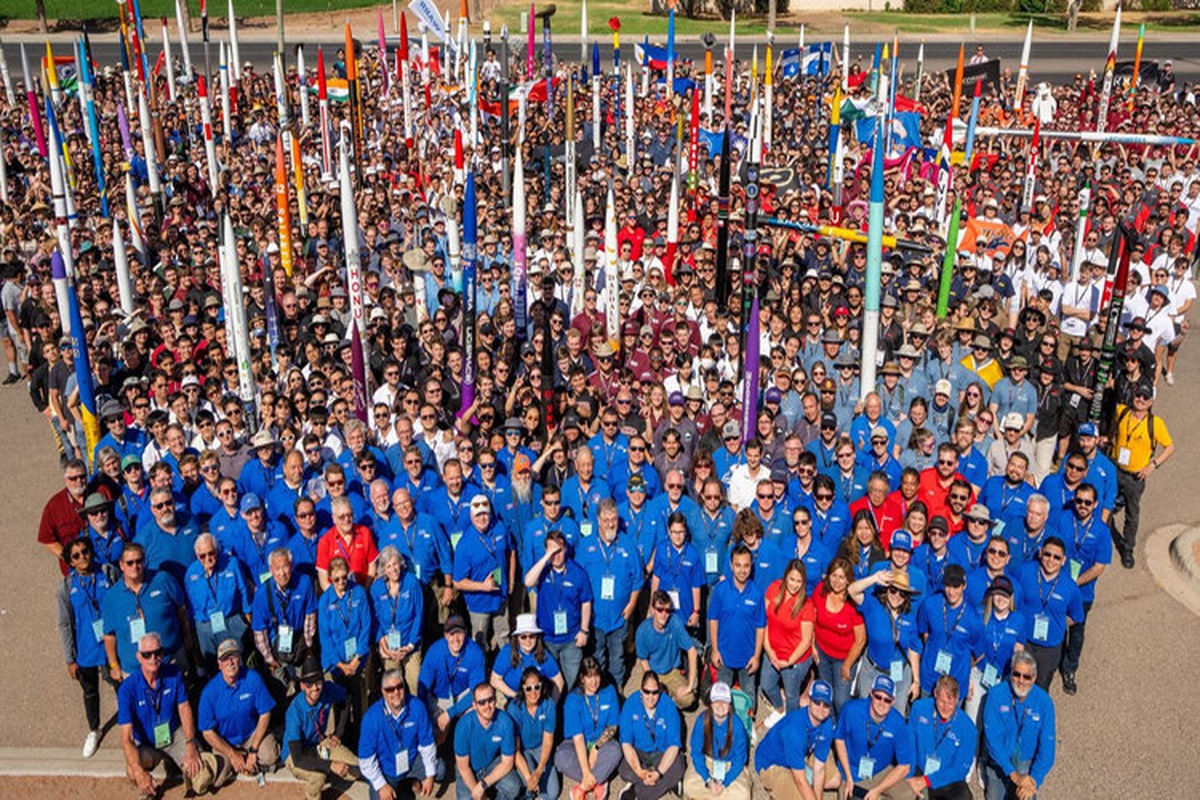
In June 2025, six teams from Brazilian public universities shone at the International Rocket Engineering Competition (IREC), held in Midland, Texas.
Organized by the Experimental Sounding Rocket Association (ESRA), the tournament is globally recognized as the largest in its category.
This edition featured more than 2,000 students and 185 teams from different countries.
-
Motorola launched the Signature with a gold seal from DxOMark, tying with the iPhone 17 Pro in camera performance, Snapdragon 8 Gen 5 that surpassed 3 million in benchmarks, and a zoom that impresses even at night.

-
Satellites reveal beneath the Sahara a giant river buried for thousands of kilometers: study shows that the largest hot desert on the planet was once traversed by a river system comparable to the largest on Earth.

-
Scientists have captured something never seen in space: newly born stars are creating gigantic rings of light a thousand times larger than the distance between the Earth and the Sun, and this changes everything we knew about stellar birth.

-
Geologists find traces of a continent that disappeared 155 million years ago after separating from Australia and reveal that it did not sink, but broke into fragments scattered across Southeast Asia.

Despite financial and technical challenges, Brazilian universities excelled in complex categories.
UFABC – (Federal University of ABC) clinched first place in the 10K Solid SRAD.
UFSC – (Federal University of Santa Catarina) achieved third place in the 30K SRAD category.
UERJ – (State University of Rio de Janeiro) was awarded for team spirit with the Nancy Squires Team Spirit Award.
These results marked a significant advancement compared to 2024.
That year, only two Brazilian teams managed to compete.
UFABC Wins with Rocket Developed by Students
The UFABC Rocket Design team from the Federal University of ABC made history.
After a hiatus since 2019, the group returned to IREC and secured first place in the 10K SRAD with solid motor category.
This unprecedented result in Brazil surpassed USP’s performance in 2024.
At that time, the university had placed second.
Lucas Fabrino, responsible for the team’s marketing, reported that the initial expectation was to reach the top 3.
When UFABC’s name didn’t appear among the top three, many thought they were out of the podium.
However, the surprise came with the announcement of the first place.
“When we saw ‘Team 302, Federal University of ABC’ on the screen, emotion took over,” he stated.
Even with a significantly lower budget than other teams, the students won one of the most demanding categories of the competition.
They fully developed the rocket engine, adhering to strict aerospace engineering standards.
This achievement reinforces the technical capability and commitment of Brazilian public universities to innovation.

UFSC Breaks Barriers and Shines in 9K Altitude Flight
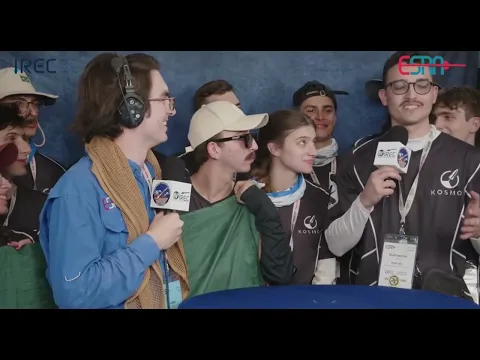
The Kosmos team from the Federal University of Santa Catarina also received international recognition.
They achieved third place in the 30K SRAD category.
The team was the first from the Southern Hemisphere to compete in this category.
According to José Roberto dos Santos, the team captain, the development of the rocket faced obstacles from conception to launch.
Still, the group’s dedication resulted in two unprecedented awards.
During testing, an explosion nearly compromised the project.
However, the team reacted quickly, secured funding, and improved the rocket with specialist assistance.
At the moment of launch, the university community stopped to watch.
Professors interrupted exams and laboratories suspended activities to follow the flight, streamed live in cinemas.
In addition to the podium, the team received the Team Sportsmanship Award.
The award recognizes the collaborative spirit demonstrated during the event.
UERJ, USP, UFJF, and IME Teams Also Make Their Mark and Innovate
The GFRJ team from UERJ was awarded the Nancy Squires Team Spirit Award.
The recognition highlighted the enthusiasm and support for other competitors.
“This achievement reinforces our passion for the aerospace sector,” commented the group.
The Projeto Júpiter team from the Polytechnic School of USP also played an important role.
Despite technical problems during the recovery of the rocket, they were the first to launch in the competition.
Moreover, they innovated with the use of an aerodynamic braking system known as “air brake.”
This system allowed for precise control of the flight altitude.
Supernova from the Federal University of Juiz de Fora (UFJF) presented the Machwave software, developed in Python.
The tool simulates motors with high statistical reliability.
The team was one of 25 selected from more than 150 for the Podium Session.
The session is a space reserved for the most significant innovations of the tournament.
The CEOS team from the Military Institute of Engineering (IME) participated with the Condor rocket.
The project was built with handmade parts and praised during the technical inspection.
The group had qualified in sixth place in the Latin America Space Challenge 2023.
Overcoming Technical, Legal, and Structural Barriers with Creativity and Persistence
Brazilian universities, despite advancements, faced numerous challenges to participate in the event in the USA.
Due to a lack of resources, coupled with legal restrictions and difficulties in importing specific materials, it was necessary to seek creative solutions.
For this reason, many teams opted for “sugar motor” type engines.
These engines, composed of potassium nitrate and sorbitol, became a viable alternative.
Moreover, they are more accessible and legally permitted in Brazil.
Although previously viewed with skepticism, these engines demonstrated reliable performance in the 2025 edition.
At the same time, students needed to seek funding through campaigns, raffles, and private partnerships.
Samuel Nascimento from the Projeto Júpiter team at USP highlighted that even with poor infrastructure, Brazilian growth was not hindered.
As a result, the country jumped from two teams in 2024 to six in 2025.
This growth, even in the face of adversities, highlights the national scientific potential.
Additionally, it reinforces the strength of Brazilian public education.
With the approval of the General Space Law in 2024, the country now has a regulatory framework for space activities.
This legislation, therefore, stimulates the participation of universities and companies in the sector.
In this way, it creates a more conducive environment for innovation.
Finally, the achievements of Brazilian teams at IREC 2025 demonstrate that, despite obstacles, Brazil is positioned to occupy a significant space in the international aerospace race.







Seja o primeiro a reagir!