





 Portuguese
  English
  Spanish
  6 min of reading
  2 comments


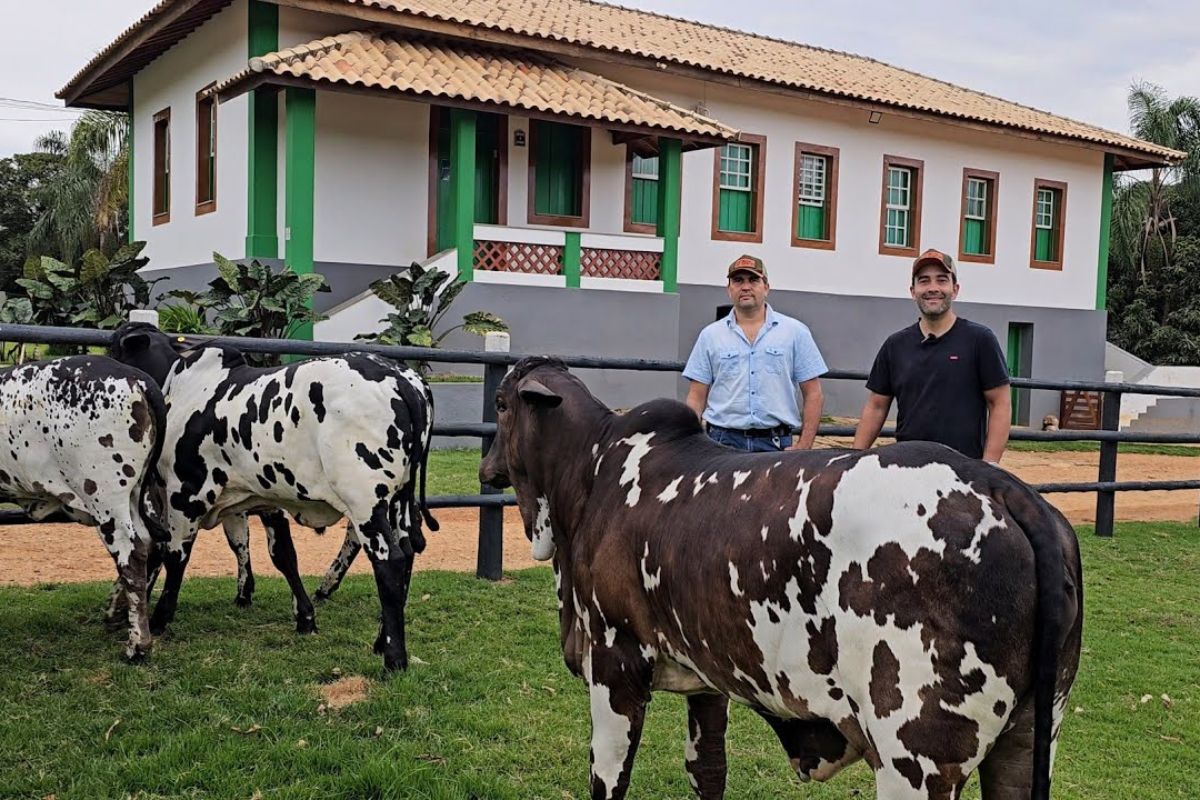


With a Preserved Century-Old History, the Farm Along BR-265 Uses Anti-Stress Pens, Painted Nelore Genetics, and Recipient Management to Transform 100 Hectares into a Technological Showcase, Producing Bulls, Matrices, and Auctions that Connect Tradition, Productive Efficiency, and Constant Valuation of the Arroba in a Strategic Region with Water and Solar Energy
The farm along BR-265 in Nepomuceno, in Southern Minas, attracts attention from those passing by the highway long before the pastures come into view. The old house with the date engraved on the facade, the well-kept lawn, the continuous stone wall, and the pen in sight tell, from afar, that tradition and business walk hand in hand in a project designed to last.
Behind this postcard landscape is a clear plan: to transform 100 hectares into a platform for Painted Nelore genetics, using reproductive technology, anti-stress management, and a privileged location to welcome clients, facilitate auctions, and consolidate the Nelore.100 brand as a regional reference in bulls, matrices, and young breeders.
From the Old House to the Genetics Project

When the current owners arrived, the farm along BR-265 was not the portrait it is today.
-
Agricultural drone sprayed poison into the air and destroyed the neighbor’s crops, causing 1 million in damages; 48 cows died from nitrite poisoning in the pasture, and Russia is hiding a possible outbreak of foot-and-mouth disease: the week was brutal for the rural sector.
-
Russia cut fertilizers, China cut fertilizers, and oil prices soared with the war in the Middle East: sugarcane producers in the interior of São Paulo are seeing costs explode from all sides and warn that the effects will take months to be absorbed.

-
It does not come from flowers, is produced only every two years, and more than 90% goes straight to Europe: meet the bracatinga honeydew honey from Santa Catarina, considered one of the rarest in the world and overlooked by Brazil itself.
-
They said no to 26 million dollars and would do it all over again: mother and daughter from Kentucky reject a million-dollar offer from a mysterious company that wants to build the largest data center in the state on more than 2,000 acres of rural land.


The large house stood, but the surroundings showed clear signs of neglect: old, deactivated dairy structures, a worn-down pen, a backyard overtaken by weeds, pastures in need of renovation.
The material heritage existed, but there was no living project to sustain it.
The family then decided to preserve what held memory and reconstruct what needed to be productive.
The house was restored, the roof replaced, the backyard cleaned and lawned, and the stone wall maintained as the historical frame of the main building.
In place of the old dairy equipment, new facilities focused on meat and selection were born: stalls, maternity, handling pen, formed paddocks, and a more functional operational headquarters for daily operations.
Why the Farm Along BR-265 Became a Natural Showcase

Being located along BR-265 is not just a geographical detail: it is part of the strategy.
The highway crosses the property, linking the interior of Minas to Fernão Dias and bringing the business closer to hubs like Belo Horizonte and São Paulo.
This facilitates client arrival, animal shipping, and brand recognition.
The showcase literally starts at the fence.
The pen and the paddocks closest to the main building were strategically positioned to leave lots of Painted Nelore visible to visitors at the farm along BR-265.
The producer has coffee on the porch while looking at the herd; the client parks the car and already observes carcass, pigmentation, and docility without needing to walk long distances.
The countryside becomes a permanent showroom.
Anti-Stress Pen: Management Designed for Cattle and the Team
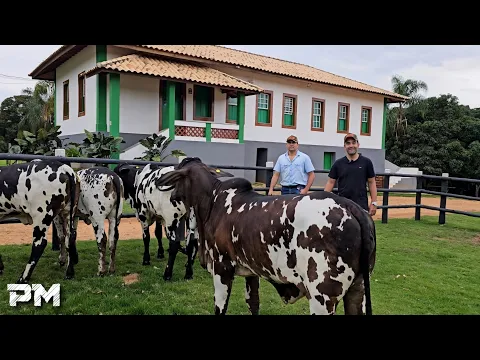

One of the central points of the project is the anti-stress pen, built from scratch to meet the new phase of the farm along BR-265.
The design prioritizes safety, continuous flow, and minimal visual interference from humans on the animals.
Those who work with the cattle move through elevated walkways, while the cattle follow closed corridors, unable to see the team during management.
The curved gates, non-slip flooring, and the integrated scale trunk allow weighing, vaccinating, inseminating, and embryo transfer to be done quickly and with less risk of accidents.
Instead of a prod or aggressive stick, guiding is done with flags and sound, reducing stress on the herd.
This management standard, aligned with the selected docility of the Painted Nelore, creates an environment where the cattle respond with less reaction and more predictability.
Stalls, Maternity, and Birth Control
Next to the pen, individual stalls accommodate heifers, calves, and females in strategic phases.
Some young animals stay in controlled handling, with feeders, automatic waterers, and weight gain monitoring, preparing for auctions or to join the main matrix nucleus.
In the maternity, the focus is on control. Each recipient enters the lot with an expected birth date marked on a tag and specific color.
Thus, the team knows which cows are days away from calving, monitors the birth, and ensures that the calf receives colostrum in the correct timing.
When there is any difficulty, support is immediate, reducing losses and preserving the value of each IVF or insemination product.
Genetics: Where the Painted Nelore of the Farm Comes From
The herd occupying the farm along BR-265 results from a combination of strategic purchases of matrices and internal herd building.
The reference base includes animals from specialized Painted Nelore breeders, combined with targeted acquisitions of females from established programs, like the main donor of the herd, Laia, purchased as an adult with a productive history.
From these matrices, the farm works with in vitro fertilization, embryo transfer, and insemination with outstanding bulls, many of them champions in the ring or leaders in economic traits.
The goal is simple and technical: each generation needs to be better than the previous one in terms of carcass, pigmentation, fertility, and maternal ability, without losing field hardiness.
Painted, Standard, and Economic Selection
The main focus is the Painted Nelore, both black and red, but the standard white Nelore also makes up the farm’s portfolio along BR-265.
In all cases, the internal rule is clear: reactive animals, difficult to handle, or with below-par performance enter the discard queue.
The selection prioritizes productivity and temperament, because the farm is both a genetic showcase and a business that needs to balance the books at the end of the month.
For the painted, the requirement is even higher.
The sought-after standard combines deep coloration, well-defined spots, and harmonious distribution of the pattern, without a speckled appearance.
As not all crosses between painted animals result in offspring with this ideal standard, a portion of births is discarded for selection, which explains why this type of genetics often carries a higher per-head value.
How 100 Hectares Gain Scale with Proper Management and Energy
The 100 hectares of the farm along BR-265 would be small for a traditional extensive system, but they become highly competitive when complemented with well-formed paddocks, quality water, and self-sufficient energy support.
Mombasa pastures, Tifton, and rotated areas allow sustaining PO matrices, recipients, and young breeders without overloading the area.
At the top of the property, the solar panel system powers the farm, wholesale, and the family’s supermarket, reducing fixed costs and softening the energy bill for equipment, pumps, and support structures.
The combination of value-added genetics with controlled operational costs is what practically turns 100 hectares into a valued asset, prepared to face price cycles of the arroba without losing competitiveness.
Auctions, Brand, and Long-Term Positioning
With the foundation in place, the farm along BR-265 began using auctions as a tool for exposure and herd turnover.
Offers of females, young bulls, and IVF products take the Nelore.100 brand to other regions of the country, while structured freight and the proximity to transportation hubs facilitate shipments and technical visits.
More than selling lots, the goal is to consolidate the image of a project that delivers genetics coherent with what it shows at the main gate: docile animals, well-managed, raised in anti-stress pens and organized pastures, with a clear history of origin.
Building this reputation is as important as the price of each animal sold at auction.
Preserved Tradition, Business in Constant Evolution
The result is an operation where the old house, the stone wall, and the orchard coexist with modern pens, functional stalls, solar panels, and an expanding Painted Nelore herd.
The farm along BR-265 keeps alive the memory of those who built the original headquarters but updates daily the way of producing meat and genetics in a compact and strategic area.
In the field, tradition only sustains itself when it generates cash, jobs, and value for the next cycle.
Projects that combine history, technical management, and market reading, like this farm along BR-265, indicate a possible path for small and medium producers who want to remain relevant in an increasingly competitive sector.
You, looking at your reality today, would you invest first in genetics, in pen infrastructure, or in well-formed pasture to turn your property into a more valued asset in the countryside?








Parabéns, sucesso, ficou linda a sede da fazenda!! Ainda de sobra o nelore pintado no piquete na frente da casa, CAPA DE REVISTA.
Gostei muito…muito capricho, muito atencioso o proprietário…parabéns. sucesso sempre, que a cada dia tenha um **** melhor.