





 Portuguese
  English
  Spanish
 5 min of reading
  8 comments


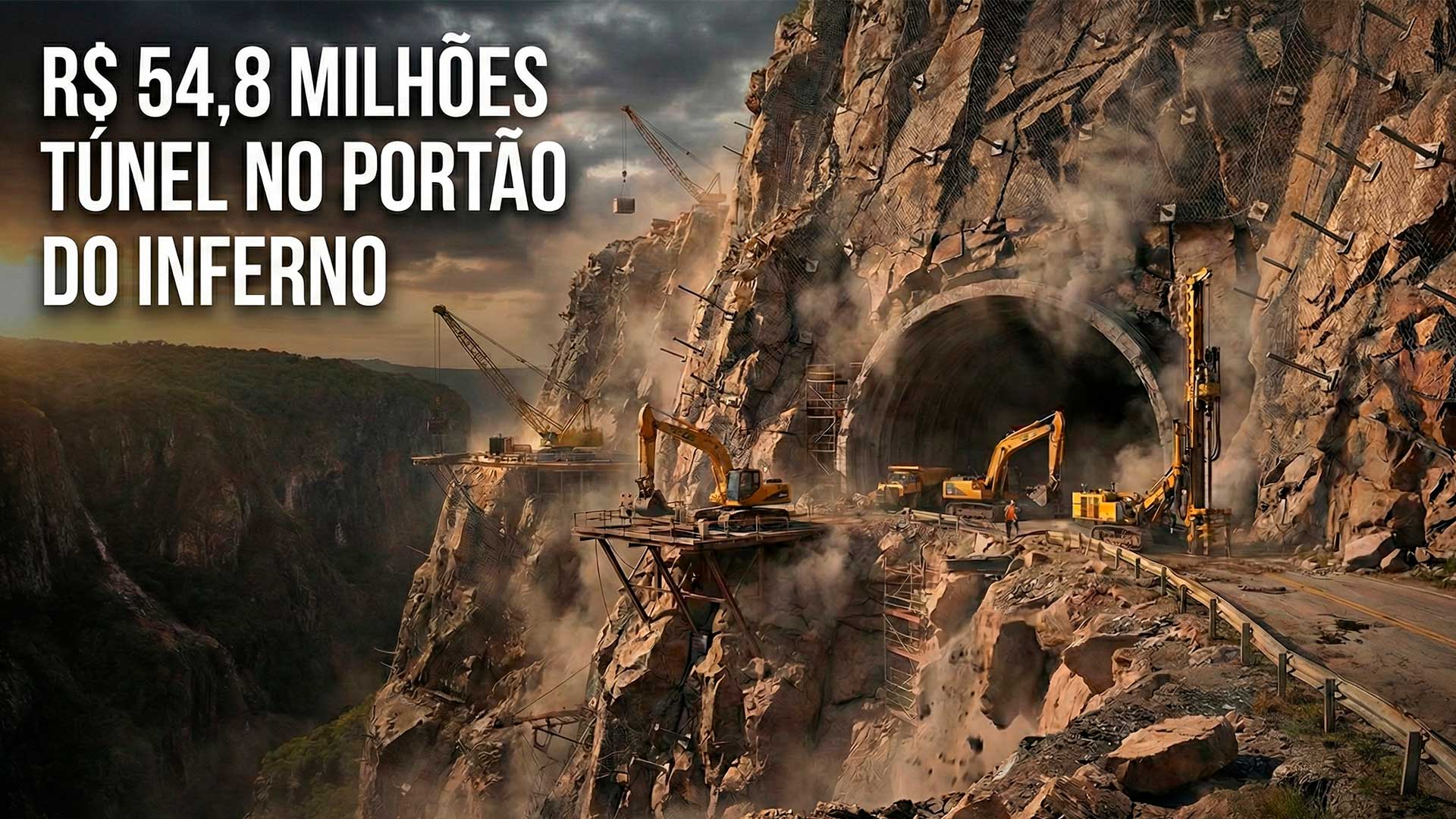


170-Meter Tunnel Project at Portão do Inferno on MT-251 Between Cuiabá and Chapada dos Guimarães Has Bid of R$ 54.8 Million Launched by Sinfra-MT and Promises More Safety and Less Environmental Impact
The State Secretary of Infrastructure and Logistics of Mato Grosso (Sinfra-MT) published on Friday, November 28, 2025, the bid to construct a 170-meter tunnel in the Portão do Inferno region on the MT-251 highway. The publication marks a new phase in the works of the most critical section of the mountains.
The project is estimated to cost R$ 54,838,507.45, with a total length of 513 meters when including access to the tunnel. The bidding opening is set for March 9, 2026, at 9 a.m., through the Government Procurement System (Siag) of the state of Mato Grosso, with the criterion of the lowest price.
The goal is to provide a definitive solution for the geological risks at Portão do Inferno, a section that records falls, tipping, and rolling of rock blocks. Stability studies indicated compromising of the mass and risk of structural collapse if nothing was done.
-
(Video): Italian pilot lands plane on moving train at 120 km/h and achieves unprecedented feat in aviation, even with a narrow runway and without direct visual contact.
-
It seems to have come out of a science fiction movie: A Brazilian city where it rains almost every day, recording over 4,000 mm per year, driven by climatic factors — a direct result of its strategic location in the Amazon.

-
The water crisis that could change everything this year has already begun; it’s not just about the climate, it affects technology, raises product prices, and can halt entire companies without warning.

-
A Japanese mason transforms raw granite into small cups and handcrafted utensils, collects giant stones, cuts with precision, and impresses with detailed manufacturing and finishing.

According to Sinfra-MT, the concrete-paved tunnel with a shoulder was chosen as it guarantees more permanent safety, less environmental impact, and reduced maintenance costs over time. Another advantage is the ability to maintain the flow of vehicles on the highway during the execution of the works, avoiding further isolation of the region.
What the Bid for the Tunnel at Portão do Inferno Says
The bid provides for the construction of a 170-meter dual-lane road tunnel, with rigid concrete paving and a shoulder. In total, including access, the project will have 513 meters on MT-020/251, in the section known as Portão do Inferno, on the border between Cuiabá and Chapada dos Guimarães.
The contract will be of the integrated type, a model in which the winning company is responsible for developing the basic project, the executive project, and executing all the works. The reference value is approximately R$ 54.8 million, and the projected timeline is 420 days for the physical execution of the works, with a total contract duration of 510 days after the service order.
The bidding will be conducted as an electronic public competition, via the Government Procurement System, the official state government purchasing platform. According to the published notices, documents such as the bid, terms of reference, and engineering drafts are available on the Sinfra-MT portal for consultation by interested companies and the public.
Geological Risk and Historical Interdictions on MT-251
Portão do Inferno has been in a state of maximum alert since 2023, when the government of Mato Grosso declared a state of emergency between kilometers 42 and 48 of MT-251 due to mass movement such as falling, tipping, and rolling of rock blocks. The decree authorized emergency interventions and containment works to reduce immediate risks to drivers.
In 2024, the section was fully closed during heavy rains, reinforcing the perception that the highway could not continue exposed to the unstable slope. Sinfra installed barriers, monitoring systems, and an electronic panel with a camera that provides real-time information on whether traffic is cleared, restricted, or blocked.
Nevertheless, the restrictions affect residents, tourists, and the flow of the local economy between Cuiabá and Chapada dos Guimarães.
Why the Tunnel Was Chosen as a Definitive Solution
Initially, the government advocated for the re-sculpting of the hill as a solution for Portão do Inferno, which would mean significant cuts in the slope and intense movement of soil and rock. With the advancement of geotechnical studies and the use of remote detection technologies and geophysical tests, technicians concluded in 2025 that the safest alternative would be the construction of a tunnel.
Environmental organizations and researchers warn that a large open cut could alter the landscape of Chapada dos Guimarães and exacerbate risks at other points on the slope. For these experts, aggressive interventions on the slope would increase the vulnerability of the section.
According to Sinfra-MT, the tunnel at Portão do Inferno offers greater permanent safety because it protects the road from blocks that may detach from the slope. The department also emphasizes that the solution reduces visual impact on the landscape, decreases the need for maintenance over the lifecycle of the works, and improves circulation conditions on MT-251 at any time of year.
Another argument made by the government is the ability to maintain the flow of vehicles during much of the construction, using the current alignment of the highway while the tunnel is excavated and structured. For those who rely on the road daily, this point is seen as critical to avoid another prolonged period of isolation.
MT-251 is the main link between Cuiabá and Chapada dos Guimarães National Park. For road safety experts, a protected corridor in the most critical section of the mountains tends to reduce accidents and interruptions due to landslides.
Expected Impacts, Bidding Timeline, and Public Inquiries
If the legal timeline is met and there are no resources that delay the competition, the expectation is that the contract will be signed after the session on March 9, 2026, and that the works will begin in the second half of that year. In practice, residents of Cuiabá, Chapada dos Guimarães, and tourists traveling on the Emanuel Pinheiro Highway (MT-251) may gain a safer route, with less risk of sudden closures due to rain and land slides.
The R$ 54.8 million project adds to more than R$ 10 million already spent on emergency interventions and project adjustments on MT-251, according to local reports on the project’s history. Critics point out that the delay in defining the solution and publishing the bid exposed drivers to risks for longer, while the state government argues that the caution is due to technical complexity and the requirements of licensing and public spending control.
Do you believe that the construction of the tunnel is the best solution to reconcile safety and environmental preservation in Chapada dos Guimarães? Leave your opinion in the comments and say if, in your view, this project resolves the problem or represents yet another infrastructure expense that should have been handled differently.





Melhor solução seria um viaduto!
Não acredito que o túnel seja viável. As rochas da,região são de arenito e não tem sustentação suficiente para se construir um túnel. É bem provável que os construtores terão surpresas e essa obra duplique de preço. É esperar para ver…
É uma vergonha. Por que não fazem uma cobertura de concreto como em montanhas no Chile? As pedras rolam por cima e caem no vale. Simples…mas querem gastar mais por que? Espaço pra desvio?