





 Portuguese
  English
  Spanish
  4 min of reading
  2 comments


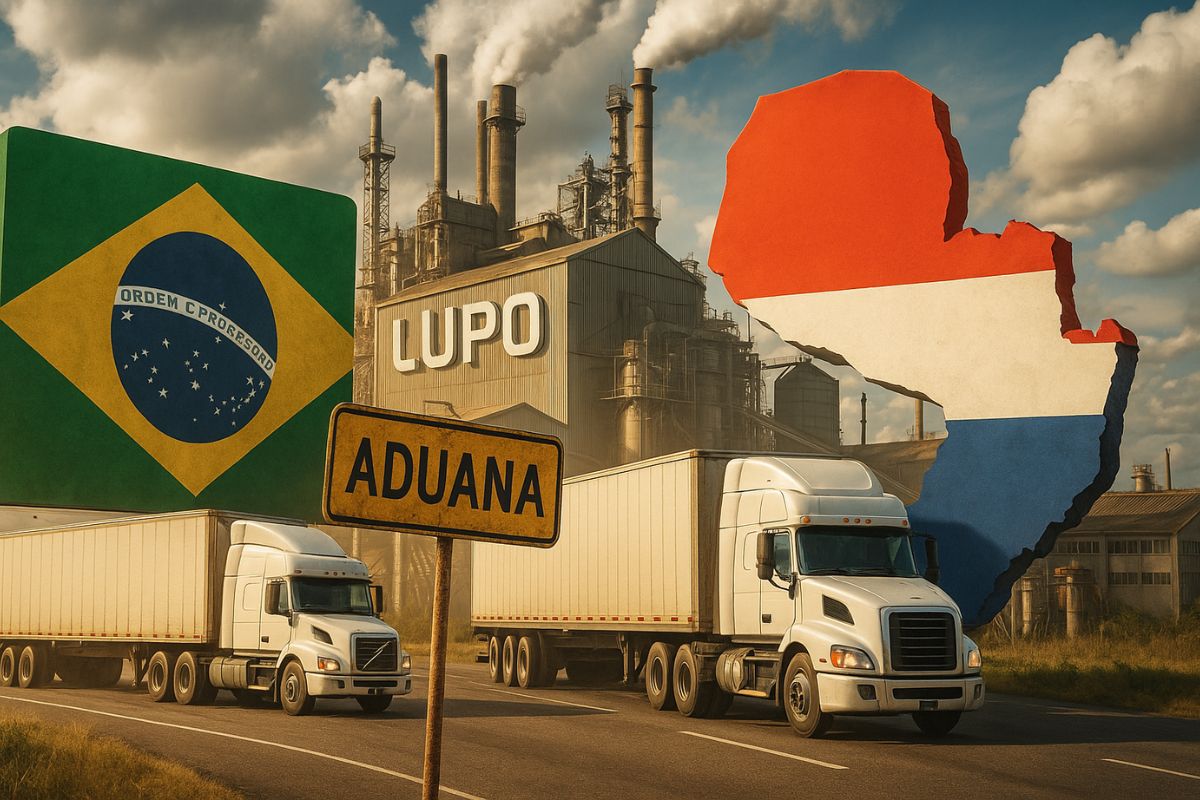


With an Investment of R$ 30 Million, Lupo Opens Factory in Paraguay in Ciudad del Este to Reduce the Burden of Brazilian Taxes, Face Competition from Asian Products, and Maintain Competitiveness in a Market Increasingly Pressured by Tax Costs.
The decision that Lupo opens a factory in Paraguay is not just an international expansion move, but a direct response to the Brazilian tax environment. The company’s president, Liliana Aufiero, summed up the situation by stating that it was not Lupo that simply chose to leave, but rather that Brazil pushed the company into Paraguay, referring to the drop in profitability after changes in the taxation rules for incentives linked to ICMS.
By establishing a plant in Ciudad del Este, the company operates in a context where costs are about 28% lower, which helps protect margins and sustain a robust production plan. The new factory received R$ 30 million in investments, employs about 110 people, and has the capacity to produce up to 20 million pairs of socks per year, reinforcing the brand’s role as a reference in socks and intimate apparel in South America.
Why Lupo Opens a Factory in Paraguay to Maintain Competitiveness

The CEO’s statement summarizes the internal diagnosis: taxes were “eating away at the operation violently”, gradually reducing profit margins in Brazil. The approval of Law 14.789 of 2023, which changed the way tax incentives granted by states for ICMS are taxed, was a turning point.
-
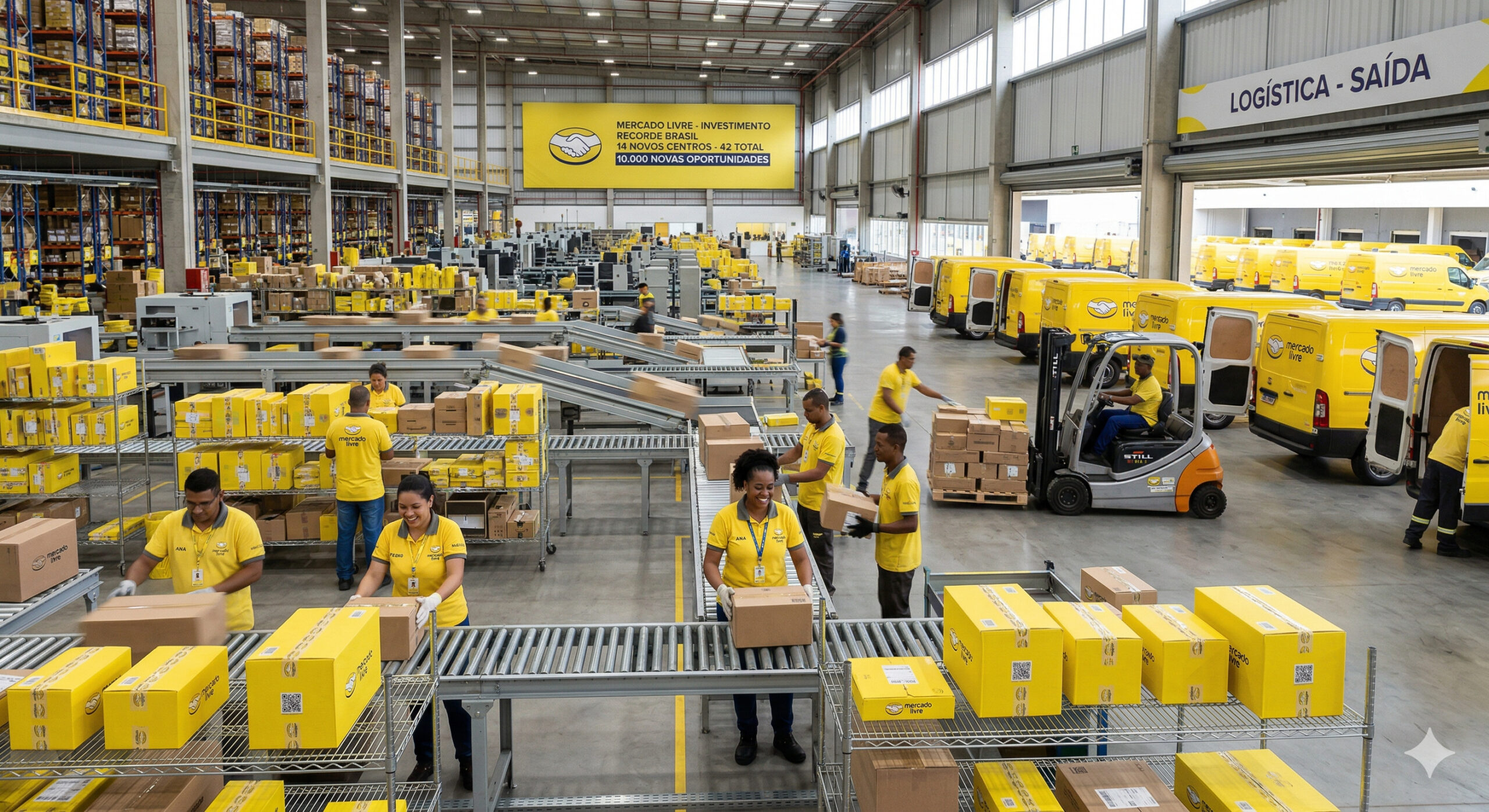
Mercado Livre “opens the vault” and announces a record investment of R$ 57 billion in Brazil in 2026, a value 50% higher than the previous year, with an expansion plan that includes 14 new logistics centers, totaling 42 units in the country and hiring an additional 10,000 employees.
-
How investment in technology can revolutionize the national economy and enhance industrial gains, according to a study that highlights the direct impact on productivity, innovation, and wealth retention within Brazil.

-
The largest food company on the planet, JBS, has just opened a 4,000 square meter laboratory in Florianópolis to develop customized proteins that modulate muscle mass gain, immune response, and metabolic performance.

-
After nearly 30 bids and competition among industry giants, a Spanish company purchases one of the largest airports in Brazil for almost R$ 3 billion and takes over the management of Galeão in a concession that will last until 2039.


In practice, this meant that regional benefits that helped balance industrial costs lost strength, putting pressure on production-intensive companies, such as Lupo.
In a sector where the final price is decisive for the consumer, maintaining the same production structure only in Brazil meant competing in the market with less breath against competitors with cheaper bases.
How the New Lupo Plant in Ciudad del Este Works
The factory opened in June in Ciudad del Este is Lupo’s first production unit outside Brazilian territory. The plant was designed to produce up to 20 million pairs of socks per year, a volume sufficient to significantly impact the brand’s supply in the region.
With about 110 employees, the new unit is part of a broader industrial network that includes five factories in Brazil, three distribution centers, and a network of 911 franchises, in addition to nine-owned stores.
The strategy is to use the Paraguayan plant as a production reinforcement in a place where costs are lower, without giving up the headquarters and historical base in Araraquara, São Paulo.
Law 14.789 and the Pressure of Taxes on the Textile Industry
The decision that Lupo opens a factory in Paraguay is directly linked to Law 14.789 of 2023, which altered the rules for taxing state tax incentives for ICMS.
For an industry with high volume and tight margins, any change in tax treatment shifts the viability calculation.
According to Liliana Aufiero, profits began to decline precisely after changes in the rules, highlighting that the combination of high taxes and loss of regional incentives reduced the margin for error.
In this scenario, seeking a less aggressive tax environment in the neighboring country became not just an opportunity, but almost a necessity to maintain investments, jobs, and competitiveness.
Asian Competition and the Price Competition in the Brazilian Market
Besides the burden of taxes, another factor weighed in on the decision: direct competition from a socks factory managed by a Chinese businessman in Paraguay, which sends products to the Brazilian market at lower costs.
Liliana made the strategic reasoning clear. If a competitor can sell in Brazil without investing in brand, local operation, and equivalent structure, yet still reaches the consumer with competitive prices, Lupo needed to access similar cost conditions to avoid losing market share.
The reading is straightforward: to face Asian competition, it was necessary to approach the same structural advantages, including cheaper energy and taxes.
What Changes for Lupo’s Operation in Brazil
Even with the new factory abroad, the Brazilian structure remains the heart of the company. Based in Araraquara, Lupo maintains its five factories, three distribution centers, and 911 franchises spread across the country, in addition to nine-owned stores.
The company employs about 9,000 people and reported revenues of R$ 1.85 billion in 2024, consolidating its position as the leader in socks and a strong reference in intimate apparel.
The move toward Paraguay, therefore, does not represent abandonment of Brazil, but rather reorganization of the cost map to enable future growth.
By lowering part of the production costs, Lupo creates room to continue investing in brand, innovation, and franchise network in the Brazilian market, which remains its main sales destination.
Lupo Opens a Factory in Paraguay and Prepares Leadership Transition
While Lupo opens a factory in Paraguay and reorganizes its industrial strategy, the company is also undergoing a leadership transition. Liliana Aufiero, granddaughter of founder Henrique Lupo, is set to pass the leadership to the current vice president, Carlos Alberto Mazzeu.
This change is occurring at a time when the company combines international expansion, tax pressure, and competitive challenges.
The new management will have the mission to balance tradition and adaptation, preserving the identity of a century-old brand while operating in more than one country, with vastly different cost structures.
In light of this scenario, one question remains: do you believe that movements like Lupo’s, opening a factory in Paraguay to reduce costs, are an inevitable exit for the Brazilian industry, or should they serve as a warning for an urgent review of the business environment in Brazil?








Uma indústria abrir em outro país buscando economia e mão de obra barata sempre aconteceu e sempre acontecera, a Lupo detém várias marcas como a Trifil e a Hang Loose entre outras e faz tempo q cresceu muito e extrapolou as dividas do país, muitas cm ela de outros países já vieram para o Brasil pelo mesmo motivo,p os tempos mudam e o Brasil hj tá em outro patamar, qto a imposto no Paraguai sempre foi baixo nem por isso as empresas
” debandaram” pra lá.
É óbvio que com nossos governantes e políticos atuais o empresário irá cada vez mais buscar alternativas. Vocês estão presenciando o assassinato da galinha de ovos de ouro. Confiram