





 Portuguese
  English
  Spanish
 6 min of reading
  1 comment


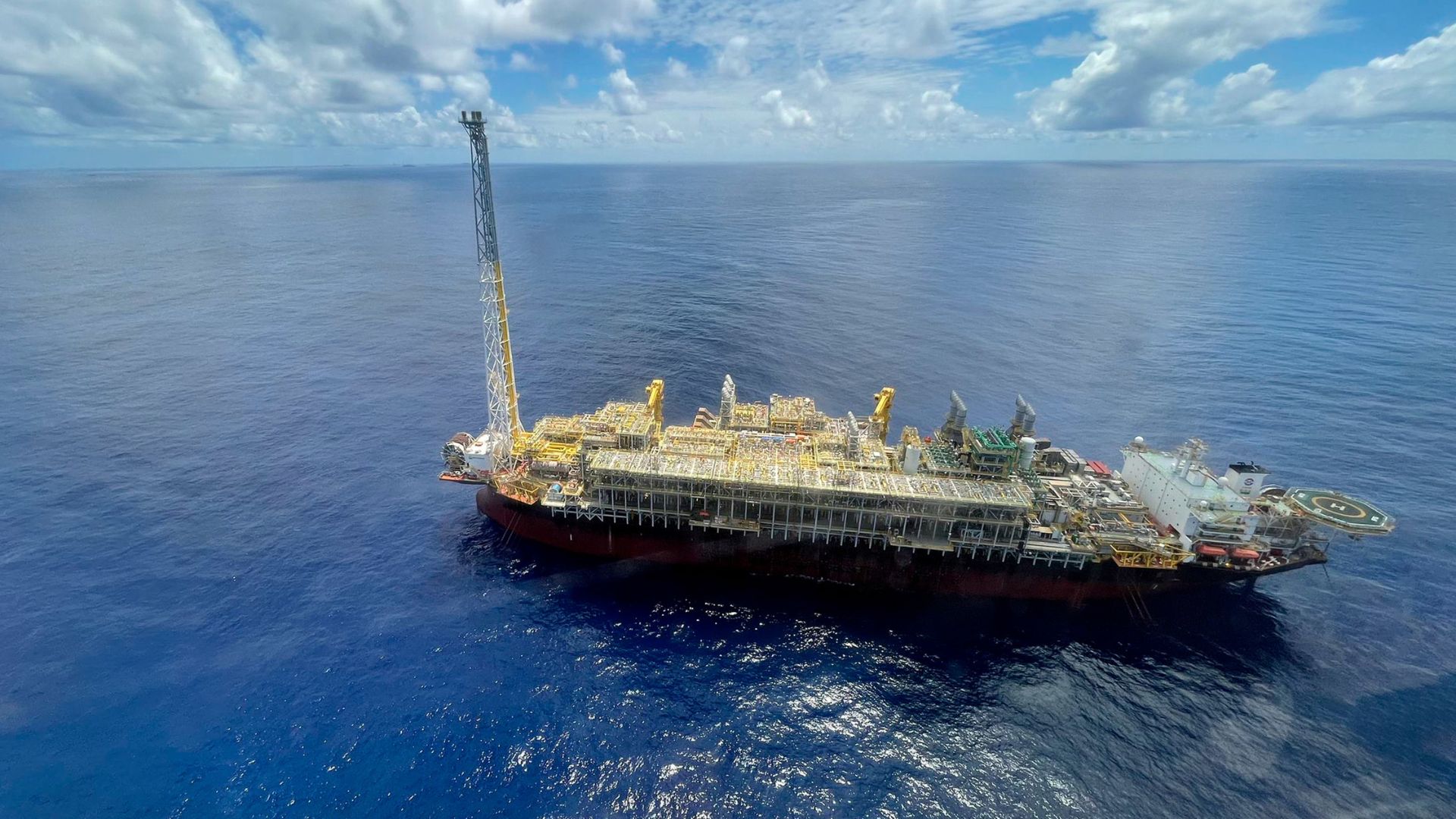

Petrobras Announces New Investment in Science and Artificial Intelligence to Study the Mero Field in the Pre-Salt and Develop Technologies to Increase Efficiency in Oil Exploration.
Petrobras has announced a new strategic investment aimed at technological advancement in oil exploration in the Mero Field, one of the company’s main sites in the Brazilian pre-salt. According to an article published by Petrobras itself on March 3rd, the initiative, developed in partnership with Brazilian universities, aims to apply advanced science and artificial intelligence to enhance reservoir analysis and increase the productive potential of the region.
Petrobras Project to Receive Investment of R$ 151 Million
The project, named Libra Rocks, aims for an investment of R$ 151 million in cutting-edge technologies, geological models, and scientific equipment. The proposal is to transform the way reservoirs in the Mero Field are analyzed, combining modern science techniques with systems based on artificial intelligence.
According to Petrobras, the initiative can directly contribute to increasing the oil recovery factor in the pre-salt, in addition to improving reservoir management efficiency. The project also strengthens Brazil’s role as a global reference in offshore deep-water exploration.
-
Petrobras evaluates suspension of sales to distributors and considers canceling the cooking gas auction following guidelines from the Federal Government.
-
Lula reveals a masterstroke by Petrobras to undo a deal made by Bolsonaro, which involves the return of an important refinery that currently produces less than half of what was expected and makes Brazil dependent on international diesel.
-
A study confirms that the natural gas sector will reduce greenhouse gas emissions in Brazil by 0.5% and accelerate the energy transition by 2026.

-
Petrobras implements a severe adjustment and confirms a 55% increase in the price of aviation kerosene with a proposal for installment payments for the companies.


The initiative involves universities such as University of Brasília (UnB), Federal University of Paraná (UFPR), and Pontifical Catholic University of Rio Grande do Sul (PUC-RS). The project is expected to last four years and aims to transform the scientific approach applied to oil exploration in the Mero Field.
Mero Field in the Pre-Salt Takes Center Stage in Petrobras’ Technological Strategy
The Mero Field is located in the area of the Libra block, in the Campos Basin, and is considered the third largest field operated by Petrobras in the pre-salt region. The area has great strategic relevance for the company, as it concentrates reservoirs with high productive potential.
The new investment seeks to expand knowledge about the geological characteristics of the field. By applying science and artificial intelligence, researchers aim to develop more detailed models of the carbonate rocks present in the region.
The reservoir of the Mero Field is located between 5,000 and 6,000 meters below sea level, with water depths varying between 1,800 and 2,000 meters. These conditions require sophisticated technologies to ensure efficient and safe exploration.
In this context, Petrobras bets on the integration of scientific research and technological innovation to enhance operations in the pre-salt. The goal is to reduce geological uncertainties and improve oil production planning. The strategy also reinforces the importance of ongoing investment in innovation to keep Brazil among the global leaders in offshore exploration.

Science Applied to the Pre-Salt Seeks to Understand the Origin and Structure of Reservoir Rocks
One of the central focuses of the Libra Rocks project is to deepen scientific knowledge about the carbonate rocks present in the Mero Field. These geological formations are responsible for storing the oil found in the pre-salt.
The rocks in the region originated approximately between 125 million and 113 million years ago during the geological separation process between the continents of South America and Africa. Since then, they have undergone different transformations that directly influence how oil accumulates in the reservoir.
The science applied to the study of these rocks aims to understand fundamental aspects such as the origin, composition, and structure of the geological formations. It also analyzes important elements for exploration, such as the distribution of pores — empty spaces within the rocks — and permeability, which represents the ability to allow fluid passage.
With the new investment, Petrobras aims to deepen this knowledge through advanced laboratory studies and the construction of more accurate geological models. This information is essential for improving the understanding of reservoir behavior in the Mero Field and optimizing production strategies in the pre-salt.
Artificial Intelligence in the Mero Field Can Accelerate Analysis of Complex Geological Data
One of the project’s main differentiators is the use of artificial intelligence to automate the processing of geological data obtained during exploration in the Mero Field. The analysis of reservoirs in the pre-salt involves large volumes of geological, seismic, and petrophysical information. Interpreting this data manually can be a complex and time-consuming process.
With the new investment, Petrobras intends to develop algorithms capable of identifying patterns in the data and generating more detailed conceptual models of the carbonate rocks in the Libra area. Artificial intelligence could help accelerate the interpretation of this information, allowing researchers to identify important reservoir characteristics more quickly and accurately.
Additionally, the application of computational science allows for analyzing the rocks of the Mero Field through methods different from those currently used. This may reveal new information about reservoir behavior and expand the productive potential of the pre-salt. The use of these technologies also helps reduce uncertainties in Petrobras‘ operational decisions, making production planning more efficient.

Petrobras Investment Strengthens Scientific Cooperation with Brazilian Universities
Another central point of the Libra Rocks project is the partnership between Petrobras and Brazilian academic institutions. The investment includes the participation of over 150 people from the universities involved in the project.
Among the participants are researchers, professors, and students dedicated to the scientific study of the rocks and reservoirs of the Mero Field. The program also includes the granting of academic scholarships at different levels of education, including scientific initiation, master’s, doctorate, and post-doctorate.
This integration between industry and university strengthens the development of science applied to the energy sector. At the same time, it contributes to training professionals specialized in strategic areas such as geology, petroleum engineering, and artificial intelligence.
For Petrobras, this type of investment in scientific research is essential to maintain technological leadership in pre-salt operations. Collaboration with universities also allows for increased access to laboratories, advanced equipment, and cutting-edge scientific knowledge.

International Consortium Led by Petrobras Operates the Mero Field
Operations in the Mero Field are conducted by an international consortium led by Petrobras. In addition to the Brazilian company, major global energy sector players are involved in the project. Among the partners are Shell Brasil, TotalEnergies, CNPC, CNOOC, and PPSA (Pré-Sal Petróleo S.A.), the state-owned company responsible for managing the sharing contracts of the pre-salt.
The cooperation between these companies allows for sharing technical knowledge, infrastructure, and offshore exploration experience. The new investment in science and artificial intelligence also benefits all consortium members, as the developed technologies can be applied in other areas of the Brazilian pre-salt.
This type of international partnership is common in large-scale projects in the oil industry, especially in complex fields like the Mero Field. In addition to expanding Petrobras‘ technological capacity, the collaboration strengthens Brazil’s position in the global energy production landscape.
Libra Rocks Project May Redefine the Way Reservoirs are Studied in the Brazilian Pre-Salt
The Libra Rocks project represents an important step in the technological evolution of oil exploration in Brazil. By uniting science, artificial intelligence, and a robust investment, Petrobras aims to transform the way reservoirs in the Mero Field are studied.
With more detailed geological models and automated data analysis systems, researchers will be able to better understand the characteristics of the carbonate rocks present in the pre-salt.
This advancement may contribute to increasing the oil recovery factor, improving reservoir management, and making operations more efficient. At the same time, the project strengthens national scientific production and expands the training of specialists in strategic areas for the energy sector.
For Petrobras, the investment in science and artificial intelligence represents not only technological innovation. It is also a strategy to ensure greater efficiency in exploring the Mero Field and to consolidate Brazil as a global reference in pre-salt production.






*universidade TECNOLÓGICA federal do paraná…. UTFPR e UFPR não são a mesma instituição