





 Portuguese
  English
  Spanish
  5 min of reading
  0 comments


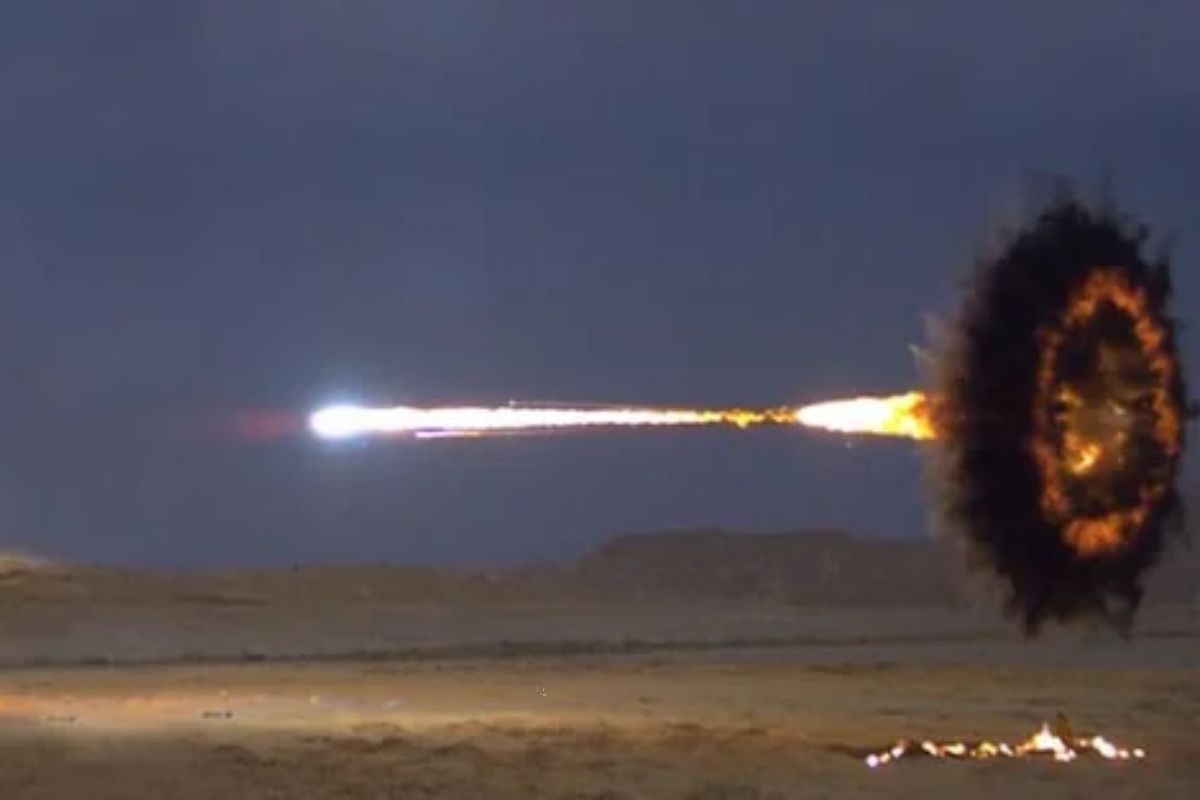
With Hypersonic Jets Cutting Through Armor Like Butter, Modern Missiles Challenge Tanks and Expose the Limits of Protection Based Only on Armoring, Even with Reactive Layers and High-Cost Solutions
The tanks were for decades the ultimate symbol of ground strength, designed to advance under heavy fire and survive where other vehicles do not. Thick armor, powerful engines, and concentrated firepower defined the role of these giants in virtually all modern conflicts.
Now, however, the equation is changing. Portable anti-tank missiles, shaped charge warheads, and top attack have turned the task of protecting tanks into an increasingly complex challenge. Even with composite armors and explosive reactive modules, hypersonic metal jets can pierce the protection and incapacitate the vehicle in seconds, calling into question the cost-effectiveness of these heavy systems.
From Tank Evolution to Advancement of Anti-Tank Weapons

Since tanks emerged in World War I, the response came almost immediately: weapons dedicated to piercing armor.
-
From sertanejo star to international investor: Ana Castela invests millions in a mansion in the USA, creates a themed accommodation in Orlando, and shows that the “boiadeira” also wants to grow away from the stage.

-
The 10 most stunning motorhomes in the world: a $3 million trailer with a rooftop nightclub and garage for a Ferrari, “palaces on wheels” with Italian marble, private cinema, and five-star hotel luxury for billionaires.

-
Trump wanted to spend $400 million on the White House, but the courts prohibited the million-dollar construction.

-
How the Egyptians erected giant structures like pyramids, temples, and obelisks without modern technology, cranes, or engines still amazes the world and reveals the power of engineering based on ramps, levers, ropes, and colossal organization.


First came anti-tank rifles and cannons, which relied on the kinetic energy of high-velocity steel projectiles.
The industry reacted with thicker plates, and the arms race escalated.
The problem is that increasingly larger cannons became too heavy for infantry.
The solution was to shift some of the lethality to portable systems: grenades, launchers, and shoulder-fired rockets.
The principle shifted from “heavy projectile” to “smart charge”, capable of transforming chemical explosive into an extremely concentrated jet designed to defeat tanks.
What Makes Tanks So Difficult to Protect Today

Thick frontal armor no longer responds on its own to today’s threats. Modern tanks need to deal with at least three problems simultaneously:
Side and rear attacks, where the armor is usually thinner
Top attacks, targeting the roof of the turret, traditionally the most vulnerable point
Tandem warheads, designed specifically to deceive or destroy the reactive armor before hitting the main structure
At the same time, there is an obvious physical and logistical limitation.
You cannot endlessly add armor, because the extra weight impacts mobility, fuel consumption, maintenance, and even bridge and logistics capability.
In other words, protecting tanks has become more difficult due to the enemy and because of the engineering constraints themselves.
Shaped Charges: The Jet That Pierces Armor
The secret of modern weapons against tanks lies in the so-called shaped charge.
On the outside, the rocket or missile looks like a common projectile. Internally, the warhead is precisely sized:
High-powered explosive
A metal coating in a cone or cavity shape
Calculated detonation to form a jet of metal particles at hypersonic speed
When the warhead hits the target and detonates, it’s not the “fireball” that defeats the tank, but rather this collimated, extremely narrow jet that behaves like a liquid metal lance. It concentrates energy in a tiny area, enough to penetrate several times the diameter of the warhead itself in armored steel.
It is this principle that allows a relatively light missile to carve a path through the armor, impact internal ammunition, electronic systems, and crew. The result is the complete neutralization of the vehicle, even when the hull appears to have suffered limited external damage.
Why Reactive Armors Are No Longer Enough
To try to contain this type of threat, explosive reactive armors emerged, those metal blocks mounted on the outer surface of many tanks.
Each block works like a small “sandwich” of metal and insensitive explosive, which only detonates under a strong shockwave.
When a projectile hits the reactive module, the detonation displaces the metal plates at high speed, diverting or degrading the jet from the shaped charge, increasing the effective distance to the main armor and reducing penetration capability.
In first-generation threat scenarios, this solution significantly increased tank survival.
But next-generation missiles, like those using tandem warheads and top-attack profile, directly exploit this system.
The first explosive triggers and “consumes” the reactive armor, clearing the way.
The second part of the warhead is then fired against the tank’s structural armor, now without the additional protection.
The result is that even tanks surrounded by reactive modules can be pierced, especially when attacked from less protected angles or from above, where there are often fewer layers of physical protection.
Active Protection Systems: Intercept Before Impact
Given the limits of passive armor and reactive armor, the current trend is to invest in active protection systems.
Instead of just resisting impact, these systems attempt to prevent the projectile from reaching the armor.
The principle is relatively simple, although the execution is complex:
Sensors and radars monitor the vehicle’s surroundings
Threats are detected and classified in fractions of a second
A counter-missile or fragmentation charge is fired to neutralize the projectile in flight
In practice, it’s like placing a dynamic “shield” around the tanks, capable of destroying rockets and missiles before the main warhead arms at the correct distance.
This type of system has already shown efficiency against some direct trajectory threats.
The challenge arises when missiles that attack from above, like top-attack profile ones, come into play, with more complex trajectories and difficult-to-track signatures.
In saturation scenarios, with multiple near-simultaneous launches, the system’s response capacity is pushed to the limit, increasing the risk of at least one missile managing to reach the target.
Tanks, Cost, and the New Balance of the Battlefield
One point that intensifies the debate is cost. A modern tank can cost millions of dollars, not counting the active protection system, operational logistics, training, and maintenance.
On the other hand, portable missiles cost a fraction of that amount and can be operated by small, dispersed, and relatively cheap teams.
From an economic and tactical perspective, the balance seems to tilt increasingly towards infantry equipped with smart weapons, especially in environments with plenty of cover, urban centers, and rugged terrain, where the tank loses some range and visibility advantage.
Does this mean tanks are obsolete? Not yet. They remain relevant in specific functions, such as:
Heavy and mobile fire platforms to support ground troops
Shock elements in offensive operations
Core components of armored formations in open terrain
But the message from the modern battlefield is clear. Isolated tanks, without integration with drones, intelligence, air defense, and active protection, become expensive and vulnerable targets.
The trend points to fewer, better-protected platforms integrated into complex networks of sensors and support.
In the end, protecting tanks has become a systems problem, not just a steel issue.
Material engineering, embedded electronics, detection software and employment tactics now matter as much as the thickness of the armor.
In light of all this, do you think that tanks will still have a central role in future wars or tend to be replaced by smaller vehicles, drones, and smart missiles?








-

Uma pessoa reagiu a isso.