





 Portuguese
  English
  Spanish
  8 min of reading
  3 comments


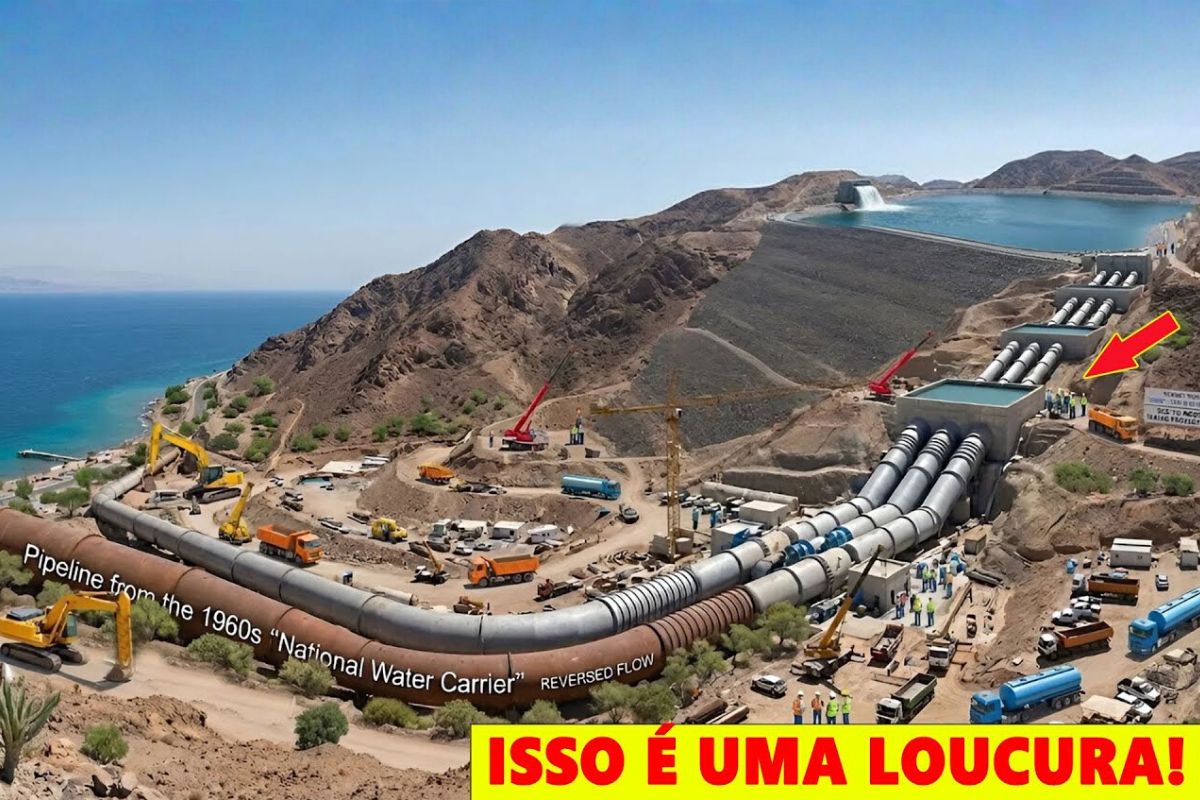


As the Kineret Threatened to Cross the Black Line and Turn into an Irreversible Salt Lake, Israel Bets on a Megaproject That Reverses the National Water System, Pulls the Mediterranean Up the Mountain, and Creates Water Autonomy in the Desert with Desalination, Energy Recovery, Sewage Reuse, and Autonomous Agricultural Robots
In the Middle East, where a wrong decision about water can determine the future of an entire country, Israel came dangerously close to the point of no return. The Kineret lake, the only large natural freshwater reservoir surrounded by deserts and saltwater, plummeted to the red lines and almost touched the black line, the threshold at which underground salt would invade the lake and turn it into a dead reservoir. Faced with the threat of seeing its main strategic stockpile collapse, the country decided to bet on a megaproject that many considered impossible: pumping seawater up the mountain to save a lake in agony.
Instead of waiting for the rain that never came, Israel built a system that starts at gigantic desalination plants on the Mediterranean coast, passing through tunnels and pipelines that scale mountain ranges, uses equalization reservoirs like Tsalmon, and connects to an inverted national system capable of making water flow backward. In parallel, the country set up a reuse machine that recycles about 90 percent of the sewage and supports agriculture based on drip irrigation, sensors, and pollination and harvesting robots. The result is an artificial water ecosystem, expensive, complex, and highly efficient, created so that the Kineret never reaches the brink of death again.
When the Kineret Almost Crossed the Black Line

For decades, the Kineret carried an disproportionate burden on its own.
-
Italian researchers have detected what appears to be a second Sphinx buried under the sands of Egypt, and satellite scans reveal a gigantic underground megastructure hidden beneath the Giza Plateau for over 3,000 years.

-
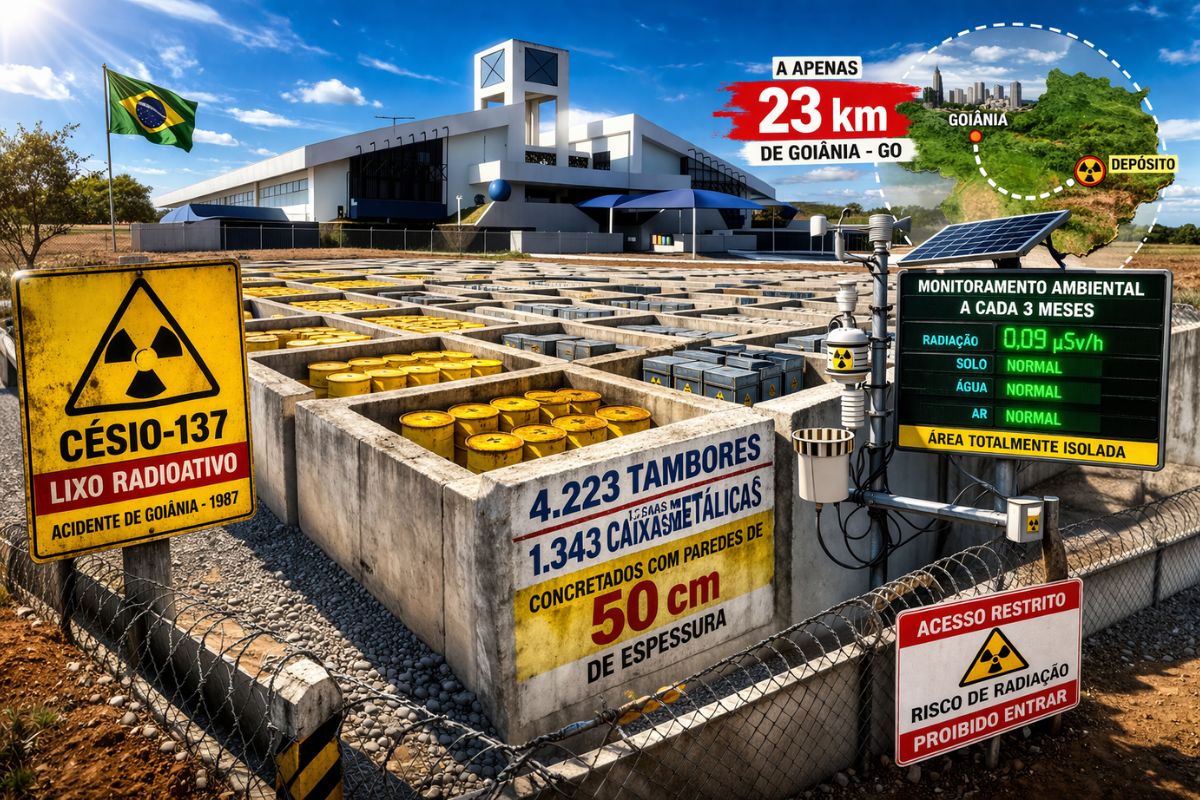
There are 4,223 drums and 1,343 metal boxes concreted with 50-centimeter walls that store the radioactive waste from Cesium-137 in the worst radiological accident in Brazil, just 23 kilometers from Goiânia, with environmental monitoring every three months.
-
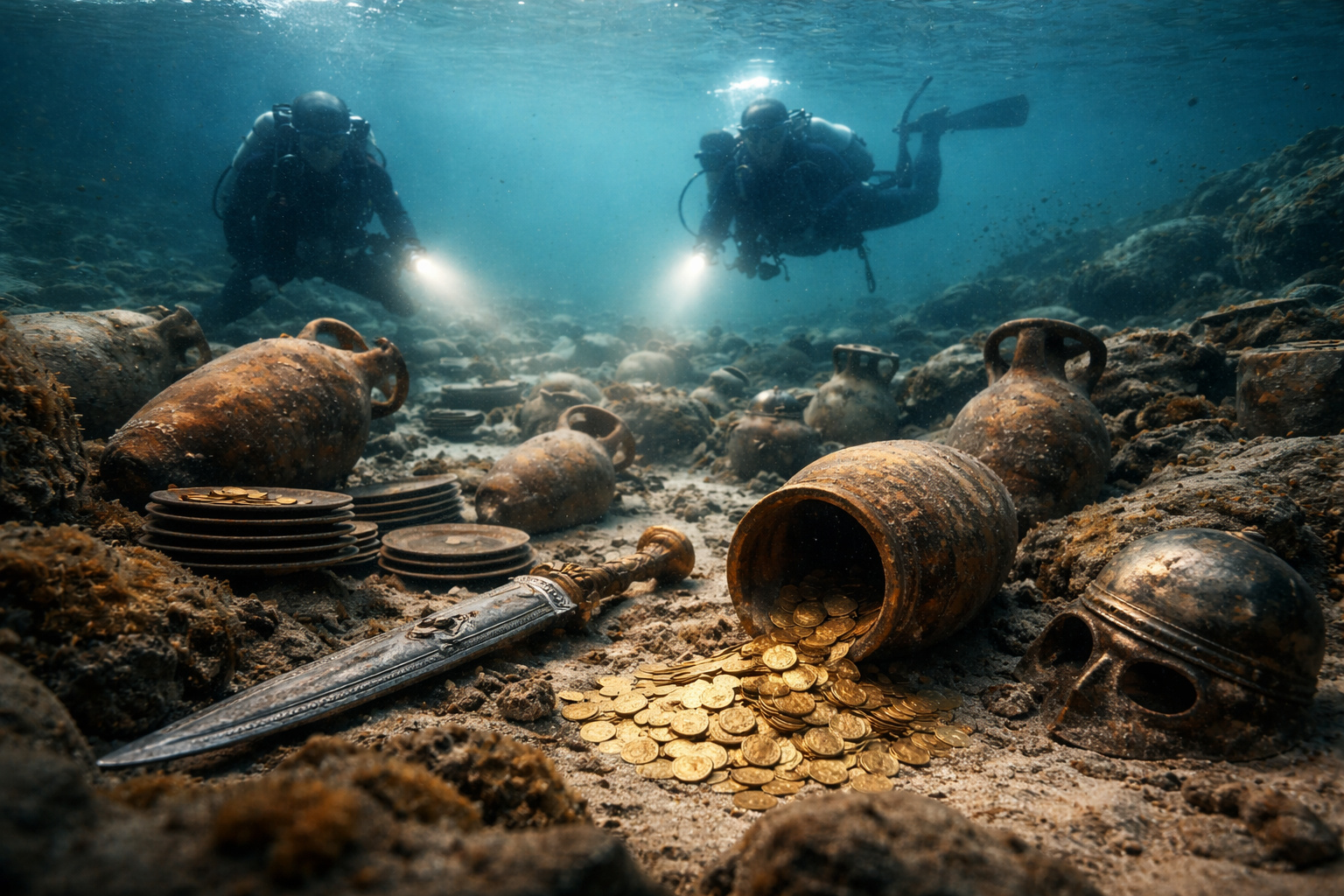
Giant Roman treasure found at the bottom of Lake Neuchâtel in Switzerland reveals an advanced trade system, circulation of goods, and armed escort in the Roman Empire about two thousand years ago.
-
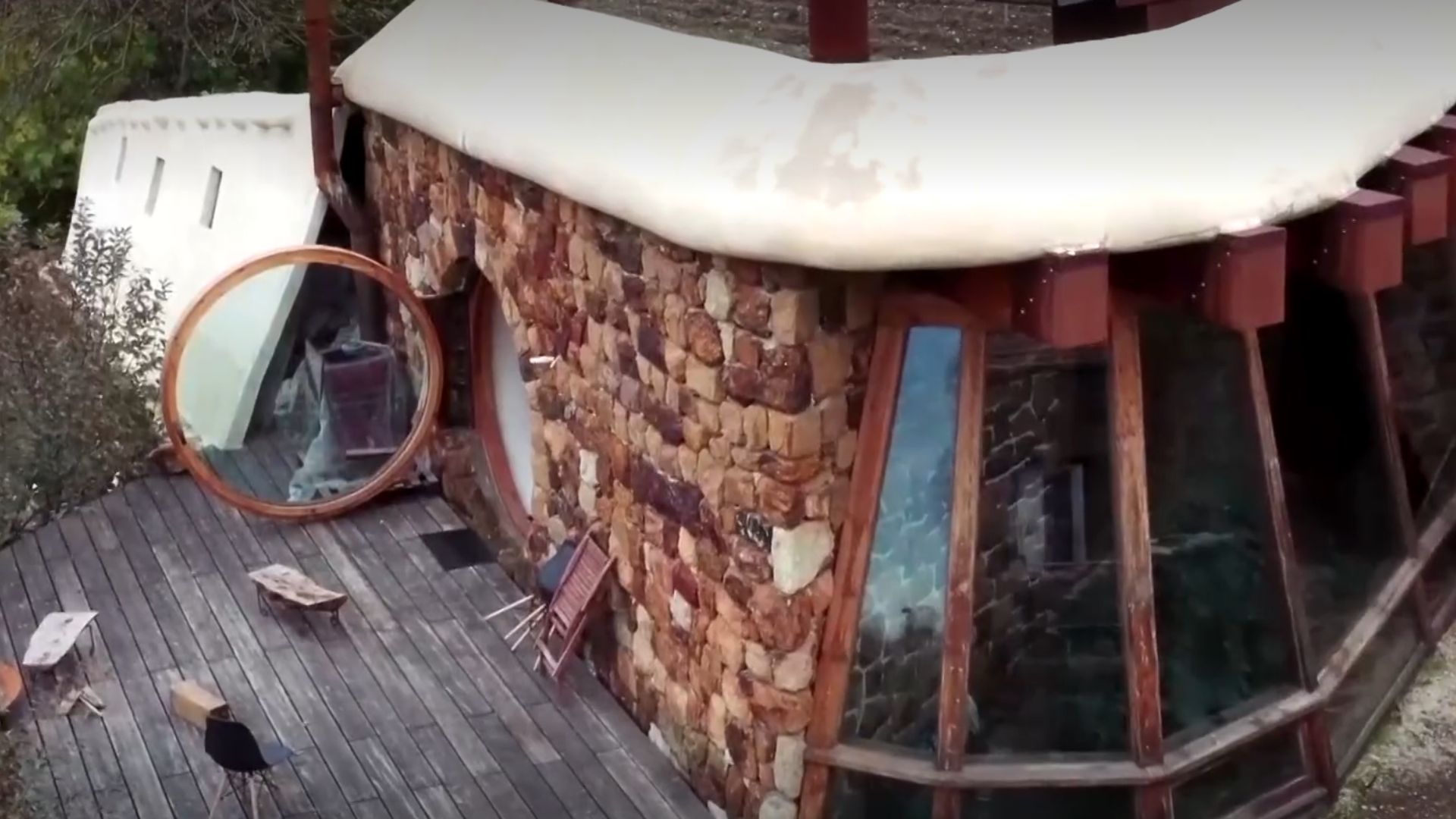
He buried 1,200 old tires in the walls to build his own self-sufficient house in the mountains with glass bottles, rainwater, and an integrated greenhouse.

In the 1990s, it accounted for about half of all the drinking water consumed in the country, supplying homes, cities, and farms in a semi-arid environment.
However, the rainfall regime changed, winters shrank, and the Jordan River, the main tributary, was being dammed and weakened by upstream dams.
As the level dropped, Israeli engineers stopped looking only at the famous red lines marked on the shore and began to fear the black line, located well below them.
At the bottom of the lake are ancient salty water springs kept under control by the enormous pressure exerted by the column of freshwater.
If the level drops below the black line, the pressure disappears and these salty springs rise like an internal poison, invading the lake and salinizing the reservoir in a practically irreversible way.
In 2018, the Kineret came dangerously close to this frontier.
It was no longer a temporary scarcity problem; it was the real risk of forever losing the only large freshwater lake in the country.
From Salty Sea to Drinking Water: The Industrial Heart of the Megaproject

The first part of the megaproject was to transform a historical enemy into an ally: the Mediterranean.
Water everywhere, but not a drop of its own to drink.
Israel then built large desalination plants along the coast, such as Ashkelon, Radera, and Sorec, the latter presented as one of the largest on the planet, true industrial cathedrals designed to separate salt and water on a scale of hundreds of millions of cubic meters per year.
The process starts with pretreatment, where seawater passes through layers of quartz sand and ultrafiltration membranes that remove sand, plankton, and bacteria.
Next, gigantic pumps compress the flow under pressures on the order of dozens of bars, equivalent to hundreds of meters of depth in the ocean.
This water is forced against reverse osmosis membranes, with micropores so small that they practically let through only H₂O molecules, retaining salt ions, viruses, and other impurities.
On the other side comes out extremely pure water, devoid of minerals, corrosive and unsuitable for consumption.
Therefore, it goes through a remineralization stage, with the dissolution of calcium carbonate and controlled addition of magnesium, to recover flavor and safety for pipelines and human health.
The big turnaround, however, lies in the use of isobaric energy recovery devices.
Instead of wasting pressurized brine, engineers transfer this pressure to the new flow of seawater, allowing a recovery of up to about 98 percent of mechanical energy.
This way, the cost of a cubic meter of drinking water plummets, and desalination ceases to be just a luxury to become a continuous production line.
Today, five large plants operate almost nonstop and account for around 80 percent of the drinking water used in Israel.
But producing freshwater on the flat coast is only half the story. The other half is transporting it in giant volumes to the dying lake and to cities and farms located many kilometers up the mountain.
The Engineering to Make Water Rise Mountains and Reverse the National Flow
In past decades, the national water transfer system was designed for a country that depended on the Kineret.
The pipelines left the lake and took the resource south, taking advantage of gravity.
With the Kineret in crisis and the Mediterranean transformed into a new main source, engineers from the national company Mecorot had to do the unthinkable: invade the circulatory system of the country and make everything work backward.
This required a new set of tunnels, pumping stations, and pipes capable of pushing millions of tons of water uphill, crossing the limestone mountain ranges of Galilee.
In redesigning this flow, the main enemy was not the distance, but the water hammer.
In case of a power outage, a column of water at high speed can return with brutal force, generating pressure spikes capable of bursting steel pipes and destroying valves in seconds.
To tame this risk, the megaproject incorporated special valves and pressure equalization chambers distributed along the route, which act as hydraulic dampers.
If something fails, part of the energy is dissipated in these technical lungs, protecting the rest of the infrastructure.
The Tsalmon reservoir is the heart of this reverse system.
There, the desalinated water that has made the uphill trek can rest, stabilize its pressure, and undergo fine analysis of calcium and magnesium levels before being released into the Kineret.
The technicians need to ensure chemical compatibility with the lake’s ecosystem, under penalty of causing shocks that affect native algae and fish.
Only then is the sluice gate opened. At the end of 2022, Israel celebrated the first time freshwater generated from the sea was pumped uphill to fill a natural freshwater lake, moving the black line away and turning the Kineret into a kind of strategic battery, ready to be used in extreme dry years.
Sewage Reuse and Precision Agriculture Close the Water Cycle
Pumping new water into the lake would not be enough if every liter were used only once.
Therefore, the Israeli water megaproject includes a second pillar: aggressive sewage recycling.
At the center of this system is Shafdan, the largest wastewater treatment plant in the region.
There, the country takes seriously the idea that one drop of water only disappears after having been used at least twice.
The sewage goes through mechanical and biological stages to remove solids and organic matter, but it is not immediately used.
The partially treated water is pumped to deep layers of sand, in a soil aquifer treatment process.
As it slowly infiltrates, the liquid is filtered for months by a natural bed, which removes microscopic impurities extremely efficiently.
Only after this underground journey is it pumped back to the surface and sent south, where it irrigates the Negev Desert.
The result is a country that recycles about 90 percent of its wastewater, a figure much higher than that of large economies that still treat this resource as waste.
In combination with drip irrigation, an invention that has become a symbol of Israeli agriculture, this recycled water is applied directly to the roots of plants, not to the surrounding soil, reducing evaporation and waste in an extreme sunlight environment.
Sensors measure moisture in real-time and open or close valves only when the plant truly needs it.
Robots, AI, and Agriculture 4.0 Powered by Artificial Water
Solving water opened space to tackle another bottleneck: labor and pollination.
The combination of smart irrigation and autonomous robots has become part of the technological package that gives meaning to the water megaproject.
Instead of relying solely on bees that suffer from climate change and pesticides, equipment like BloomX comes into play to mimic and even surpass nature.
This autonomous vehicle navigates rows of plants, identifying by algorithms the exact moment flowers reach the ideal point and uses electrostatic charges to capture pollen from male flowers and deposit it on female flowers, with millimeter precision.
At harvest time, drones tethered to ground vehicles receive continuous power and can fly practically nonstop, guided by computer vision and artificial intelligence.
They analyze the color, size, and ripeness of each fruit and use vacuum suction arms to harvest without bruising.
Inside greenhouses, robots like Grow W move through narrow aisles between tomato plants, performing not only harvesting but also fine pruning of excess leaves and stems.
It is a scenario where water is generated at plants, pumped uphill, recycled underground, and applied plant by plant by an army of machines, leaving the farmer in the role of systems operator and strategist, rather than just a manual laborer.
What the Israeli Megaproject Reveals About the Future of Water
Israel’s decision to pump seawater uphill to save the Kineret goes beyond engineering.
It is a political and technological statement that geography is not destiny.
A small country, born in the desert and surrounded by limitations, decided to treat water as critical high-tech infrastructure, and not as a random gift from nature.
The megaproject that combines large-scale desalination, reverse flow in the national system, sewage recycling, and Agriculture 4.0 shows that it is possible to build a nearly closed water cycle, albeit with high capital, energy, and knowledge costs.
At the same time, it raises uncomfortable questions: how many countries have the financial and institutional capacity to copy such a complex model, and what impact will it have on oceans, energy, and land use if adopted on a global scale.
For regions already facing severe droughts and rapidly declining reservoirs, the Israeli experience serves as a living laboratory.
It points to a future in which water will be less and less a natural resource and more and more an industrial product, dependent on plants, algorithms, and electrical grids.
The big question is whether this path can be scaled without creating new environmental and social problems.
In light of all this, what do you think of this megaproject that pumps the sea uphill to save a lake and an entire country from thirst: should other countries copy this reverse flow model or seek completely different solutions to face drought?










Israël vê e se antecipa para prevenir situações calamitosas, catastróficas que é viver sem ou quase sem água.
Israël vê com olhar critico um cenário onde todo os recursos disponíveis devem ser usados de forma a manter em equilíbrio as reservas aquíferas.
Este projeto deve ser visto como exemplo para o resto do mundo
Isso prova quê política pública tem que ser a longo prazo e não importa o partido que está no governo os projetos tem que ser seguido independente de quem governa
É muito bom saber que existem pessoas e tecnologias que são usadas para o bem.
Imagine esse pensamento e atitude sendo aplicados aqui no Brasil ….