





 Portuguese
  English
  Spanish
  4 min of reading
  2 comments


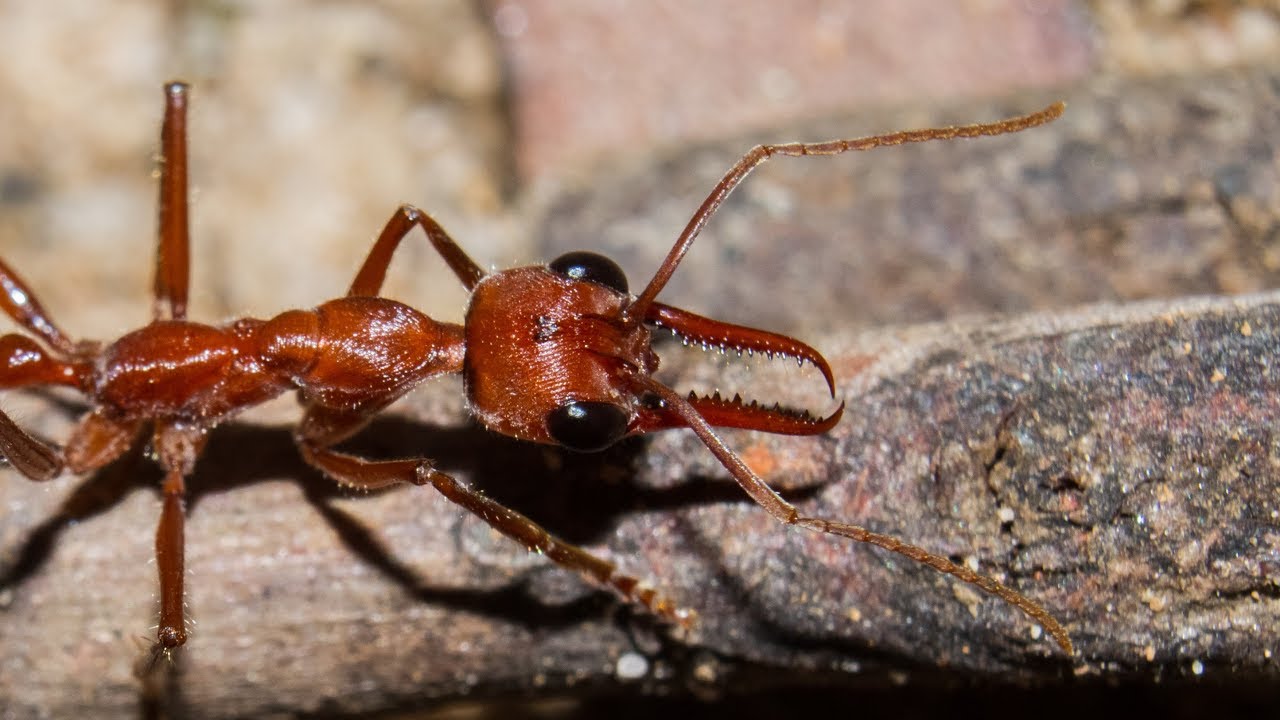


The Bullet Ant Has The Most Painful Sting Ever Recorded, Giant Colonies, And A Specialized Venom That Has Made It One Of The Most Feared Insects On The Planet.
At first glance, the numbers may seem exaggerated, and it is important to clarify right away: the bullet ant does not measure 30 centimeters. What reaches over 30 centimeters is the length of the physiological impact of its sting along the human body, a pain that radiates, spreads, and lasts for hours, described by experts as one of the most intense ever recorded in the animal kingdom. The insect itself measures about 18 to 30 millimeters, with some individuals exceeding 30 mm, but the fear it provokes is disproportionate to its size.
Scientifically known as Paraponera clavata, the bullet ant gained worldwide fame not for killing — it is rarely lethal — but for producing the most painful sting measured in insects, turning a small animal from the rainforest into a living legend.
A Small Insect With A Giant Reputation


The bullet ant primarily lives in tropical rainforests of Central America and the Amazon, where it occupies the ground and the bases of trees. Unlike common ants, it is large, robust, and visually intimidating, with a dark coloration and aggressive territorial behavior when its nest is disturbed.
-
He started running at 66 years old, broke records at 82, and is now a subject of study for having a metabolic age comparable to that of a 20-year-old, in a case that is intriguing scientists and inspiring the world.

-
Oldest tree on the planet reappears after 130 years of searches: Wattieza, 385 million years old, was 10 meters tall and had no leaves or seeds; Gilboa fossils in New York solved the mystery in 2007.

-
A 48-square-meter house assembled in hours with 4,000 bricks made of recycled plastic that does not absorb moisture, has natural thermal insulation, and costs less than 90,000 reais in a complete kit.

-
Luciano Hang revealed that Havan’s air fleet has already accumulated more than 20,000 landings, 10,000 flight hours, and 6 million kilometers traveled, and he says that without the planes, the company would never have grown so quickly.


Despite this, it is not an insect that attacks indiscriminately. The reputation comes from the extreme effect of its sting, not from constant attacks. However, when the sting occurs, it is rarely forgotten.
The Stinger That Became A Global Reference For Pain
The fame of the bullet ant is directly linked to the Schmidt Pain Index, a system created by entomologist Justin Schmidt to classify the intensity of pain caused by insect stings.
On this index, the sting of the bullet ant occupies the maximum level: 4.0. Schmidt described the sensation as comparable to “walking on embers with an 8-centimeter nail driven into the foot,” an immediate, deep, and persistent pain that can last from 12 to 24 hours.
The reason for this is a highly specialized venom, rich in poneratoxin, a neurotoxin that directly interferes with the communication between nerves and muscles, causing intense pain without causing significant tissue destruction.
Why Does It Hurt So Much, But Rarely Kills
Unlike insects whose venom causes necrosis or systemic failure, that of the bullet ant is precisely tuned to cause extreme pain, not to kill. From an evolutionary perspective, this makes sense: pain serves as a powerful warning, deterring predators and reducing future threats to the colony.
In most cases, symptoms include shooting pain, trembling, sweating, and a feeling of local shock. Severe cases are rare and generally associated with allergic reactions, not the direct toxicity of the venom.
Numerous And Highly Organized Colonies
Another factor contributing to the fear is the social behavior. Colonies of Paraponera clavata can gather hundreds of thousands to millions of individuals spread over large forest areas. The nests are often underground, with multiple entrances near the roots of trees.
When a nest is threatened, the response is quick and coordinated. The ants emerge in mass, releasing alarm pheromones that call for reinforcements within seconds. Although they do not attack without reason, the collective defense is efficient and intimidating.
An Insect That Became A Human Resistance Ritual
In some indigenous cultures of the Amazon, the bullet ant occupies an impressive symbolic role. Among the Sateré-Mawé, for example, young people go through an initiation ritual in which gloves full of live bullet ants are worn for several minutes.
The goal is not the pain itself, but to prove endurance, self-control, and courage. Even so, reports describe hours of intense suffering after the ritual, with numbness and muscle spasms that can last for days.
This cultural use has further reinforced the mythical aura of the insect outside the forest.
Why The Bullet Ant Does Not Dominate The World
Given such defensive power, the obvious question arises: why has the bullet ant not spread across the planet? The answer lies in its ecological specialization. It depends on humid tropical forests, specific soils, and complex ecological relationships.
Outside this environment, the species simply does not thrive. This limits its expansion and keeps its territory relatively restricted, despite its global fame.
An Extreme Example Of Defensive Evolution
The bullet ant is a classic case of evolution focused on deterrence, not on physical strength or continuous aggression. It does not chase large prey, does not hunt vertebrates, and does not dominate urban environments.
Its success comes from a single trump card: no one who has ever felt its sting wants to repeat the experience. This rapid learning is precisely what nature intended.
Over the years, the reputation of the bullet ant has generated exaggerations — such as the myth that it measures several centimeters or that its sting is deadly. The reality is more interesting: it is a relatively discreet insect, but with the most painful defense system ever documented among insects. It is not a killer. It is memorable.
What The Bullet Ant Reveals About Nature
The story of Paraponera clavata shows that, in nature, power is not related to size, but to efficiency. An animal just a few centimeters long has made history not through brute force, but by the biochemical precision of its venom.
On a planet filled with giant predators, the bullet ant proves that pain can be the ultimate weapon and that evolution is capable of creating solutions as elegant as they are terrifying.









Tô fora! kkkk,esse inseto é uma praga do inferno.kkk
Buenos días, una observación. El tamaño de la hormiga bala no es de 30 centímetros, es un error de transcripción, pienso yo. El tamaño es 30 milímetros.
Imagínense estar rodeados de hormigas de 30 centímetros. El apocalipsis zombie sería un juego de niños.