





 English
  Francês
  Alemão
  Italiano
  Japonês
  Norueguês
  Portuguese
  Spanish
  5 min of reading
  0 comments


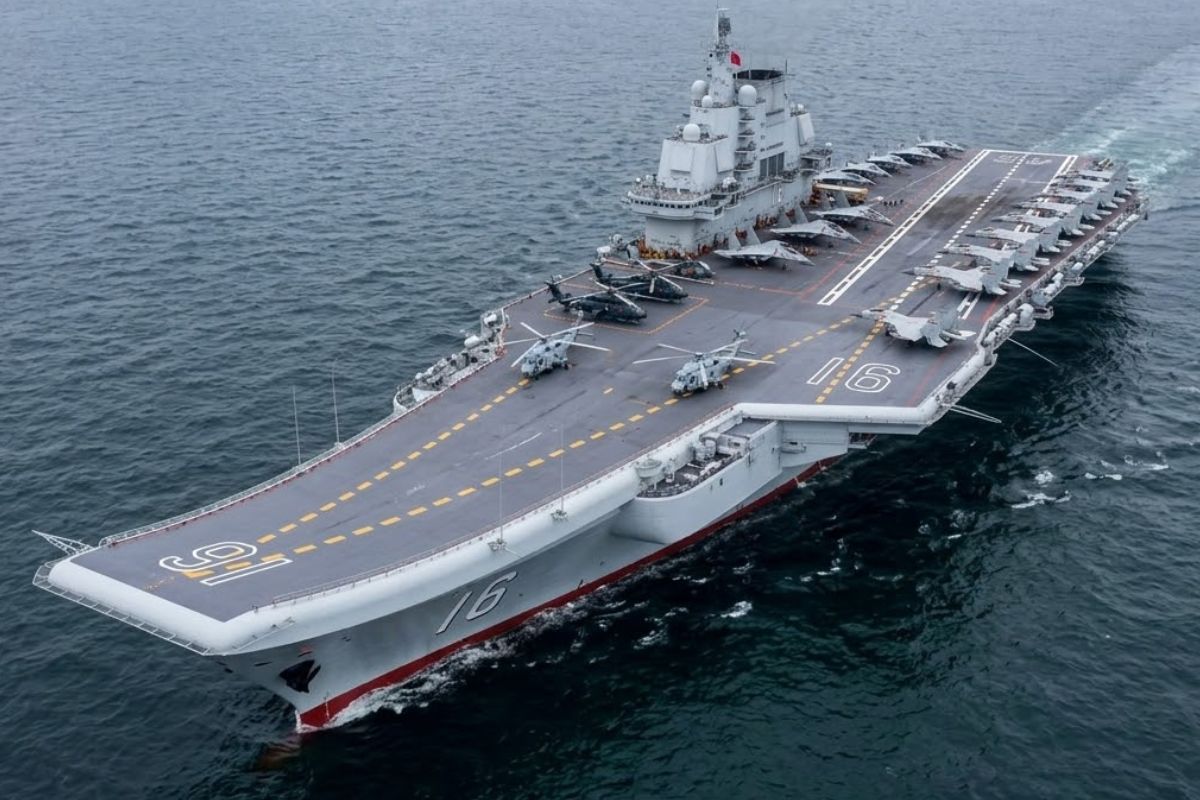
The Liaoning Was Born from an Abandoned Soviet Project in Ukraine, Officially Purchased by a Civilian Company and Eventually Rebuilt by China Over a Decade to Become the First Operational Aircraft Carrier of the Chinese Navy
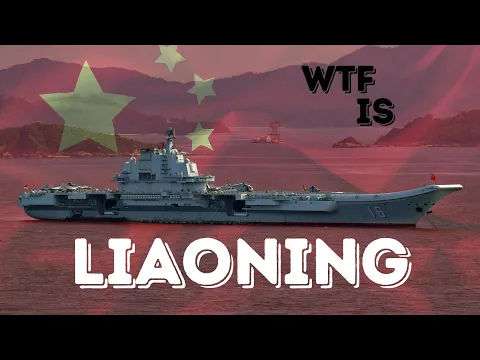
The Liaoning is today one of the most visible symbols of China’s military and technological transformation in recent decades. With more than 300 meters in length and about 60,000 tons of displacement, the ship marked the country’s entry into the exclusive group of nations capable of operating large aircraft carriers.
The history of the Liaoning, however, begins long before its incorporation into the Chinese navy. The ship originally emerged as an unfinished Soviet hull that, after the collapse of the Soviet Union, was abandoned in Ukraine until it was purchased and rebuilt in one of the most ambitious naval projects of modern China.
The Soviet Hull That Gave Rise to the Liaoning
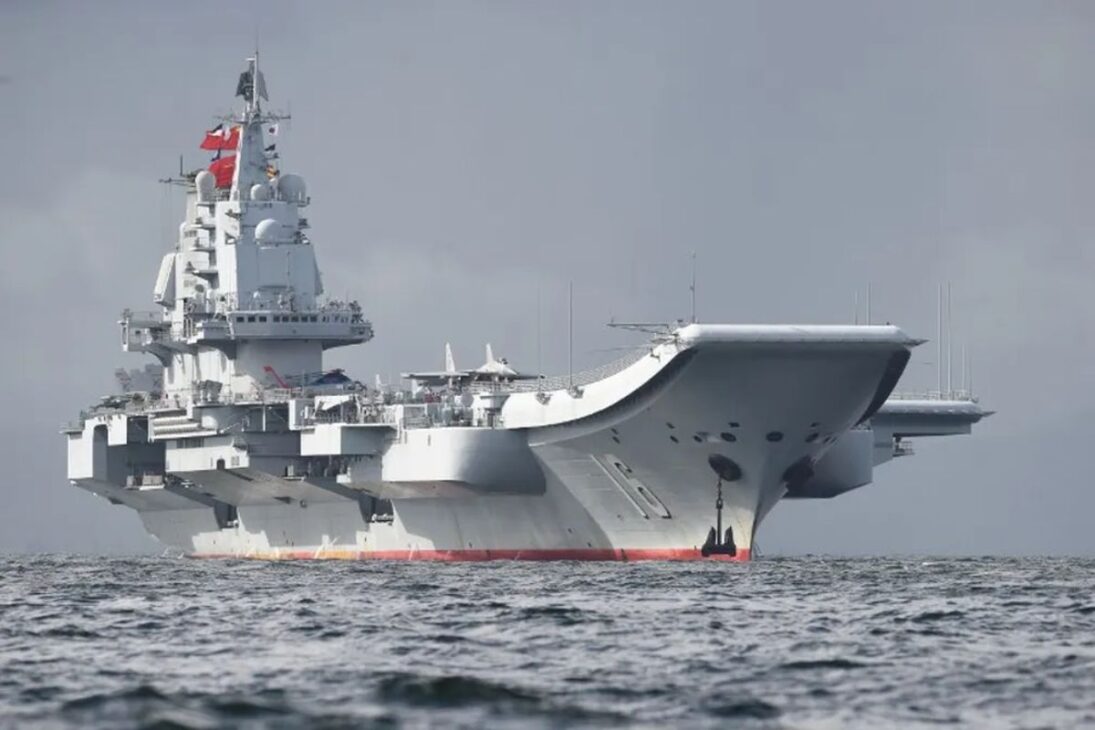
The origin of the Liaoning dates back to the last years of the Soviet Union.
-
350-year mystery may have been solved: remains of a soldier who inspired the hero of The Three Musketeers found beneath a church in the Netherlands.

-
NASA photographed a nearly perfect square with 3 km sides on Mars, 13 times larger than the Great Pyramid of Giza, but the official explanation is natural erosion; still, no one has explained why the four sides have almost identical lengths.

-
Starlink breaks the barrier of 10,000 satellites in orbit and takes its expansion to an unprecedented level, with a direct impact on global internet, technological competition, and the race for space.

-
Japan finds an alternative to oil amid rising prices by transforming ocean balance into electricity with a new technology that maintains efficiency even when the sea changes.

In the 1980s, Soviet shipyards began to construct a new aircraft carrier of the Kuznetsov class called Varyag. The ship would measure more than 300 meters in length and displace tens of thousands of tons.
It was designed as a peculiar hybrid of the Soviet naval doctrine.
In addition to operating combat aircraft, the ship also had strong armaments, including large anti-ship missiles.
The goal was to create a combination of an aircraft carrier and a heavy attack cruiser.
However, the project would never be completed.
With the collapse of the Soviet Union in 1991, the Varyag was about 70% complete, but without funding to complete its construction.
The Abandonment of the Ship After the End of the Soviet Union
After the dissolution of the USSR, the hull that would later become the Liaoning remained stationary at the Ukrainian shipyard in Mykolaiv.
Ukraine inherited the ship but lacked the resources or military need to complete an aircraft carrier of this size.
Russia, in turn, faced a severe economic crisis and also could not buy the ship.
For years, the giant hull remained rusting in the harbor.
Without engines, without electronic systems, and without armaments, it seemed destined to become naval scrap.
In 1998, the Ukrainian government decided to sell the structure.
The Unexpected Purchase That Initiated the History of the Liaoning

It was at this moment that a curious proposal emerged.
A little-known company from Macau declared that it would buy the ship for around 20 million dollars.
The official plan presented was to transform the hull into a large floating casino and hotel.
The story seemed extravagant but was ultimately accepted.
Subsequently, many analysts began to consider that the civilian project was merely a strategy to allow China to acquire the hull without generating immediate international reaction.
In practice, what was being purchased was not a floating casino, but the base of a future aircraft carrier.
The Long Journey of the Hull to China
Bringing the hull of the future Liaoning to China was a complicated process.
Without engines or navigation systems, the ship needed to be towed by a fleet of tugboats.
The biggest obstacle was crossing the Bosphorus Strait, controlled by Turkey.
For over a year, passage was denied due to security reasons and international political pressure.
Only after diplomatic negotiations and financial guarantees did the ship receive authorization to continue its journey.
The crossing of more than 28,000 kilometers to China took over a year to complete.
In 2002, the hull finally arrived at the port of Dalian, in the north of the country.
The Reconstruction That Transformed the Hull into the Liaoning
When it arrived in China, the ship that would become the Liaoning was basically an empty structure.
For nearly a decade, thousands of engineers and technicians worked on the complete reconstruction of the vessel.
China installed new propulsion systems, radars, electronics, and combat systems.
One of the most important changes was the removal of the large Soviet missile silos.
This transformed the ship into an aircraft carrier primarily focused on aircraft operations.
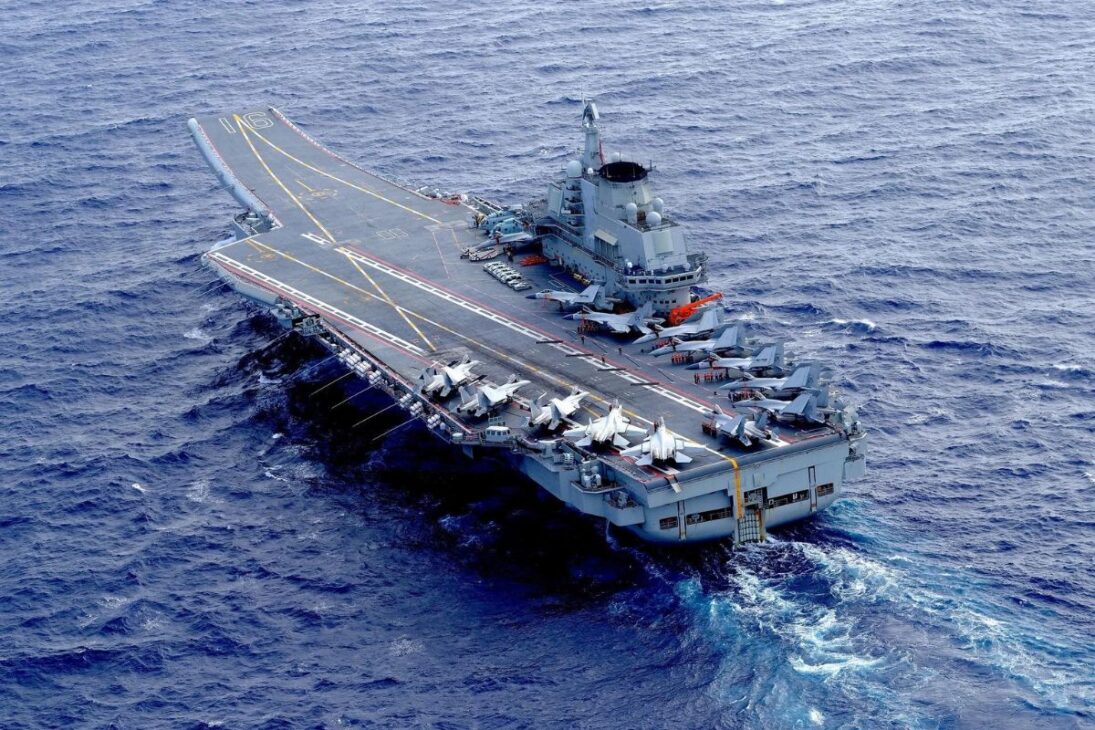
The deck was adapted with an inclined ramp known as ski-jump, used to help fighters take off without catapults.
In 2012, the ship was officially incorporated into the Chinese navy under the name Liaoning, in reference to the province where it was rebuilt.
The Role of the Liaoning in the Chinese Navy
Although it is a large warship, the main role of the Liaoning has always been to serve as a platform for learning.
China had never operated aircraft carriers before.
Therefore, the ship became essential for developing doctrine, training, and naval aviation operations.
The Liaoning typically operates with about two dozen onboard J-15 fighter jets, as well as helicopters for surveillance, rescue, and anti-submarine warfare missions.
Each operation on the deck serves as experience for pilots, engineers, and naval commanders.
These lessons have been crucial for the development of more modern Chinese aircraft carriers.
The Strategic Impact of the Liaoning
The emergence of the Liaoning marked a significant shift in China’s naval strategy.
Traditionally focused on coastal defense, the Chinese navy began to develop power projection capabilities in more distant waters.
The aircraft carrier enables China to operate embarked aircraft far from the mainland and protect strategic maritime routes.
It also represents a political symbol of the country’s rise as a global naval power.
Moreover, the knowledge gained from the ship has allowed for the construction of new Chinese aircraft carriers, including more advanced models.
The trajectory of the Liaoning shows how an abandoned hull after the end of the Cold War became the foundation of modern Chinese naval aviation.
The ship transformed a Soviet relic into a strategic instrument that helped usher in a new phase for China’s navy.
More than an aircraft carrier, the Liaoning was a floating school that paved the way for a new generation of military ships.
Now, an interesting question remains.
Do you believe that the transformation of the Liaoning was merely a starting point or the beginning of a new naval race in the Pacific?







-

-

-

-

-

-

16 pessoas reagiram a isso.