





 Portuguese
  English
  Spanish
  5 min of reading
  1 comment


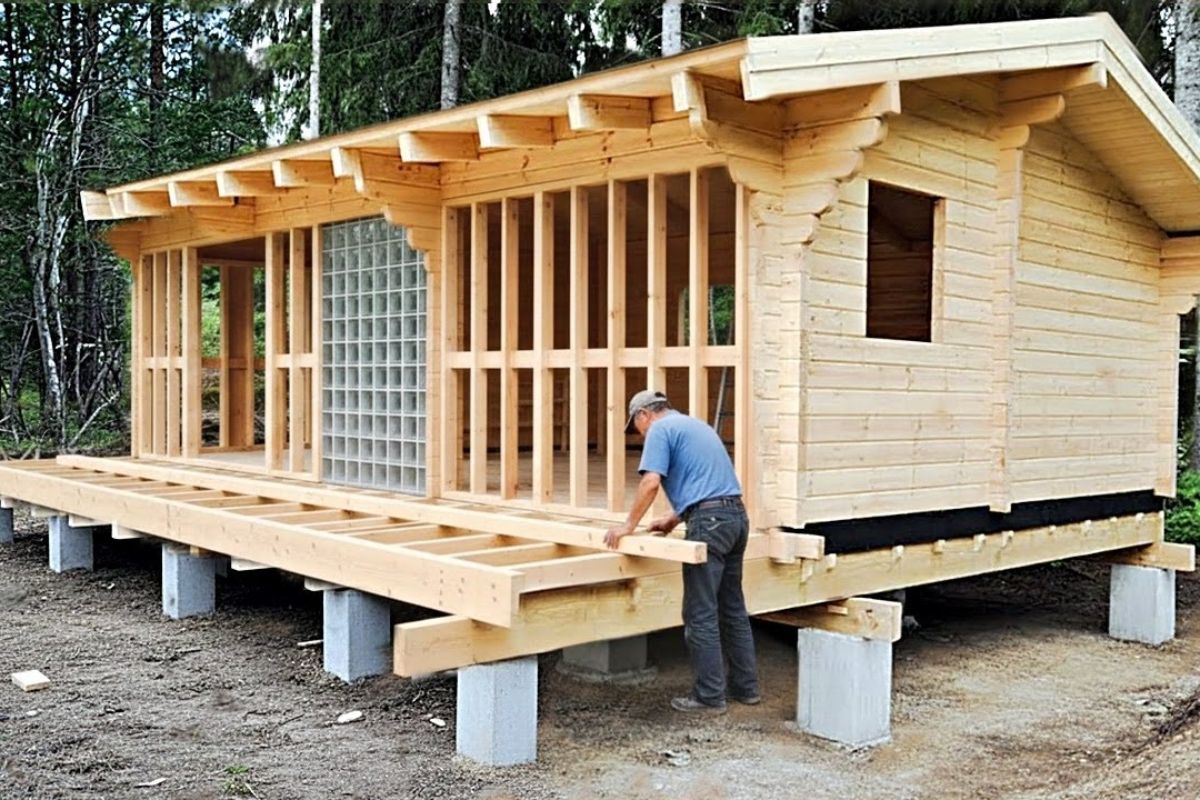


In a Patient Project, He Prepares the Ground, Calls the Team Only at the Foundation, and Then Takes on Each Stage of the Japanese Wooden Cabin, from the Beams to the Roof Trusses. He Installs Walls, Windows, Painting, Electrical, Flooring, Bathroom, Sewage, and Stove, Always Measuring and Adjusting Until Sealing the House with Total Precision.
At over 60 years old, he decided to build a japanese wooden cabin from scratch, alone, following a method in which each cut and each joint only happens after measuring, aligning, and confirming the support point.
The construction progresses in very clear stages, with professional help only at the foundation. From soil preparation to stove testing, the work reveals how patience, precision, and method can form a house planned to last for decades, with the declared goal of lasting 100 years.
Ground Preparation and Foundation: The Base That Defines the Entire Japanese Wooden Cabin

The first movement is rough and silent: he removes roots, clears the area, and prepares the ground where the japanese wooden cabin will stand.
-
Made from recycled plastic, plastic wood is gaining space in the construction industry because it does not rot, resists moisture, and reduces maintenance costs over the years.

-
Florianópolis will receive a million-dollar BRT that will begin construction in 2026 with nearly 400 million in funding from the federal government and the Inter-American Development Bank, and the map already shows the routes for the exclusive bus corridors.

-
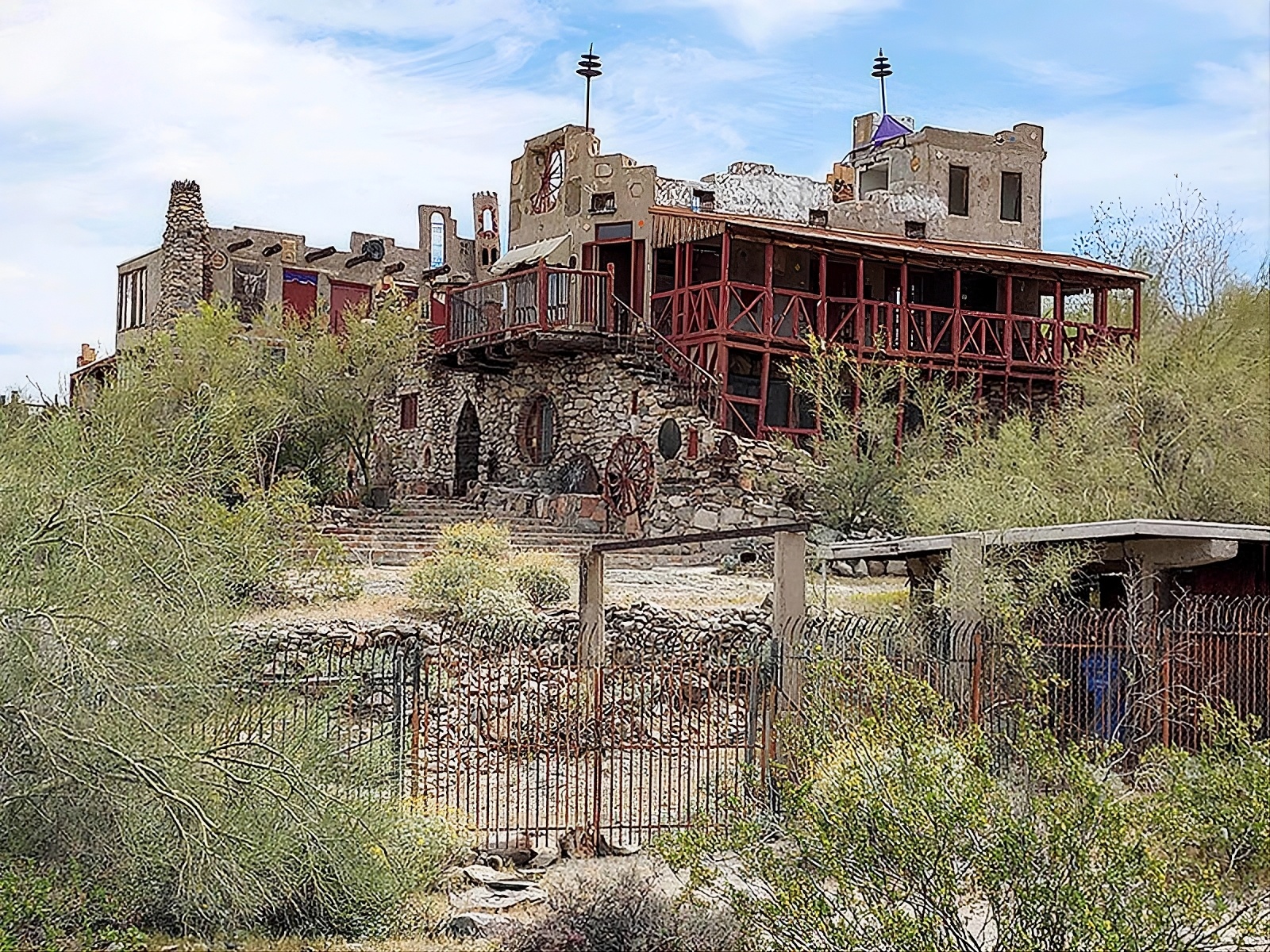
Without a blueprint, without an engineer, and using scrap from the dump, a father spends 15 years building an 18-room castle for his daughter, featuring tram tracks, 13 fireplaces, and over 700 m², which may now be demolished.
-
A megaproject worth R$ 89 billion is advancing in Iraq and promises to change the game in global trade by creating a new corridor between Asia and Europe, reducing traditional routes and repositioning the country as a logistics powerhouse.


Next comes the only phase in which he enlists a team: the foundation.
The ground is excavated, and the forms and rebar are placed. As the base takes shape, the dimensions and layout become visible, clearly showing where each wall and each support will work.
Although it may seem simple from the outside, he treats this stage as crucial because structural integrity depends on what is hidden at the beginning.
At this stage, each support point is measured individually and receives small concrete blocks.
The space between the concrete walls is carefully leveled, in a crucial preparation to receive the wooden structure that will come later, without misalignment and without gaps.
Beams and Columns: The Structure That Supports the Japanese Wooden Cabin

With the foundation ready, the beams begin. One by one, they are measured, aligned, and positioned on the base.
He works to keep the structure straight, supporting the pieces on props and checking the fit before proceeding.
The part that bears the load takes shape when the vertical columns come into play. Each column is placed and connected to the beams, and each piece is individually secured, without skipping steps.
To safely reach higher points, he sets up temporary scaffolding that only stands while needed.
Trusses and Upper Closing: The Roof Rises with Piece-by-Piece Verification
With the main structure raised, the roof trusses begin to be installed. The logic is repeated: each truss is checked individually, and the fastening only happens when the correct angle is achieved.
From there, the japanese wooden cabin progresses toward the closure, from top to bottom.
When a solid surface appears on the roof, the work becomes more comfortable and, at the same time, more demanding, as small alignment differences start to become noticeable.
A protective layer is applied to the wooden surface, and then the roofing materials begin to be installed.
As the roofing is completed, the structure becomes more organized, and the house starts to look less like a skeleton and more like a real shelter.
Walls, Windows, and External Finishing: When the Japanese Wooden Cabin Becomes a “Home”
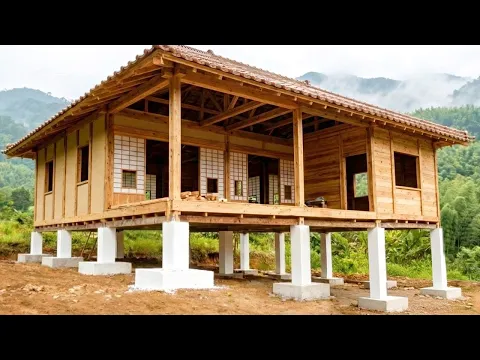

The wall panels begin to be installed with an almost mechanical rhythm. The wooden pieces are stacked on top of each other, starting from the bottom row, gradually raising the walls to form a solid set.
With the addition of windows, the japanese wooden cabin becomes more enclosed and defined, and the details gain prominence.
Outside, the external wooden panels begin to be painted, protecting the finish and reinforcing the clean and organized look of the structure.
When the exterior phase stabilizes, he dismantles the temporary scaffolding, as their function comes to an end.
Wooden handrails are installed and secured according to measurements, and the entry area is nearly finished, appearing ready for use.
Interior and Electrical: The Japanese Wooden Cabin Comes to Life Inside
With the exterior resolved, the focus shifts to the interior. The internal walls begin to rise, and the space gradually reveals itself, transforming the house from just a volume into a living area.
Wiring is installed in the walls, and connection points are prepared.
The wiring for lighting and outlets enters as the technical part that transforms the japanese wooden cabin into a functional place, not just beautiful.
Work on the floor begins with the installation of insulating panels. They are fitted between the beams, the gaps are sealed, and then wooden planks gradually close the surface, in sequence, until forming the floor.
Kitchen, Bathroom, and Sewage: Complete Infrastructure, No Haste and No Improvisation
After the outlets and lights are installed, he prepares a wooden support for the sink.
Next, he builds a wooden cabinet for the sink and kitchen counter: measures, cuts, and assembles the pieces, and only then plans for the installation of the sink and counter on top.
The heaviest stage outside the structure appears in the sewage infrastructure.
A pit is dug to receive the wastewater from the toilet, sink, shower, and kitchen.
The tank is carefully placed in the prepared area according to the dimensions, forming the system used in places without a sewage network to maintain the stable functioning of the japanese wooden cabin.
The floors of the bathroom and lavatory are prepared, and sewage and drainage pipes are installed before closing the floor, with the logic of making sure everything is ready so that the finish does not hide unresolved issues.
A bathtub is installed, and the walls receive tiles to accommodate the wet area.
Stove Area and Final Test: Safety, Heat, and the Closing of the Cycle
In the area designated for the stove, he prepares the floor and walls with heat-resistant material. Bricks and fire-resistant surfaces are installed to create the section where the stove will sit, with a clear focus on safety and usability.
When the chimney system is installed, almost everything is ready.
Then comes the first test of the newly installed stove, the kind of moment that encapsulates the entire project: the result is a structure built with time and effort, supported by steps that fit together.
The Method Behind the Japanese Wooden Cabin: Small Actions That Add Up to Decades
Throughout the process, tasks are not treated as big or small. Sometimes, hours are spent just taking measurements; at other times, a single piece is placed.
But at the end of the day, each action means taking a step forward and making the next stage easier and safer.
He plans each phase alone, progresses as far as his strength allows, and maintains the rhythm of measuring, cutting, and assembling as a fixed rule. It is this pattern that gives meaning to the promise of a japanese wooden cabin made to last.
In your opinion, what most contributes to a house lasting 100 years: traditional technique, execution method, or patience to complete each stage without shortcuts?










What type of wood is used ? How the joints are made ? What material is used to glue the wooden structure together ? How it was made waterproof without any water leakage / seepage inside ? What type of roof tiles were used ?