





 Portuguese
  English
  Spanish
  6 min of reading
  9 comments


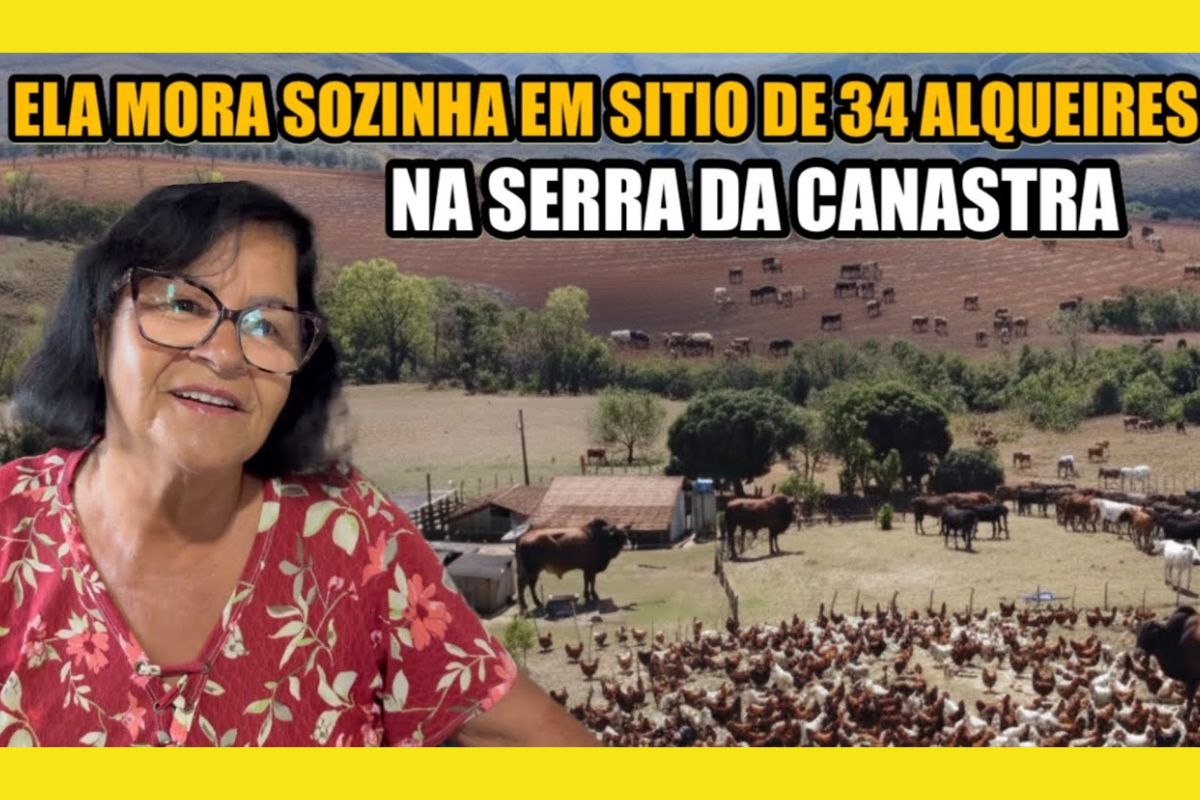


Into Dust, Wood Stove, and Old Pots, Aunt Ana Continues Living Alone on the Farm in the Valley of Gurita, Plants, Weeds, Makes Cheese, Sweet Balls, Really Cheese Bread, Takes Care of the Animals, and Proves That Simple Life Still Sustains the Serra da Canastra Like Few Places in Brazil.
Living alone on the farm where she was born, in the Valley of Gurita, right in the Serra da Canastra (MG), Aunt Ana has spent decades doing everything with her own hands. She plants, weeds, makes cheese, cheese balls, cheese bread, takes care of the animals, and still hosts visits with a table full of treats, as if time had slowed down just for her.
While many people abandon the countryside and trade rural life for the city, Aunt Ana remains steadfast, living alone on the farm, surrounded by dust, red ore, the smell of fresh coffee, and the noise of the wood stove. The routine is tough, but she ensures that this is better for taking care of everything her way, honoring what she learned from her parents back then.
Living Alone on the Farm and Taking Care of Every Detail

Over time, the siblings took different paths, life changed, but Aunt Ana stayed. Today, she continues living alone on the farm, without drama or victimhood.
-
Italian researchers have detected what appears to be a second Sphinx buried under the sands of Egypt, and satellite scans reveal a gigantic underground megastructure hidden beneath the Giza Plateau for over 3,000 years.

-
There are 4,223 drums and 1,343 metal boxes concreted with 50-centimeter walls that store the radioactive waste from Cesium-137 in the worst radiological accident in Brazil, just 23 kilometers from Goiânia, with environmental monitoring every three months.

-
Giant Roman treasure found at the bottom of Lake Neuchâtel in Switzerland reveals an advanced trade system, circulation of goods, and armed escort in the Roman Empire about two thousand years ago.

-
He buried 1,200 old tires in the walls to build his own self-sufficient house in the mountains with glass bottles, rainwater, and an integrated greenhouse.

Her nephew Cláudio helps when there is cattle, a calving cow, or heavier needs, and when the crops are overtaken by weeds, she calls a ranch hand for extra help.
In the rest, it’s just her and God. She weeds the garden, works with collard greens, takes care of chickens, manages cows, organizes everything inside the house, and still finds strength to bake treats for any visitors that show up.
Arriving in Aunt Ana’s kitchen guarantees finding a tin of cookies full, fresh corn bread ready, and cheese bread dough waiting for the oven to heat up.
Root Cheese Bread, the Kind That Doesn’t Come in a Package

Aunt Ana’s cheese bread is a root recipe, inherited from her mother. No ready-made mix. The dough includes scalded manioc flour, a cup of oil, a cup of milk, a cup of water, eggs, and real cheese made on the farm, all measured by eye and experience.
She explains that the secret is to scald the manioc flour well, knead by hand until the dough is “just right,” neither too hard nor too soft.
If it gets too soft, the cheese bread “falls apart”; if it gets too hard, “it becomes a crust.” The result is firm balls on the outside and soft on the inside, filling the kitchen with a good aroma.
And if there’s leftover dough, no problem. Living alone on the farm, Aunt Ana is already used to saving it to bake the next day, extending the flavor and the work.
The same goes for the corn bread: she makes it, freezes it raw, and when the time comes, just puts it in the oven to have fresh treats as if they were made just minutes ago.
Fried Cheese Balls, Boiled and Drenched in Syrup

Another highlight on the table is the cheese ball, which deceives the eye of those who think it’s a coxinha. The dough is simple: cheese mashed with a little wheat flour.
Then there are two versions: the fried ball, which later gets a bath in thick syrup or molasses, and the cooked ball directly in the syrup, which becomes soft, sweet, and packed with flavor.
She makes a point of serving both types for comparison. The fried one has a crunchy crust that cracks in your mouth and preserves the contrast of the cheese’s saltiness with the sweetness of the molasses.
The cooked one soaks up more syrup and becomes “just perfect,” as she herself defines. And if left in syrup for an entire day, it improves even more.
Flour, Manioc Flour, Treats, and the Time When Nothing Came from the City
When she begins to talk about how it was to make flour and manioc flour in the old days, Aunt Ana goes back in time. Manioc was ground in a mill, sifted, dried, and roasted in the oven, all by hand.
She remembers a special recipe her mother made with manioc dough, “tareco,” a kind of cake that was dropped into the oven with a spoon after roasting, to brighten the end of the work.
In those days, living on the farm and practically not going to town, no one bought bread or ready-made cookies.
Her mother made cookies, cheese bread, corn bread, cakes, and whenever someone arrived, there was always a full tin. Today, Aunt Ana keeps the custom: if you knock on the door at any time of the day, you can almost certainly find fresh treats or ready to go in the oven.
Beliefs, Superstitions, and The Faith That Grew Stronger Than Fear
The conversation yields stories from the past. She recalls the Holy Week when no one could kill chicken, pig, or make blood, out of respect for the tradition.
Thursday after lunch was already time to stop everything. On Friday, not even a knife was picked up. Then, on Holy Saturday, the people would “celebrate” and the skin would be eaten as a joke for the children.
Aunt Ana also grew up hearing about werewolves, ghosts, noise in the dark, and the fear of walking in the fields during Lent. Today, living alone on the farm, she laughs at all of it.
She says she has never seen anything, never encountered a ghost, and that what scares her the most is her own head’s fear. For her, it’s God who protects, and the rest is just stories that people exaggerate.
Simplicity Without Distinction Between Rich and Poor
In the way she speaks, it’s clear that Aunt Ana doesn’t judge anyone by their bank account. She serves the same coffee, the same cheese bread, and the same corn bread to both the poor and the rich, without separating dishes for “important guests.”
She laughs as she tells that she has never cared for fancy china plates; the chipped enamel plates, marked by time, hold the same value.
For her, what matters is having a good appetite and a functioning body; the rest is city nonsense. The table is democratic, and the hospitality is the same for those who drive up the dirt road and have the courage to knock on the gate.
A Lifetime Living Alone on the Farm as an Act of Resistance
What might seem like isolation is, in fact, a silent act of resistance. By continuing to live alone on the farm, Aunt Ana holds an important thread of the culture of Serra da Canastra: food cooked on the wood stove, unhurried hospitality, work in the fields, respect for nature, and faith mixed with superstition and good humor.
While time tries to erase the simple life, she insists on waking up early, kneading cheese bread, making cheese balls, taking care of the animals, and keeping the farm her parents left her going strong.
In practice, Aunt Ana shows that tradition is not preserved in museums, but in people who continue living, planting, cooking, and welcoming anyone who arrives.
And you, would you face this routine living alone on the farm like Aunt Ana, or would you prefer to continue in the hustle and bustle of the city and only visit the countryside from time to time?










Tua Ana….me convida pra ir passar uns 10 dias aí…..
Não sei se ela fornece serviço de pousada, mas caso possua, gostaria de fazer uma visita ao local em um final de semana. Moro em cidade de porte misto, mas minha paixão é o interior.
Gostaria de morar na roça outra vez,mas com alguém de companhia porque com essa idade não é bom ficar sozinha, Gostaria de fazer uma visita nesse sítio da tua Ana, recordar é viver novamente,porque já fiz tudo isso que ela faz, é gratificante, muitas bênçãos de luz 💥 💥 💥