





 Portuguese
  English
  Spanish
  6 min of reading
  1 comment


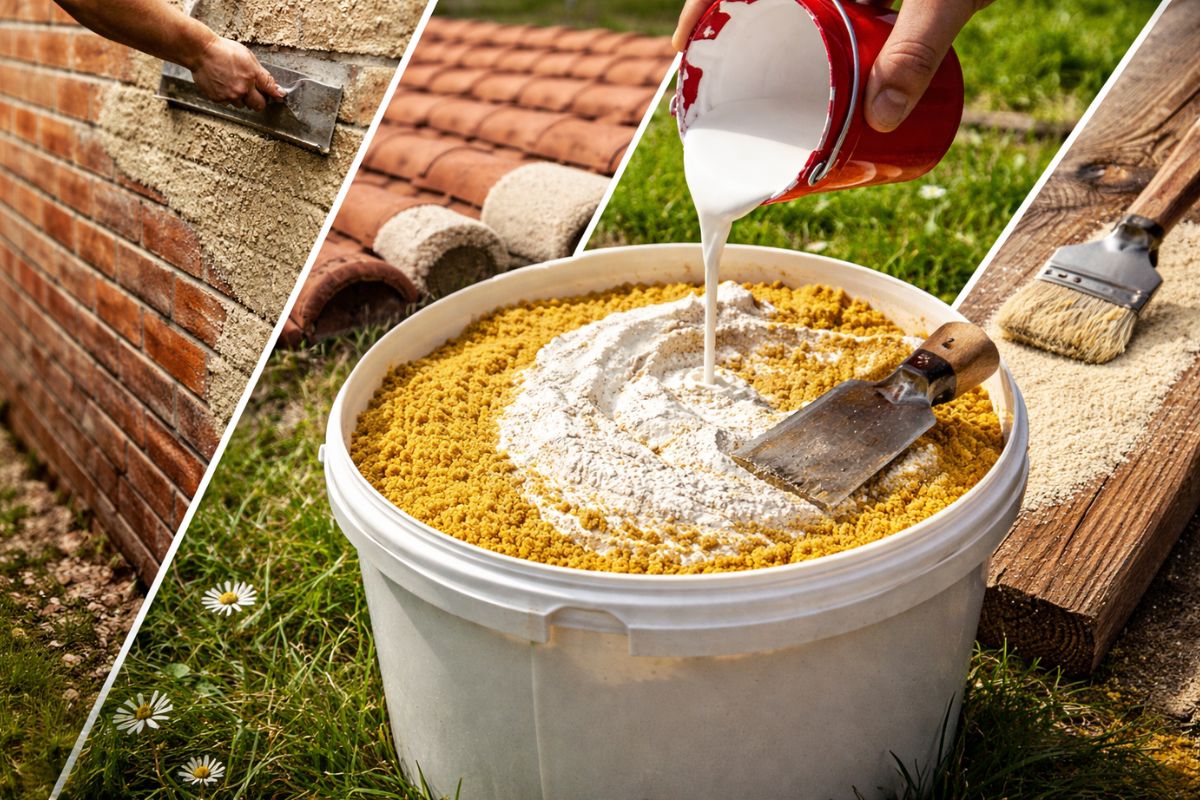


The Simple Mixture Combines Acrylic Paint, PVA Glue, and Fine Sieved Sand to Form a Textured Coating That Can Be Applied on Blocks, Plastered Walls, Tiles, and Boards, Covering Small Flaws of the Surface, Creating a More Robust Appearance After Drying and Enhancing the Sensation of Resistance in Different Domestic Finishes.
The simple mixture made with acrylic paint, PVA glue, and fine sand emerges as a practical alternative for those who want to change the finish of different surfaces without resorting to complex compositions. The proposal attracts attention because it combines familiar materials and creates a textured paint that can disguise small imperfections and give the final layer a firmer appearance.
The result is more evident on bases such as concrete, plastered walls, tiles, and wood, where pores, micro flaws, and finishing marks tend to be more visible. By gaining body with fine sand and adhesion with PVA glue, the paint takes on a different behavior than regular paint, forming a visually more robust coating after drying.
How the Preparation of the Mixture Changes the Behavior of the Paint
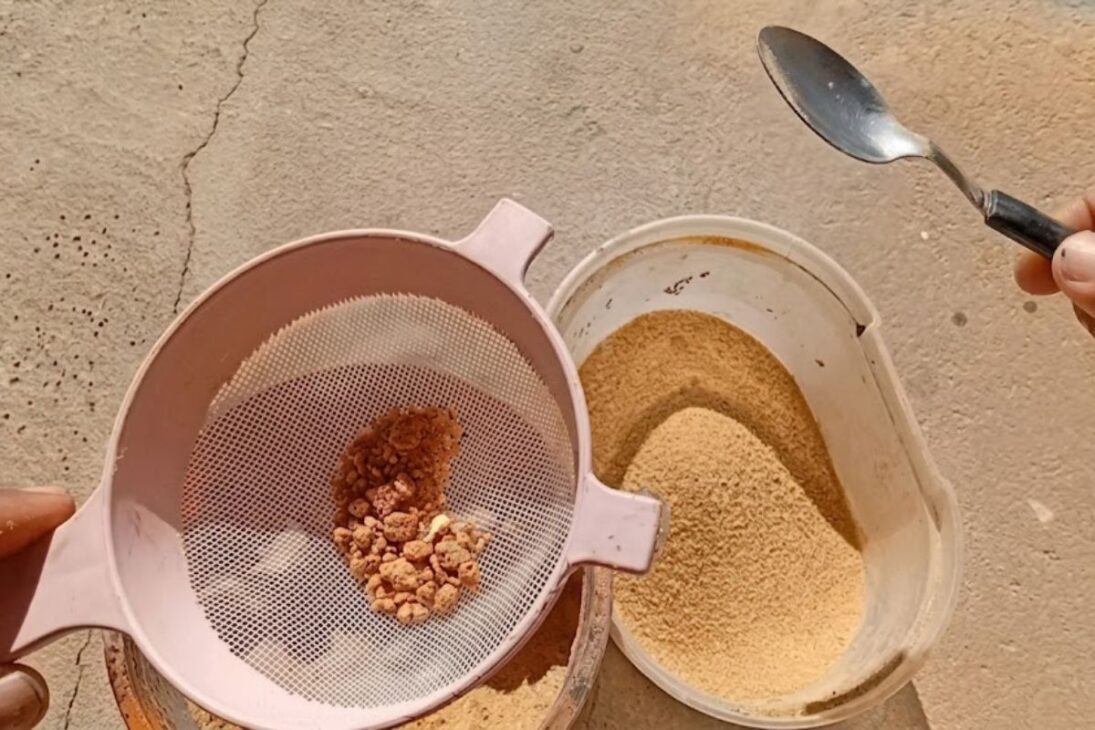
The first important point is in the choice of fine sand and the care to sieve this material before any mixture. This detail makes a difference because it removes small stones and impurities that could compromise the homogeneity of the application and leave the finish uneven. The cleaner and finer the sand, the more uniform the texture created on the surface tends to be.
-
New CCR concrete paving technology promises roads up to 3x more durable, less maintenance, and cost reduction in Brazil.

-
Made from recycled plastic, plastic wood is gaining space in the construction industry because it does not rot, resists moisture, and reduces maintenance costs over the years.
-
Florianópolis will receive a million-dollar BRT that will begin construction in 2026 with nearly 400 million in funding from the federal government and the Inter-American Development Bank, and the map already shows the routes for the exclusive bus corridors.

-
Without a blueprint, without an engineer, and using scrap from the dump, a father spends 15 years building an 18-room castle for his daughter, featuring tram tracks, 13 fireplaces, and over 700 m², which may now be demolished.

In the presented composition, the base starts with white acrylic paint, although other colors can also be used. Next, PVA glue is added in a proportion of half a measure of glue to one measure of paint, forming an intermediate step before the sand.
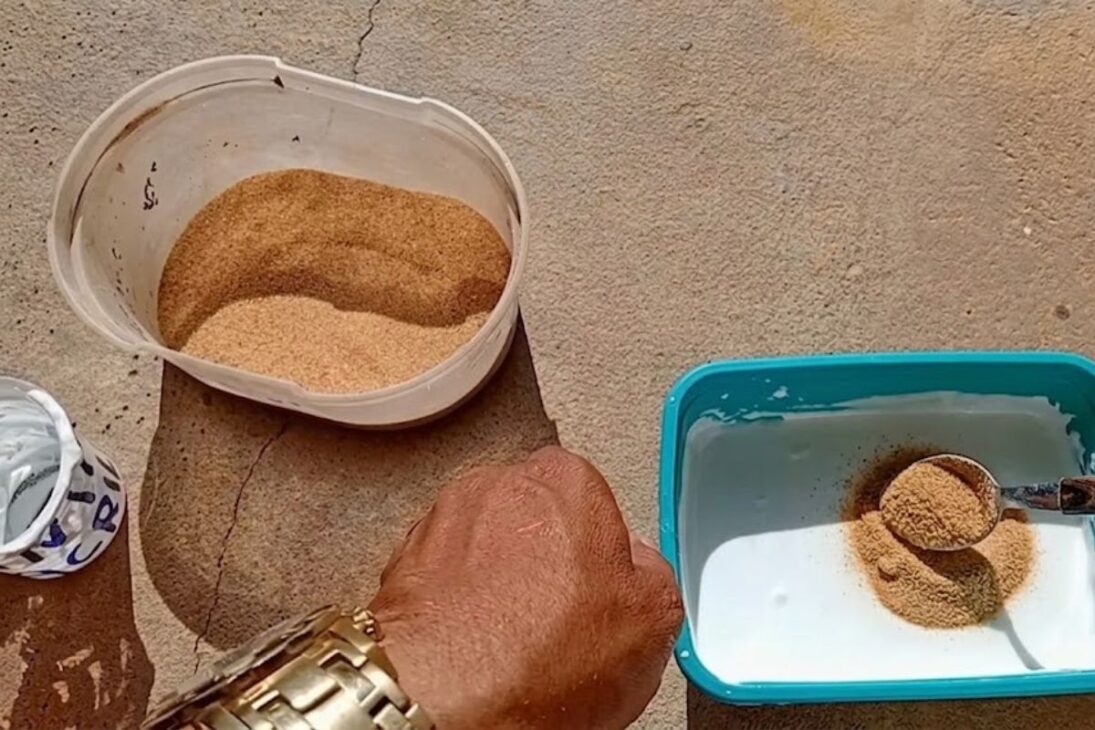
After this well-incorporated mixture, the sand is added gradually, until reaching about 30% of the composition. This gradual addition prevents clumping and helps to perceive the point at which the paint begins to gain density without losing the possibility of application with a roller or brush.
Why PVA Glue and Fine Sand Reinforce the Finish
The logic of the composition lies in the function of each component. The acrylic paint, being water-based, serves as the main covering element.
PVA glue serves to strengthen the bond between the materials and contribute to a more cohesive layer after drying. Fine sand alters the texture of the paint, making the product less smooth and more substantial. This is not just about changing the appearance; the mixture also alters the tactile sensation and the body of the paint.
That’s precisely why small flaws in the base become less evident. On very smooth surfaces, any unevenness usually stands out more. When the paint gains texture, the pores, microcracks, and little holes cease to attract much visual attention.
On concrete blocks, for example, this effect is pronounced because the surface is inherently full of irregularities. The new layer does not structurally correct the material but helps visually cover these marks and creates a more uniform finish to the eye.
Where the Simple Mixture Can Be Applied Most Effectively
The application shown on concrete blocks helps to understand the use of the simple mixture on porous bases. Since this type of surface often presents many voids and imperfect finishes, the textured paint tends to visually fill part of these flaws and make the overall appearance more homogeneous. Instead of a smooth and thin film, a presence-filled layer is formed, capable of emphasizing the natural defects of the block less.
On plastered walls, the principle is similar. Anyone dealing with small imperfections in plaster knows that regular paint doesn’t always manage to hide discreet marks. The presence of fine sand changes this scenario because it creates superficial relief.
On wood, the result gains another appeal: in addition to apparent resistance, the texture gives the piece a distinctive finish, less flat and more marked.
On tiles, the proposal appears as an alternative to coat the surface and create a firmer layer, with the expectation of improving the external behavior of the material after drying.
What Happens After Drying and Why the Result Stands Out
After drying, the paint clearly shows the most talked-about effect of this composition: the texture. Wood makes this very evident, as the contrast between the rigid base and the new layer reveals a visually highlighted surface. The sensation is of a thicker, more present, and less fragile paint than a conventional coat. This explains why the finish catches so much attention right after the initial curing.
On tiles and concrete, the perception of resistance also stands out. When water is poured over the already dry surface, the observed tendency is the formation of droplets instead of immediate absorption. This behavior suggests a more closed superficial layer than the original base.
In the case of tiles, this type of coating is also associated with the attempt to improve the thermal performance of the painted material, as white paint is often used with the intention of reducing heat absorption.
Still, the central point here is not to promise an absolute solution, but to show that the composition forms a more robust and perceptible film.
How Much to Use and What Care to Avoid Errors in Application
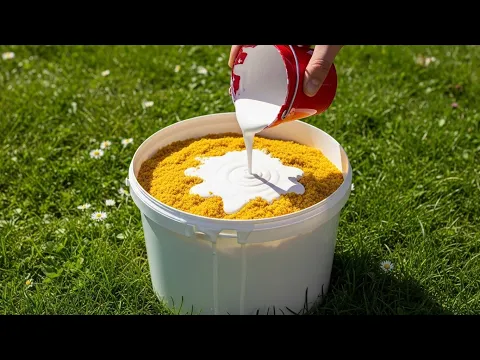

The proportion is one of the most important parts for those who want to repeat the process with balance. One measure of acrylic paint, half a measure of PVA glue, and about 30% of fine sand create a reference that helps maintain the mixture’s applicability.
If the sand is added in excess right at the beginning, the composition may lose fluidity and make spreading difficult. The texture needs to emerge without turning the paint into a heavy mass for the roller or brush.
Another essential care is continuous mixing. The sand should be incorporated gradually and stirred carefully to prevent it from settling at the bottom of the container. It is also important to observe the type of tool used on each base.
The roller works well on blocks and walls, while the brush may be more suitable for tiles, corners, and wooden pieces. When the application respects the nature of the surface, the result tends to be more uniform, and the texture appears more cleanly.
Why This Solution Catches Attention in Maintenance and Renovation of Surfaces
The strength of this proposal lies in its simplicity. There is no need for a sophisticated formulation to make a noticeable change in the finish of an already worn or visually irregular base.
The simple mixture gains space because it combines easy access to materials with immediate visual effect, especially in places where small flaws bother more than major structural problems.
It also stands out that the same composition can be used in different ways. Instead of being restricted to a single type of base, it appears as an alternative for concrete, plaster, wood, and tiles. This broadens the interest of those seeking a versatile solution for indoor and outdoor areas.
The final result depends not only on the ingredients but on the correct preparation, the sieving of the sand, the balanced proportion, and the careful application on a compatible surface.
In the end, the main takeaway about this composition is straightforward: it transforms paint into a thicker, more textured coating with a more resistant appearance while helping to hide small imperfections that would be more apparent under a smooth paint job. It’s a simple change in the formula, but with a clear visual impact on the finish.
And you, would you use this simple mixture on walls, tiles, wood, or concrete? Let us know in the comments which surface the result seems most interesting for and if this type of textured paint makes sense for your home or any project you have in mind.








Faltou a CAL na mistura. Fica mais resistente, mais barato e rende mais.