





 Portuguese
  English
  Spanish
  6 min of reading
  0 comments


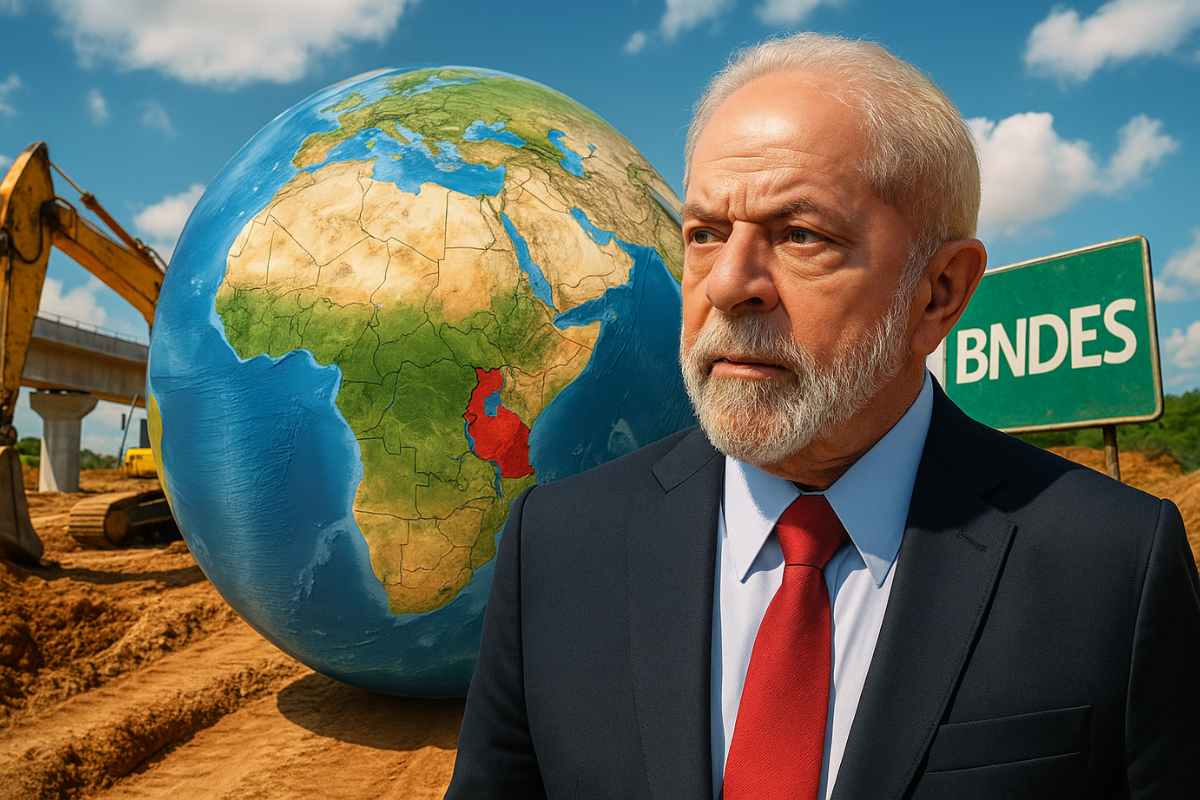
In Meeting With Mozambique President, Lula Uses New Agreements to Strengthen BNDES Defense for Projects Outside Brazil, Points to Infrastructure, Energy, and Agriculture as Business Showcases, Revives the Debate About Sending Public Money Abroad and Increases Pressure on Congress and National Public Opinion
The meeting between President Luiz Inácio Lula da Silva and Mozambique President Daniel Chapo, held this Monday (11/24), went well beyond diplomatic protocol. With new agreements in trade, aviation, health, diplomatic training, and infrastructure projects, the Brazilian government once again showcased the idea of financing projects outside Brazil with BNDES resources, connecting foreign policy, business, and internal narrative disputes.
By publicly defending that the National Bank for Economic and Social Development resumes financing for projects abroad, Lula signaled that he wants to make Mozambique a concrete example of economic and political cooperation. The message is clear: strengthen Brazilian presence in Africa, support national companies in strategic markets, and at the same time, face the sensitive debate about the use of public money for projects outside Brazil, a topic that divides political actors and fuels opposition discourse.
Meeting in Mozambique Puts BNDES Back at the Center of the Debate
On the official agenda, the meeting in Mozambique marked the resumption of historical ties and the opening of a “new phase” in the bilateral relationship.
-
A new Brazilian shopping center worth R$ 400 million will be built in an area equivalent to more than 4 football fields, featuring 90 stores, 5 cinemas, a supermarket, a college, and parking for 1,700 cars, potentially generating 3,000 jobs.

-
Larger than entire cities in Brazil: BYD is building a 4.6 km² complex in Bahia with a capacity for 600,000 vehicles per year, but the discovery of 163 workers in conditions analogous to slavery has shaken the entire project.

-
With an investment of R$ 612 million, a capacity to process 1.2 million liters of milk per day, Piracanjuba inaugurates a mega cheese factory that increases national production, reduces dependence on imports, and repositions Brazil on the global dairy map.
-
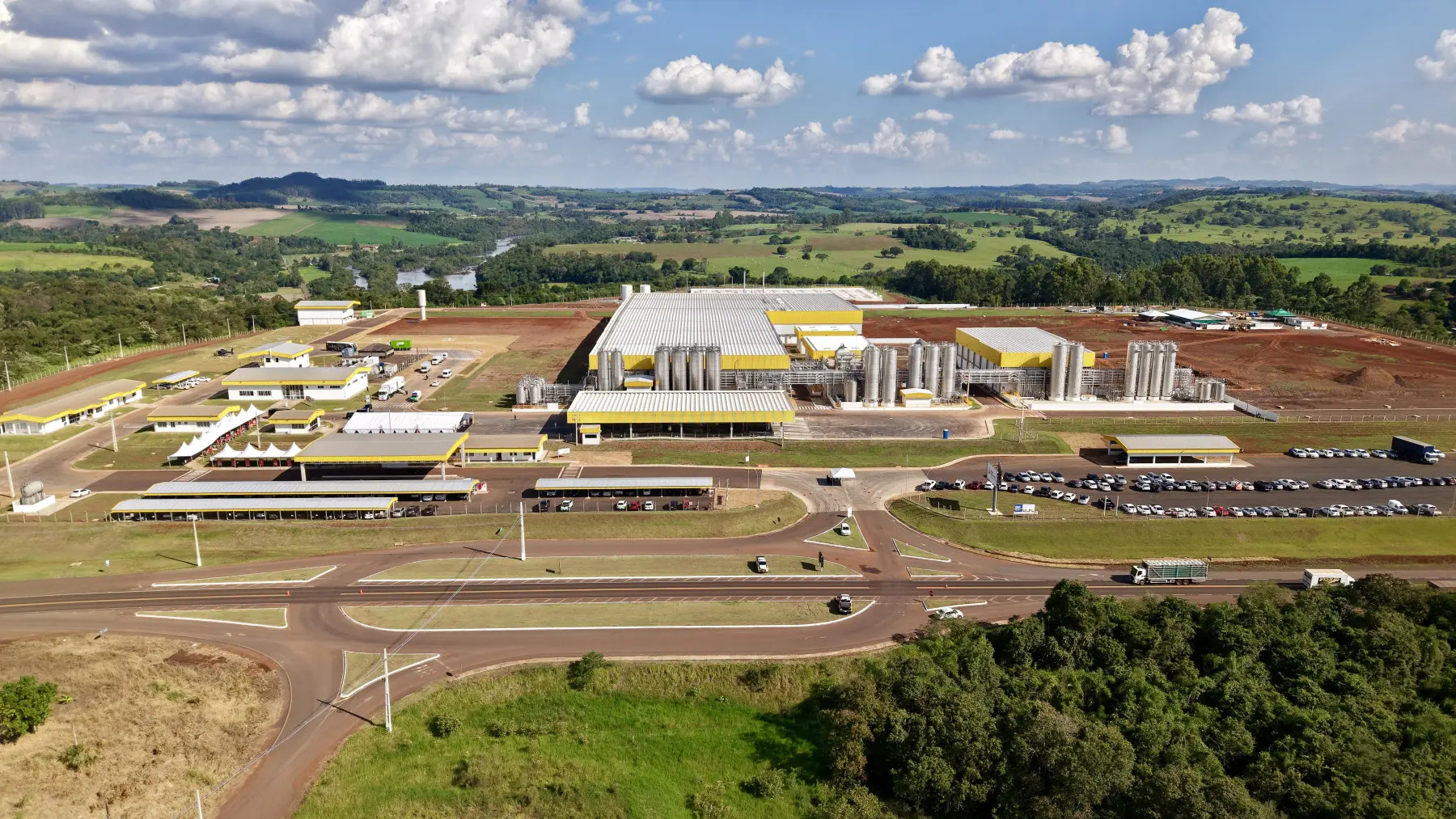
Brazilian city gains industrial hub for 85 companies that is equivalent to 55 football fields.


However, in the political backstage, the move was read as a calculated gesture to reposition BNDES at the center of the debate on projects outside Brazil and the internationalization of Brazilian companies.
Lula emphasized that the development bank must resume financing projects abroad to ensure that Brazilian companies compete on equal footing with foreign rivals.
The reading from the Planalto is that, without this support, large construction companies and national groups lose ground in international bids for infrastructure, energy, and logistics.
The message to the market is one of gradual rehabilitation of BNDES as a tool for economic foreign policy, with Mozambique as the initial showcase.
At the same time, the public defense of financing projects outside Brazil reopens a controversial frontier.
This issue has already been the subject of intense debates in the recent past and now returns in a context of fiscal pressures, internal social demands, and a fragmented political environment, which tends to increase scrutiny over every new contract and every real disbursed.
What’s in the Agreements: Ports, Roads, Energy, and Cooperation
In practice, the signed agreements involve a broad package of fronts.
Infrastructure was identified as a particularly promising area for Brazilian companies engaged in the construction of ports, roads, plants, and transmission lines, in a country seeking to overcome structural bottlenecks and expand its logistical integration.
According to the official discourse, strengthening Mozambican infrastructure can boost local socioeconomic development, opening space for engineering, specialized services, and Brazilian technology.
In this design, BNDES reappears as a potential financier of projects outside Brazil, especially when national companies lead consortia or provide equipment and additional services.
The agreements also include cooperation in health and diplomatic training, as well as advances in bilateral trade.
The logic is to put together a package that combines physical projects, services, and training, creating a long-term ecosystem for Brazilian presence in Mozambican territory.
Agriculture, Food Security, and Energy Transition in Focus
Another emphasized axis was agribusiness.
The Brazilian government highlighted its capacity to collaborate with Mozambique in increasing agricultural productivity with advanced technology and sustainable practices, aiming to address food security challenges without increasing environmental damage.
Lula pointed out that Brazil’s experience in tropical agriculture can significantly boost local production, reducing Mozambique’s vulnerability to external shocks and dependence on imports.
At this point, the discourse mixes diplomacy, agribusiness, and soft power, presenting the country as a reference in high-productivity techniques that preserve natural resources.
In the energy sector, the agreements foresee joint development of renewable energies, with an emphasis on biofuels.
The idea is to create jobs, reduce dependence on fossil fuels, and align Mozambique with the global energy transition agenda.
This front opens space for Brazilian technology, equipment, and services, which may also be supported by credit lines tied to infrastructure and energy projects classified as projects outside Brazil.
Why BNDES Returns to the Debate on Projects Outside Brazil
By advocating for BNDES as a key player in international expansion, Lula revives a familiar argument: without competitive financing, Brazilian companies are at a disadvantage compared to foreign groups that rely on public banks from their home countries.
The resumption of credit for projects abroad is presented as a tool for industrial policy and international insertion, and not just as a diplomatic gesture.
The logic is that, with adequate financial support, Brazilian companies can explore new markets, expand global presence, and promote technology and knowledge exchange with partners like Mozambique.
In this context, projects outside Brazil cease to be treated merely as spending abroad and are now presented as strategic investments in value chains that return to the country in the form of jobs, taxes, and contracts for the national industry.
On the other hand, the mere mention of increasing BNDES funding for projects outside Brazil reignites criticism from part of the political spectrum, which fears a loss of focus on domestic demands and questions the transparency and risk assessment of these projects.
It is in this friction zone that the new agreements come into the spotlight of Congress and public opinion, with the potential to become subjects of intense scrutiny.
Security, Institutional Cooperation, and Narrative Disputes
In addition to infrastructure, agriculture, and energy, the agenda includes cooperation in security and combating financial crimes.
The Brazilian Federal Police is cited as a reference in tracing illicit assets and combating money laundering and can serve as a model in initiatives with Mozambique.
This dimension reinforces the discourse of responsibility and governance associated with the projects, especially when public funding is involved.
For the government, tying projects outside Brazil to high standards of control and institutional cooperation is a way to shield BNDES from criticism.
The strategy combines an international showcase of large undertakings, a discourse of mutual development, and a commitment to compliance mechanisms, trying to reduce space for narratives of irresponsible use of public money.
At the same time, the expansion of this cooperation depends on the effective implementation of the agreements, the realization of regular diplomatic and commercial meetings, the promotion of exchanges in education and health, and the broadening of concrete opportunities for Brazilian companies in Mozambique.
Each contract signed and each project initiated tends to be closely monitored by political and economic actors in Brazil, precisely because the topic has returned to the center of the arena.
Next Steps and Lula’s Political Calculus
The visit to Mozambique and the explicit defense of BNDES in projects outside Brazil show that the government is willing to reopen a delicate flank, betting that economic and diplomatic gains will outweigh the political cost.
Strengthening the partnership depends on executing the agreements, delivering visible results in infrastructure, energy, and agriculture, and demonstrating concrete benefits for Brazil as well.
From an internal perspective, the challenge will be to explain to voters that financing projects in another country can generate jobs, contracts, and technology here, while domestic needs remain in the spotlight.
It is in this balance between active foreign policy, fiscal responsibility, and social sensitivity that BNDES’s agenda in projects abroad will be tested in the coming years.
In the end, the question that echoes is simple and direct for those following the political and economic news closely: are you for or against BNDES financing projects outside Brazil when there is a guarantee of return for companies and jobs in Brazil?










-

-

5 pessoas reagiram a isso.