





 Portuguese
  English
  Spanish
  4 min of reading
  0 comments


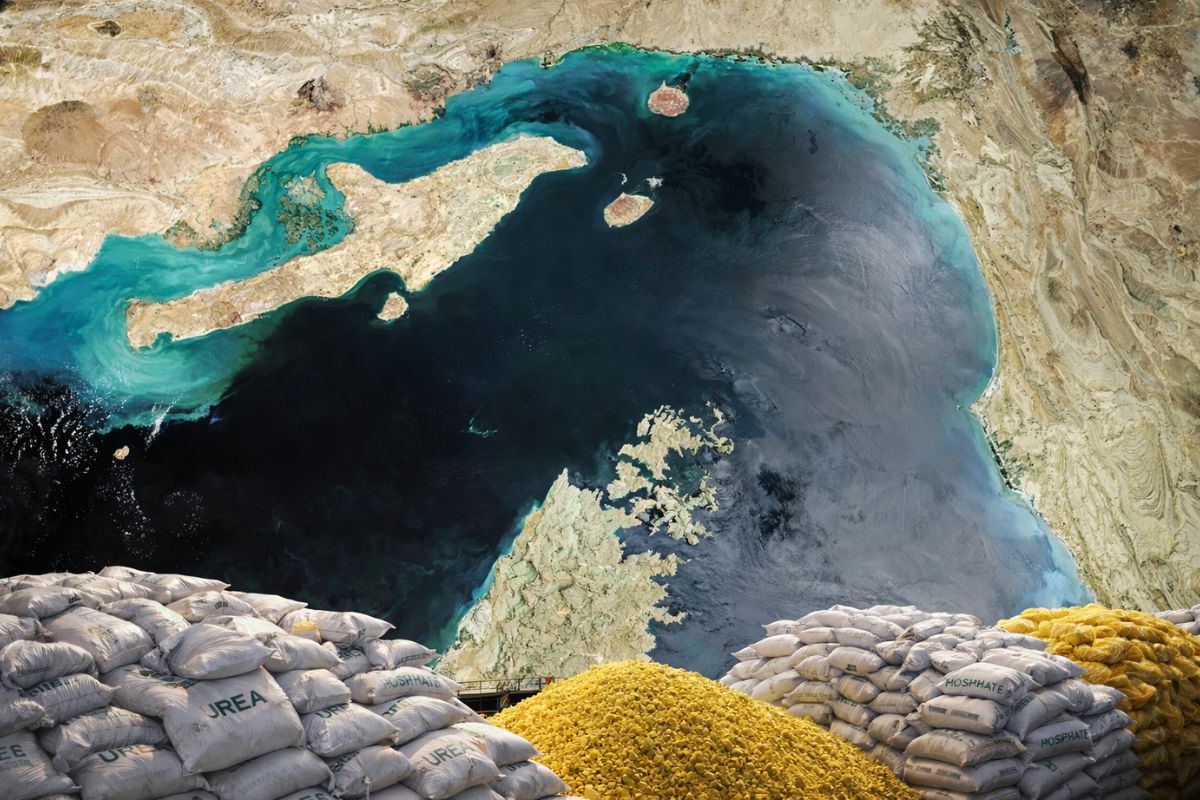
The Closure of the Strait of Hormuz, Caused by the War Involving Iran, Israel, and the United States, Interrupted the Passage of Ships Loaded with Fertilizers, Such as Urea, Sulfur, and Phosphates. More than Twenty Vessels Were Held Back, Putting Pressure on Global Logistics Chains and Increasing Concerns About Agricultural Costs and Food Security.
The blockade of the Strait of Hormuz has created a new point of tension for the global Fertilizer market. According to the journalistic portal Globo Rural, more than 20 ships loaded with almost a million tons of these inputs have been stranded in the region after maritime traffic was interrupted amid the escalation of the war involving Iran, Israel, and the United States.
The interruption occurs in one of the world’s most strategic maritime corridors for the trade of raw materials. With large volumes of urea, sulfur, and phosphates stranded on ships, the situation raises concerns among importers and agricultural sectors that directly depend on the regular arrival of these inputs.
Ships Loaded with Agricultural Inputs Await Route Release
Logistics monitoring data indicates that the stranded ships transport different types of Fertilizers used in global agricultural production. Among the identified loads are about 463 thousand tons of urea, one of the main nitrogen fertilizers used to increase crop productivity.
-
Russia cut fertilizers, China cut fertilizers, and oil prices soared with the war in the Middle East: sugarcane producers in the interior of São Paulo are seeing costs explode from all sides and warn that the effects will take months to be absorbed.
-
It does not come from flowers, is produced only every two years, and more than 90% goes straight to Europe: meet the bracatinga honeydew honey from Santa Catarina, considered one of the rarest in the world and overlooked by Brazil itself.

-
They said no to 26 million dollars and would do it all over again: mother and daughter from Kentucky reject a million-dollar offer from a mysterious company that wants to build the largest data center in the state on more than 2,000 acres of rural land.

-
While corn requires rain and is expensive, sorghum produces almost the same volume per hectare at a cost up to 80% lower and uses less water, and it is revolutionizing dairy farming in the Triângulo Mineiro, where producers save hundreds of reais per hectare.
Other vessels carry approximately 303 thousand tons of sulfur and about 105 thousand tons of phosphates, fundamental elements in the composition of agricultural fertilizers. These inputs are essential for maintaining the nutritional balance of the soil, which explains the growing concern over the delay in the delivery of these shipments.
In addition to these volumes, there are also vessels transporting mixtures of products and fertilizers whose composition has not been detailed. Combined, the shipments approach one million tons of agricultural inputs awaiting passage through the maritime route.
The Strait of Hormuz Concentrates a Large Part of the Global Fertilizer Trade
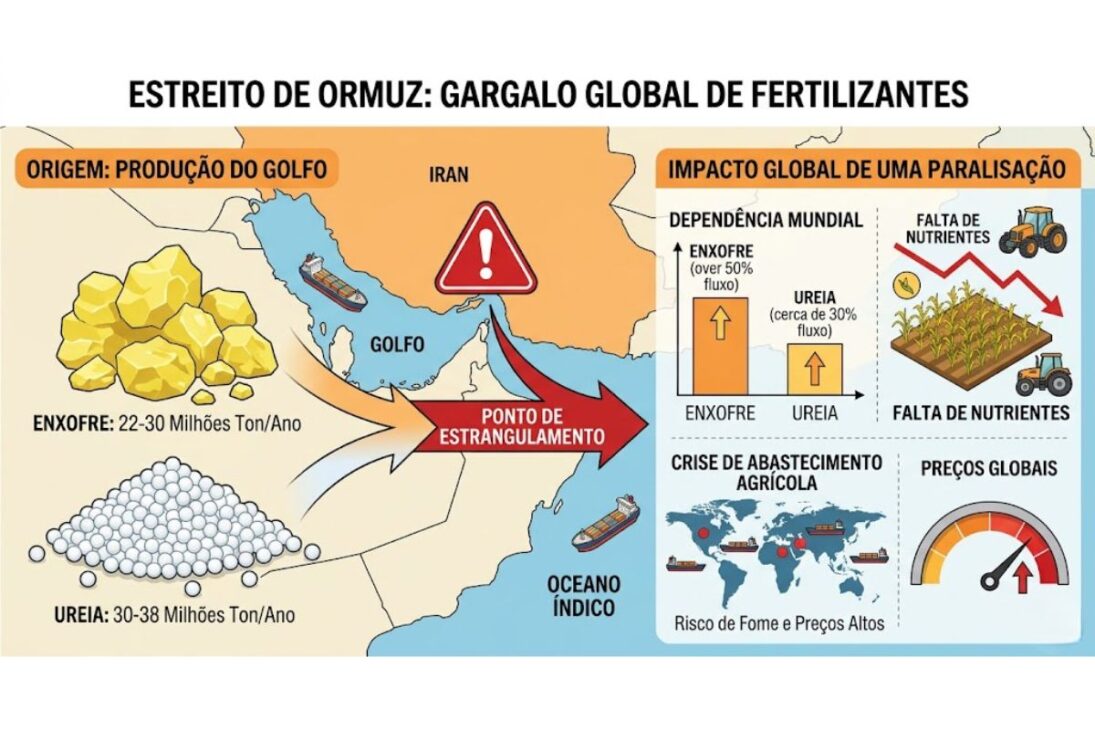
The impact of the stoppage gains global dimension because the Strait of Hormuz is one of the main routes for the export of Fertilizers produced in the Gulf.
The region is responsible for a significant portion of the international supply of these inputs. The annual production reaches 22 million to 30 million tons of sulfur and between 30 million and 38 million tons of urea, most of which is destined for the external market.
More than half of the world’s sulfur supply and about 30% of the urea produced on the planet passes through the strait. Any interruption on this route tends to provoke immediate effects on global trade, as the agricultural chain depends on a constant logistical flow to maintain supply.
Dependence on Imports Increases Concern in the Asian Market
The stoppage also raises alarms especially among Asian countries that heavily depend on fertilizers imported from the Middle East.
In some economies in the region, about 40% of urea, 54% of sulfur, and 71% of ammonia used in agriculture come from Gulf suppliers. This level of dependence means that any interruption in maritime transport generates immediate concerns about supply and costs.
Even countries that diversify their sources of import can feel indirect impacts. When part of the global market loses access to an important route, competition for available supplies tends to increase, putting pressure on prices and freight.
Maritime Logistics at Risk Could Increase Agricultural Costs
Logistics sector experts assess that the normal resumption of maritime traffic may take time, depending on security conditions in the region.
Shipping companies tend to act cautiously in the face of risks associated with armed conflicts. As long as security assessments remain uncertain, shipowners may avoid the route, prolonging the stoppage or reducing the flow of vessels.
This scenario can generate additional costs related to insurance, cargo security, and increases in maritime freight costs. Consequently, the final price of fertilizers may rise, also raising agricultural production costs in various parts of the world.
Pressure on Fertilizers Could Affect Production and Food Security
When the supply of fertilizers faces interruptions, the effects can spread throughout the food chain. These inputs are essential for maintaining agricultural productivity on a large scale.
If fertilizer costs increase or if there are delays in supply, farmers may face difficulties in planning planting or maintaining production levels. This can directly reflect on food prices, especially in markets dependent on imports.
Moreover, logistical uncertainty tends to generate volatility in agricultural markets. Buyers and distributors begin to compete for available volumes, creating price fluctuations that can affect producers and consumers.
The blockade of the Strait of Hormuz reveals how the global fertilizer market is deeply connected to geopolitical stability and strategic maritime routes. With almost a million tons of agricultural inputs awaiting passage, the event reinforces the logistical fragility that can impact global agriculture.
Now we want to hear your opinion: Can international conflicts jeopardize the global supply of fertilizers and food?
Do you believe that countries should reduce their dependence on imports of these inputs? Share your analysis in the comments and join the discussion.









Seja o primeiro a reagir!