





 Portuguese
  English
  Spanish
  6 min of reading
  0 comments


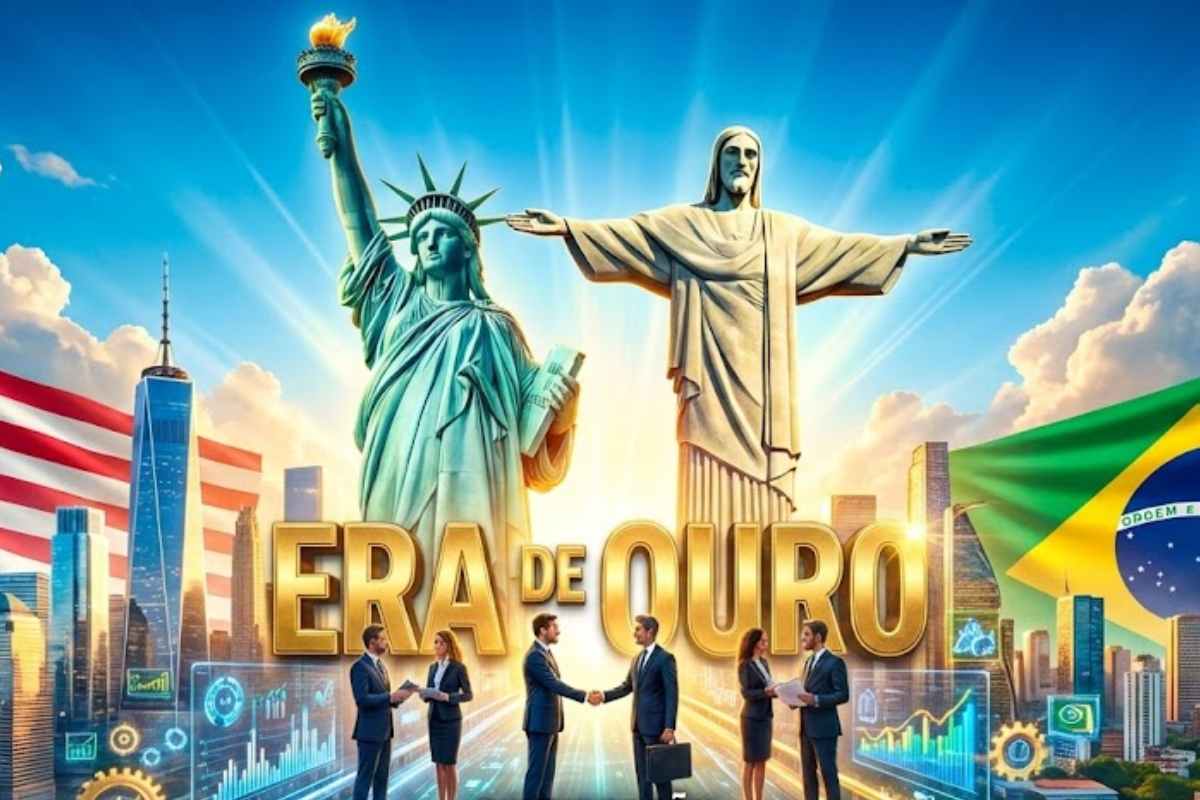
While Washington Talks About Golden Age and Removes Part of the Tariff on Agriculture, Consul Kevin Murakami Calls on Brazilian Companies to Invest in the USA, Details Billion-Dollar Gaps, Admits Sensitive Differences and Exposes the Silent Dispute for Influence, Jobs, and Technology Between the Two Countries in This New Strategic Phase.
The scene is one of calculated reconciliation. After months of friction with the tariff on Brazilian products, the United States and Brazil are once again testing the golden age discourse in an environment where trust, predictability, and access to the market are worth as much as any interest rate. The official message is one of optimism, but the real agenda is one of mutual pressure.
On one side, Washington is trying to reposition Brazil as a priority partner in a tenser global chessboard. On the other, Brasília seeks to alleviate tariffs, preserve agribusiness, and push industrial goods into the American market. In the middle of this tug of war, the message from Consul Kevin Murakami is clear: those who quickly understand the billion-dollar gaps of this new golden age could get ahead in the next decade.
From Critical Point to Initial Relief of the Tariff
Murakami recalled that, about two months ago, when he took office in São Paulo, the bilateral relationship was at a “critical point.”
-
Elderly individuals aged 65 or older who have never contributed to the INSS can receive R$ 1,621 per month in 2026 without having paid any contributions in their lifetime: learn how the benefit works that already supports nearly 7 million Brazilians.

-
The gaucho city reduced the number of Bolsa Família beneficiaries by almost 40% in just a year and a half with active outreach that connects each registered person directly to job vacancies in Bento Gonçalves in Rio Grande do Sul.
-
The bluest city in Brazil has just gained a new floating bridge for the free crossing between the island and the mainland, connecting residents and visitors to the historic center of São Francisco do Sul every day of the week.
-
In a silent race, Shopee signs a mega contract in Guarulhos and accelerates the e-commerce war with faster deliveries, pressured shipping, and a new threat to rivals in Brazil.

The tariff imposed by Washington against Brazilian products had raised the political tone and sounded alarms in Brasília about employment, competitiveness, and the flow of investments.
The situation began to change after the meeting between Luiz Inácio Lula da Silva and Donald Trump in Malaysia, which opened negotiations for the gradual end of the surcharges.
The first concrete gesture was the executive order that removed the 40% surcharge on certain Brazilian agricultural products, such as meat, coffee, fruits, and oil, starting on November 13.
The message is twofold: there is room to ease tensions, but the pen remains in Washington.
Still, the consul himself acknowledges that “we still have many bilateral differences to resolve.”
A significant part of the tariff remains active, especially concerning other Brazilian exporting segments, and the government in Brasília is trying to transform the agribusiness precedent into a model for industrial goods.
The Golden Age as Discourse and as Pressure
In public, Murakami made the political tone of the visit clear.
“I am in São Paulo with a primary task: to support the Trump administration’s goal of inaugurating a golden age between the United States and Brazil”, he stated in front of officials and businesspeople.
The expression “golden age” appears as a promise, but also as an instrument of pressure.
By linking the idea of a golden age to a direct call for Brazilian companies to increase investments in the United States, the consul practically redraws the map of expectations.
This is not just about selling more to the American market, but about bringing capital, technology, and Brazilian jobs into the U.S. economy.
In practice, this movement shifts part of the strategic decision-making of headquarters in Brazil to American soil.
Call to Invest in the USA: The Agenda Behind the Invitation
Murakami made an explicit call.
On behalf of the U.S. government, he asked that Brazilian companies expand their investments in the United States, indicating that governors, mayors, municipal councils, and development agencies are actively seeking these resources.
According to him, the package includes available infrastructure, reliable energy, a qualified workforce, and local incentives.
The offer is clear: less regulatory insecurity, more contractual predictability, and a competitive environment designed to attract production, distribution centers, and technology.
By positioning himself as a connector for Brazilian companies to these opportunities, the consul tries to shorten the path between investment decisions and specific American territories.
These are cities and states that are directly competing for industrial plants, logistical bases, and corporate offices that could today be located anywhere in the world.
Billion-Dollar Gaps and the Mirror of Numbers
Behind the scenes, the golden age discourse gains weight as Murakami projects data on bilateral flow. In 2024, trade in goods and services between the two countries exceeded 127 billion dollars.
More than 3,000 American companies have already invested around 226 billion dollars in Brazil, a volume higher than that allocated to any other country.
These numbers act as a mirror.
On one side, they show the structural weight of the United States within the Brazilian economy; on the other, they lay bare the still-existing billion-dollar gap regarding Brazilian capital embedded in American soil.
The implicit message is that Brazil has room to become a major investor as well, not just a major recipient, in this golden age.
When talking about new opportunities amid profound transformations in the global economy, Murakami also highlighted that not all players outside the hemisphere play “by fair rules.”
It is a direct message about the competition for markets, production chains, and regulatory influence, in which Brazil appears as a partner to be won over by Washington before strategic rivals.
Post-Tariff: Partial Relief and Silent Dispute
Even with the partial relief of the tariff on agriculture, negotiations are far from over.
For Brasília, every percentage point of surcharge removed creates room to protect margins, secure contracts, and sustain jobs.
For Washington, every tariff concession needs to be compensated with some political or economic delivery, such as productive investments, regulatory alliances, or alignments in international forums.
The result is a silent dispute.
The official rhetoric insists on shared values, more than 200 years of bilateral relations, and a solid foundation built over the past decade, when trade and investment expanded.
However, beneath the discourse lies the question of who will capture the largest share of the upcoming cycles of investment and growth in sensitive sectors for both countries.
January Delegation and the Test of the New Phase
The next visible milestone in this process will be on January 27, when Murakami receives a delegation with representatives from ten American cities and states in São Paulo to present opportunities directly to Brazilian companies.
In practice, it will be a focused roadshow, where local authorities will attempt to sell their territories as a preferred destination for Brazilian factories, service centers, and logistical hubs.
If the golden age rhetoric resonates with businesspeople, this meeting could inaugurate a new cycle of capital transfer from Brazil to the United States, with a direct impact on jobs, technology, and the production chain within Brazil itself.
For the consul, the difference from his first stint in the country 15 years ago is the chance to avoid repeating the frustration of the magazine cover showing Christ the Redeemer blasting off like a rocket.
The reading is that, at that time, Brazil and the United States failed to maximize the potential of the relationship.
The challenge this time is to transform promises into contracts, and slogans of the golden age into concrete projects.
In the end, the big question for Brasília, companies, and workers is simple and uncomfortable at the same time: what price is Brazil willing to pay, in terms of concessions, investment location, and strategic alignments, to truly live this golden age with the United States?
And you, if you were today in charge of a Brazilian company with the potential to export or invest abroad, would you place part of your operation in the USA betting on this golden age or would you prefer to diversify into other markets before taking that step?








Seja o primeiro a reagir!