





 Portuguese
  English
  Spanish
  4 min of reading
  0 comments



German Research Offers Around R$ 140,000 for Volunteers Willing to Endure 100 Days of Confinement in Extreme Space Simulation; Brazilians Can Apply.
The new frontier of space science requires human bodies willing to face total isolation, rigid routines, and weeks without contact with the outside world. This time, the opportunity is not restricted to astronauts: Germany has opened applications for volunteers willing to live 100 days confined in a high-security scientific facility, in exchange for around R$ 140,000. The initiative, revealed by Terra with official data from the German Aerospace Center (DLR), includes Brazil among the countries whose citizens can participate in the selection process.
This is SOLIS1000, one of Europe’s most ambitious studies in the field of space psychophysiology. The project seeks to understand how the human body and mind react when subjected to extreme confinement, a scenario that increasingly accurately simulates the conditions faced by astronauts on long-duration missions to the Moon or Mars. Applications are open to volunteers of different nationalities, provided they meet strict health, education, and psychological fitness criteria.
The Earth Mission That Simulates a Space Journey: Why Confinement Matters So Much to Science
The global race for crewed missions to Mars demands that scientists answer questions that only experiments like SOLIS1000 can clarify. Prolonged confinement affects:
-
While the world looks at oil, the war with Iran is already disrupting helium supply from Qatar, affecting car and iPhone chips, threatening AI expansion, and putting pressure on aluminum packaging at the highest value in four years.

-
Global warming will expose a treasure hidden under the ice of Antarctica and may spark an international dispute over gold and valuable minerals.

-
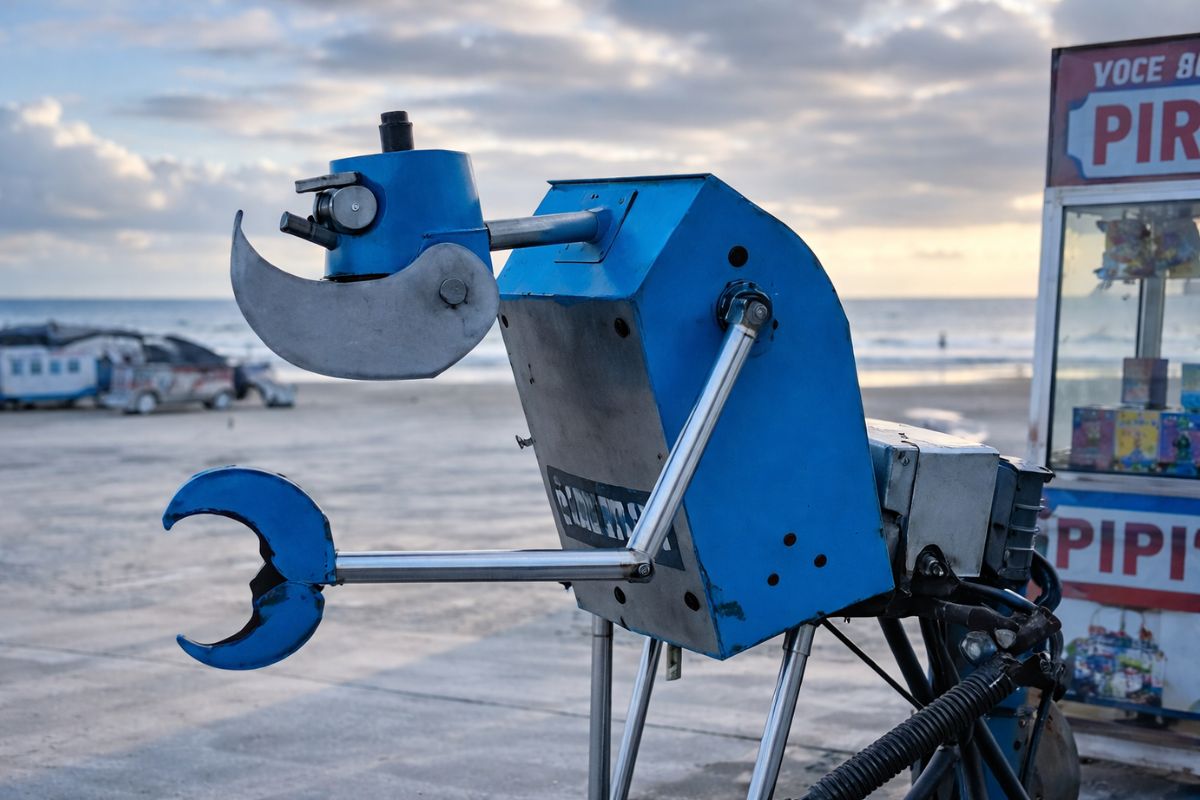
A street vendor from Praia Grande built a robot made of scrap from scooters and washing machines that pulls his popcorn cart on the beach, emits sounds, and interacts with customers, becoming an attraction on the coast of São Paulo.
-
The specifications of the Xiaomi 18 Pro Max have been leaked, and the highlight is a dual 200 MP camera with a new 22-nanometer technology that promises to consume less energy and capture details in shadows and bright areas using LOFIC HDR.


• sleep and circadian rhythm, which become disorganized when the day-night cycle loses reference
• social behavior in small groups
• long-term immune responses
• muscle atrophy and metabolic changes, even without microgravity
• psychological resilience, a decisive factor in extreme environments
The 100 days of isolation simulate what happens in space missions where crew members remain months without physical contact with others, without external stimuli and without freedom of movement. Analyzing these effects is essential for designing spacecraft, lunar bases, work routines, and survival strategies in extraterrestrial environments.
In SOLIS1000, every detail is controlled: temperature, noise, lighting, nutrition, and schedule are standardized with rigor. The team of volunteers lives almost like astronauts in training, except for the fact that the facility remains on Earth.
R$ 140,000 for 100 Days: How the Selection Works and Who Can Participate
According to the report published by Terra, the total remuneration offered is around 23,000 euros, equivalent to about R$ 140,000. This is the amount paid to those who complete the full 100 days of confinement, from the beginning until the end of the measurements. However, participating requires more than just courage: the criteria follow standards similar to professional space training.

DLR requires:
• age between 25 and 55 years
• excellent physical and mental health
• advanced medical tests
• proficiency in English
• higher education — with a preference for technical areas, engineering, natural sciences, medicine, or related fields
• proven emotional stability
• ability to adhere to strict protocols without external social contact
The selection process includes interviews, clinical exams, psychological tests, and performance evaluation in simulated stressful situations. Only after this screening are candidates cleared to participate in the Earth mission.
Brazilians can apply directly through the institution’s official channels, provided they meet all requirements and are available to stay in Germany for the entire isolation period.
What Happens Inside the Facility: Scientific Routine, Stimulus Deprivation, and Controlled Environmental Stress
The DLR facility where the confinement takes place was designed to replicate space mission environments. There are no windows, the lighting cycle is artificial, and all routine aspects are monitored:
• wake and sleep times
• intensity and duration of artificial light
• amount of calories consumed
• time dedicated to work, rest, and cognitive activities
• emotional responses to long periods without stimuli
The volunteers live under constant biometric observation. Equipment records heart rates, blood pressure, body temperature, sleep patterns, and even hormonal variations.
The goal is to create a large database on how ordinary human beings — and not just selected astronauts — adapt to controlled and isolated environments.
This approach broadens the scope of studies, allowing predictions on how crews composed of varied profiles may react to future space exploration missions.
Why Germany Leads This Type of Research
Europe, particularly Germany, has established itself as one of the world’s centers for isolation experiments and space simulation.
DLR participates in ESA (European Space Agency) programs and maintains cooperation with NASA, JAXA, and Roscosmos. SOLIS1000 follows the same line of initiatives that, in recent years, have proliferated to prepare for medium- and long-term missions.
The scientific motivation is clear: before sending humans to Mars — a journey that can take between 180 and 240 days just to get there — it is essential to know how to minimize psychological, physical, and metabolic risks. Terrestrial experiments like SOLIS1000 are the only viable way to gather this data in a controlled environment.
100 Days for a Historic Advancement: Why Ordinary People Accept the Challenge
Besides the payment, many volunteers see confinement as a unique opportunity to participate directly in the science that will shape the future of space exploration.
For others, it is a personal challenge: testing limits, understanding the impact of extreme isolation on their own bodies, and contributing to discoveries that could define the next era of crewed travel.
But above all, there is a sense of mission: helping humanity understand how to live beyond Earth.
The German study paves the way, and the inevitable question now is: are we close to the moment when missions of 500 or 600 days will be feasible for the human body?







Seja o primeiro a reagir!