





 Portuguese
  English
  Spanish
  4 min of reading
  7 comments


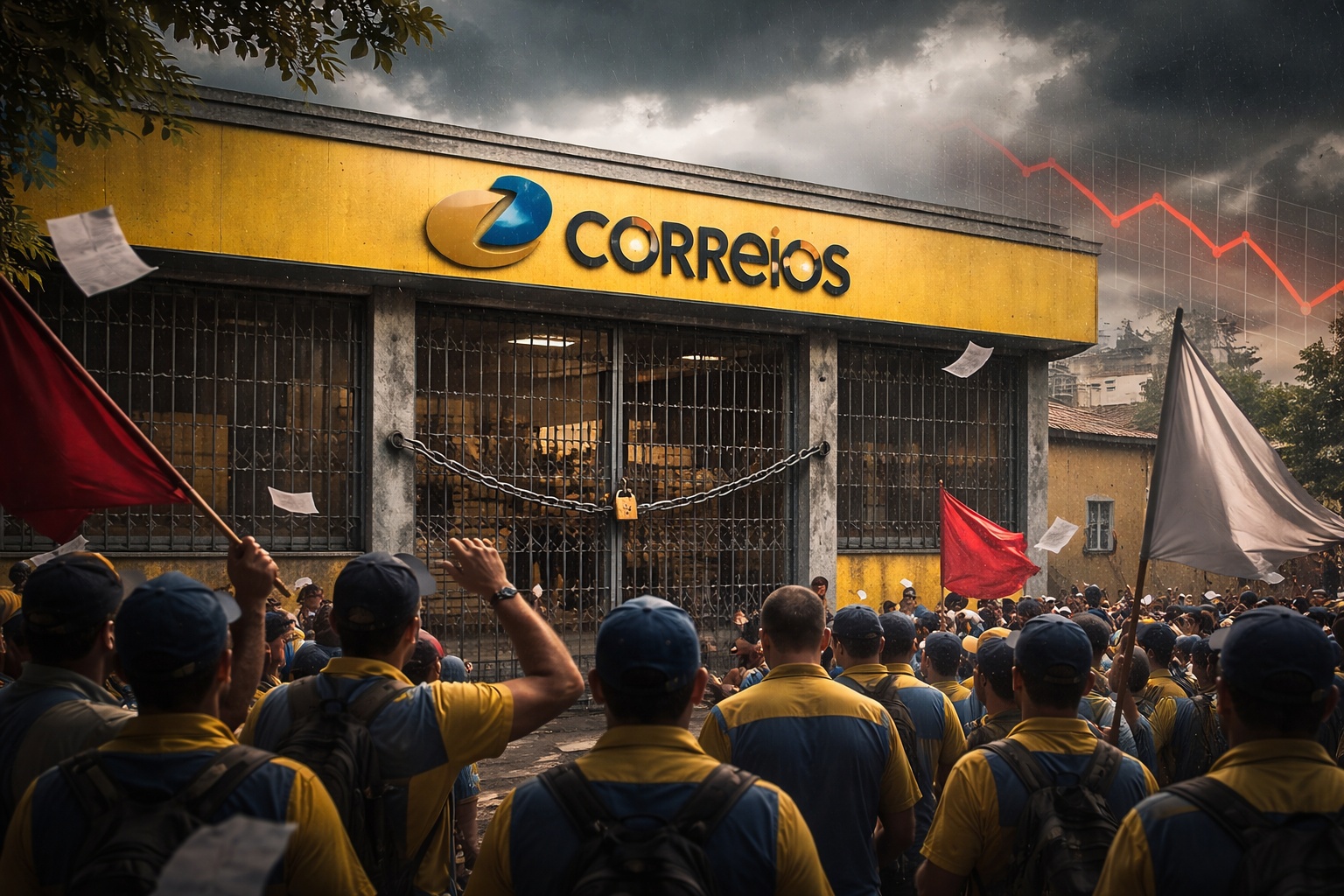


Postal Workers Approve Indefinite Strike in 7 States, Pressure for Immediate Funding and Expose Financial Crisis with Loss of R$ 6.1 Billion.
The financial crisis at the Postal Service entered a new chapter this week. State Workers approved an indefinite strike in seven states, following assemblies held on Tuesday night, the 16th, deepening the impasse between unions and the company’s management. This information was disclosed by Revista Oeste and occurs amid the worst economic moment in the history of the state-owned company, which has accumulated billions of reais in losses.
The strike has already begun and increases pressure for immediate financial support, a central demand of the category in light of the company’s financial collapse.
Strike Affects Seven States and Major Urban Centers


According to Revista Oeste, the strike was approved in assemblies in the states of São Paulo, Minas Gerais, Paraná, Rio de Janeiro, Rio Grande do Sul, Ceará, and Paraíba. In São Paulo, despite contrary guidance from the union, the workers decided to halt activities.
-
China alone accounts for 70% of trade within the BRICS, while Brazil establishes itself as an essential supplier of food and minerals: understand how the group, which already represents nearly 40% of the world’s GDP, is changing the game.
-
Starting in May, those who do not have registered biometrics will not be able to apply for Bolsa Família, sickness benefits, or unemployment insurance: understand the new rule that changes access to benefits for millions of Brazilians.

-
A new law being voted on in Brazil proposes a minimum fare of R$ 10 per trip and R$ 2.50 per kilometer for Uber and 99 drivers, and promises to ensure they earn as well as taxi drivers did during the golden age of taxis in the country.

-
Bauer Group collapses after failed judicial recovery: 25 years, 800 vehicles, and a network of gas stations leave a debt of R$ 50 million and 100 layoffs, exposing costs, tight margins, and expensive credit in Brazil.

In addition to the capitals, important bases in major cities also joined, such as Vale do Paraíba, Campinas, and Santos in São Paulo, as well as Londrina in Paraná. The movement signals a high level of dissatisfaction among the category, especially given the prolonged negotiations without concrete advances.
Other Unions Maintain State of Strike
While seven states have already started the strike, another 12 unions opted to maintain their state of strike, remaining mobilized and monitoring the developments of national negotiations.
The unions in Amazonas, Bahia, Distrito Federal, Maranhão, Pará, Piauí, Rio Grande do Norte, Mato Grosso do Sul, Roraima, Santa Maria, Juiz de Fora, and Bauru are in this situation.
These unions do not dismiss joining the strike if there is no change in the company’s stance.
“Immediate Funding”: Main Demands of the Workers
The movement is marked by a clear slogan: “immediate funding”. The workers state that they cannot be held responsible for the company’s financial crisis and demand urgent measures from the federal government.

Among the main demands are salary adjustments, maintenance of historical benefits, such as 70% additional on vacation, 200% payment on weekends, and the so-called holiday bonus worth R$ 2,500. The category also criticizes the lack of a proposal for adjustments that fully aligns with inflation.
Unions Point to Exhaustion and Lack of Response from the Company
In a statement, Sintect-SP stated that it has been awaiting a concrete proposal from the company since July, without success. According to the union, the negotiation process has dragged on for months without real progress.
The entity declared that “the category will not accept being penalized for a crisis it did not create”, reinforcing the demand for retroactive adjustments to August, maintenance of rights, and better working conditions.
Postal Service Claims Financial Infeasibility
On the other side of the table, the Postal Service’s management claims that the serious financial situation makes it unfeasible to grant all the demanded benefits. The state-owned company asserts that there is no room in the current budget to meet all the category’s demands.
In light of the impasse, the Superior Labor Court (TST) began, on Thursday, the 11th, a series of mediation meetings between the company and the unions. Since then, five meetings have already been held, including meetings on the 15th and 16th, in an attempt to reach a consensus for the new collective agreement.
Negotiations Partially Advance, but Proposal is Rejected
During the talks at the TST, the Postal Service proposed a salary adjustment based on inflation and accepted part of the demands. However, the refusal to grant the holiday bonus was considered unacceptable by the workers, who rejected the proposal.
The lack of agreement directly led to the approval of the strike in several states.
Billion-Dollar Loss and Loan Requests Aggravate the Scenario
Since the beginning of the current government, the Postal Service has moved from profitability to accumulating successive losses. The financial deficit has reached R$ 6.1 billion as of September, according to data cited by Revista Oeste.

To try to stem the crisis, the state-owned company initially sought loans of R$ 20 billion and, later, R$ 12 billion, amounts that are part of a restructuring plan under analysis at the Ministry of Finance. The lack of definition regarding this funding increases tension between workers and management.
The Postal Strike exposes not only a labor conflict but a deep structural crisis. While unions demand immediate funding and preservation of rights, the company points to budgetary limits and awaits government solutions.
The outcome of the negotiations at the TST will be decisive in determining whether the strike will expand to other states and what the financial future of the state-owned company will be in a scenario of historic losses.









A Culpa é do desgoverno Lula, que colocou as taxas das blusinhas nas compras internacionais impedindo o consumidor brasileiro de comprar, provocando um colapso sem precedentes nas finanças dos Correios. Essa empresa já passou de ser privatizada, dessa forma, acaba de vez com o cabide de emprego. Se os Correios não for privatizado, obviamente, Lula vai colocar dinheiro público de outro setor na empresa pra gerar mais corrupção e no fim quem vai pagar o rombo é a população.
A greve é justa e para a tristeza de vocês, não haverá privatização. O problema não é dos trabalhadores é da Gestão. Acabou de sair o financiamento, Lula disse que a empresa é necessária ao país e não será privatizada, houve mudança na gestão e haverá uma restruturação para atender o desmonte que foi feito na tentativa de privatizar. Viva a maior empresa de Logística da América Latina, serviço essencial para o País.
Coma péssima qualidade dos serviços oferecidos , pode dar o aporte que quiser,.
Gestão pessima e funcionarios piores ainda.
A tal de estabilidade gera isso que esta ai.
Vão demonstrar que não fazem nenhuma falta.