





 Portuguese
  English
  Spanish
  6 min of reading
  0 comments


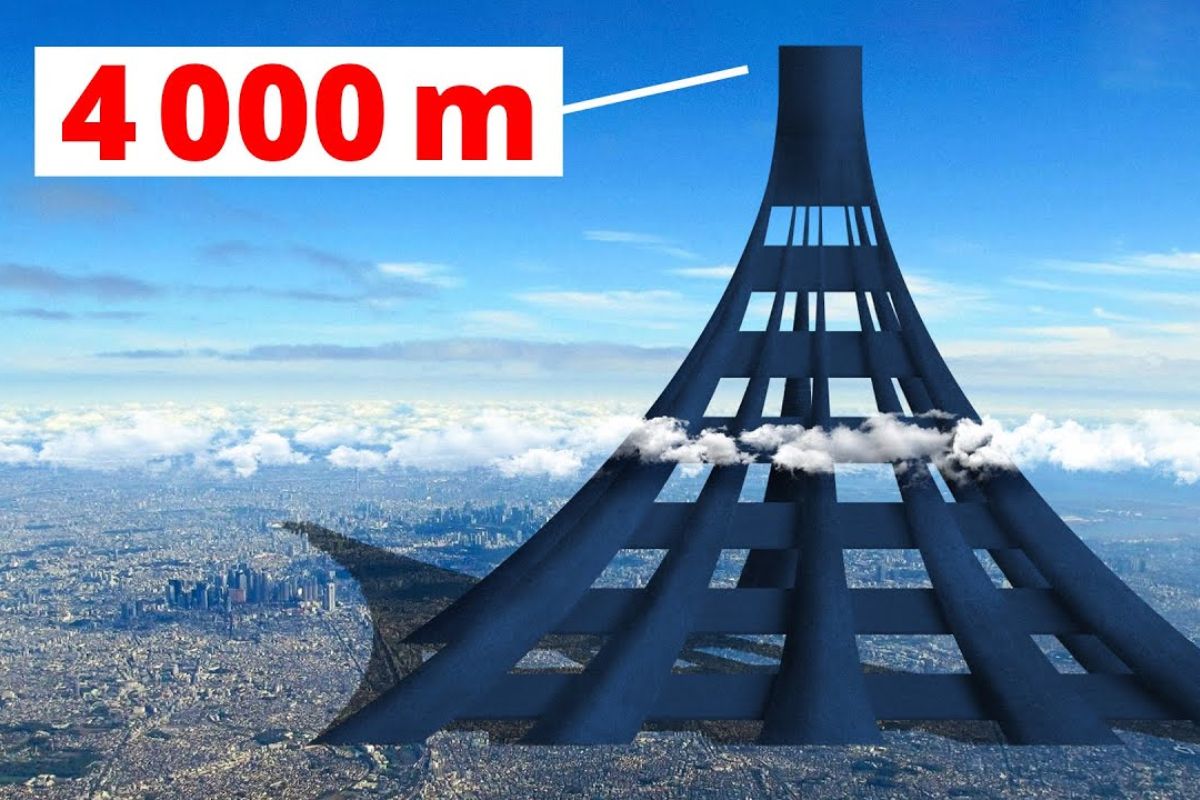
Real And Conceptual Projects Show How The Future Of Skyscrapers Already Connects Icons Like Burj Khalifa, Visionary Megatowers Like X-Seed 4000 And Tokyo’s Tower Of Babel And Even The Space Elevator In A New Frontier For Global Structural Engineering, With Urban, Economic, Environmental Impacts Still Little Understood Worldwide.
The question that drives engineers, architects and investors is simple and direct: how high can we really build before hitting physical, economic and political limits. The discussion about the future of skyscrapers has moved from just a competition of height to involving megatowers that function like complete cities, connecting land, atmosphere, and in extreme concepts, Earth’s orbit.
Between the reality of landmarks like Burj Khalifa, studies of megaprojects like X-Seed 4000 and the Tower of Babel in Tokyo, and the orbital concepts of the space elevator, the future of skyscrapers transforms into a laboratory of everything human engineering can do with materials, energy, vertical transport, and risk management on scales never tested.
From Burj Khalifa To The Physical Limits Of The Planet

The Burj Khalifa, in Dubai, is still the main concrete reference when talking about the future of skyscrapers.
-
New CCR concrete paving technology promises roads up to 3x more durable, less maintenance, and cost reduction in Brazil.
-
Made from recycled plastic, plastic wood is gaining space in the construction industry because it does not rot, resists moisture, and reduces maintenance costs over the years.

-
Florianópolis will receive a million-dollar BRT that will begin construction in 2026 with nearly 400 million in funding from the federal government and the Inter-American Development Bank, and the map already shows the routes for the exclusive bus corridors.
-
Without a blueprint, without an engineer, and using scrap from the dump, a father spends 15 years building an 18-room castle for his daughter, featuring tram tracks, 13 fireplaces, and over 700 m², which may now be demolished.

At 828 meters high, built starting in 2004 and opened in 2010, the building became a showcase of engineering, luxury consumption, and tourism, while also highlighting how expensive and complex it is to keep a tower of this scale operating daily.
It shows the point where the future of skyscrapers is no longer just a matter of height but depends on three essential technical variables: structural resistance against wind, capacity of vertical transportation systems, and energy efficiency.
Even an icon like Burj Khalifa already requires sophisticated solutions for elevators, vibration dampening, and climate control, indicating the magnitude of the leap necessary to reach the megatowers that are coming next.
When designing buildings over one kilometer, like Jeddah Tower, engineers approach a limit where shape, weight, and wind impose harsh restrictions.
Every additional meter costs exponentially more in steel, concrete, technology, and risk, which helps explain why the future of skyscrapers is shifting toward “vertical city” concepts rather than merely “taller towers”.
X-Seed 4000 And The Tower Of Babel In Tokyo As Vertical Cities

Among the most emblematic concepts of the future of skyscrapers, the X-Seed 4000 occupies a central place.
Proposed in the 1990s by a large Japanese engineering corporation, the project envisioned a megatower 4 kilometers high, taller than Mount Fuji, with a structure supported in the region of the so-called Ring of Fire in the Pacific.
The idea was to create a true vertical city, based on solar energy, with capacity to house up to 1 million people inside.
The X-Seed 4000 is a landmark because it treats the future of skyscrapers as complete urban infrastructure, not just an isolated building.
The cost estimate, ranging from hundreds of billions to over 1 trillion dollars, and the need for millions of tons of steel show that, even though it is theoretically possible, economic and logistical viability is the biggest obstacle.
Still, the name X-Seed 4000 comes up whenever discussing the limit of what engineering can erect in a terrestrial environment.
Even more extreme is the concept of the Tower of Babel in Tokyo, a project 10 kilometers high, designed to reach an elevation surpassing that of Mount Everest and exceed the cruising altitude of many commercial airplanes.
The Tower of Babel in Tokyo was designed to accommodate up to 30 million people in a base over 4,000 square kilometers, larger than many entire metropolitan areas.
In practice, the Tower of Babel in Tokyo serves as a study of a limit scenario for the future of skyscrapers: the size of the base, structural efforts, and economic scale make the project almost impossible under current conditions.
However, the fact that the Tower of Babel in Tokyo was formally presented at an international congress and discussed by universities shows that engineering is already calculating, even if on paper, how megatowers that rival mountains would look.
How Long Until The Space Elevator Leaves Fiction
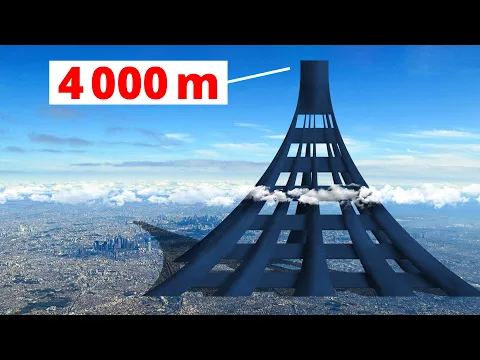

If X-Seed 4000 and the Tower of Babel in Tokyo push the future of skyscrapers to the conceptual stratosphere, the space elevator goes even further and almost redefines the idea of a skyscraper.
Instead of a building supported on the ground, the space elevator proposes a cable connecting the Earth’s surface to a point in orbit, about 35 thousand kilometers high, with a counterweight in orbit and vehicles ascending along that cable.
In practice, the space elevator is the stage where the future of skyscrapers merges with orbital infrastructure.
The challenge is not only structural but mainly about materials: the cable would need to be light yet extremely resilient to tension, able to support its own weight and that of the moving vehicles.
Theoretical research mentions materials such as advanced fibers, carbon nanotubes, or structures based on graphene, but there is still no industrial technology capable of producing cables of this type at scale and with reliability.
Nevertheless, the concept of a space elevator remains active in research centers, companies, and universities.
For the future of skyscrapers, the space elevator serves as a reference horizon: it indicates that the question is not just “how far can we build,” but “how do we connect the ground to orbit safely and at an acceptable cost”.
In other words, the space elevator is less a building and more a planet-wide vertical transport system that would completely reorganize logistics, satellites, and even space tourism.
Costs, Materials And Risks In The Future Of Skyscrapers
When analyzing the future of skyscrapers, it becomes clear that the discussion is not only about engineering but also about economics and risk.
Projects like X-Seed 4000 or the Tower of Babel in Tokyo show that, even with theoretically possible structural solutions, the billion-dollar or trillion-dollar cost and the construction timeline of many decades create almost unmanageable political and financial uncertainties.
An adverse economic cycle or a government change can halt the work and turn a megatower into an unfinished ruin.
From a technical perspective, the future of skyscrapers depends on new high-strength and lightweight materials, faster and more efficient elevator systems, and strategies to mitigate wind and vibration in long vertical spans.
The Burj Khalifa itself, which is “only” a predecessor to these megatowers, required refined façade aerodynamics solutions to reduce oscillations.
In projects like X-Seed 4000 or the Tower of Babel in Tokyo, these oscillations would be a critical problem throughout the structure.
In the case of the space elevator, the risks go beyond classic civil engineering.
The cable could be affected by orbital debris, solar storms, mechanical failures, or even deliberate sabotage actions.
For this reason, many experts see the space elevator as the ultimate frontier of the future of skyscrapers, but also as a system that would require international cooperation, specific regulation, and extreme redundancies to be authorized on a real scale.
A Future Of Skyscrapers That Goes Beyond Height
What unites Burj Khalifa, X-Seed 4000, Tower of Babel in Tokyo, and the concept of space elevator is less the competition for records and more the quest for new ways to organize life, work, transport, and energy in gigantic vertical structures.
The future of skyscrapers becomes, at the same time, a debate about compact cities, efficient land use, environmental impact, and resilience in the face of climate and economic crises.
Ultimately, the future of skyscrapers will not be determined solely by what is technically possible, but by what makes social, economic, and environmental sense.
Megatowers like X-Seed 4000 or the Tower of Babel in Tokyo, and radical systems like the space elevator, currently serve as laboratories for ideas that can generate more realistic intermediate solutions for the coming decades.
In the end, the question that remains for those following these projects is simple: if you could choose, would you prefer to live in a “realistic” skyscraper like the Burj Khalifa, in a conceptual megatower like the X-Seed 4000 or risk a trip on a space elevator to orbit?








Seja o primeiro a reagir!