





 Portuguese
  English
  Spanish
  6 min of reading
  0 comments


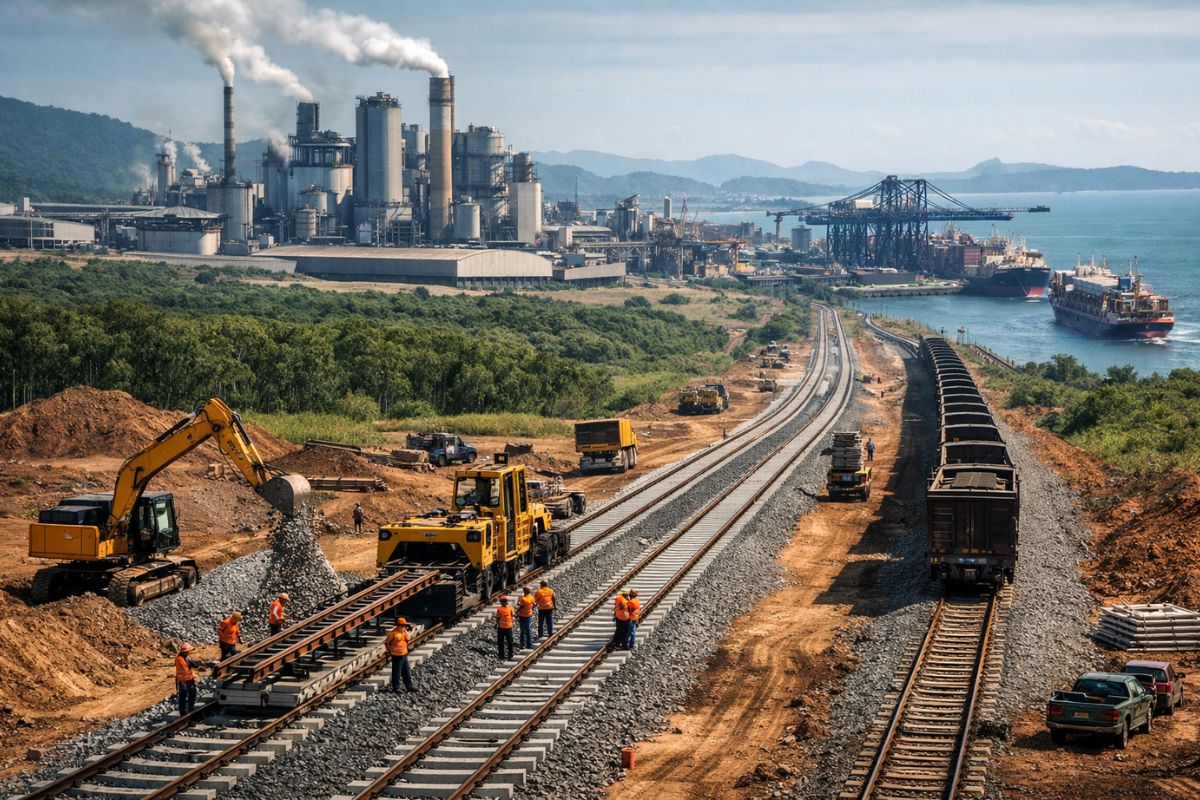
With a Projected Capacity of 3.5 Million Tons Annually and Operation with up to 100 Wagons, the Railway Started in Inocência Connects Arauco’s Future Plant to the Northern Line, Reinforces the Route to the Port of Santos, and Repositions Mato Grosso do Sul in the Contemporary Brazilian Industrial Geography with International Reach.
The railway that began to be implemented in Inocência, in the east of Mato Grosso do Sul, consolidates a large-scale logistical turnaround in Brazil’s main cellulose hub. With an estimated investment of R$ 2.8 billion and a layout of 47 kilometers, the project connects Arauco’s future factory to the Northern Line.
In practice, this new cargo corridor shortens access to the Port of Santos and repositions the state in the international flow directed towards the United States, Europe, and Asia. The movement brings together the federal government, state government, and private initiative around a common goal: reduce logistical bottlenecks, elevate operational efficiency and sustain export growth.
Where the Construction Started and Who is at the Center of the Logistical Decision

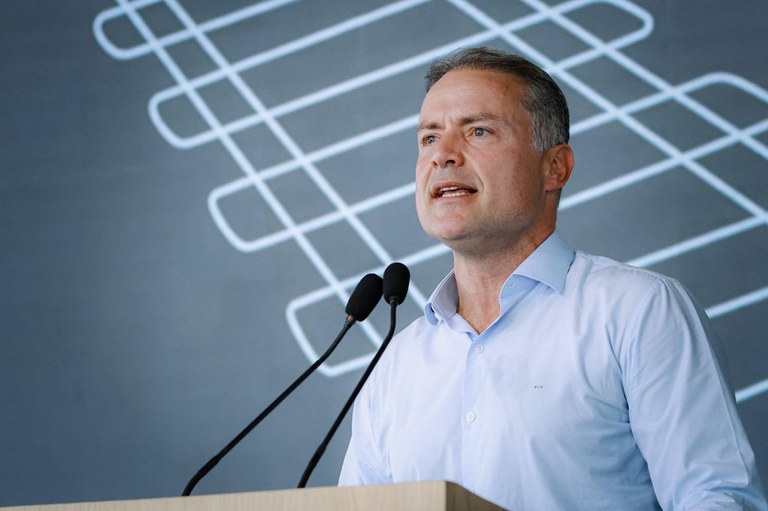
New Railway in Inocência (MS) will have 47 kilometers in length and an investment of R$ 2.8 billion. – Photo: Marcio Ferreira/MT
-
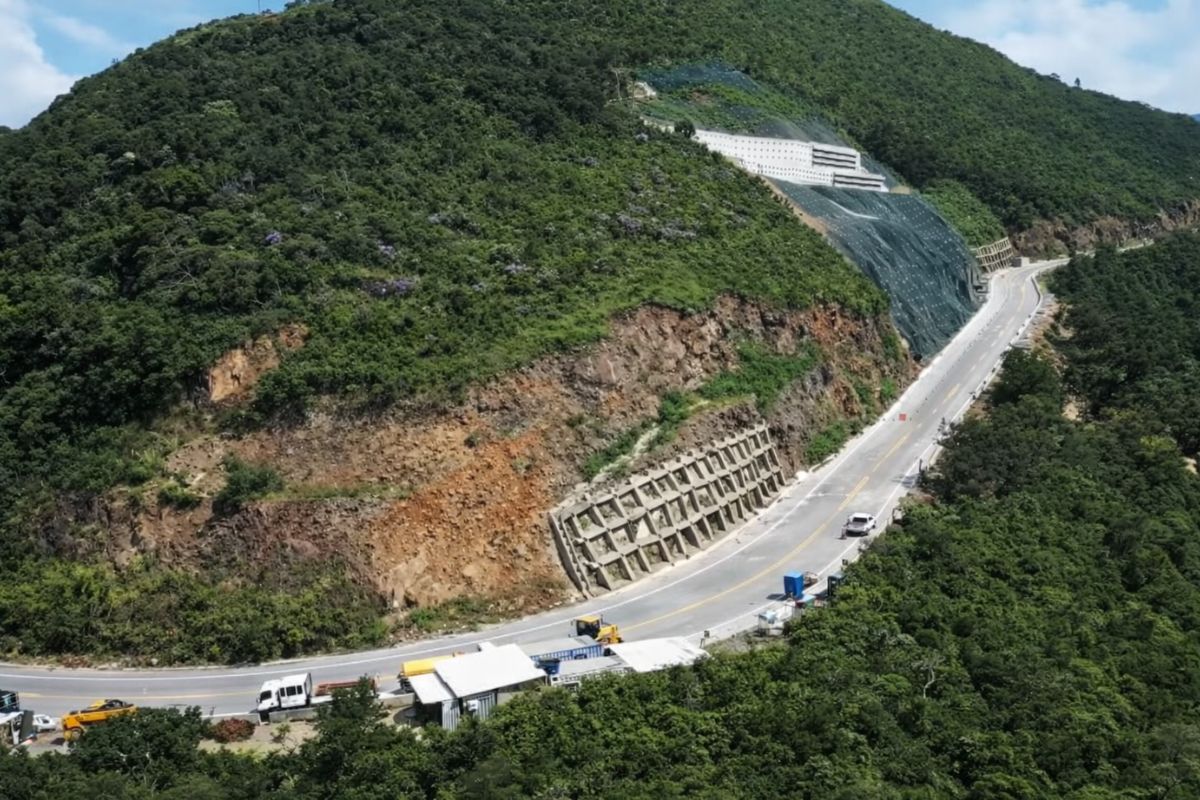
The section of Serra da Rocinha on BR-285 is now open in Timbé do Sul: 50 m tensioned curtains and top-down technique stabilize the slope, with a stairway duct controlling the water.
-
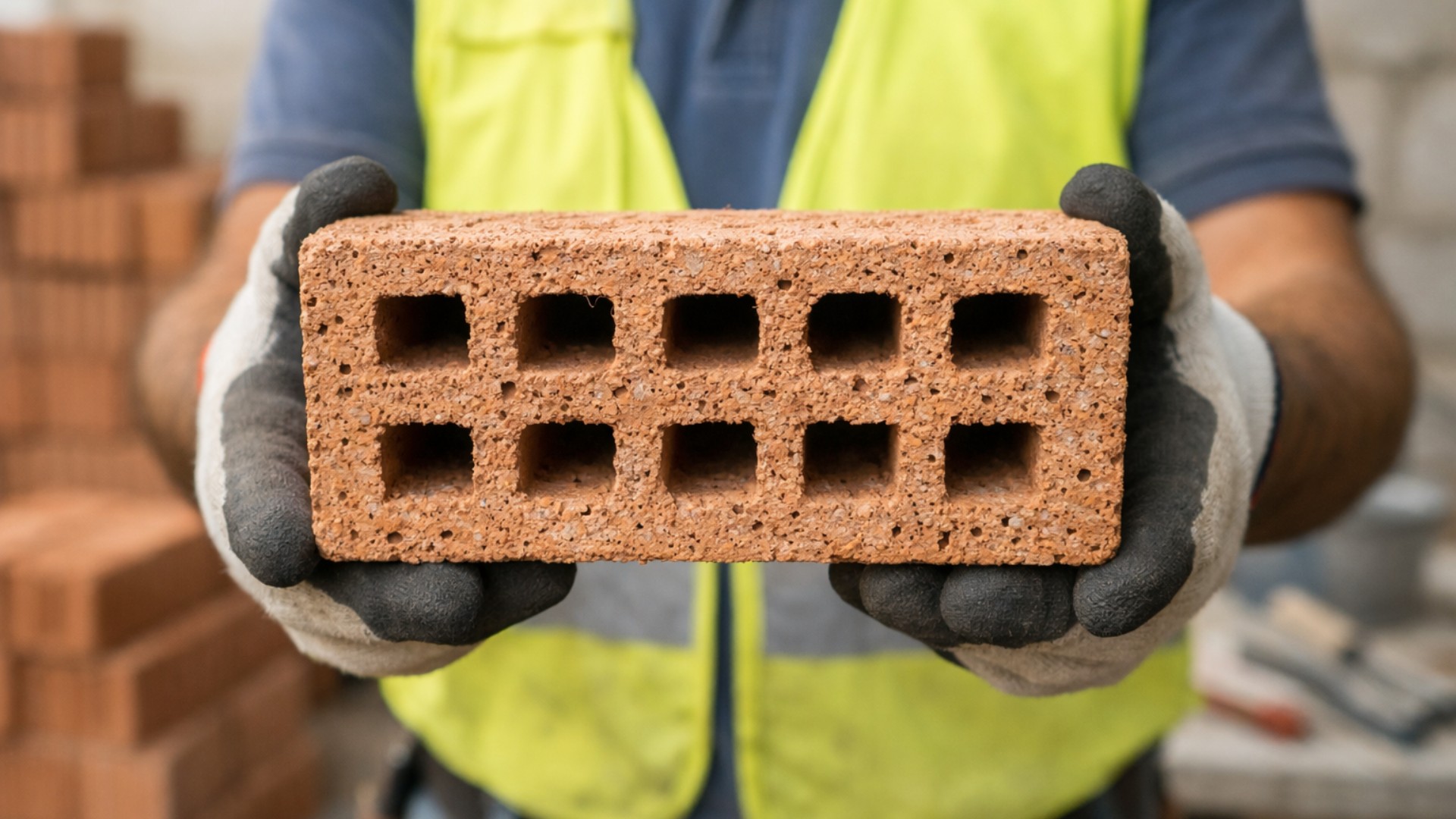
Scientists use sawdust mixed with clay to create a lighter brick, promising efficient thermal insulation and impressing by transforming waste into a solution for construction.
-
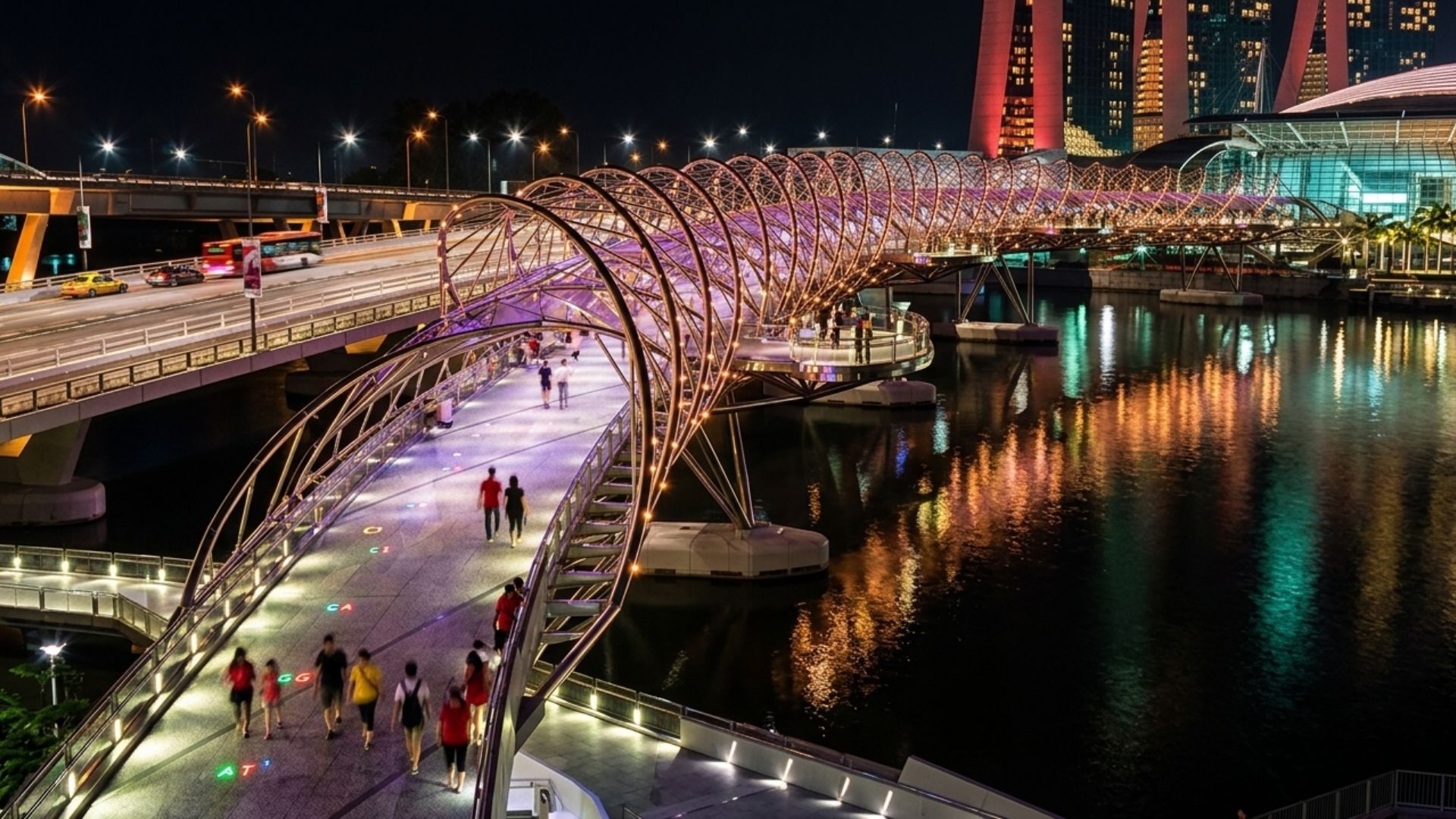
With a DNA shape, this bridge in Singapore draws attention in modern architecture and surprises tourists by transforming a simple crossing into an unforgettable visual experience in the urban heart.
-
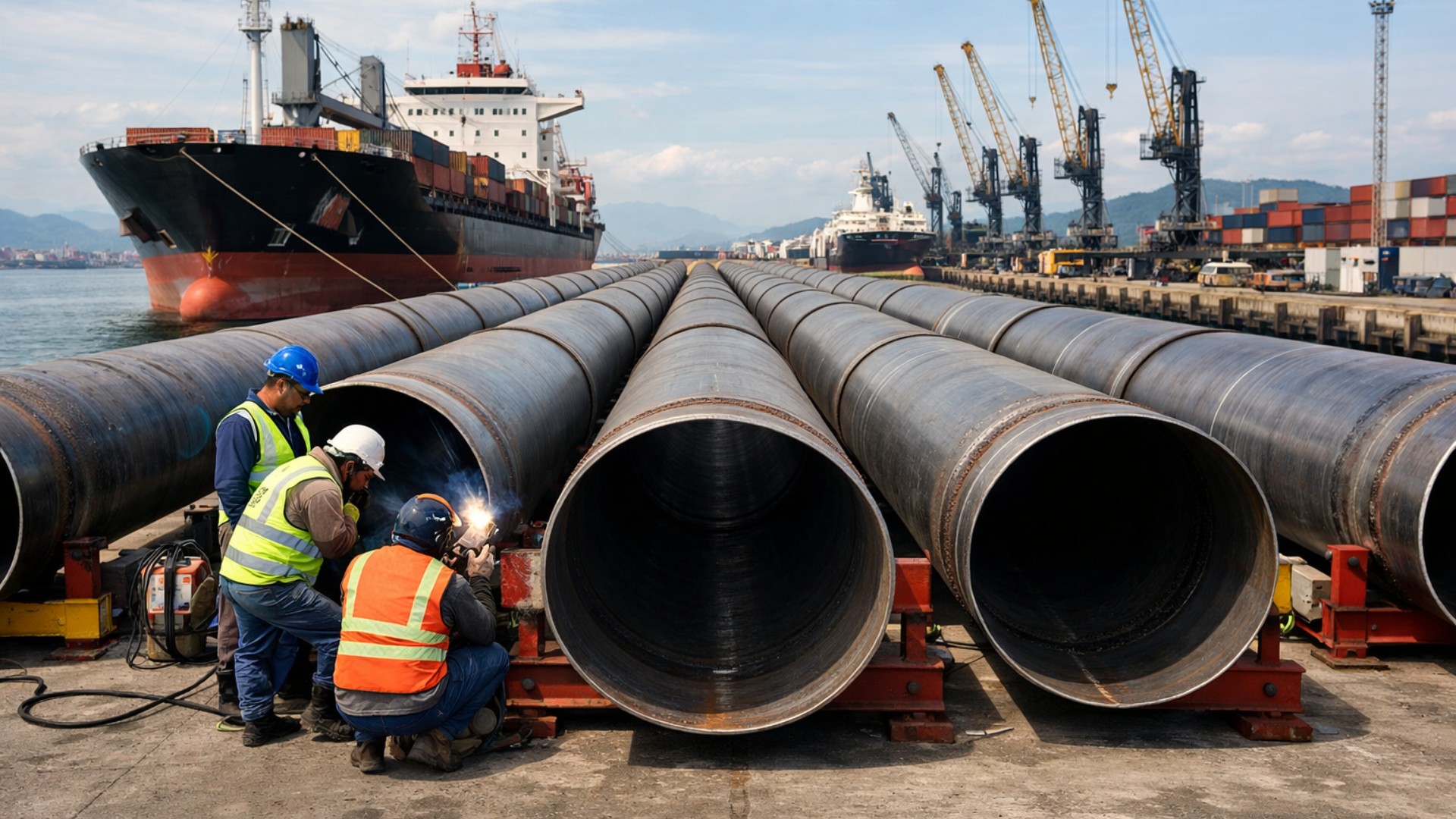
Giant underwater pipeline begins to take shape with a R$ 134.7 million project at the Port of Santos: the 1.7 km structure uses 12-meter and 700 mm pipes to supply water to 450,000 people in Guarujá.
The ceremony to start construction took place in Inocência, a municipality in the eastern region of Mato Grosso do Sul, with the presence of the Minister of Transport, Renan Filho. The section begins with strategic weight as a shortline, a model of smaller extent aimed at cargo operation, and was presented as the first shortline authorized in Brazil.

In the institutional design, the railway brings together agents with complementary roles: the federal government in coordinating transport policy, the state as an economic environment facilitator, and Arauco as the anchor investor in the industrial project linked to cellulose. Arauco Brazil’s president, Carlos Alberto Altimiras, defined the railway section as a structural part of the business, not an accessory, emphasizing that logistics was treated from the outset as a pillar of viability.
Also at the local level, the city hall of Inocência began to treat the implementation as a vector of immediate transformation, especially regarding employment and income. Mayor Antônio Ângelo highlighted that the combination of factory and railway opens direct opportunities for the population, with an impact that goes beyond the construction site and reaches commerce, services, and the economic dynamics of the municipality.
How Much the Railway Costs and How This Operation Should Work in Practice
The estimated investment in the new railway is R$ 2.8 billion, with a completion deadline set for the second half of 2027. The project includes 47 kilometers of new tracks, connecting Arauco’s plant to the Northern Line, which continues the rail flow to the Port of Santos.
In operational terms, the infrastructure was designed to handle up to 3.5 million tons of cellulose per year, with compositions of up to 100 wagons.
This parameter indicates a scale logic typical of dedicated corridors, prioritizing shipment regularity and arrival predictability, two critical factors in export chains sensitive to deadlines and logistical costs.
During the implementation, it is estimated that around a thousand direct jobs will be created. This number is relevant for two reasons: first, because it injects income in the short term in a smaller city; second, because it anticipates the demand for support services, professional qualification, and public capacity to absorb the accelerated cycle of works and associated activities.
Why This Railway Changes the Position of Mato Grosso do Sul on the Cellulose Map

The data from the Federation of Industries of Mato Grosso do Sul (Fiems) helps to understand the economic dimension of this movement.
In 2025, the state accounted for 35% of the total cellulose exported by Brazil, with almost 7 million tons sent to 40 countries and revenue of US$ 3.11 billion, a 17% increase compared to 2024. When the export base is already large, logistics starts to define competitiveness.
The new railway acts exactly at this point. By connecting production and national cargo networks towards Santos, the state reduces dependence on more fragmented routes, improves volume coordination, and strengthens its presence in demanding markets. The United States, Europe, and Asia, already cited as priority destinations, tend to require supply stability, which depends on infrastructure with lower operational vulnerability.
The long-term view also appears in the state discourse.
Governor Eduardo Riedel projected that the set of investments being made now will have a transformative effect in the next decade. In practical terms, the message is clear: this is not just a railway project, but a reorganization of the productive base and the ability to compete internationally.
Multimodal Integration and the Infrastructure Package Accompanying the Railway
The construction in Inocência was not presented as an isolated action. It integrates a broader agenda for optimizing the transport matrix, combining rail and road to reduce historical bottlenecks in the production flow.
The national secretary of railway transport, Leonardo Ribeiro, highlighted that rail transport tends to be more efficient for cargo and is associated with lower emissions of pollutants, in addition to helping to reduce congestion and accidents on the roads.
In this same strategic axis, the Ministry of Transport held the auction for the Cellulose Route in May 2025, with an investment of R$ 10.1 billion. The package involves BRs 262 and 267 and state highways MS-040, MS-338, and MS-395, forming a logistical arrangement to support the productive corridor of the Midwest.
The route crosses key municipalities such as Água Clara, Bataguassu, Campo Grande, Nova Andradina, Ribas do Rio Pardo, Santa Rita do Pardo, and Três Lagoas. At the end of 2025, another movement reinforced the integration logic: BNDES approved R$ 1.05 billion for Eldorado Brasil Celulose to build a railway of 86.7 kilometers between the factory in Três Lagoas and the company’s terminal in Aparecida do Taboado, connected to Rumo’s network. The emerging design is of a network, not a single project.
What to Monitor Until 2027: Execution, Connections, and Real Impact on the Territory
With a deadline until the second half of 2027, the decisive stage now is execution. In works of this nature, the schedule, coordination between public and private actors, and synchronization with the existing network are factors that determine the final success. The promise of scale is high, but it depends on physical delivery on time and stable operation after inauguration.
Another central point is the connection between investments. The revitalization of the West Line, mentioned by the Ministry of Transport as part of the state’s railway reintegration, can amplify positive effects if it progresses in line with industrial demand. The same goes for the investments planned for 2026, including R$ 850 million in access to the Brazil-Paraguay bridge and in the reconstruction of the road between Porto Murtinho and Carmelo Peralta, which influence the regional fluidity of cargo.
In social terms, local gains go beyond the thousand direct jobs from the implementation phase but require governance for the benefits to be consistently distributed. The practical question is not just whether the railway will be completed, but whether it will be integrated into a lasting regional development strategy, with workforce qualification, productive linkage, and permanent income gains.
The new railway in Inocência centers around robust numbers, a clear goal for cargo flow, and a direct connection to the country’s main export port. The project combines industrial scale, logistical planning, and invests in multimodal integration, with potential impact on competitiveness, employment, and the international positioning of Brazilian cellulose.
From your point of view, which front should take priority for this corridor to deliver real results by 2027: meet the railway construction deadline, accelerate the road connections of the Cellulose Route, or ensure local workforce qualification to absorb the new demand?








-

-

-

-

-

-

14 pessoas reagiram a isso.