





 Portuguese
  English
  Spanish
  6 min of reading
  0 comments


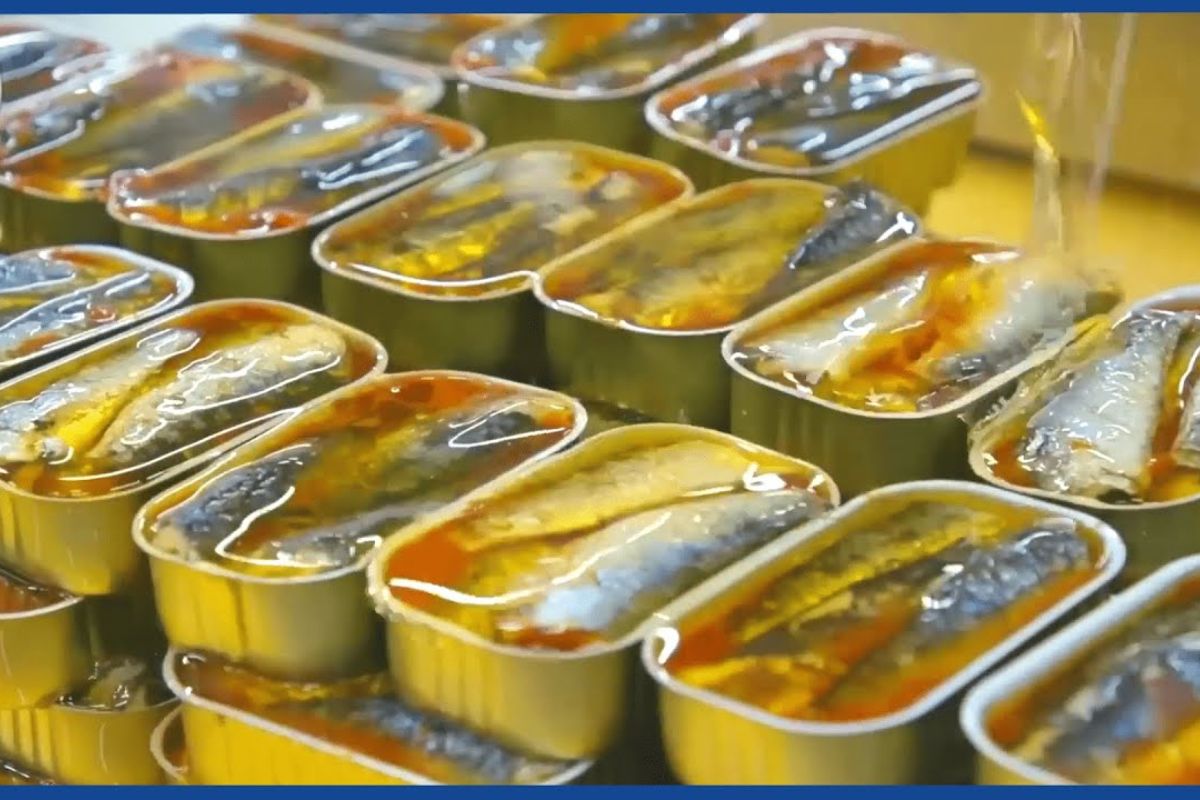
From Night Fishing in the Oceans to the Shining Conveyor, Canned Sardines Arise from a Precise Sardine Production, Inside a Modern Sardine Factory and Giant Canning Industry, in a Timed Sardine Process That Transforms Fresh Fish into Safe Food for Store Shelves Around the World.
The canned sardine seems simple, but behind that small packaging lies a ridiculous industrial operation. In just a few years, the world started consuming millions of tons of sardines, and part of this comes from production lines that do not stop, transforming fresh fish into stable preserves in a matter of hours.
In this behind-the-scenes, you will see how sardine production begins at sea, goes through boats equipped with sonar, arrives at the sardine factory filled with ice to the top, and enters into a sardine process so rigorous that a canning industry can fill over 2 million cans a day while maintaining standards and safety.
Canned Sardines: From the School to the Production Line

It all starts at the port, in the late afternoon. Sardine production takes advantage of the fish’s habit, which swims to the surface at dusk to feed on plankton. Modern fleets no longer rely solely on seagulls or bubbles in the water: they use sonar and radar to locate schools with precision, reducing time and waste.
-
The low-cost solution called PatchPal, invented in South Africa to fix potholes in minutes, does not crack and prevents water from entering, becoming more compact with each car that drives over it, revolutionizing road repairs that governments have forgotten.

-
The 2nd safest city in Brazil is attracting new residents, industries, formal jobs, and also has a giant free park.

-
“Brazilian California”: the city is one of the best places to live in Brazil.

-
A collector bought a black stone in Morocco in 2011 without knowing that he had in his hands a Martian meteorite 4.45 billion years old with ten times more water than any other fragment of Mars ever found on Earth.


The most commonly used method is the surround net, a huge net that encircles the school while the boat navigates around it at a controlled speed.
When the fish are surrounded, the net is closed from below and pulled toward the boat. Here, the sardine process is already beginning, which, a few hours later, becomes canned sardines on the shelf.
The sardines are extracted from the net with suction pumps or smaller nets and taken to tanks filled with ice or chilled water.

Keeping the fish cold from the first minute is a golden rule in the canning industry, because the quality of canned sardines directly depends on the temperature immediately after capture.
Sardine Production on a Brutal Scale

To meet global demand, sardine production exceeds 3 million tons per year. Part of this volume goes for fresh consumption, but billions of units become canned sardines in factories around the planet.
In Brazil, a symbol of this scale is the unit in Itajaí, Santa Catarina, Gomes da Costa is considered the largest canned sardine factory in the world, with a capacity for over 2 million cans per day.

Here, the sardine arrives a few hours after being caught, still covered in ice, and goes directly into the sardine process that needs to be completed in less than 5 hours.
The boats unload quickly, usually in less than 24 hours after capture. Refrigerated trucks take the fish to the sardine factory, where the canning industry operates on a heavy shift: while one batch is received, another is being cleaned, another is being cooked, and another is being canned. Canned sardines are the result of a meticulous logistics.
Evisceration and Cleaning: The Start of the Sardine Process

As soon as they arrive at the industrial unit, the sardines are placed in containers with cold water, keeping the temperature around 5 ºC.
This control prevents the fish from deteriorating before turning into canned sardines. The first major stage of the sardine process is evisceration, which removes heads and entrails.
This can occur in two ways:
- Automated process, in which the fish move along conveyor belts to machines equipped with pincers and blades that cut heads and remove entrails at high speed.
- Manual process, on stainless steel or marble tables, where specialized workers use knives or scissors to clean sardine by sardine.
The manual method is slower, but allows for much greater visual control, reducing defects and waste. On the other hand, the automated process maintains the industrial pace of the sardine factory, essential for a sardine production that can reach 1 million processed fish in a single day.
After cleaning, the sardines go to the brine, where they are submerged for about 30 minutes. The brine adjusts flavor, texture, and helps with preservation, preparing the fish to withstand high temperatures without disintegrating inside the can.
Cooking and Methods Used by the Canning Industry
Next, the sardine process goes through cooking. In a line, the sardines are placed on inclined metal grills, washed to remove excess salt, and then taken to steam industrial ovens.
These ovens operate at a controlled temperature between 100 and 120 ºC, for about 10 to 20 minutes, ensuring even cooking without drying out the meat.
The canning industry also uses another very common method: cooking inside the can itself. In this case, the sardines are cleaned and cut, but not pre-cooked. They go raw directly into the cans along with olive oil, vegetable oil, water, or tomato sauce. The cans are hermetically sealed and sent to industrial autoclaves.
Inside the autoclaves, the set goes through thermal sterilization, with steam under high pressure and temperatures that can reach about 130 ºC for 30 to 90 minutes, depending on the size of the package and the type of sauce.
It is at this point that canned sardines gain a long shelf life, as the process eliminates microorganisms and cooks the product completely.
There are also variations where raw sardines are placed in cans, and these are turned upside down to allow liquid and natural fat to drain during cooking in a steam oven. Each type of sardine factory chooses the combination of methods that best balances flavor, texture, and cost.
Filling, Sealing, and Safety of Canned Sardines
After cooking, the sardines are organized manually or automatically inside the cans, ensuring visual standardization and correct weight.
Next, they receive the covering liquids: olive oil, vegetable oil, sauces, or brine, which help with preservation, intensify flavor, and define brand positioning.
The cans go to automatic sealing machines, where the lid is pressed and fixed to the body with vacuum sealing. Sealing the canned sardine without air prevents oxidation of the fish and increases durability, as long as the can remains intact.
During filling and sealing, it is normal for the exterior of the cans to get dirty with oil or sauce. Therefore, they go through washing and drying before returning for new autoclaves.
This second round of heat completely sterilizes the contents, ensuring that the food remains safe until the consumer opens the canned sardine at home.
Canning Industry, Sardine Process, and Nutrition
All this sardine production at an industrial pace makes no sense if the final product does not deliver nutritional value.
The canned sardine retains much of the benefits of fresh fish, especially when processing is quick, as in lines that do everything in less than 5 hours after arrival at the factory.
Sardines are rich in omega 3, important for heart and brain health, and also provide calcium, phosphorus, and vitamin D, which help with bone health.
As a source of protein, it aids in muscle growth, combats anemia, and strengthens the immune system. For many families, canned sardines are an inexpensive way to regularly consume fish.
When you open a can, you are seeing the condensed result of an entire sardine process, operated by people, machines, and a canning industry that controls temperature, pressure, cooking time, salt, and hygiene at every stage.
The sardine factory is the meeting point between sea and metal, where the school turns into food that crosses borders.
In the end of this whole story, you can look at canned sardines with a bit more respect, knowing the speed, scale, and the level of control involved so that that small silver fish arrives safely to your kitchen.
After learning all this, do you think that canned sardines are underestimated at the Brazilian table, or do you still prefer other canned products when making a quick meal?







-

-

4 pessoas reagiram a isso.