





 Português
  Inglês
  Espanhol
  5 min de leitura
  0 comentários


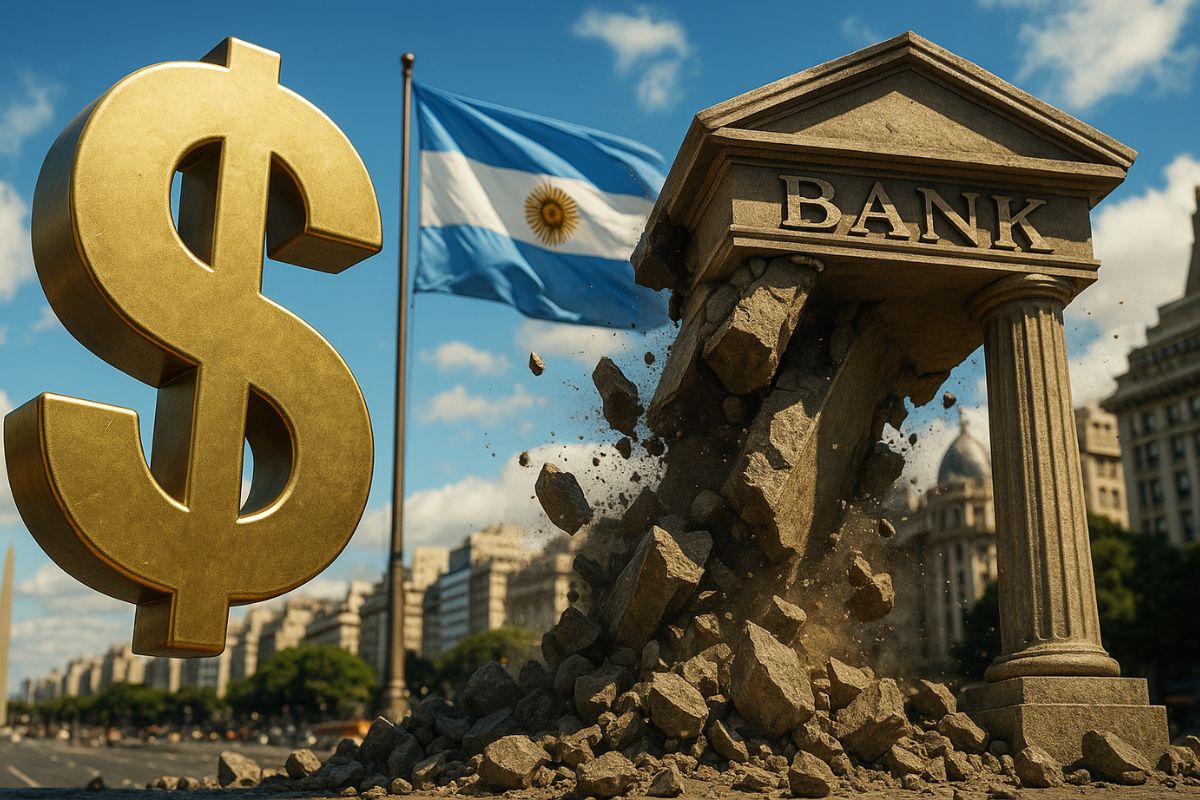
With High Political Risk And Pressured Reserves, Javier Milei’s Argentina Saw American Banks Step Back From The US$ 20 Billion Package And Start Discussing A Repo Of Just US$ 5 Billion, Urgent, Short And Filled With Financial Uncertainties About Real Collateral, US Treasury Support
The plan that promised to be Javier Milei’s big financial cushion was put on hold. The American banks suspended the US$ 20 billion rescue that was being negotiated with JP Morgan, Bank of America, and Citigroup and are now considering a much smaller aid in the form of a short-term repurchase operation, worth approximately US$ 5 billion.
Instead of a robust package designed to bolster reserves and give breathing room to the economic program, what is on the table today is a repo aimed at covering a one-time debt payment in January, of about US$ 4 billion, heavily dependent on market conditions for repayment. The risk of Argentina being left without an exit if it cannot issue new bonds heightens the tension surrounding this retreat by American banks.
From The US$ 20 Billion Megaplan To The US$ 5 Billion Repo
According to people close to the talks cited by the Wall Street Journal, the initial design involved American banks structuring a US$ 20 billion rescue for Argentina, in combination with actions from the U.S. Treasury.
-
In a silent race, Shopee signs a mega contract in Guarulhos and accelerates the e-commerce war with faster deliveries, pressured shipping, and a new threat to rivals in Brazil.

-
Oil surged to $115 a barrel due to the war in the Middle East, and diesel in Brazil has already risen to R$ 7.45 per liter, while the United States…

-
Brazilian city bets on the business environment to generate jobs and attract investments in the energy sector — secretary reveals strategy at Macaé Energy 2026.

-
50 viaducts, 4 tunnels, 28 bridges, and 40 kilometers of bike paths: BR-262 in Espírito Santo will receive 8.6 billion reais for the largest engineering project in the state’s history, inspired by the Immigrant Highway in São Paulo.


The financial engineering included a robust private line that would be part of a broader strategy to support Milei’s government.
This model has been frozen. JP Morgan, Bank of America, and Citigroup have begun evaluating a repo of around US$ 5 billion, in which Argentina would deliver a portfolio of assets in exchange for dollars, with a short term and a very clear objective: to ensure the payment of approximately US$ 4 billion in debt early next year.
The logic is simple and harsh.
First, the repo would help navigate the immediate payment. Then, the government would try to issue billions in bonds in the international market to repurchase the assets used in the operation and settle the loan.
If the market closes the door or demands prohibitive interest rates, the risk of default or new renegotiation comes back to the center of the scenario.
Reserves Under Pressure And The Search For Time For Milei
The negotiation around the repo is taking place in a context of compressed reserves and strong financial pressure. Javier Milei’s economic team is racing against the clock.
The Finance Minister, Luis Caputo, has committed to updating the market on the strategy to bolster reserves by early December, in an attempt to anchor expectations while the plan with American banks remains undefined.
By reducing the size of the operation, American banks seem to be looking for a way to limit exposure to a historically volatile issuer, while delivering a minimum of support to ensure Argentina meets immediate commitments.
The problem is that a US$ 5 billion repo does not resolve the structural situation, it merely buys time, and that time depends on the future willingness of investors to accept new Argentine papers.
U.S. Treasury, Currency Swap, And Criticism Of The Lack Of Transparency
The diminished private package needs to be read alongside the actions of the U.S. government.
At the end of October, the American Treasury signaled a US$ 20 billion currency swap, along with an additional credit line of US$ 20 billion structured by the banks, aimed at supporting Milei’s pro-reform camp and strengthening the Argentine treasury at a moment of high political pressure.
This official front is also not free from questions.
Former members of the U.S. Treasury criticize the lack of transparency regarding financial support for Argentina, highlighting that the level of public information is much lower than in previous episodes, such as the bailout of Mexico in the 1990s.
Brad Setser, a researcher at the Council on Foreign Relations and former Deputy Treasury Secretary under the Obama administration, has drawn attention specifically to the use of taxpayer resources without clear detailing.
The available data shows that there was an increase of US$ 2.5 billion in short-term swaps on the balance sheet of the Argentine Central Bank between late September and October, but there is no official confirmation on how much of the US$ 20 billion swap has already been activated.
Meanwhile, the United States has sent about US$ 900 million in special drawing rights, an IMF reserve instrument, financially reinforcing the country on another front.
Collateral, Risk Appetite, And The Brakes Of American Banks
At the heart of the impasse is a classic discussion of sovereign credit: collateral and recovery in case of problems.
The American banks were awaiting clear guidance on which assets could be used as collateral for a larger, longer-term package.
Without a response that alleviated the perception of risk, the institutions ceased to seriously consider the original US$ 20 billion proposal, according to sources cited by the Wall Street Journal.
The US$ 5 billion repo emerges precisely as a more limited alternative, with direct backing from a portfolio of assets and a short-term horizon, making the operation more palatable for banks that still view Argentina as a high-risk borrower.
The counterparty, on the Argentine side, is exposure to a binary scenario: either the country manages to access the bond market under minimally acceptable conditions, or the very liquidation of the repo becomes a new bottleneck.
For the U.S. Treasury, the rhetoric remains one of confidence in the economic program.
Spokespeople for the U.S. government reiterate that they continue to trust Milei’s and Caputo’s commitment to essential principles, even mentioning the slogan “Make Argentina Great Again.”
But the lack of operational details and the retreat of private banks reinforces the notion that support is conditioned, gradual, and subject to quick revisions as the risk environment changes.
What Is At Stake For Milei If The Plan Shrinks Down
If the US$ 5 billion repo moves forward, Argentina gains a short space to breathe, pays the commitment of around US$ 4 billion in January, and tries to rebuild confidence via the capital markets.
If the talks fail, the government goes back to square one in the face of private financing at a time when credibility is still being built.
The difference between a US$ 20 billion package and a US$ 5 billion operation is more than numerical.
In the first scenario, American banks would serve as an expanded stamp of confidence, facilitating future issuances and reducing part of the risk premium.
In the second, they offer a minimum, condition-laden support, leaving Argentina highly dependent on the daily mood of global investors.
Meanwhile, criticisms of the opacity of U.S. support, doubts about the extent of the currency swap’s utilization, and uncertainties regarding the guarantees presented to private banks create a picture of heightened volatility.
The Milei government attempts to sell the narrative that the economic bridge is already generating profit for American taxpayers, but the numbers and the exact conditions of the agreements remain far from complete public scrutiny.
From your perspective, looking from the outside, do you think American banks should accept greater risk to support Milei’s strategy, or are they right to reduce exposure and demand stricter guarantees?









-

-

2 pessoas reagiram a isso.