





 Português
  Inglês
  Espanhol
  8 min de leitura
  0 comentários


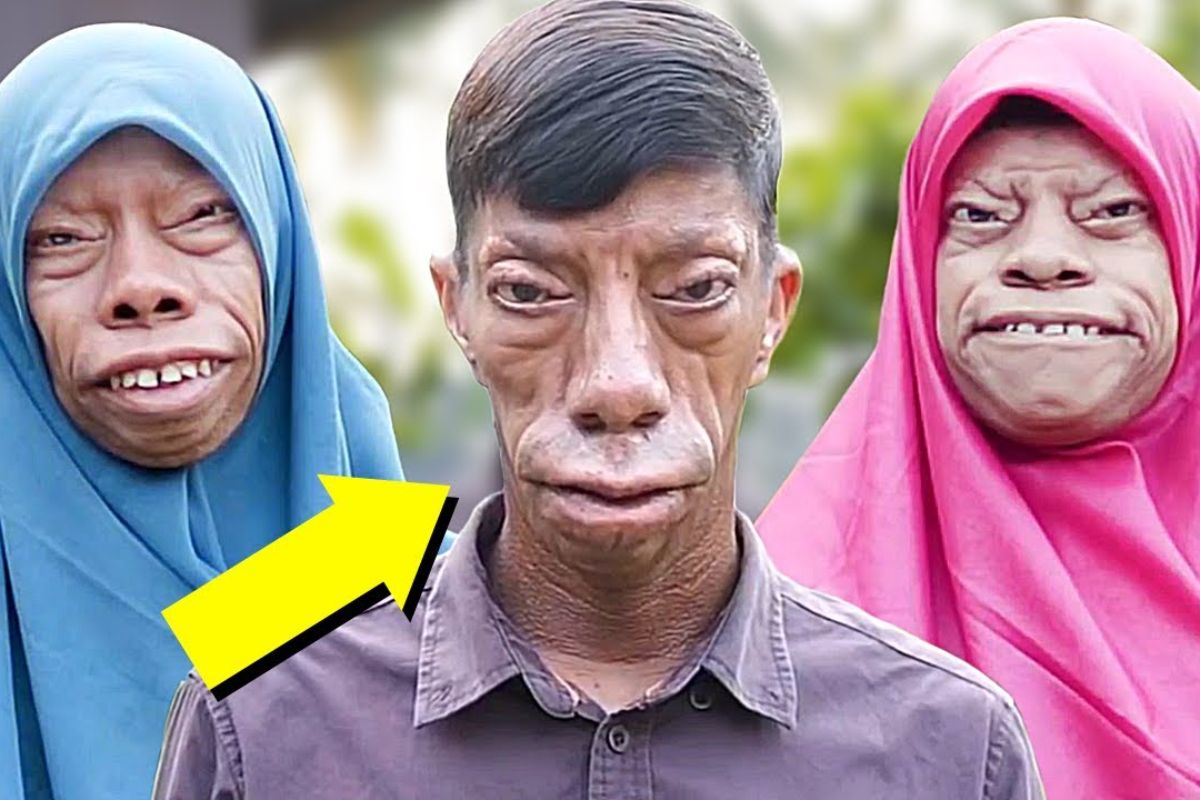
With Faces That Change Shape Over The Years, The Manurung Family Faced Bullying, Rare Diagnoses, And Fearful Glances To Transform A Nearly Unknown Genetic Syndrome Into Union, Financial Stability, Strengthened Faith, Millions Of Followers On Social Networks And A Marriage That Symbolizes Collective Victory Against Prejudice
The faces that change shape in this story are neither a metaphor nor a figure of speech. They are the visible mark of an ultra-rare genetic syndrome that shapes, over the years, the features of almost the entire Manurung family, in the rural area of northern Sumatra, and places them at the center of a debate about difference, empathy, and inclusion.
During childhood and adolescence, those same changing faces were the reason for cruel jokes, nicknames, closed doors, and silent tears after school. Today, the same family that was once treated as cursed has become a reference on social media, lives off live streams, fills party halls, and transforms an extremely rare genetic condition into union, a source of income, and a public celebration of love.
The Genetic Syndrome That Causes Faces That Change Shape

The Manurung family lives with Barber Say syndrome, a genetic condition so rare that it virtually does not appear in medical books and for which there are no clear treatment protocols.
-
Nestlé said it always encourages people to take a break with KitKat, but the thieves took the message too far by stealing 12 tons of chocolate from a truck that disappeared between Italy and Poland.

-
Neither in the refrigerator nor in a plastic bag: this is the correct way to store garlic.

-
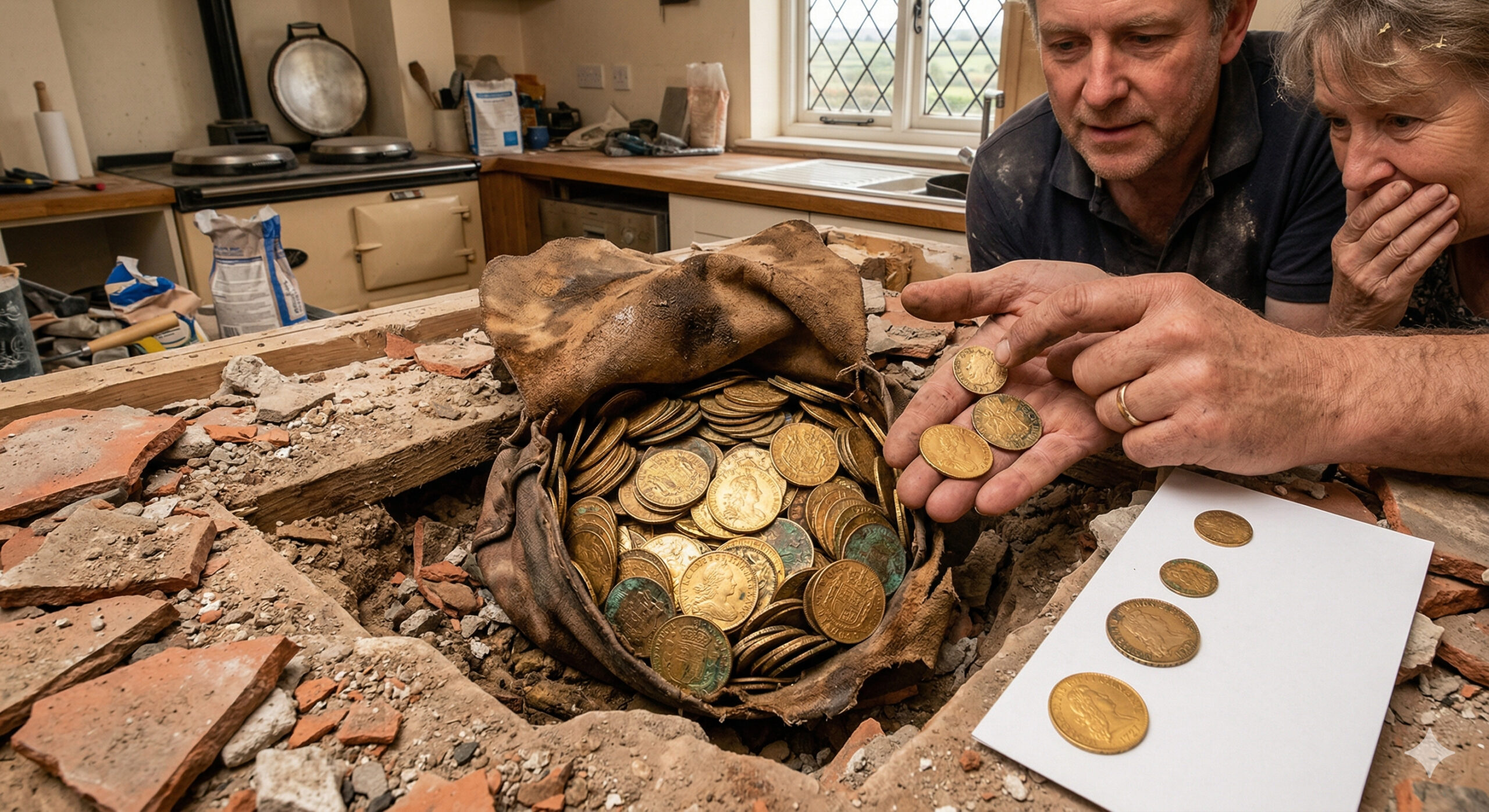
While breaking the kitchen floor during a renovation, residents in England found 260 gold coins hidden for over 300 years, with pieces dated between 1610 and 1727 and an estimated value of hundreds of thousands of pounds.
-
More tolls! The Anchieta-Imigrantes system will start implementing charges in both directions with free flow on July 1st, a fee of R$ 19.35 per segment, the end of toll plazas, and a project for a new 21.5 km lane.


Reports cited by the family speak of something like one case for every billion people, around 0.00000025 percent of the global population, with about 15 recorded diagnoses.
The effects are visible in their features.
Among the main characteristics are excessive hair growth, a face wider than usual, partially closed eyelids, a flat and wide nose, and a mouth larger than average.
Behind that is a mutation in a gene linked to face formation, which alters how the structures organize themselves from time to time.
It is from that basis that the faces that change shape over a lifetime emerge.
From a medical perspective, knowledge is still limited.
The Manurungs themselves report that, at birth, doctors did not know what they were seeing. It was only later that the name Barber Say syndrome emerged.
The father was the first identified case in the family, and from him, the records of the children with various traits arose, reinforcing the genetic nature of the condition.
Childhood Among Bullying, Fear, And Family Protection

The rarity of the syndrome and the changes in the face explain only part of the story.
The other part lies in the social environment. At school, the siblings with changing faces were constant targets of bullying.
Classmates looked at them in disbelief, small children cried in fear upon seeing them, and the return home often happened in silence, with held-back tears.
However, inside the home, the narrative was different.
Parents insisted on the importance of a united family, repeated that no one should be ashamed of who they were, and reinforced that what set them apart could also be a source of strength.
The eldest brother, Surya, played a central role in this process.
He repeated to his sisters that it was necessary to keep a strong mind, that the pain of the moment would not define the future, and that life could go far beyond what school showed.
This combination of external suffering and internal support helped consolidate a cohesive family unit. When the world saw only changing faces, they tried to see complete people with trajectories, dreams, and possibilities.
The result of this internal pact would appear years later when the family decided to consciously expose themselves on social media.
When Difference Becomes Audience On Social Media
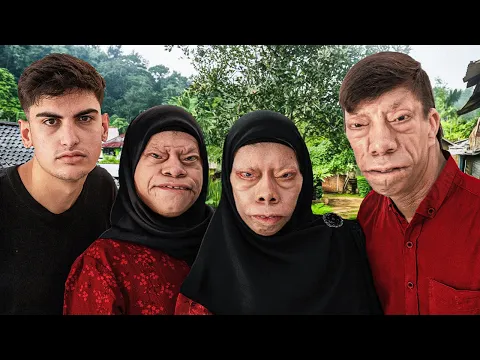

The turning point came with the internet. Instead of hiding, the Manurung family began to record their daily routine on video.
What was once a reason for rejection began to spark genuine curiosity in thousands of people.
From then on, the changing faces ceased to be just targets of prejudice and also became a reference image for those seeking stories of overcoming.
Over time, the simple house in northern Sumatra gained recording equipment, lighting, and space dedicated to broadcasts.
Today, they do daily live streams lasting about four hours on platforms such as TikTok, Facebook, YouTube, and Instagram. During the broadcasts, they dance, converse with viewers, thank for virtual gifts, and maintain a joyful atmosphere that contrasts with their childhood marked by insults.
The reach is impressive. The Manurungs have amassed millions of followers, appeared on television shows, and have become the subject of documentary reports.
In addition to visibility, the new audience brought a concrete consequence. The live streams became a stable source of income, supplemented by commercial partnerships and spontaneous donations from the audience.
The family that was once on the brink of bankruptcy managed to reorganize their lives and increase their standard of living, without abandoning their rural context and without denying the genetic condition that has accompanied them since birth.
More than numbers, what impresses is the change in perception.
People who would previously cross the street to avoid contact now line up to ask for photos.
Children who might react with fear are often guided by their parents to adopt a posture of respectful curiosity.
The same appearance that was once seen as a curse has come to be understood, in many cases, as uniqueness.
Love, Marriage, And Reconstruction Of Self-Esteem
At the center of this new phase is the story of Surya, one of the siblings with changing faces and the protagonist of a marriage that has become a public symbol of acceptance.
For a long time, he believed that he would never find someone willing to marry him due to his appearance. This scenario began to change when he met Shasa.
The first contact was through social media. Shasa saw the videos, learned about the syndrome, and still decided to reach out.
Later, the two met at a local festival, and she confirmed in person what she had intuitively sensed from a distance.
What caught her attention was not just the different facial features, but Surya’s character, humor, and the way he treated those around him.
In Shasa’s view, appearance should not be a criterion for defining who deserves love.
She claims that she wanted to know the heart before the face, and that was exactly what guided her decision. This position, rare in a society that values rigid aesthetic standards, reinforced the idea that it is possible to see beyond the obvious.
The wedding, carefully planned and recorded in detail, symbolizes more than the union of two people.
For the family, it is practical proof that self-esteem, emotional support, and networks of affection can reverse trajectories marked by stigma.
For the audience, it is a direct message that changing faces do not diminish the ability to love, to be loved, and to build long-term projects.
Faith, Destiny, And The Choice Not To Seek Cure
One of the most striking aspects of the story is how the family interprets their condition through the lens of spirituality.
Instead of blaming God or wondering why they were born this way, the Manurungs state that they hold no resentment.
For them, if God made them with faces that change shape, this happened for a reason that does not have to be fully understood to be respected.
This perspective translates into a concrete stance.
When asked about the possibility of a future cure, one of the members states that she would not undergo surgery to change her appearance.
She says she trusts in herself, believes that her identity is not reduced to her face, and does not feel the need to conform to external standards.
The refusal to seek a radical aesthetic change is, in practice, a declaration of self-acceptance at its highest level.
At the same time, faith is not used as an excuse for passivity.
The family works hard, produces content daily, deals with constant exposure, and accepts the challenge of living publicly with a condition that still scares and intrigues.
The belief in destiny appears alongside the belief in effort. They repeat that one should not fight against what cannot be controlled, but it is possible to decide how to react.
The Message From Those Who Live With Faces That Change Shape
The journey of the Manurung family condenses themes that are usually treated separately. There is a medical component, with an ultra-rare syndrome. There is a social component, with years of bullying and exclusion.
There is an economic component, with the transition from near bankruptcy to stability via social networks.
And there is, above all, a human component that connects all of this around self-esteem, faith, and family ties.
From a symbolic perspective, they transform what many would call deformity into identity, narrative, and purpose.
In an era where filters smooth out any imperfection in seconds, the Manurungs appear in full view, not hiding the marks of the syndrome, using the changing faces as a starting point to discuss respect, love, and the limits of what we consider normal.
Accompanying a day with the family leaves not only curiosity about the genetic mutation or astonishment at the audience on digital platforms.
What remains is the impression that vulnerability and exposure can be tools for transformation when there is emotional support, a minimal structure, and a willingness to face the gaze of others.
There is also the feeling that we are still just beginning to understand the psychological and social impact of living with a body that deviates from established standards.
If stories like this gain space, it is because, in some way, they challenge beauty hierarchies and invite the public to reconsider their own reactions to difference.
By refusing to hide, the Manurungs remind us that there is no correct face to be respected, loved, or to love.
If this story has made you rethink how you see those born with rare conditions, share it, talk about the topic, and help spread less superficial perspectives on appearance and human value.
And you, what would you do if you encountered an entire family with changing faces sitting next to you on a crowded bus today?







-

-

-

12 pessoas reagiram a isso.