





 Portuguese
  English
  Spanish
 7 min of reading
  0 comments


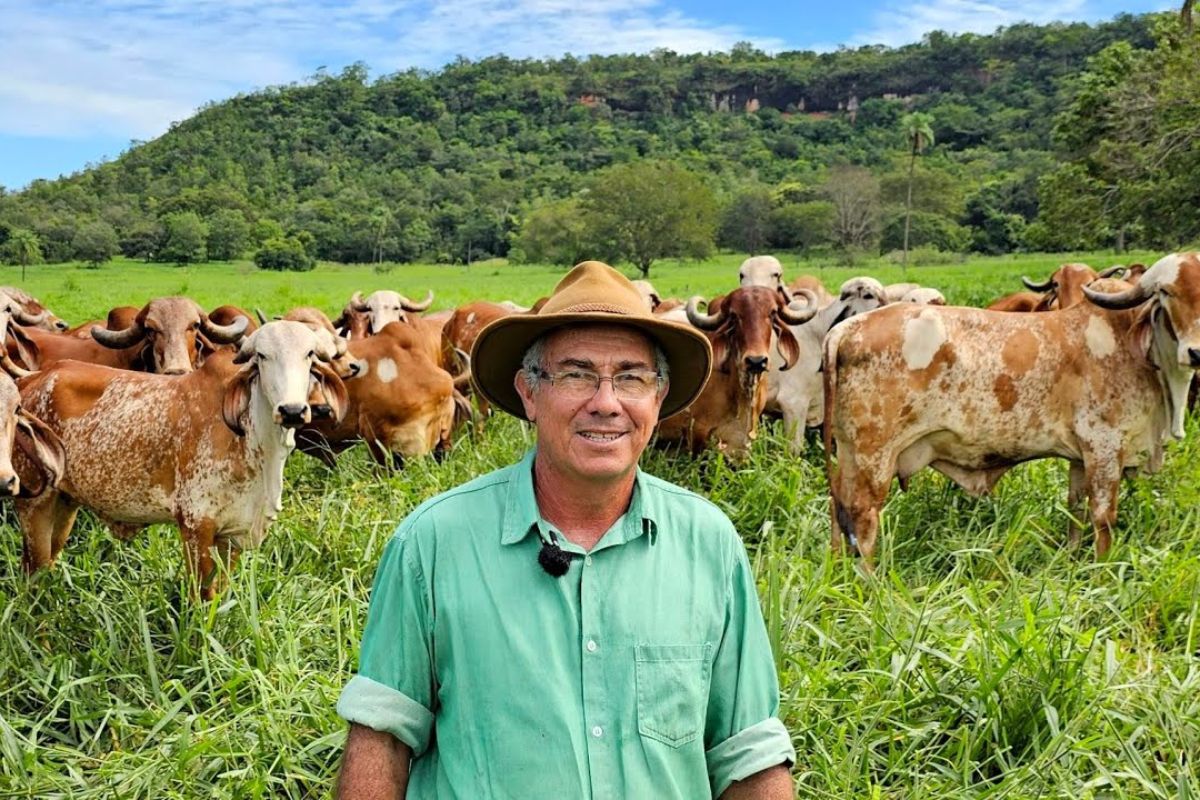
At Furninha Farm, the Breeding of Gir Leiteiro Combines Heavy Routine in the Corral, Embryo Aspiration, Valued Genetics, Solar Energy, Irrigation, and Gentle Calves, Transforming Management, Productivity, and the Future of Dairy Farming in the Current Brazilian Countryside, While Spreading Genetics to Nearby Small Producers, Ensuring Consistent and Lasting Results
The scene is truly rural: full corral, cattle entering in line, people tending to them, dust, mud, strong coffee, and an endless workload. In the middle of all this, Gir Leiteiro has become more than just a “pretty spotted cow” and turned into a heavy-duty work tool, million-dollar genetics in the form of a gentle and productive calf, meticulously planned to sustain an entire farm. Here, every dose of semen, every embryo, and every aspiration has a destination, purpose, and direct impact on the property’s cash flow.
At Furninha, the owner turned a long-standing passion for Gir into a professional project focused on milk, genetics, and the sale of crossbred and purebred Gir. He left the city, returned to the countryside, structured the corral, calf barn, irrigation, solar panels, and support laboratory, and today lives a heavy routine that starts before dawn and ends when the last animal is checked. This is the real work of the field, the kind that hardly ever appears in the pretty advertisements, but keeps the farm running every month.
From Childhood Passion to a Million-Dollar Gir Leiteiro Herd

When he was a boy, the producer saw his father raise “any Gir that showed up” and was captivated by the spotted calves.
-
They said no to 26 million dollars and would do it all over again: mother and daughter from Kentucky reject a million-dollar offer from a mysterious company that wants to build the largest data center in the state on more than 2,000 acres of rural land.

-
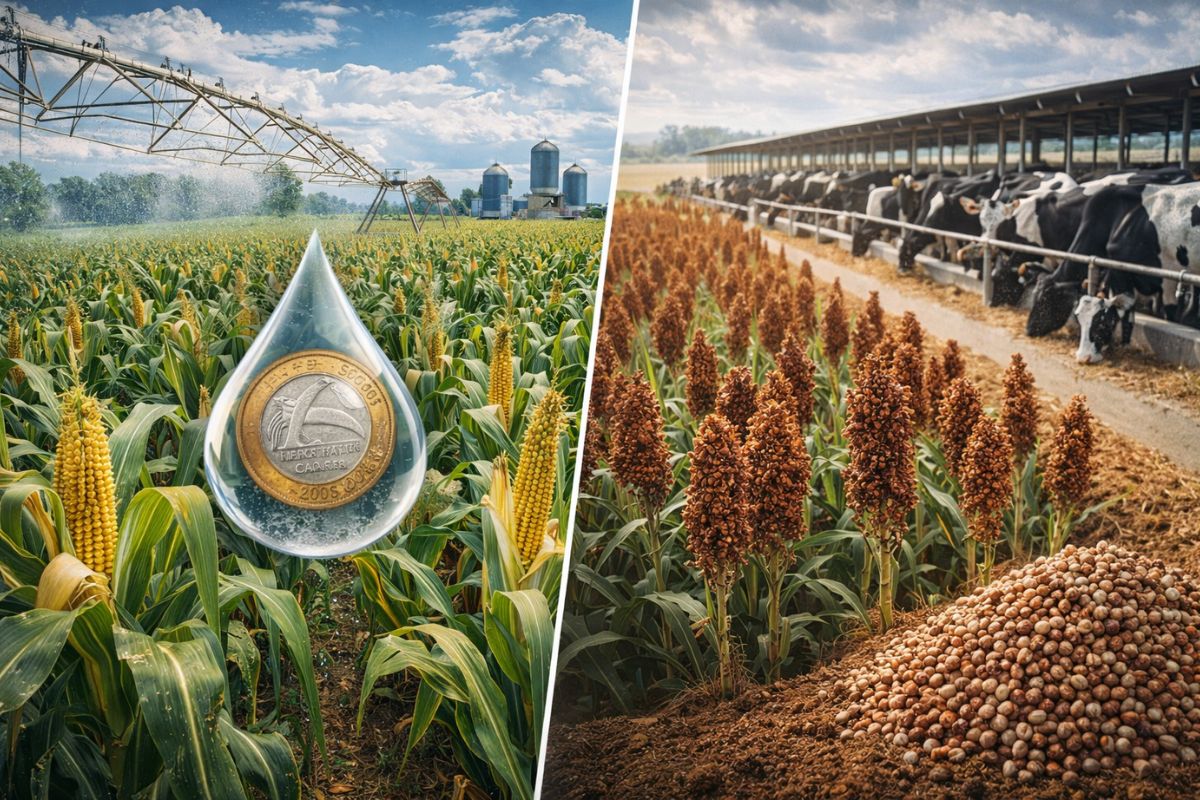
While corn requires rain and is expensive, sorghum produces almost the same volume per hectare at a cost up to 80% lower and uses less water, and it is revolutionizing dairy farming in the Triângulo Mineiro, where producers save hundreds of reais per hectare.
-
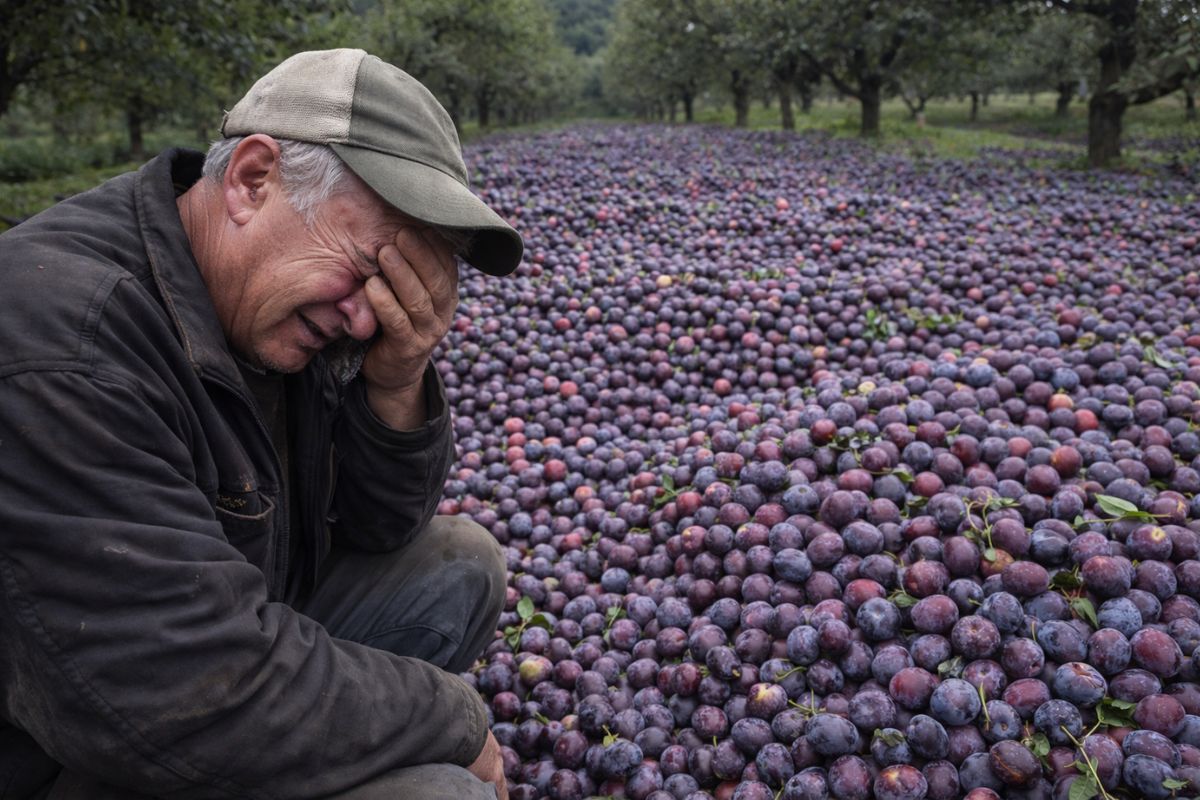
A rural producer from Urubici cries as he shows 50 tons of plums thrown on the ground because no one wanted to buy them, and in desperation, he records a video asking anyone to come to the property to pick the fruits before they rot.
-
Unable to pass through Hormuz, Brazil activated a plan B that uses Turkey as a gateway to the Middle East: the route through Gibraltar and the Mediterranean is longer and more expensive but ensures that chicken, beef, and corn continue to reach Arab markets.


The beauty came first, the technique came later.
Time passed, he moved to the city, worked in a pharmacy, did everything, but his mind remained in the countryside.
As soon as he could, he returned to the field and decided that if he was going to work with cattle, it would be with Gir Leiteiro for real, focused on milk and genetics.
In the beginning, the Gir was rustic, producing 4 or 5 liters, very different from the current Gir Leiteiro.
The turning point came when he decided to start “at the top,” directly with embryos from renowned bulls like Sansão, Teatro, Jaguar, and other strong names in the market.
No slow testing: the plan was to build a Gir Leiteiro herd with heavy pedigree, registration, verified DNA, focusing on cows that produce milk and transmit quality.
Today, the farm works with donors, crossbred, special Holsteins, and a team of heifers and young cows that represent years of selection.
Part of the herd is for milk, part is for genetic sale, and part is involved in a diffusion project for small producers in the region.
The heart of the business remains the Gir Leiteiro, but now with structure, planning, and careful accounting.
Genetics, Aspiration, and Laboratory within the Farm

What sets Furninha apart is that the work with Gir Leiteiro does not stop in the corral.
It continues inside a simple yet equipped room, where the reproduction team performs follicular aspiration of the donors.
Underneath the cow, an ultrasound shows the follicles in the ovary. A needle guided by the image pierces, and with the help of a vacuum pump, the fluid containing the eggs is drawn into a heated tube.
Each cow has its own identified tube.
There is no room for improvisation: no Gir Leiteiro egg mixes with that of another matrix, because everything needs to match later with the registration and DNA of the animal.
From the corral, the tube goes to a mini laboratory set up in a room of the house, complete with a magnifying glass, plates, washing media, and a trained technician to separate the quality material from the non-quality material.
The collected material is filtered, eggs are washed, classified, and sent for maturation and IVF.
The next day, they are already being fertilized in a partner laboratory.
This is how a single Gir Leiteiro donor can turn into dozens of embryos, feeding the herd and generating a supply of qualified genetics for the market.
The collection respects intervals, ovarian conditions, and even gestation: many donors continue to produce eggs even when pregnant, up to a certain month.
Heavy Routine in the Corral, Management, and Well-Being of the Herd

The image of the gentle Gir Leiteiro misleads those who think the work is easy.
The routine in the corral starts early, with milking several cows at once, using a channelized system, precise feed measurement, production control, and attention to each animal’s behavior.
While some cows excel in genetic tournaments, others sustain the milk volume that pays the monthly bills.
The producer doesn’t just want a beautiful cow.
He demands soundness, top-line, hoof health, and functionality. Cows with serious defects don’t stay.
If the Gir Leiteiro female doesn’t become pregnant, does not respond to IVF, or presents chronic issues, they go on the culling list, no matter how pretty they are.
The mantra is simple: either it contributes to the system, or it makes way for another that will produce.
In the calf barn, the Gir Leiteiro and crossbred heifers are raised on controlled milk, specific feed, handled in individual pens and later in small groups, always preventing them from suckling each other.
Gentleness is fostered daily, with constant human presence, feeding by hand, and calm but firm management.
The results show in the footage: the animals approach, accept affection, walk calmly in the corral and during shows, ready to work and represent the farm’s genetics.
Irrigation, Pasture, Solar Energy, and Milk Structure
At Furninha, the Gir Leiteiro does not walk alone.
Behind the herd lies irrigated pasture, well-divided paddocks, level curves, renovated Brachiaria grass, and Tifton areas planned for the most critical phases of the year.
Instead of solely relying on the weather, the farm employs irrigation to maintain the forage supply when the cold arrives or when rainfall fails.
The paddocks are designed for rotation: dairy cows, young Gir Leiteiro, Girolando, and crossbred Holsteins rotate according to the pasture’s needs.
The stocking rate is high, but controlled. Each hectare must deliver enough grass to transform expensive genetics into liters of milk and weight gain, without degrading the soil.
On the corral roof, a sea of solar panels: 110 units generating energy for the entire farm and even for homes in the city.
Previously, the electric bill exceeded three thousand reais; today, energy is strategic.
Besides covering milking, the panels power irrigation pumps, cooling structures, and in the future, even the aspiration room and laboratory in a climate-controlled environment.
This is infrastructure at the service of Gir Leiteiro, reducing fixed costs and providing predictability for further investments in the herd.
Shared Genetics Project with Small Producers
The Gir Leiteiro produced at Furninha does not stay confined within the farm’s fences.
An important part of the project is to spread this genetics to small producers in the region, in partnership with an IVF laboratory.
Heifers, young cows, and bulls originating from Furninha are already spread across neighboring farms, entering herds that previously did not have access to this level of genetic material.
The results are evident in the field: crossbred heifers producing 30 to 35 liters of milk on smaller properties, changing the financial situation for entire families.
The farm provides genetics, technical support, and, in many cases, breeding guidance, while the neighboring producer handles management, pasture, and a will to work.
In practice, what used to be “simple farming” now becomes a showcase of high-performance Gir Leiteiro, but without losing its essence: a family home, wood-fired coffee, free-range pigs, chickens in the yard, and neighbors stopping by for a chat.
The difference is that now, the conversation is not just about rain and milk prices; it’s also about pedigree, breeding, SCC, heifer management, and the next embryo collection.
What This Work with Gir Leiteiro Reveals About the Future of Livestock Farming
The story of Furninha shows that the future of livestock farming is not just in gigantic showcase farms.
A producer with a heavy routine, a keen eye, cost control, and a focus on Gir Leiteiro can build a high-value business right in the countryside, combining genetics, milk, solar energy, irrigation, and partnerships with neighboring small producers.
The model is demanding. It requires discipline, technology, reproduction technicians, partner laboratories, risk management, and the courage to cull animals that do not fit.
But when it works, it delivers something rare: genetic scale without losing the identity of family, countryside, or the small farm where everyone knows each other by name.
At the end of the day, after aspiration, milking, feeding, and meetings with the team, the owner of Furninha reaffirms what he decided long ago: his place is in the countryside, amongst Gir Leiteiro, Girolando, Holsteins, and the spotted calves that captivated the boy he once was.
This is dairy farming moving from defensive strategies into the generation of planned genetics, without losing its roots.
And you, if you had the chance to invest in Gir Leiteiro breeding on a countryside farm like Furninha, would you face this heavy routine of genetics, aspiration, and corral, or do you still think it’s too risky to bet high on milk?








-

Uma pessoa reagiu a isso.