





 Portuguese
  English
  Spanish
  3 min of reading
  0 comments


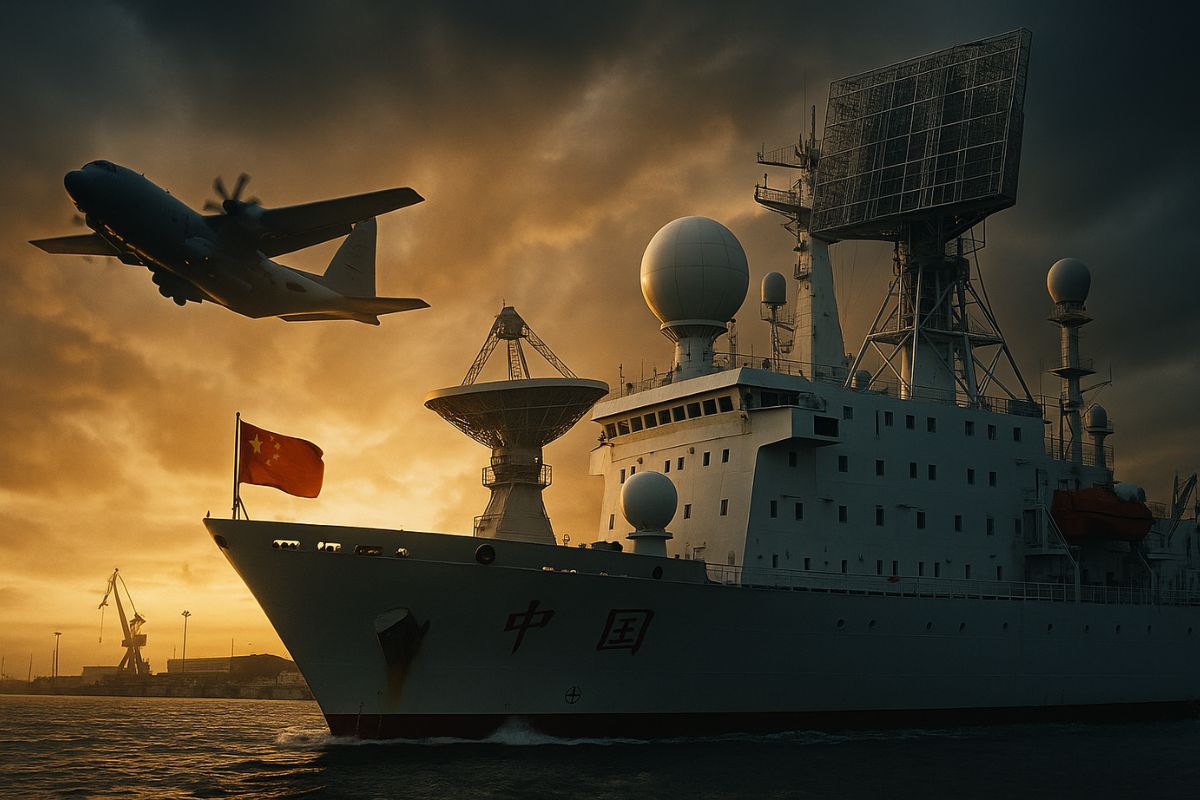
Chinese Spy Ship 815A Becomes a Key Piece in China’s Strategy of Surveillance and Dissuasion in Sensitive Areas of the Indo-Pacific
The growing presence of the Chinese ship in the Indo-Pacific is not limited to aircraft carriers or ballistic missiles. One of Beijing’s main strategic assets is called Type 815A, a spy ship capable of mapping the military environment of its adversaries from hundreds of kilometers away. Its mere presence in international waters already forces the United States and its allies to reconsider how they conduct their military exercises.
The 815A does not attack but sees. It collects data, intercepts signals, and relays it in real time to the Chinese satellite network, feeding anti-ship missiles and rapid response platforms. For specialists, its function is as decisive as that of a nuclear submarine or a stealth bomber, as it acts as the “eye that sees everything” in the world’s major tension points.
What Is the Spy Ship 815A and Why Does It Scare the USA?
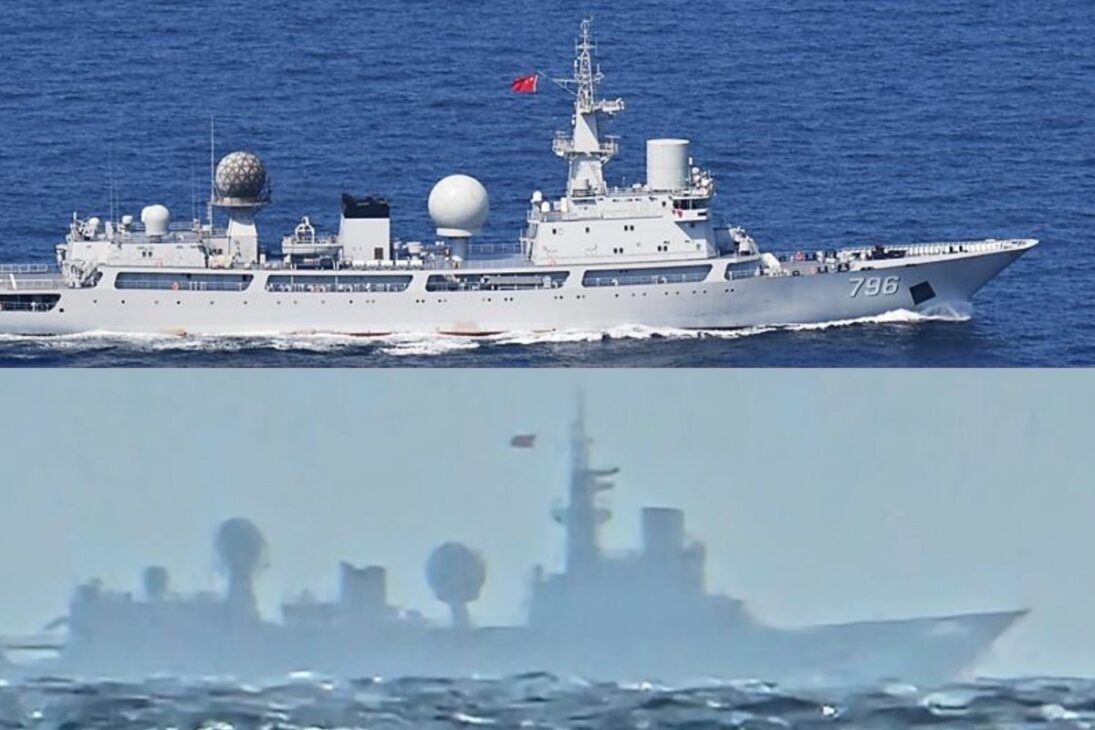
Launched in 2010, the Type 815A is an evolution of the Beijixing project, the first reconnaissance ship entirely built in China. With 130 meters in length and 6,000 tons of displacement, the ship is equipped with electronic surveillance sensors, stealth radomes, and communication systems integrated with BeiDou, the Chinese satellite constellation.
-
Ocean Giant Could Change Everything: Nuclear Container Ship Project Promises to Transport 16,000 Containers Without Using Fossil Fuels

-
Hormuz Strait: Hundreds of Ships and Oil Tankers Stranded After Attacks in the Middle East
-
World’s Largest Electric Ship, China Zorrilla, Will Connect Argentina and Uruguay Across the Río de la Plata with a $200 Million Investment and Operations Planned for 2026
-
How A 20-Ton Anchor Holds 200,000-Ton Ships Even Under Extreme Winds And Why It Fails In The Deep Ocean

Unlike a destroyer, the 815A does not rely on firepower, but rather on its ability to scan the electromagnetic spectrum in real time. It can identify radar signals, track missiles, and monitor aircraft up to 1,500 km away, according to military sources cited by the BBC and Xataka.
How Does the Chinese Ship Act in Practice?
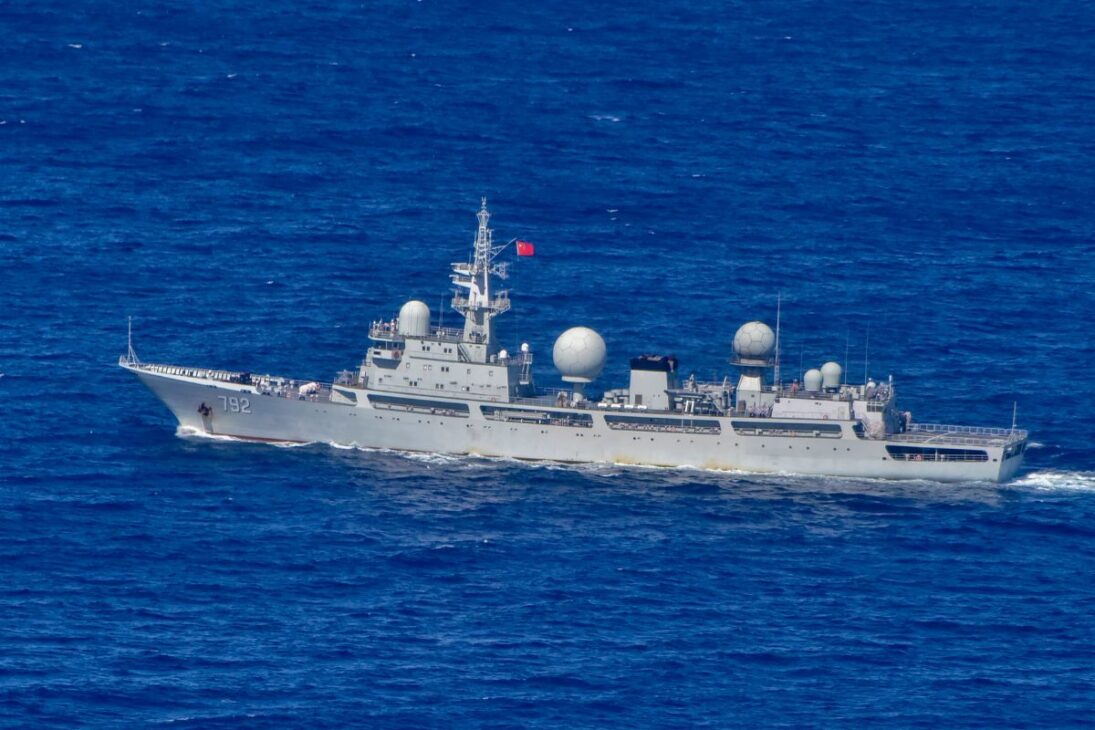
These vessels have been used in surveillance missions during large Western military exercises such as RIMPAC (Hawaii), Talisman Sabre (Australia), and Cope Thunder (Philippines). During the latest exercise, China positioned an 815A to intercept signals while the US tested its F-35 fighters, complicating the allies’ real simulation due to the risk of data leaks.
Additionally, the ship recently intercepted by the Philippine Coast Guard within its exclusive economic zone while escorting other Chinese vessels demonstrated how the 815A also acts as a platform for intelligence gathering in contested areas.
Why Does This Matter Strategically?
The presence of an 815A drastically reduces the “surprise effect” of military maneuvers. This forces the US and its allies to limit their radar and communication emissions, compromising the realism and efficiency of their training. In a real war scenario, this puts enemy ships in the crosshairs of China’s anti-ship ballistic missiles, such as the DF-26 or the hypersonic YJ-21.
Moreover, the new Liaowang-1 model, also mentioned in the Chinese press, further amplifies this power: sensors with a range of up to 6,000 km, artificial intelligence to classify targets with 95% accuracy, and the ability to track satellites. According to analysts, it even surpasses the American spy ship Howard O. Lorenzen, designed with similar functions.
The Future of War May Pass Through This Chinese Ship
Even without heavy armament, the 815A represents an advancement in multi-domain warfare, connecting the sea, air, and space into a single surveillance network. It is the backbone of Chinese electronic intelligence at sea, and its evolution is anticipated with the adoption of AI, GaN radars, and remote drone controls.
With this, China not only responds to US military actions but anticipates them. Its ability to see, decode, and react puts constant pressure on Western forces operating in the Pacific, opening a new chapter in the race for regional supremacy.
Do you think the 815A changes the military balance in the Pacific? Does this type of surveillance compromise global security or is it a legitimate part of modern deterrence? Comment below your view—it could illuminate a debate that affects us all.










-

Uma pessoa reagiu a isso.