Portuguese
  Spanish


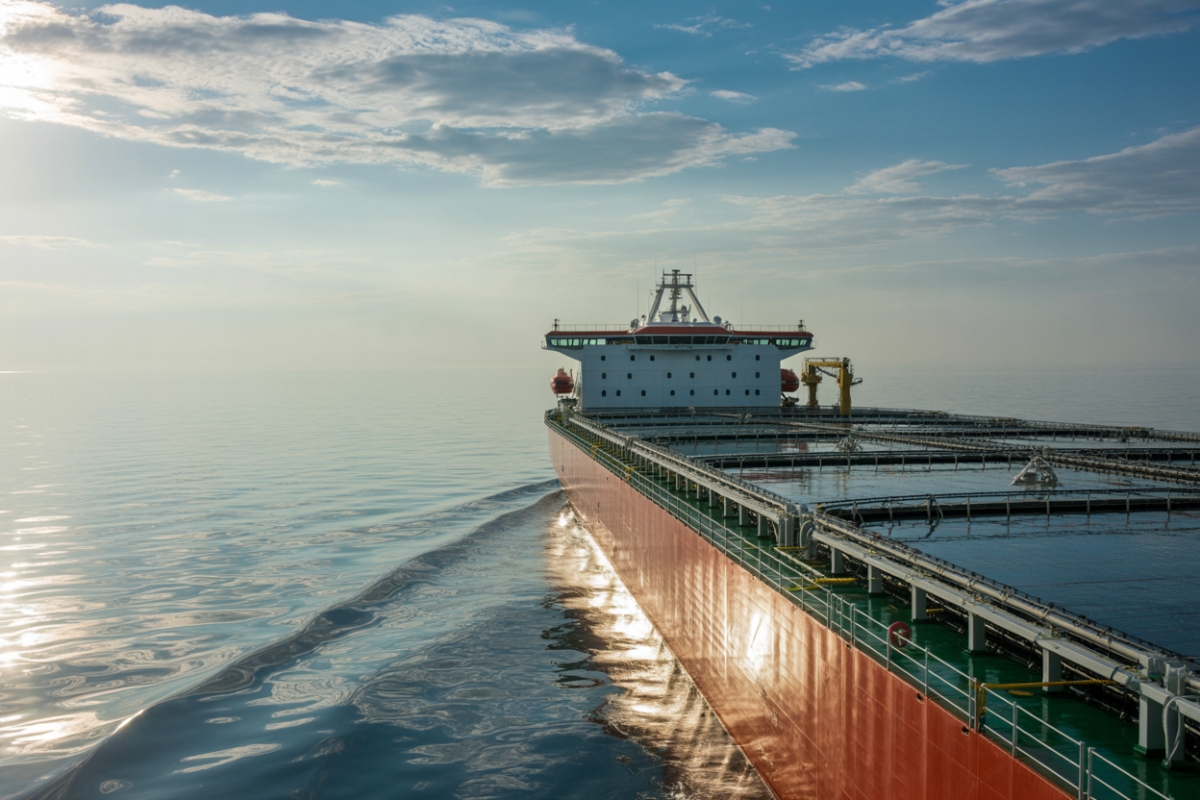

China Builds Giant Fish Farming Ships With Smart Sensors, Colossal Tanks, and Electric Propulsion to Increase Offshore Production and Reduce Import Dependence
Demand for fish in China is growing year after year. To avoid relying on imports, the country has decided to invest in technological solutions that expand supply and ensure internal provision. The latest strategy involves the construction of enormous offshore fish farming ships, structures so advanced that they are already nicknamed floating aircraft carriers for fish.
Global interest in China’s fishing sector is not new. FAO data shows that nearly one-third of the world’s fish volume is related to the country. There are also increasing reports of Chinese fleets operating in distant waters, such as in Peru. Now, in addition to traditional fishing, China is betting on industrial-scale marine aquaculture with a strong technological presence.
Wan Qu Ling Ding: The New Generation Fish Aircraft Carrier
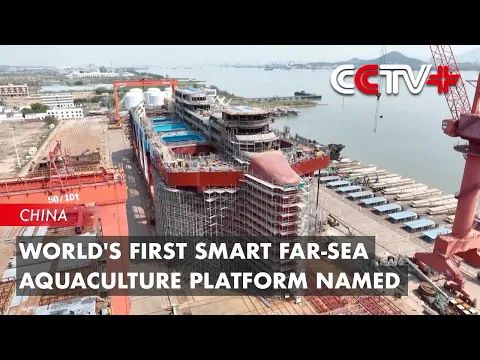
One of the symbols of this new strategy is the imposing Wan Qu Ling Ding. The ship looks like it came out of a futuristic movie and was launched on May 27, according to CCTV reports. The construction was carried out by Jiangmen Hangtong Shipbuilding Co.
-
Xiaomi Unveils Smart Pressure Cooker That Cooks Meat Up to 40% Faster

-
Antarctic Mystery: Study Uncovers Over 500 Hidden Earthquakes 150 km Deep, Challenging Traditional Theories
-
Excavation for Solar Park in Germany Uncovers Rare Celtic “Princely Tomb” with Elite Warrior Buried with Gold, Weapons, Etruscan Jug, and Two-Wheeled Chariot in Bad Camberg

-
NOAA Scientists Discover Mysterious, Perfectly Aligned Holes on the Mid-Atlantic Ridge Seafloor, Origin Still Unknown



The delivery is scheduled for August, when the ship will begin operations for the Zhuhai Ocean Development Group Co. It will function as a massive floating farm, with impressive dimensions. It measures 155.8 meters in length and 44 meters in width.
The main highlight is the twelve farming compartments, capable of holding up to 80,000 cubic meters of water. This volume is equivalent to about 32 Olympic-sized swimming pools. The expected annual production ranges between three thousand and five thousand tons of fish. In comparison, this volume would correspond to the yield of a land-based farm covering about 3.33 million square meters.

Smart Aquaculture and Continuous Monitoring
The Wan Qu Ling Ding is designed to raise high-value species in China. The list includes golden pomfret, seriola, and grouper. Besides supplying the internal market, part of the production will also cater to tourism enterprises.
One of the most advanced points of the project is the constant water exchange system with the marine environment. This improves the water quality in the tanks and promotes healthy fish growth. Each compartment is equipped with modern sensors and automatic feeding systems.
The sensors can detect sudden changes in water quality and signs of pollution. When this occurs, the semi-submerged compartments can be rapidly raised. This process reduces water resistance and allows the ship to move more quickly to safe areas.

Total Autonomy and Smart Navigation
Another distinguishing feature of the Wan Qu Ling Ding is its operational autonomy. The electric propulsion system allows what its creators call autonomous maritime nomadism. The ship has a range of up to two thousand nautical miles and can navigate on its own to avoid natural phenomena such as typhoons.
Additionally, the ship has a 20 kW wind generation system. This energy is sufficient to fully power the onboard aquaculture systems. It is a clear example of how clean energy and technology can be integrated into the fishing sector.
Salmar Ocean presents a similar filtration system on the Guoxin 1, another modern ship used for open sea aquaculture.
Hai No. 1: The First Ship Exclusively Dedicated to Salmon
While the Wan Qu Ling Ding prepares to begin its operations, another giant is already ready. The Hai No. 1 was built by Huangpu Wenchong Shipyard in Guangzhou. It is the world’s first ship created exclusively for salmon production.
At 250 meters long, the Hai No. 1 impresses with its size and mobility capability to escape polluted or dangerous areas. Initial tests occurred in April, and production is expected to start in June.
The annual capacity reaches eight thousand tons of salmon. Thanks to an onboard processing plant, the ship can deliver fresh salmon to certain national markets in just 24 hours.
National Strategy to Achieve Food Independence
The construction of these ships addresses a strategic priority for China: to enhance food self-sufficiency. According to SCMP, the country imported about one hundred thousand tons of salmon in 2024. The expectation is that demand will exceed two hundred thousand tons by 2030.
More than 80 percent of the salmon consumed by the Chinese depends on imports. Therefore, projects like the Wan Qu Ling Ding and the Hai No. 1 are seen as essential to reduce external dependence and stabilize the supply chain.
In 2023, the Ministry of Agriculture and Rural Affairs of China published guidelines to encourage the development of marine aquaculture. The expansion of these ships aligns with these goals.
A Technology That Can Transform the Global Industry
The colossal fish aircraft carriers from China are not only aimed at supplying internal consumption. They also strengthen the country’s food security in an international scenario marked by trade tensions and logistical uncertainties.
As in other strategic sectors, China is betting on advanced technology to bolster its food sovereignty. Offshore aquaculture, driven by ships like the Wan Qu Ling Ding and Hai No. 1, emerges as a central piece of this strategy and can transform the global fishing industry in the coming years.