





 Portuguese
  English
  Spanish
  7 min of reading
  0 comments


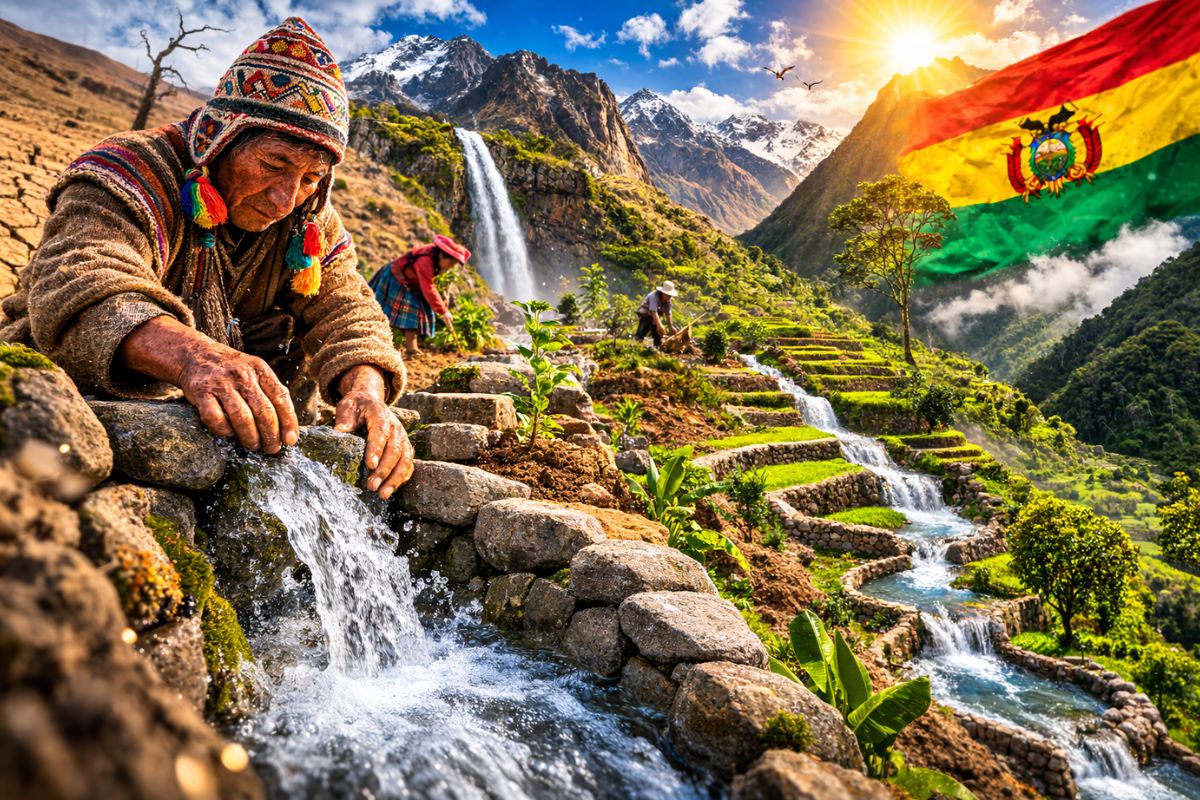
By Combining Terraces, Canals, Artificial Ponds, Reservoirs, and Reforestation with Native Species, Bolivia Recovers Dry Areas on Andean Slopes, Strengthens Springs, and Attempts to Contain Erosion, Landslides, and Water Scarcity in Extreme Regions.
The Way That Bolivia Recovers Dry Areas in the Andes Draws Attention Because It Is Based on an Ancient Principle That Seemed to Have Been Left in the Past. Instead of Relying Solely on Modern Solutions That Often Failed or Worsened Problems, Bolivian Communities Are Resuming Ancestral Landscape Management Techniques to Make Water Infiltrate Again into the Mountains, Reactivate Springs, and Stabilize Entire Slopes.
The Result Is Visibly Apparent. Areas That Just a Few Years Ago Were Arid and Severely Eroded Are Now Turning Green Again, with Rivers, Streams, and Springs Nourishing Families and Crops. More Than an Environmental Recovery, It Is a Concrete Response to Drought, Erosion, Flooding, and Landslides in One of the Harshest and Most Unstable Scenarios of the Andes Mountain Range.
Extreme Andes Put Water and Soil Under Pressure
The Bolivian Landscape Combines High Altitudes, Harsh Climate, Dangerous Roads, and Naturally Unstable Geography.
-
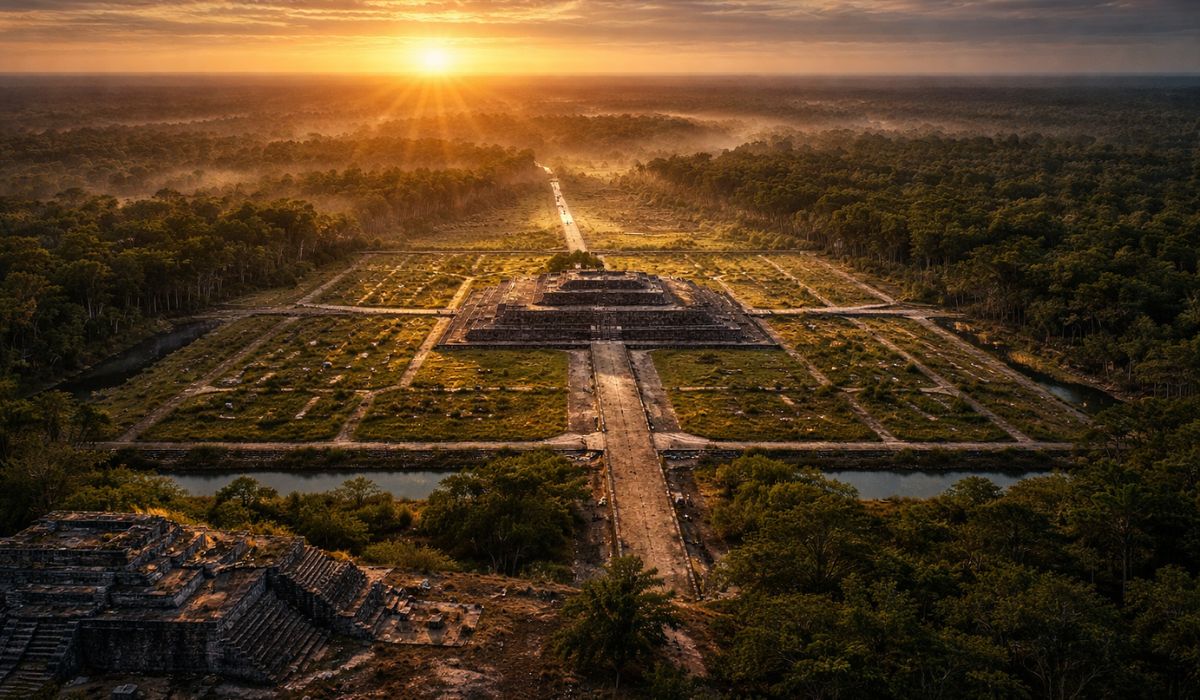
In Mexico, a 3,000-year-old Maya site with the dimensions of an entire city may have been built as a colossal map of the cosmos, created to represent the order of the universe and reveal how this people organized space, time, and rituals.
-
Japan wants to build a solar ring of 10,900 kilometers on the Moon to continuously send energy to Earth.

-
Weighing almost 1 ton, with temperatures of up to 3,000°C, the ability to launch 10,000 fragments within a radius of 1 km, capable of penetrating concrete and melting steel, Turkey’s terrifying bomb emerges as one of the most destructive non-nuclear weapons ever presented.

-
After a submarine disappeared beneath the “Doomsday Glacier,” scientists announce a new monstrous machine capable of operating at 3,000 meters depth to return to the heart of the ice and investigate a threat that could raise sea levels worldwide.


In This Environment, Intense Rains, Prolonged Droughts, Erosion, and Landslides Coexist in the Same Territory.
The Problem Has Become Even More Severe in Recent Years, with the Accelerated Reduction of Andean Glaciers, Essential for Water Supply, Especially in Major Centers Like La Paz.
According to the Sent Base, Bolivia Faced Two of the Worst Droughts Ever Recorded in 2016 and 2023. When Long Dry Periods Eliminate Vegetation That Protects the Soil, the Earth Hardens, Loses Life, and Begins to Repel Water.
Then, When the Rain Comes with Force, It Does Not Infiltrate. It Runs Off, Carries Soil, Worsens Flooding and Increases the Risk of Landslides.
It Is Precisely in This Cycle That Bolivia Recovers Dry Areas by Acting Not Only on Water but on the Entire Logic of the Slope.
Ancient Techniques Come Back to the Center of the Solution
The Communities Leading These Projects Are Not Improvising. They Are Resuming a Very Old Andean System of Vertical Landscape Management, Which Articulated Water, Soil, Agriculture, Forest, and Human Settlement at Different Levels of the Mountain.
This Model Combined Terraces, Canals, Artificial Ponds, Reservoirs, and Tree Planting to Control Water Flow and Reduce Erosion.
In Practice, Water Stopped Descending Violently and Began to Be Absorbed Gradually Along the Slope.
When Bolivia Recovers Dry Areas with This Kind of Ancestral Engineering, It Is Not Just Reconstructing Structures but Reactivating a Territorial Intelligence Developed Over Centuries.
San Francisco Shows How Water Can Return
One of the Strongest Examples Presented in the Material Is in the Area of San Francisco, in the Bolivian Andes.
A Few Years Ago, the Land Was Extremely Dry and Had Little Vegetation. After Applying These Techniques, an Entire Wet Area Came Back to Life.
Today, the Restored Site Functions Like a Sponge. Water Captured During the Rainy Season Gradually Infiltrates the Mountain and Reappears Lower Down in Springs, Rivers, and Streams.
At One of the Visited Points, the Water Flowing from the Restoration of the Wet Area Already Supplies 15 Families, for Both Domestic Use and Irrigation.
It Is in This Type of Transformation That Bolivia Recovers Dry Areas Most Impressively, Because the Change Is Not Just Talk; It Reappears in Water Flowing Again.
Reservoirs Amplify the Effect of Restoration
The Increase in Available Water in the Mountains Also Allowed for the Construction and Use of Reservoirs, Another Important Element of the Old Andean System.
In San Francisco, Water from Springs Is Guided Through Pipes, Passes Through a Filtering Tank to Remove Sediments, and Continues to Reservoirs That Help Store and Distribute the Resource.
One of the Reservoirs Shown in the Project Has a Capacity of 46,000 Liters and, According to the Base, Was Built in About Three and a Half Days Using Adobe, Stone, and Local Materials.
The Logic Is Simple Yet Powerful: Store Water to Get Through Drought and Ensure Security for Those Who Depend on Rural Production.
When Bolivia Recovers Dry Areas, These Reservoirs Serve as a Link Between the Restored Mountain and Community-Based Agriculture.
Infiltrated Water Already Irrigates Dozens of Families
The Effect of Recovery Goes Beyond One or Two Springs. In the Lower Part of the Mountain, Over 70 Families Are Already Irrigating Their Crops with Water Infiltrated in the Restored Wet Areas of San Francisco. This Water Is Stored in a Large Reservoir Above the Village, Repeating a Logic Already Used by Ancient Andean Peoples.
This Shows That the Project Is Not Just About Reforestation or Beautifying the Landscape. It Directly Affects the Supply and Productive Capacity of the Community.
Bolivia Recovers Dry Areas While Also Returning Water to Homes, Crops, and Agricultural Systems That Depend on This Constant Flow Throughout the Year.
Terraces Slow Erosion and Help Hold the Mountain
Among the Most Important Elements of the Project Are the Terraces. They Are Made with Stones Collected from the Landscape Itself and Organized in Contour Lines on the Slope. This Structure Slows Down the Descent of Water and Reduces Soil Erosion.
Moreover, Terraces Create Areas with More Moisture Retention and Fertility, Especially When Combined with Trees Planted Above or Behind the Stone Walls.
In the Material, the Recommendation Is Clear: Fruiting Trees and Forest Trees Occupy Exactly the Points Where Soil Accumulates the Most.
This Detail Helps Understand Why Bolivia Recovers Dry Areas Based on Integrated Systems, Not Isolated Solutions.
Artificial Ponds Help Recharge the Mountain
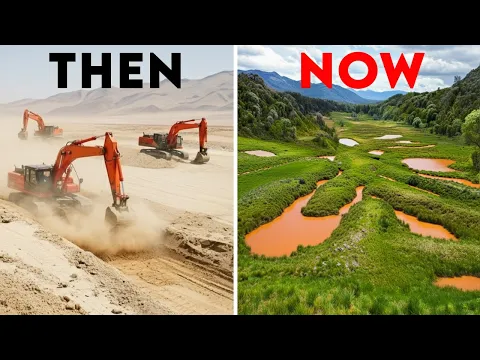

Another Decisive Component Is the Artificial Ponds and Small Reservoirs Built in the Upper Parts of the Mountain. They Capture Water from the Rainy Season and Hold It for Longer, Allowing Slow and Continuous Infiltration.
In the Project Shown, These Ponds Were Reinforced by More Than 30 Canals Excavated Around, Increasing Water Retention. According to the Base, This Raised the Amount of Water in the Streams in the Lower Part of the Mountain by More Than 25%.
This Is Important Data Because It Shows That Bolivia Recovers Dry Areas Not Only Through Revegetation but Also Through Objective Changes in the Hydrology of the Slope.
Native Reforestation Changes the Behavior of the Valley
Recovery Does Not Only Depend on Water. It Also Requires Vegetation. Thousands of Native Andean Trees Have Been Planted as Part of the Project, and Protecting These Areas Prevented Grazing and Cultivation in Strategic Points to Allow the Return of Vegetation Cover.
In a Larger Area, Less Than an Hour Away, a Reservoir of 500,000 Liters Was Installed, Built by the Community Itself, to Supply 80 Agroforestry Lots for 100 Families in a Large Slope Undergoing Recovery. All of This Integrates a 70-Hectare Project Focused on Ecosystem Restoration Throughout the Valley.
When Bolivia Recovers Dry Areas on a Large Scale, Reforestation Becomes as Important as Water Because It Is What Holds the Soil and Helps Stabilize the Landscape in the Long Term.
Dangerous Roads Also Come into This Equation
The Documentary Shows That the Problem Is Not Just Agricultural. Landslides and Falling Boulders Frequently Block Roads, Isolating Entire Communities for Days.
In One of the Shown Sections, a Functional Road Had Simply Collapsed into the River After the Rainy Season. In Another, Residents Were 10 Days Isolated After a Landslide.
This Detail Changes the Dimension of the Project. Restoring Slopes Helps Reduce Erosion, Increase Vegetation Cover, and Slow Down Water, Which Can Alleviate Some of the Instability Threatening Local Roads.
In Other Words, Bolivia Recovers Dry Areas but Also Attempts to Address a Mobility and Safety Issue Affecting the Daily Lives of Thousands of People in the Andes.
Communities Take the Lead in Transformation
Another Strong Point of the Process Is That It Does Not Rely Solely on External Technicians. Local Leadership Is Present Throughout, Both in Building Reservoirs and in Transmitting Knowledge. One of the Project’s Leaders, Herman, Works Installing These Solutions in Different Regions and Teaching Communities to Reproduce Them.
The Base Also Shows the Use of Three-Dimensional Models of the Mountain to Understand Rivers, Streams, Villages, and Watershed Patterns, in a Logic That Refer to Ancient Forms of Andean Planning. This Reinforces the Idea That Technique Is Not Separate from Culture. Bolivia Recovers Dry Areas Because Community Knowledge, Ancestral Memory, and Collective Action Are Working Together.
Ancient Solution Gains Strength Where the Modern Has Failed
The Bolivian Case Draws Attention Precisely Because It Shows an Inversion of Logic. Instead of Treating the Past as a Backwardness, It Reappears as a Source of Response to Problems That Today Seem Too Modern Even for Conventional Engineering.
Drought, Flooding, Erosion, Water Insecurity, and Landslide Are Not New in the Andes. The Difference Is That Ancient Peoples Developed Very Efficient Systems to Deal with All of This Together.
Now, by Resuming This Foundation, Bolivia Recovers Dry Areas with Accessible, Replicable, and Deeply Adapted Solutions to the Territory.
Water, Forest, and Soil Work Together Again
What This Experience Shows Is That Real Recovery Does Not Happen When Only One Piece of the Problem Is Solved.
It Happens When Water, Vegetation, Infiltration, Production, and Occupation of the Mountain Function Again as Parts of the Same System.
The Landscape That Was Once Arid, Unstable, and Dangerous Begins to Respond Differently When Rain Stops Being Destruction and Again Becomes Recharge.
It Is at This Point That Bolivia Recovers Dry Areas in a More Transformative Way: Not Only Greening Slopes But Also Reorganizing the Relationship Between Community and Territory.
And You, Do You Think Ancestral Techniques Like These Should Be Used More Today to Recover Dry Areas and Reduce Landslides in Risk Regions?




-

-

-

-

-

28 pessoas reagiram a isso.