





 Portuguese
  English
  Spanish
  3 min of reading
  0 comments


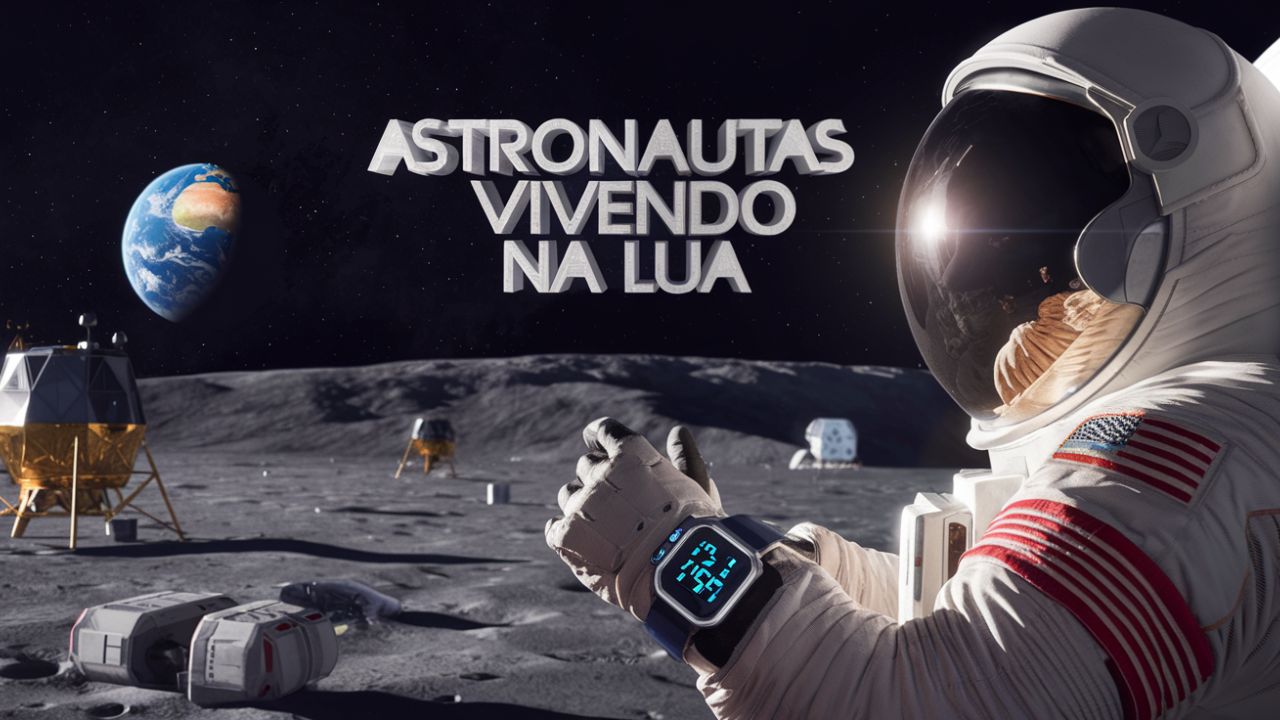
NASA Is Developing Revolutionary Clocks for Lunar Missions, Capable of Compensating for Reduced Gravity, Time Dilation, and Gravitational Anomalies, Essential for Future Colonies and Autonomous Operations in Deep Space.
If you find it complicated to adjust your watch for a new time zone on Earth, imagine syncing time for the Moon! That is NASA’s mission, which is developing a unique timing system for our natural satellite. This work is essential to make a permanent human presence on the Moon possible, something that doesn’t seem so far away.
But why do we need a “lunar clock”? The answer involves cutting-edge science and challenges that go beyond simply counting seconds.
What Is Coordinated Lunar Time (LTC)?

LTC, or Coordinated Lunar Time, is a new time scale being designed to solve synchronization issues between Earth and the Moon. Unlike Earth time, which is largely regulated by the planet’s rotation, lunar time needs to account for relativistic effects and the unique conditions of the lunar environment.
-
In Mexico, a 3,000-year-old Maya site with the dimensions of an entire city may have been built as a colossal map of the cosmos, created to represent the order of the universe and reveal how this people organized space, time, and rituals.

-
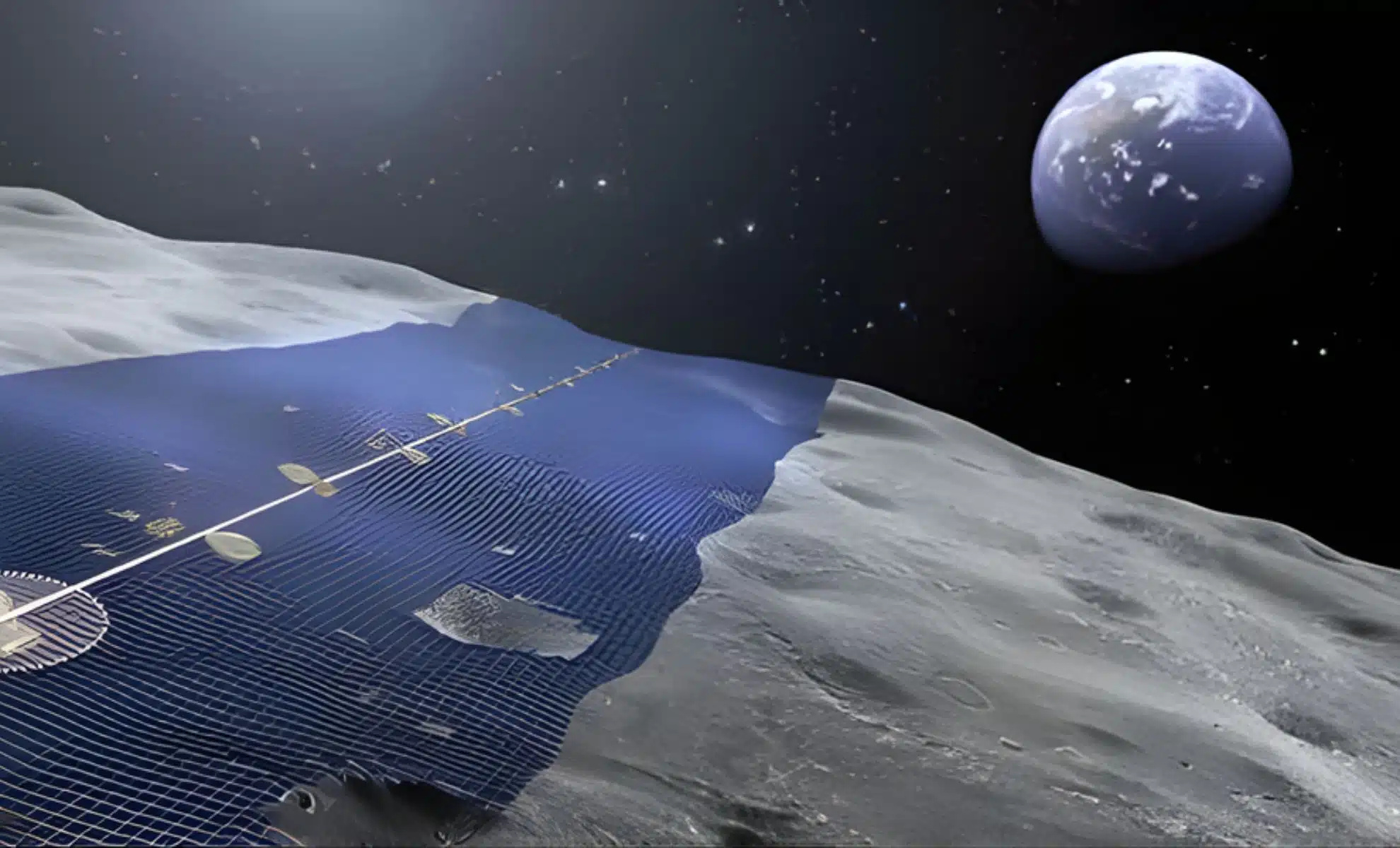
Japan wants to build a solar ring of 10,900 kilometers on the Moon to continuously send energy to Earth.
-
Weighing almost 1 ton, with temperatures of up to 3,000°C, the ability to launch 10,000 fragments within a radius of 1 km, capable of penetrating concrete and melting steel, Turkey’s terrifying bomb emerges as one of the most destructive non-nuclear weapons ever presented.

-
After a submarine disappeared beneath the “Doomsday Glacier,” scientists announce a new monstrous machine capable of operating at 3,000 meters depth to return to the heart of the ice and investigate a threat that could raise sea levels worldwide.


Time dilation, an essential concept from Einstein’s theory of relativity, plays a crucial role here. In simple terms, this means that time passes differently depending on gravity and speed. On the Moon, gravity is about six times weaker than on Earth, causing lunar clocks to “run” faster. An astronaut observing a clock on Earth would see a difference of about 56 microseconds per day. That might seem small, but in multibillion-dollar missions, every microsecond counts.
Clocks designed to operate on the Moon need to be incredibly precise and adjustable. A millisecond error can cause problems in rocket landings, communications, and scientific experiments.
Challenges to Standardize Time on the Moon
Creating a lunar timing system is like trying to assemble a puzzle where the pieces constantly change shape. Many factors come into play, from gravity to the Moon’s unique characteristics.
The Moon’s weaker gravity affects not only the clocks but also how we synchronize time between the two celestial bodies. This requires precise calculations and systems that compensate for these differences.
The Moon has “mascons,” regions where gravity is stronger due to the concentration of mass beneath the surface. These mascons can influence time measurements, creating variations that need to be adjusted.
Technologies Used for the New Lunar Timing System
Nasa is applying advanced technologies to ensure this new system is reliable and accurate.
The GRAIL project, which mapped the lunar gravitational field precisely, and Lunar Laser Ranging, which measures the distance between Earth and the Moon, provide crucial data to adjust lunar time. These missions offer detailed information on how gravity and lunar orbit influence time.
Relativistic time transformations, known as time dilation, are applied to calculate discrepancies and create a system that works in sub-nanoseconds. This is essential for missions like Artemis, where every second can be crucial.
How Lunar Time Affects Future Missions and Settlements
Having a standardized timing system on the Moon is more than a technical issue; it is a fundamental step for space exploration and colonization.
Imagine trying to land a spacecraft without having an exact time reference. A small delay in communication can mean the difference between success and disaster. Therefore, the precision of lunar clocks is vital.
With permanent settlements on the Moon, an autonomous time system will be necessary. This will allow future colonies to operate independently of Earth, facilitating commercial, scientific, and even tourist activities.
Nasa is literally “tuning the dials” for humanity’s future on the Moon. The development of Coordinated Lunar Time (LTC) not only ensures safer and more efficient missions but also paves the way for sustainable space colonization. After all, if we want to live on the Moon, we need to learn to tell time there — and it seems NASA is on the right track to make that happen.








-

Uma pessoa reagiu a isso.