





 Portuguese
  English
  Spanish
  5 min of reading
  2 comments


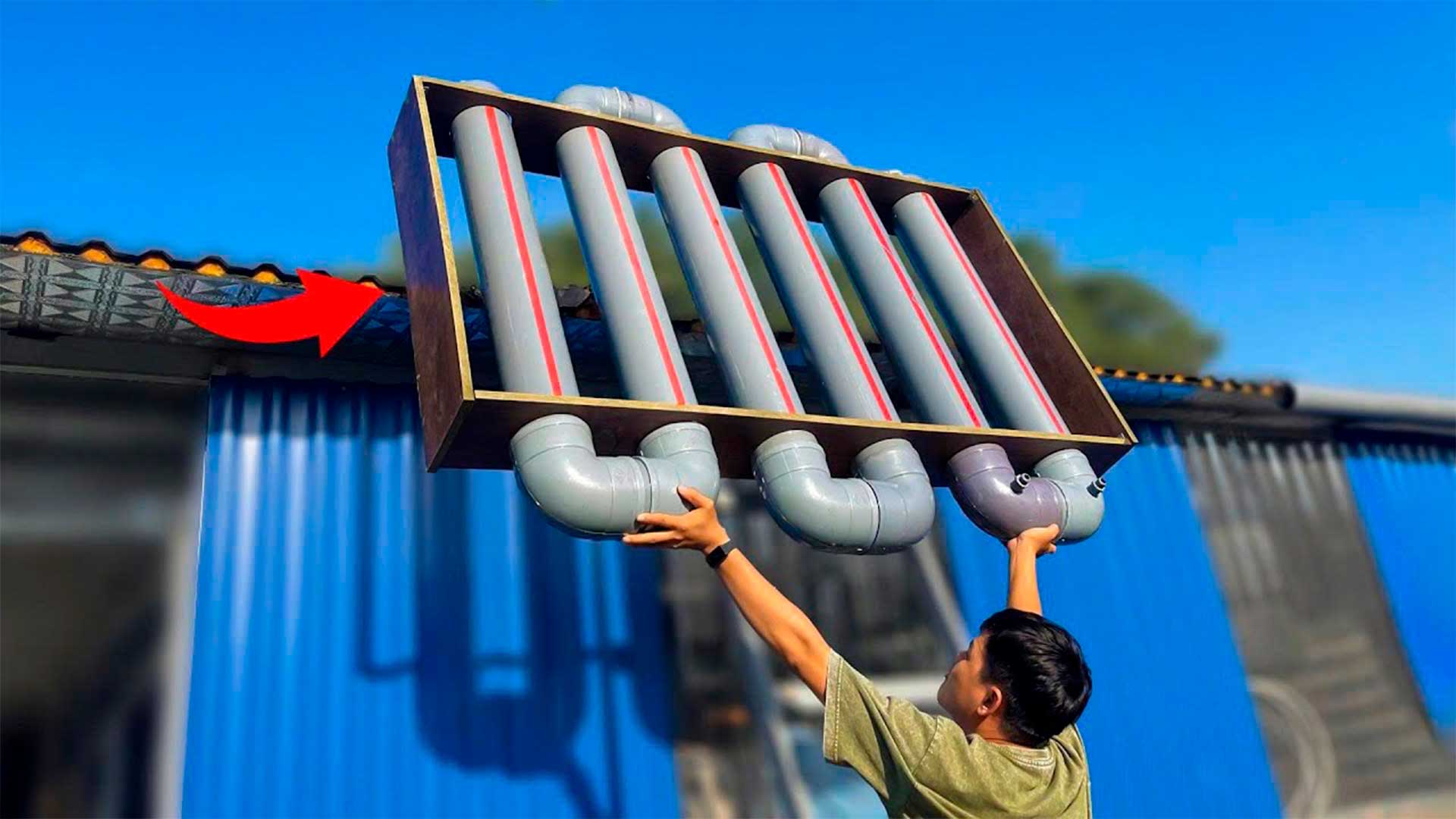


Simple And Accessible Technique Allows Families To Build An Efficient Rainwater Harvesting System At Home Using Basic Materials Found In Construction Stores, Saving Money And Helping The Environment
Thousands of liters of rainwater are wasted every year in Brazilian homes simply because there is no system to capture it. While the country faces a waste of almost 38% of treated water even before it reaches homes, according to information from the Trata Brasil Institute released in 2024, a simple and economical solution has gained attention: the construction of homemade rainwater harvesting systems using PVC pipes.
The technique, which can be implemented by anyone without the need for expensive equipment or advanced plumbing knowledge, consists of directing the water from the roof through gutters and PVC pipes to a reservoir. With an initial investment that can vary from a few reais to about R$ 4,000 in more elaborate projects, the financial return is usually quick.
According to experts in sanitation and sustainability, savings on the water bill can reach 50% monthly when the system is well-sized and utilized. The captured water can be used for various household activities that do not require potable water, such as washing floors, cars, irrigating gardens, and flushing toilets.
-
Drought may be creating stronger superbugs in the soil and helping antibiotic resistance reach hospitals, warns a study highlighting a problem that could grow alongside extreme weather.

-
The biggest scam in history: Napoleon’s France deceived the United States by selling them a territory that was Spanish.

-
Why is the Danakil Desert so dangerous? It has unstable terrain and how extreme temperatures and toxic gases turn the region into one of the most hostile environments on Earth.

-
With a height of 221 meters and a capacity for trillions of liters, Hoover Dam still holds a trick that makes water defy logic.

How The PVC Pipe Capturing System Works
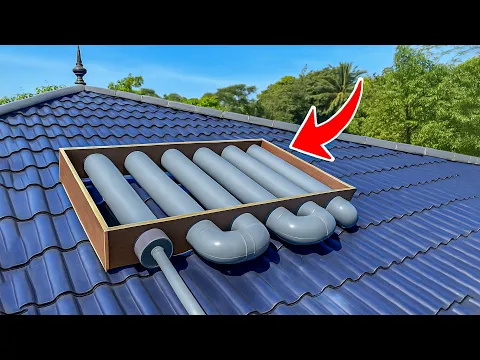

The functioning of the rainwater harvesting system is relatively simple and can be adapted to different sizes of residences. The process begins with collecting water through gutters installed on the roof, which direct the liquid to drainage PVC pipes.
According to technical information from the Brazilian Association of Technical Standards (ABNT), represented by the NBR 15527 standard, which regulates rainwater harvesting in urban areas, it is essential that the system includes filters to retain larger impurities such as leaves, branches, and insects. These filters can be constructed using the PVC pipes themselves and protective screens.
An essential component is the system for discarding the first rainwater, known as “first flush.” The initial water washes away the impurities accumulated on the roof and in the gutters, so it must be discarded before filling the main reservoir. After adequate filtration, the water is stored in cisterns, barrels, or water tanks, from where it can be distributed by gravity or through pumps to the points of use.
Proven Financial Savings And Environmental Benefits
Data from projects implemented in different regions of Brazil demonstrate significant results. A case study by the University of São Paulo (USP), conducted in São Carlos, showed that a residential system with a storage capacity of 5,000 liters allowed for savings of nearly 60,000 liters of water throughout the year, as well as a monthly reduction of up to R$ 300 on the water bill, according to information released by the Jornal da USP in 2017.
The installation cost varies according to the project’s complexity. Simpler systems, using only gutters, PVC piping, and basic reservoirs, can cost less than R$ 1,000. Meanwhile, more elaborate projects, with advanced filters, automation, and larger cisterns, can reach R$ 4,000 or more.
The return on investment is considered quick by experts. According to information from companies specialized in capturing systems, the average time to recover the invested amount is around 18 months, depending on the water consumption of the residence and the rainfall pattern of the region.
Beyond financial savings, rainwater harvesting brings significant environmental benefits. Each residence that implements the system reduces pressure on treated water sources, helps decrease waste, and alleviates urban drainage systems during periods of heavy rainfall.
Necessary Materials And Installation Process
To build a basic rainwater harvesting system, the main materials include PVC pipes and fittings, gutters (preferably made of PVC, aluminum, or galvanized steel), filtration screens, a reservoir (barrel, cistern, or water tank), and taps or valves for controlling the flow.
According to guidance from experts in sustainable construction consulted by specialized media, the choice of materials is crucial to ensure durability. PVC pipes are highly recommended due to their resistance to corrosion, ease of installation, and affordable cost. Gutters should always be clean and in good condition to avoid initial water contamination.
The sizing of the system should consider two main factors: the area of the roof available for capture and the area’s rainfall history. The larger the roof and the more regular the rainfall pattern, the greater the storage capacity needed to optimize usage.
For installation, it is not necessary to hire specialized labor for simpler projects, although consulting a professional may help with more complex systems. The important thing is to follow best practices for sealing, proper slope of the gutters and pipes, and correct installation of the filters.
Context Of Scarcity And Waste In Brazil
The implementation of rainwater harvesting systems becomes even more relevant when observing the national waste scenario. According to the 2024 Water Loss Study, conducted by the Trata Brasil Institute in partnership with GO Associados consultancy, the country loses 37.78% of treated water before it reaches residences.
This waste, caused by leaks, measurement errors, and unauthorized consumption, is equivalent to nearly 7,636 Olympic-sized swimming pools of treated water wasted daily, according to data released in June 2024. The lost volume would be enough to supply 54 million Brazilians annually, while more than 32 million people in the country still live without access to treated water.
The situation makes the adoption of water reuse and conservation practices by families even more urgent. Each residence that implements a rainwater harvesting system contributes to reducing pressure on water resources and decreases the need for additional capture from water sources.
Brazil recently approved Law No. 14,546, which requires the Union to adopt measures to prevent water waste and promote reuse in new constructions and various activities. Some cities already offer tax incentives, such as property tax discounts, for properties that implement rainwater harvesting systems.
And you, have you thought about installing a rainwater harvesting system in your home? Do urban residents really have the conditions to implement this type of system? Share your opinion in the comments and share your experience if you already utilize rainwater harvesting!









Depende do lugar e como é a construção, sobrado já é mais complicado.
Pode usa uma caixa para depositar água da chuva e fazer ligações para utilizar em outras coisas.
Aqui em Maringá PR-NAO vale apenas fazer este procedimento de aproveitamento em relação a colaboração e descontos da PREFEITURA este ano 2.026 tivemos aumento vergonhoso de IPTU pelo prefeito Silvio Borros, e desconto de $ 72,00 reias no ano..kkkkkkkk isso é vergonhoso para uma cidade que diz uma das maiores .