





 Portuguese
  English
  Spanish
 4 min of reading
  4 comments


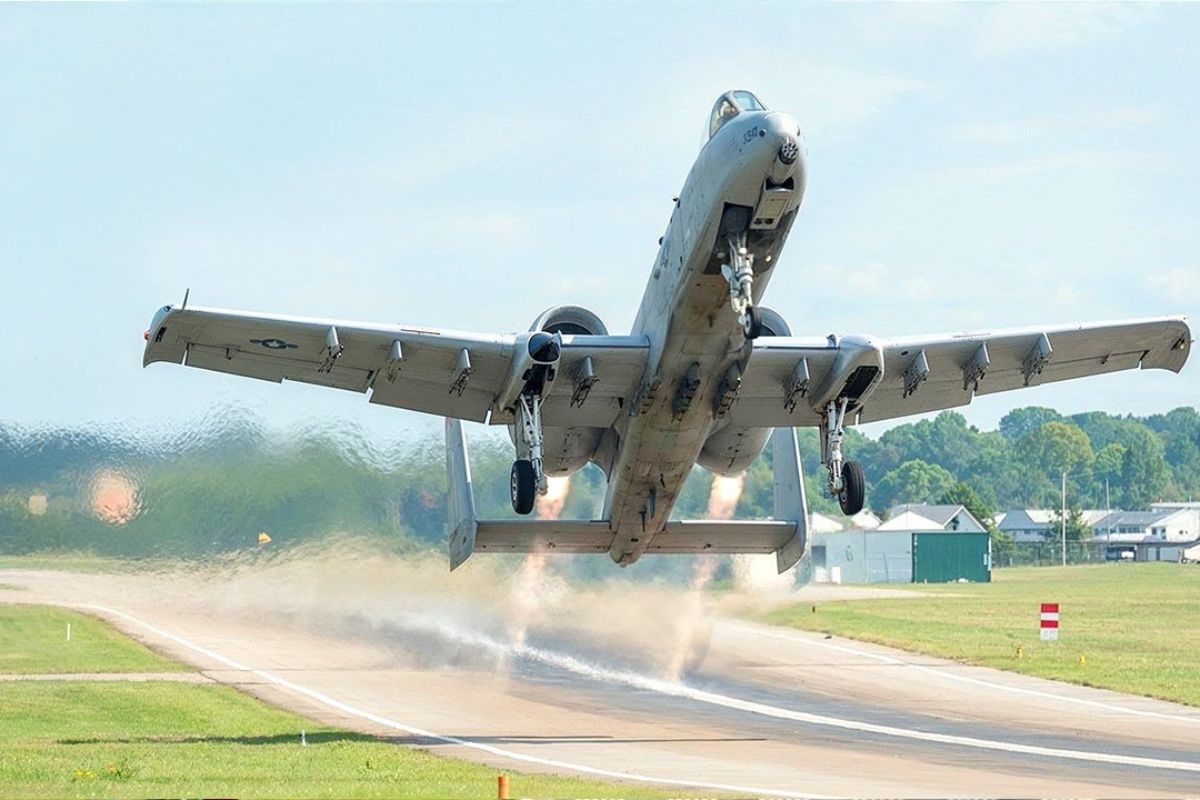


Designed Around The GAU-8/A Avenger, The A-10 Thunderbolt II Combines Straight Wings For Slow Flight, Engines Positioned To Reduce Vulnerability, Hydraulic Redundancy, And A Titanium Bathtub Cockpit, Allowing It To Stay Over Combat For Long Periods And Deliver Precise Fire When Friendly Troops Are Dangerously Close On The Ground Under Risk.
The A-10 Thunderbolt was designed for a specific type of mission: close air support in hostile environments, where ground troops need immediate response and minimal margin for error. Instead of prioritizing maximum speed, the design favored staying power over the battlefield, stability at low altitude, and the ability to continue flying even under damage.
This set explains why the aircraft has gained a unique reputation among pilots and forward controllers. It Is Not A Classic “Multirole” Fighter, but a platform built to attack ground targets with precision, return for another pass quickly, and sustain presence when other aircraft have needed to withdraw.
The Central Logic Of The Design Begins With The Cannon
On the A-10, the airframe architecture revolves around the GAU-8/A Avenger, a 30 mm rotary cannon with seven barrels and a length exceeding 19 feet. The complete system, with ammunition, weighs over 4,000 pounds and represents about 16% of the aircraft’s empty weight. In practice, it is not a weapon mounted on an airplane; it is an airplane structured to deliver that weapon.
-
The Arctic is shrinking and in March 2026 recorded only 14.3 million km² of ice at the peak of winter, one of the lowest levels since 1979, reducing the planet’s ability to reflect heat and accelerating global warming.

-
The waste that can double a household’s water bill is not in the faucet or the shower; it happens hidden within the walls and can go unnoticed for months, according to sanitation experts.

-
Darkness can surpass light in an optical phenomenon confirmed by scientists, which expands the understanding of relativity and reveals new behaviors of waves in the universe.

-
A Brazilian scientist created a pen that touches human tissue and identifies cancer cells in seconds using a drop of water and artificial intelligence, and Lívia Eberlin’s invention has already been used in over 400 surgeries in the United States and Brazil.


This engineering decision imposed trade-offs and advantages. The nose gear is offset to accommodate the cannon in the ideal line of fire, and the operation of the weapon requires management of recoil, heat, and gas flow. In short bursts of about two seconds, the system can fire approximately 130 rounds, maintaining accuracy compatible with scenarios where friendly forces are very close to the target.
Survival In Combat: Engines, Structure, And Pilot Protection
The two TF-34 engines, with about 9,000 pounds of thrust each, were positioned at the rear and high of the fuselage to reduce exposure to ground fire and decrease the thermal signature perceived from below. With a high bypass ratio, they prioritize efficiency and time over the area, allowing long patrol periods. In close support, staying on site often outweighs being the fastest.
The structure also reflects this philosophy. With extensive use of riveted aluminum alloys and interchangeable panels, the A-10 favors reparability in the field.
Surrounding the cockpit, a titanium armor weighing about 1,200 pounds, with varying thicknesses, protects the pilot and critical control components. The fuel system combines protected tanks, self-sealing cells, and solutions to reduce risk after penetration, maintaining a real chance of return even under damage.
Redundant Flight Control And What Happens When Everything Fails
The A-10 operates with two independent hydraulic systems distributed across separate circuits. If one circuit is lost, the other keeps control surfaces active without sudden changes in behavior for the pilot. And, in the worst-case scenario, there is mechanical manual reversion via cables and rods, without relying on hydraulic pressure. It Is An Extra Layer Designed For The Day When The Unthinkable Happens.
This concept came to life in combat. In 2003, over Baghdad, Captain Kim Campbell lost both hydraulic systems after enemy fire and landed the aircraft in manual mode. The case became a reference because it demonstrates, in a real situation, the logic of the design: redundancy is not a technical detail; it is the difference between total loss and aircraft recovery.
Precision Under Pressure: Where The A-10 Thunderbolt Makes A Difference
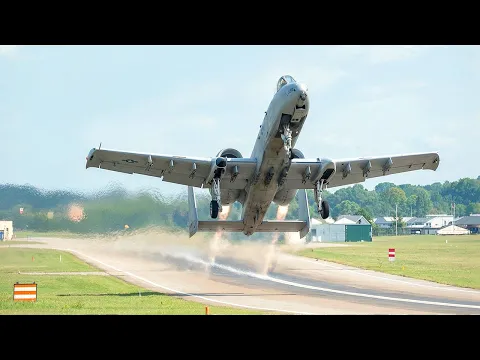

With straight wings, the A-10 maintains control at low speeds, able to fly around 140 knots without stalling and maneuver for another pass in the range of 300 knots.
The aircraft also carries a wide variety of external armaments on 11 hardpoints, with relevant total capacity for different mission profiles. This combination allows adapting response, not just increasing fire volume.
In the attack phase, the fire control computer with continuously calculated impact point considers speed, dive angle, altitude, and ballistics in real-time.
In conditions described in the classic profile, there is a reference of 80% accuracy within a 40-foot circle at a slant distance of 4,000 feet, in a 30-degree dive.
This level of precision is decisive in a “danger close” situation, when friendly forces may be about 200 meters from the target.
The A-10 Thunderbolt remains relevant because its technical design answers a direct operational question: how to support ground troops with precision, endurance, and staying power when the environment is unfavorable. Cannon, Armor, Redundancy, And Simplified Maintenance form a coherent system, oriented by survival and effectiveness, not by appearance or showcase speed.
If You Had To Prioritize Just One Factor In Close Air Support, Would You Choose Time Over Target, Ability To Survive Damage, Or Precision At Close Distance To Friendly Troops? And Why?




Esse avião é de qual PAÍS, não vi em nenhum lugar no texto acima.
Essa aeronave torno-se obsoleta, após a infantaria ser armada com mísseis antiaéreos portáteis.
Avião Fantástico,do Fantástico,Com Dedicação Exclusiva a “Pulverização” de Blindados no Solo,Arma de Maior Robustez Em Combate Convencional,de Imensa Resistência,Mas Que Acaba,ao Ser Atingida Por Disparos Desse Medonho Canhão Cíclico,
Cuja Munição Feita de Urânio Exaurido,Ora Que Atinge os Blindados,os Cortam Feito Manteiga,Chegando a 10 Mil Graus no Ponto de Fusão No Momento Que os Tiros Acertam o Blindado.
É Um Avião Com Mais de 40 Anos de Uso,Sempre Repaginado,e Tão Cedo os E. U. A. Não Podendo Prescindir se do Mesmo Por Sua Suprema Capacidade de Poder,Ainda Hoje, Insuperável.
O Seu Canhão de Cadência Cíclica de 30mm é O Mais Poderoso Ainda, Canhão do Mundo Nessa Configuração Técnica!! Algo, Épico e Supremacia, Imbatível !!
Vê lo Operando é Algo Cinematográfico.
Emerson/
Gestor/Perito Ambiental/Energias Renováveis/Política de Baixo Carbono.