





 Portuguese
  English
  Spanish
  4 min of reading
  0 comments


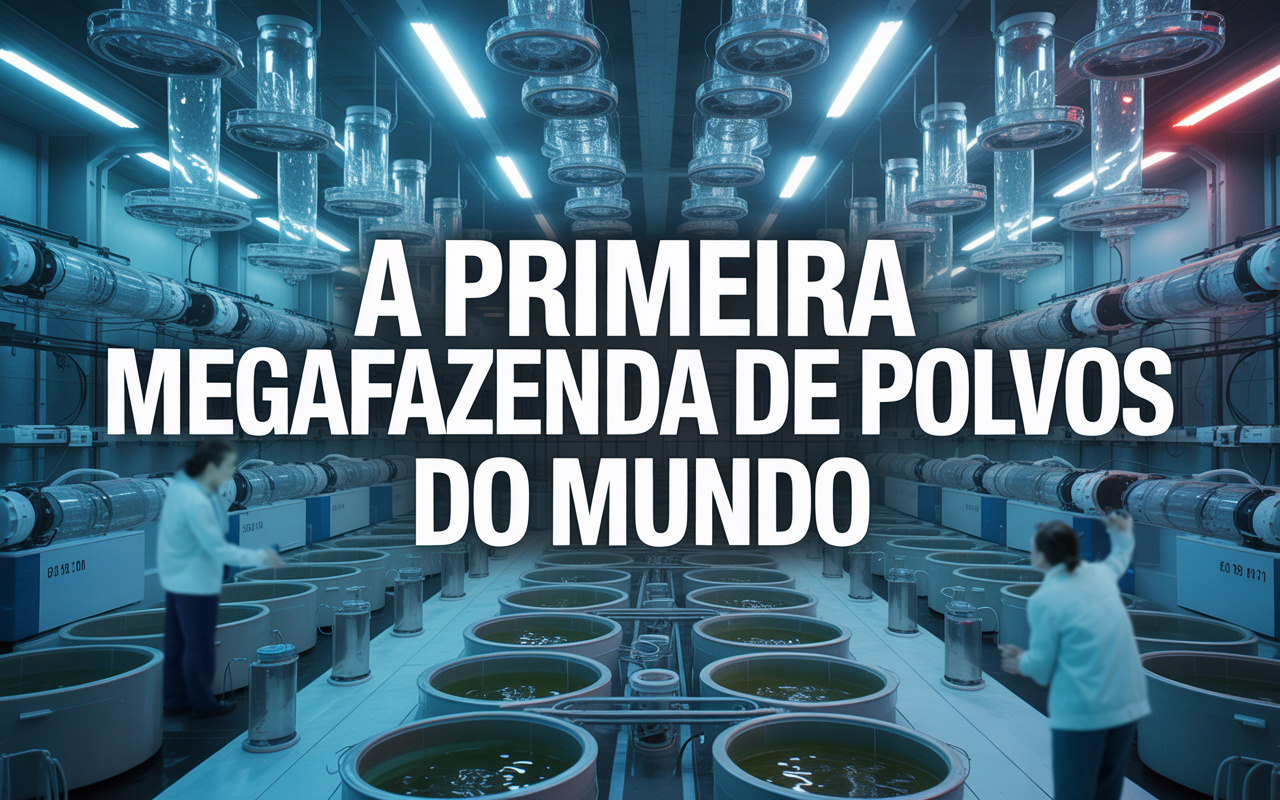
Spain Invests €65 Million In First Octopus Megafarm In The World And Begins Global Dispute Over One Of The Most Controversial Proteins In Aquaculture.
In 2022, when the Spanish company Nueva Pescanova officially announced that it had mastered the complete reproduction cycle of octopuses in captivity, laboratories and aquaculture centers around the world turned their attention to Galicia, in northwest Spain. The news, reported by Reuters, BBC, CNN, and confirmed in technical statements from the company itself, marked a turning point in the global marine protein industry. The octopus, until then considered “impossible” to farm on an industrial scale due to high larval mortality, complex behavior, and cannibalism among individuals, finally seemed close to entering global aquaculture.
The Spanish proposal is bold: to build the first octopus megafarm in the world, with an estimated investment of €65 million, proprietary technology, and an experimental model of fattening, feeding, and reproduction still under evaluation. It is a project described by experts as “revolutionary,” “controversial,” and “unprecedented,” capable of redefining the gastronomic and scientific market.
The Octopus Megafarm: Structure, Technology, and Industrial Ambition
The initial project plans to install tanks, breeding modules, and continuous monitoring systems in an area near the port of Las Palmas, in the Canary Islands. The documents presented by the company to local authorities include climatized rooms, light control, seawater filtration systems, and a management model that attempts to simulate part of the natural habitat conditions of the species Octopus vulgaris.
-
100 times less energy consumption: the innovation that could solve the huge energy crisis of AI.

-
Scientists reveal a new method using solar light that transforms plastic into vinegar and could change the game against pollution, converting waste into a sustainable solution with future global impact.
-
3,500-year-old tear discovered reveals a textile technique much more advanced than previously thought in the Bronze Age.
-
One of the largest manufacturers of military ammunition in the world is Brazilian and has just signed an agreement with the Navy to develop national ammunition for the frigates built in Santa Catarina that will protect the Blue Amazon.



The technology used in the laboratory is based on the work started in 2010 by the Spanish Institute of Oceanography (IEO), which managed — after years of study — to bring octopuses from the larval stage to the juvenile stage. Nueva Pescanova then partnered with researchers and began private tests to improve yield and reduce mortality, a historical bottleneck in captive production.
According to Reuters, interviewed technicians claim that the company has managed to complete several generations of octopuses raised in the laboratory, which made the ambition to scale the process feasible.
Despite this, the proposed industrial model is still under analysis and there is no official data on the tonnage produced, only projections, still without final validation from environmental agencies.
Octopus: One Of The Most Complex And Ethically Debated Proteins On The Planet
Industrial octopus farming is not just a matter of engineering. It involves ethical, biological, and scientific debates rarely seen in aquaculture.
The octopus is considered one of the most intelligent animals in the marine world. Studies published in the journal Nature show that these animals:
- solve complex problems
- use sophisticated camouflage strategies
- demonstrate behaviors that suggest memory and learning
- manipulate objects and escape from environments with ease
These characteristics, combined with a short life cycle and high environmental sensitivity, have made its farming a barrier for researchers for decades.
Therefore, when Spain announced that it had reached the point of planning a megafarm, scientists from European universities and environmental entities began publicly debating the risks.
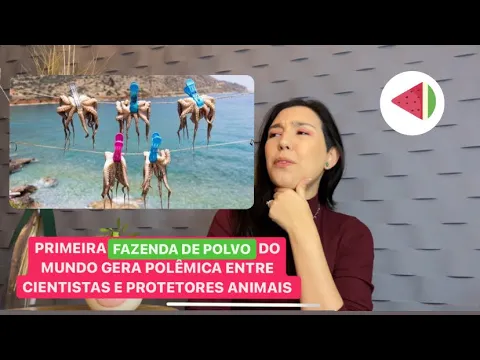
The BBC noted that groups like Compassion in World Farming question whether intensive farming can cause suffering, due to territorial behavior, cannibalism, and stress resulting from high tank density.
Nueva Pescanova claims to have animal welfare protocols and ongoing research to mitigate stress, but so far the project divides opinions — which only increases global curiosity and repercussions.
Economic Impact And The International Dispute Over A New Protein Frontier
Despite the controversy, the economic interest is undeniable.
The octopus is one of the most high-value proteins in gastronomy. In cities across Europe and Asia, the price of fresh octopus can exceed €20 per kilogram, and the global market generates hundreds of millions of euros per year.
Spain, in turn, is one of the largest consumers of octopus on the planet, especially in Galicia, where traditional dishes like pulpo a la gallega are part of the cultural identity.
If the Spanish project reaches the intended scale, the country could:
- reduce dependence on extractive fishing
- supply the domestic market with traceable production
- export technology to other countries
- become a pioneer in a still non-existent global chain
But none of this is guaranteed. The megafarm is still awaiting definitive environmental permits to operate at full production, and its real industrial performance in tons, yields, and survival rates — has not yet been publicly proven.
What exists today is an infrastructure under construction, a multi-million investment, and unprecedented technological potential.
What The Spanish Project Represents For The Future Of Aquaculture
If octopus farming advances, Spain will open a new frontier of global aquaculture comparable to the impact Norway had with salmon and China with carpa, tilapia and seafood.
But if it does not progress, the Spanish case will be remembered as one of the most daring (and controversial) experiments ever attempted in marine protein farming.
Regardless of the outcome, the Spanish megafarm already plays a historical role: to accelerate the international debate about the limits of animal production in industrial environments and how much science and market are willing to invest to transform complex species into scalable products.




-

-

2 pessoas reagiram a isso.