





 Portuguese
  English
  Spanish
  6 min of reading
  0 comments



Investment in New Airport, Aviation Ecosystem, and Aerospace Industry Projects the Country as a Global Power in Air Transport and Technology
A India has entered a phase where opening a new airport has ceased to be a rare event and has become a routine public policy. According to the Civil Aviation Minister, Ram Mohan Naidu Kinjarapu, the country has been inaugurating a new terminal approximately every 50 days, in a movement described as “unprecedented” in global aviation. The goal is not only to expand the physical network but also to consolidate civil aviation as a structuring axis of Indian economic growth.
This sequence of deliveries is connected to a long-term strategy aimed at increasing the total number of operational airports from 162 to 350 by 2047. In parallel, the government is working to ensure that each new airport functions as a driver of jobs, specialized services, vocational training, and industrial investments, aligned with the “Developed India” (Vikshit Bharat) plan, which projects the country as the future third largest economy in the world in terms of purchasing power parity.
Network Expansion: New Airport as State Policy
The official statement from the minister makes it clear that the construction of each new airport is not an isolated action but part of a national guideline. The policy combines the geographical expansion of infrastructure with sustained growth in passenger traffic and the strengthening of sectors that revolve around civil aviation.
-
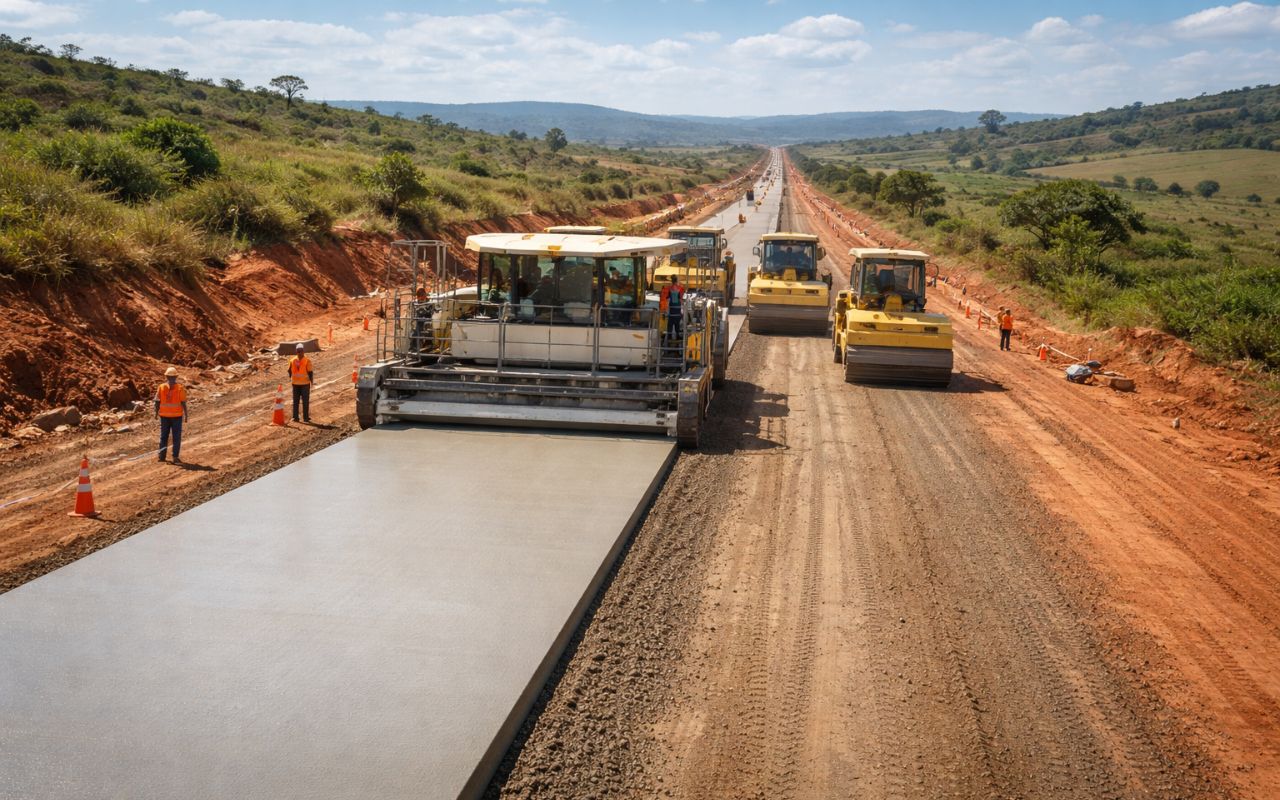
New CCR concrete paving technology promises roads up to 3x more durable, less maintenance, and cost reduction in Brazil.
-
Made from recycled plastic, plastic wood is gaining space in the construction industry because it does not rot, resists moisture, and reduces maintenance costs over the years.

-
Florianópolis will receive a million-dollar BRT that will begin construction in 2026 with nearly 400 million in funding from the federal government and the Inter-American Development Bank, and the map already shows the routes for the exclusive bus corridors.

-
Without a blueprint, without an engineer, and using scrap from the dump, a father spends 15 years building an 18-room castle for his daughter, featuring tram tracks, 13 fireplaces, and over 700 m², which may now be demolished.


By classifying the numbers as unprecedented on the global stage, the Indian government seeks to reinforce the message that aviation is at the center of its development strategy. More than just building runways and terminals, the country is reshaping its internal flows of people and cargo, connecting regions and reducing travel time between emerging economic hubs.
A New Airport Every 50 Days: What This Pace Indicates
Operating a new airport every 50 days assumes the capacity for planning, financing, and execution on a national scale.
The disclosed schedule indicates that there is a robust portfolio of projects being developed simultaneously, with construction progressing at different stages.
In practical terms, this pace means:
continuous creation of work fronts in engineering and construction
growing demand for specialized labor in airport operations
expansion of associated services, such as security, logistics, maintenance, and passenger services
Even without detailing all the locations, the minister associates this movement with the growth in passenger traffic and the formation of a “robust aviation ecosystem,” in which each new airport becomes a strategic node in an increasingly dense network.
Goal of 350 Terminals by 2047: Long-Term Vision
The goal of increasing from 162 to 350 airports by 2047 reveals a planned horizon beyond election cycles.
Each new airport that goes into operation brings the country closer to this mark, which is integrated into the “Developed India” plan.
This long-term vision has at least three direct implications:
- consolidation of aviation as basic infrastructure, not just as a premium service
- creation of air corridors connecting industrial, technological, and agricultural centers
- ability to absorb the anticipated increase in demand for domestic and regional travel
In this context, the new airport ceases to be just a construction and represents a component of an economic architecture designed for decades.
Andhra Pradesh: Laboratory of the New Phase of Indian Aviation
The state of Andhra Pradesh stands out as a key example of this strategy in action.
Currently, seven state airports are already in operation, and the local government is planning to implement seven more, which effectively means doubling the regional network.
With this, each new airport in Andhra Pradesh strengthens the integration between medium-sized cities, industrial hubs, and rural areas, facilitating the flow of products and the circulation of workers.
The design points to a model where states take an active role in expansion, while the central government coordinates guidelines, financing, and regulatory frameworks.
Training, Maintenance, and Services: The Ecosystem Behind the Terminals
The physical expansion of the network is accompanied by investments in human capital and technical capability.
In the same state of Andhra Pradesh, the plan includes the establishment of four schools directly focused on civil aviation, besides the installation, in Vishakhapatnam, of a set of strategic structures:
- aircraft maintenance center
- air base
- university linked to the sector
These initiatives show that the goal is to ensure that each new airport is supported by qualified labor and advanced maintenance and engineering services.
The training of technicians, engineers, and operational professionals becomes as important as the concrete and asphalt of the runways.
Drone City and Aerospace Industry: Technological Frontier
Another axis of the policy is the encouragement of emerging technologies. Among federal projects is the creation of a “drone city,” dedicated to the development and application of unmanned aerial vehicles.
The idea is for this hub to function as an accelerator of innovation, testing, and commercial and governmental applications.
In parallel, the national strategy includes the expansion of the aerospace industry and the encouragement of aircraft manufacturing in Indian territory.
This way, the infrastructure of a new airport begins to engage with a more sophisticated production chain, which includes everything from electronic components to complete flight platforms, manned or unmanned.
Economic and Geopolitical Impacts of the New Air Network
The advancement of this civil aviation network becomes an economic and geopolitical asset.
A country that can deliver a new airport at short intervals demonstrates the ability to attract investments, integrate logistics chains, and shorten distances in a vast and populous territory.
The combination of regional terminals, maintenance centers, aviation schools, aircraft production, and drone hubs creates industrial density.
Each new airport becomes an anchor point for tourism, commerce, technology, and logistics services, reinforcing the external perception of India as an emerging power, aligned with the aim of being among the largest economies on the planet in terms of purchasing power parity.
Challenges to Sustain the Expansion Pace
Despite the optimistic discourse, maintaining the schedule of a new airport every 50 days poses significant challenges. Among them, the following stand out:
- need to ensure continuous funding for construction and operation
- coordination between central government, states, and municipalities
- definition of management models that ensure efficiency and safety
- monitoring environmental and social impacts, especially in sensitive areas
The government’s response has been to emphasize the “sustained” nature of growth, indicating concern with passenger traffic, regulation, and the development of aviation-related sectors.
The balance between delivery speed and operational quality will be one of the critical points for measuring the success of the strategy by 2047.
Conclusion: New Airport as a Symbol of a Country Project
By announcing that it inaugurates a new airport every 50 days and projects 350 terminals by 2047, India sends a clear message to the world: civil aviation is at the center of its development project.
More than just impressive statistics, the country is trying to build an ecosystem in which infrastructure, schools, maintenance, drones, and the aerospace industry operate in an integrated manner.
If the plan materializes at the announced scale, each new airport will cease to be just an engineering project and become a landmark of economic, social, and technological transformation, connecting previously isolated regions and reinforcing India’s position as a global power in civil aviation.
For you, who follows this movement: what should be prioritized in a country that decides to accelerate the construction of each new airport, regional integration or investment in technology and training of personnel?









-

Uma pessoa reagiu a isso.