





 Portuguese
  English
  Spanish
  5 min of reading
  0 comments


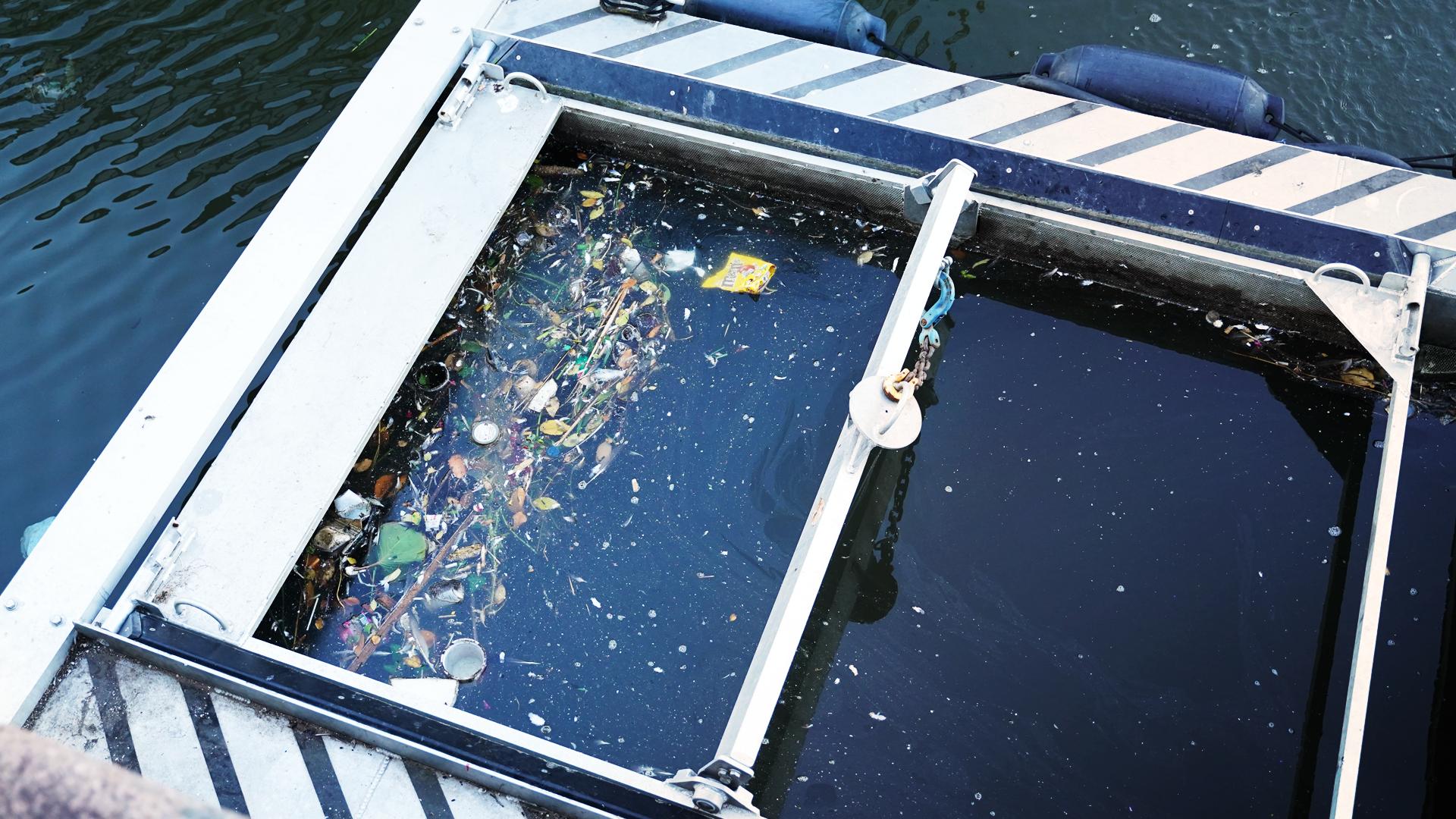
European System Creates Bubble Curtain That Intercepts Up to 86% of Plastic in Rivers, Captures Microplastics and Prevents Tons of Waste from Reaching the Ocean.
For decades, the fight against marine pollution has focused on the open ocean, where millions of tons of plastic are already circulating freely. But European scientists and engineers decided to tackle the problem at a much more strategic point: before the waste reaches the sea. This led to the emergence of the so-called Great Bubble Barrier, an seemingly simple yet technologically sophisticated system that uses only compressed air to create an invisible barrier capable of capturing most of the plastic carried by rivers.
Initially installed in urban canals in the Netherlands, the technology showed concrete results, measured in real efficiency, and quickly began to be regarded as one of the most promising approaches in the world to continuously, scalably, and with low environmental impact, curb plastic pollution.
Why Rivers Have Become the Central Focus in the Fight Against Plastic
Scientific studies indicate that most of the plastic that reaches the oceans comes from rivers, especially those that traverse large urban centers and industrial areas. Once in the sea, recovery becomes extremely difficult, costly, and often unfeasible. In river environments, however, the waste is still concentrated, predictable, and technically interceptable.
-
While Brazil wants to end the 6×1 work shift, the president of Argentina wants 12 hours for his workers, increasing political tension in the country.

-
The village where two rivers run side by side without mixing in Santarém and Alter do Chão reveals some of the most beautiful freshwater beaches on the planet.
-
Mars is accelerating, and scientists have discovered that the planet’s day is getting shorter, revealing surprising signs of internal activity.

-
Artemis 2 is set to launch on April 1 at 7:24 PM to orbit the Moon with four astronauts, but a class X solar flare and coronal mass ejection could interfere with communications and threaten the launch.



The logic behind the Great Bubble Barrier is based on this realization: stopping the waste flow at the source is much more efficient than trying to clean it up after oceanic dispersion. Instead of large solid structures or nets that block navigation, the engineers bet on a radically different concept.
How the “Bubble Curtain” Works to Block Plastic Without Blocking Rivers
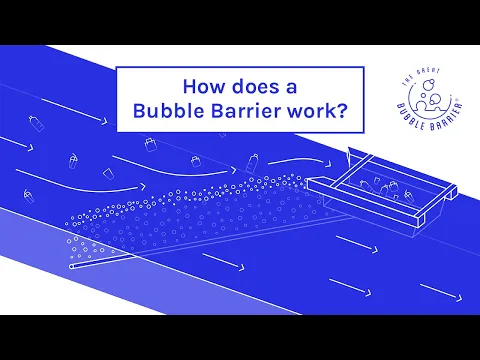
The system consists of a perforated tube installed diagonally on the riverbed. Through this tube, compressed air is continuously released, creating a dense curtain of bubbles that rises from the base to the water’s surface. This air barrier spans the entire width and depth of the river, forming a smooth yet effective physical obstacle.

When floating or submerged waste meets the bubble curtain, it is pushed sideways by the combined flow of the water and the rising bubbles, being directed towards a specific point on the bank. There, the material is collected by conventional collection systems.
The difference lies in the fact that the bubbles do not prevent the passage of boats, fish, or natural sediments, something that has always been a problem with rigid barriers. Navigation continues normally, aquatic fauna does not face blockages, and the system can operate 24 hours a day, regardless of weather conditions.
Proven Efficiency: Up to 86% of Plastic Intercepted
Tests conducted in Amsterdam and released by the project team demonstrated that the Great Bubble Barrier can capture up to 86% of floating plastic passing through the installation point.
The system is effective for both large waste, such as bottles and packaging, and for smaller fragments, including microplastics of a few millimeters.
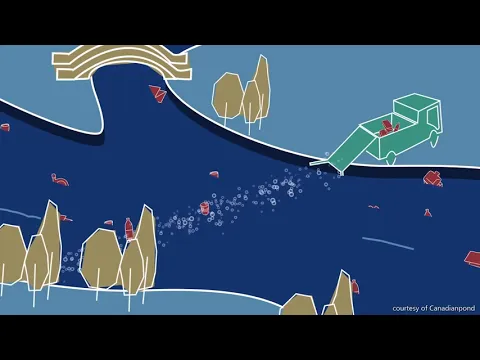
This interception rate is considered extremely high for a passive system, especially compared to traditional river cleaning methods. Additionally, the barrier operates continuously, preventing plastic from accumulating further down the river or reaching the ocean.
Microplastics Also in the Crosshairs
One of the great assets of the technology is its ability to capture microplastics, particles almost invisible to the naked eye but highly dangerous. These fragments, smaller than 5 millimeters, easily pass through grates and conventional filtration systems and end up entering the food chain.
The bubble curtain acts on these particles because it creates a controlled turbulence zone that alters the water flow behavior, pushing the microplastics towards the collection point. This has made the Great Bubble Barrier one of the few technologies capable of simultaneously acting on both macro and microplastics in the river environment.
Real Implementation and International Expansion
Following positive results in Dutch canals, the project began to expand to other European countries. Installations have been planned or initiated in strategic rivers in Germany and Portugal, including areas near estuaries that flow directly into the Atlantic Ocean.
Local governments began to see the technology not just as an environmental tool, but as water protection urban infrastructure, integrated with sanitation policies, waste management, and climate adaptation.
The system has also caught the attention of global sustainability initiatives and was recognized by international awards focused on environmental innovation.
Low Energy Consumption and Reduced Maintenance
Another decisive factor for the adoption of the system is its relatively low operational cost. The Great Bubble Barrier uses only air compressors, with modest energy consumption compared to mechanized collection systems. There are no complex submerged moving parts, nor the need for large metal structures.
The maintenance consists of periodic checks of the compressors, cleaning the collection point, and monitoring efficiency. This makes the system viable even for medium-sized cities and regions that do not have large environmental budgets.
A Paradigm Shift in Ocean Cleaning
By focusing on rivers, the Great Bubble Barrier represents a profound shift in how the world views marine pollution. Instead of just dealing with the effects, the technology acts directly on the cause, preventing tons of waste from entering the ocean every year.
Environmental experts emphasize that no single solution will solve the plastic problem, but systems like this have the potential to become permanent layers of defense, especially when combined with policies to reduce plastic use and improve urban waste management.
An Invisible but Decisive Defensive Line
At first glance, the idea of blocking waste with air bubbles seems too fragile for a global problem. But the data show the opposite. The Great Bubble Barrier proves that intelligent solutions, based on simple physics and well-applied engineering, can outperform heavy, costly, and invasive approaches.
By creating an invisible barrier underwater, the project not only intercepts plastic but redefines the concept of environmental infrastructure: discreet, continuous, efficient, and adapted to coexist with cities, rivers, and ecosystems.
If replicated on a global scale, especially in the most polluted rivers of the planet, this bubble curtain could become one of the most important tools in the fight to prevent plastic from continuing to dominate the oceans.










Seja o primeiro a reagir!