





 Portuguese
  English
  Spanish
  8 min of reading
  0 comments


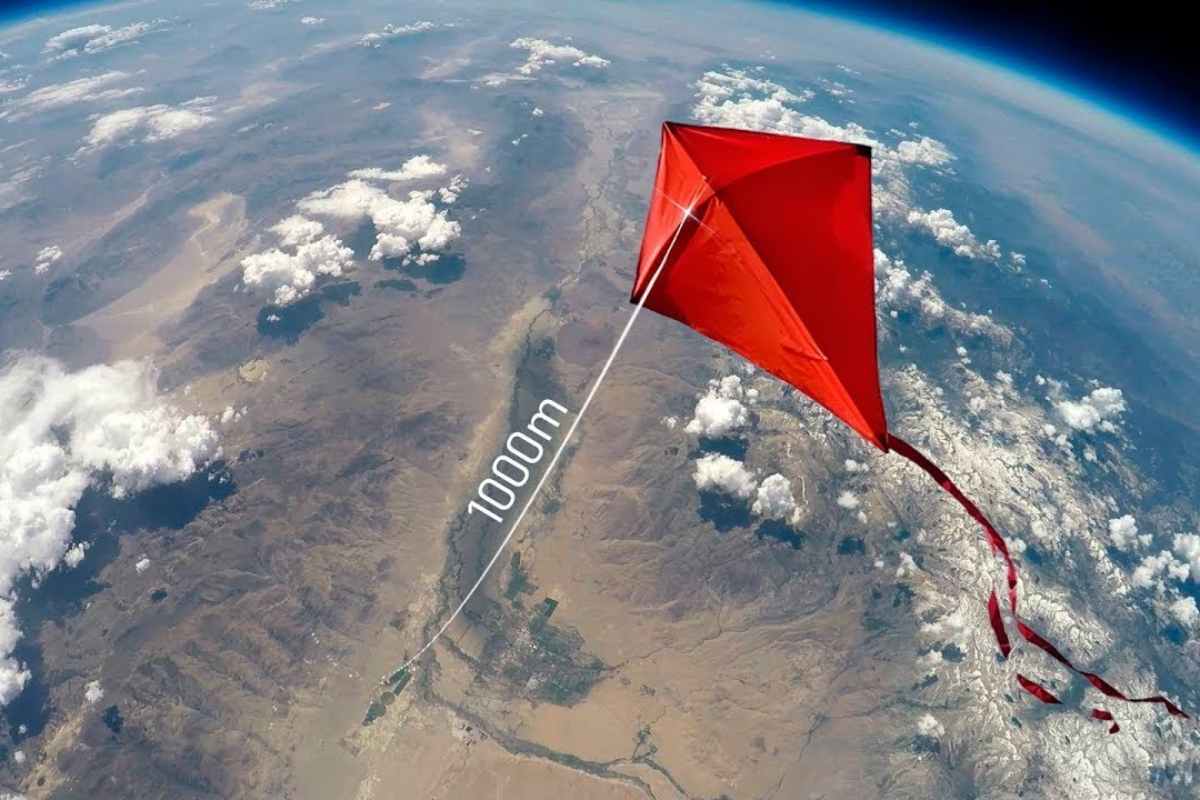
To Discover How Far A Monstrous Kite Can Go, The Group Built A Giant Reel, Joined Ten Spools Of Line In A Continuous Kilometer, And Hung Cameras From The Structure, Facing Strong Winds, Brutal Turbulence, Near Collisions With Eagles, And The Real Risk Of Falling, Total Loss Of Line And Equipment
Flying kites at dusk is a neighborhood pastime. But when that kite turns into a monstrous kite, made to carry two cameras and reach a kilometer of line in the air, the game changes levels. From a street game, the experience becomes an aggressive test of improvised engineering, wind physics, and nerve.
Over several days, the team moved from common kites, which could barely hold one camera, to a giant project, with a carbon fiber structure, its own reel, and line marking. The goal was simple to explain and hard to execute: to push the monstrous kite far beyond the height of any common kite, without letting the wind, turbulence, or a calculation error drag the line over houses, wires, and entire neighborhoods.
From The Failure Of Common Kites To The Birth Of The Monstrous Kite

The plan started small. The first attempt used a cheap kite, one of those from the market, which theoretically would be enough for a high flight.
-
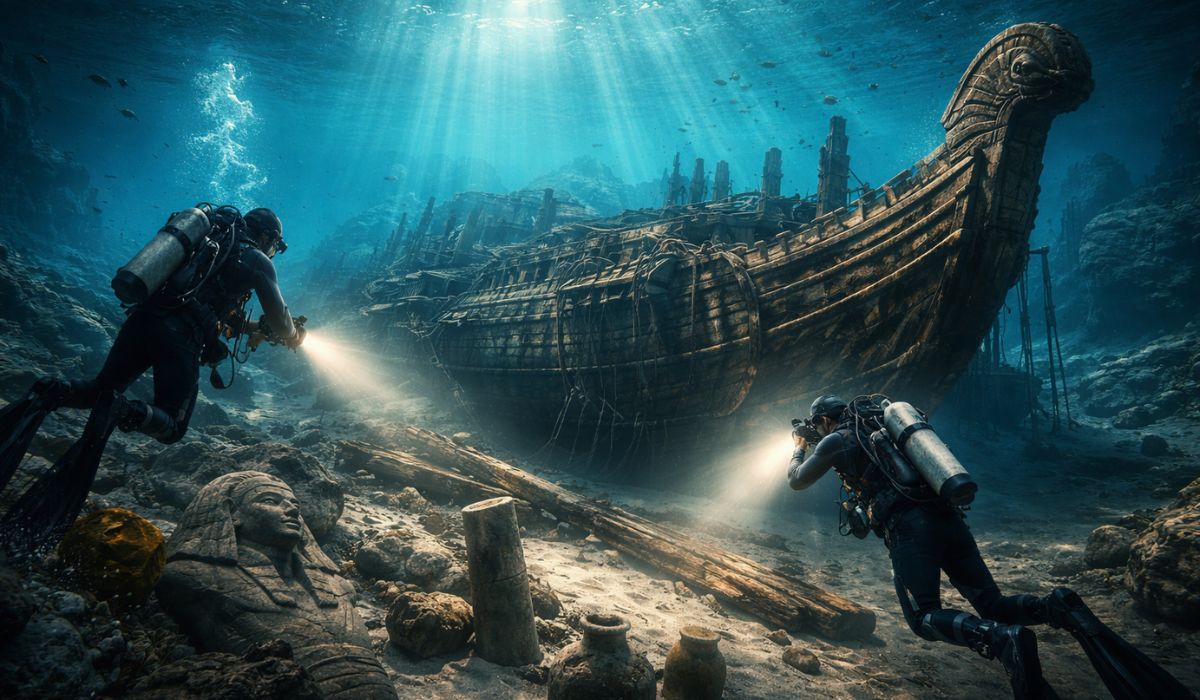
Archaeologists find a colossal 2,000-year-old vessel at the bottom of the sea near Alexandria linked to the elite of Egypt and reveal a pleasure barge from the last dynasty of the pharaohs that the sea has hidden for centuries.
-
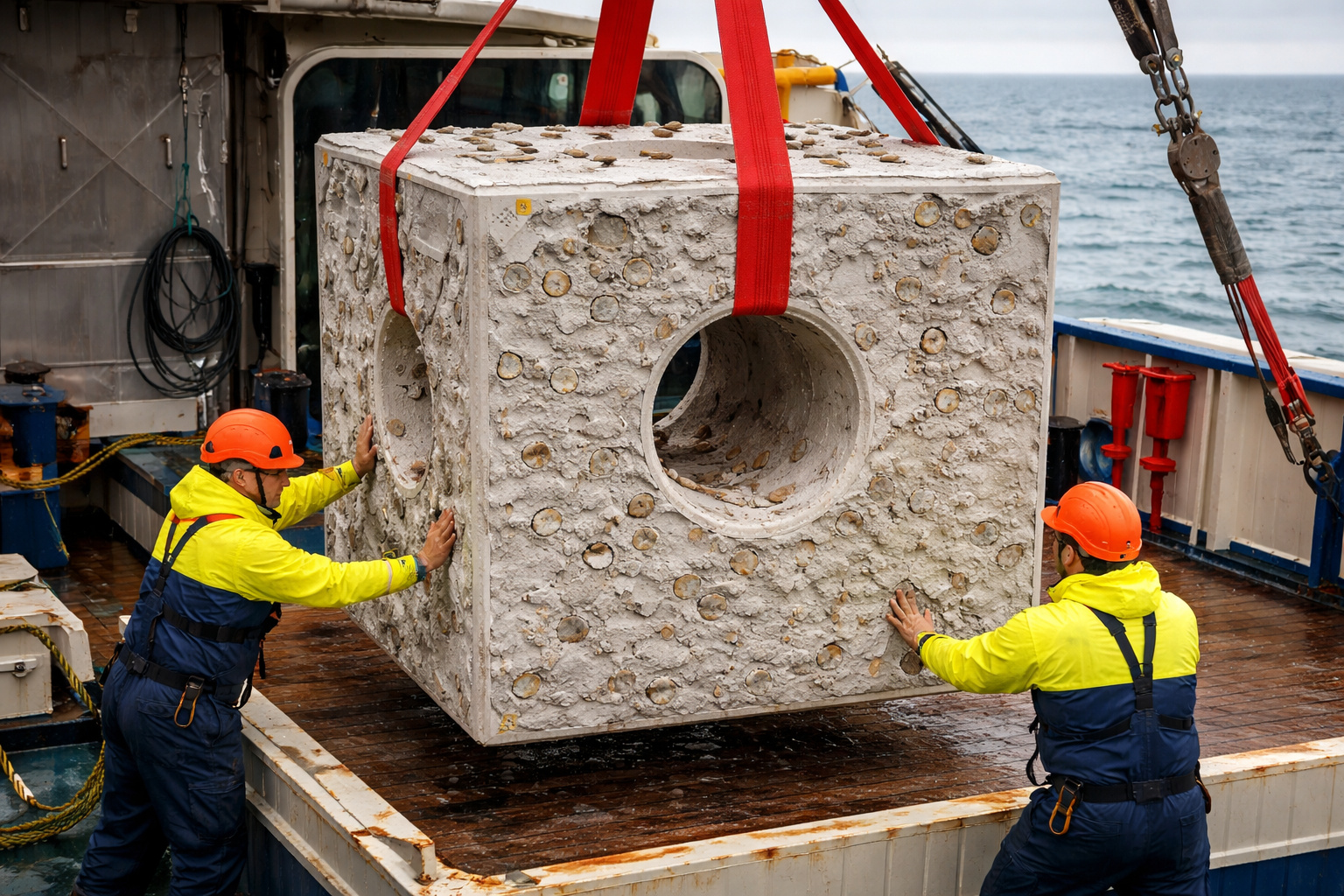
United Kingdom clears 40 tons of shells and concrete into the sea in an innovative project that promises to restore a marine ecosystem lost for over 200 years and improve water quality.
-
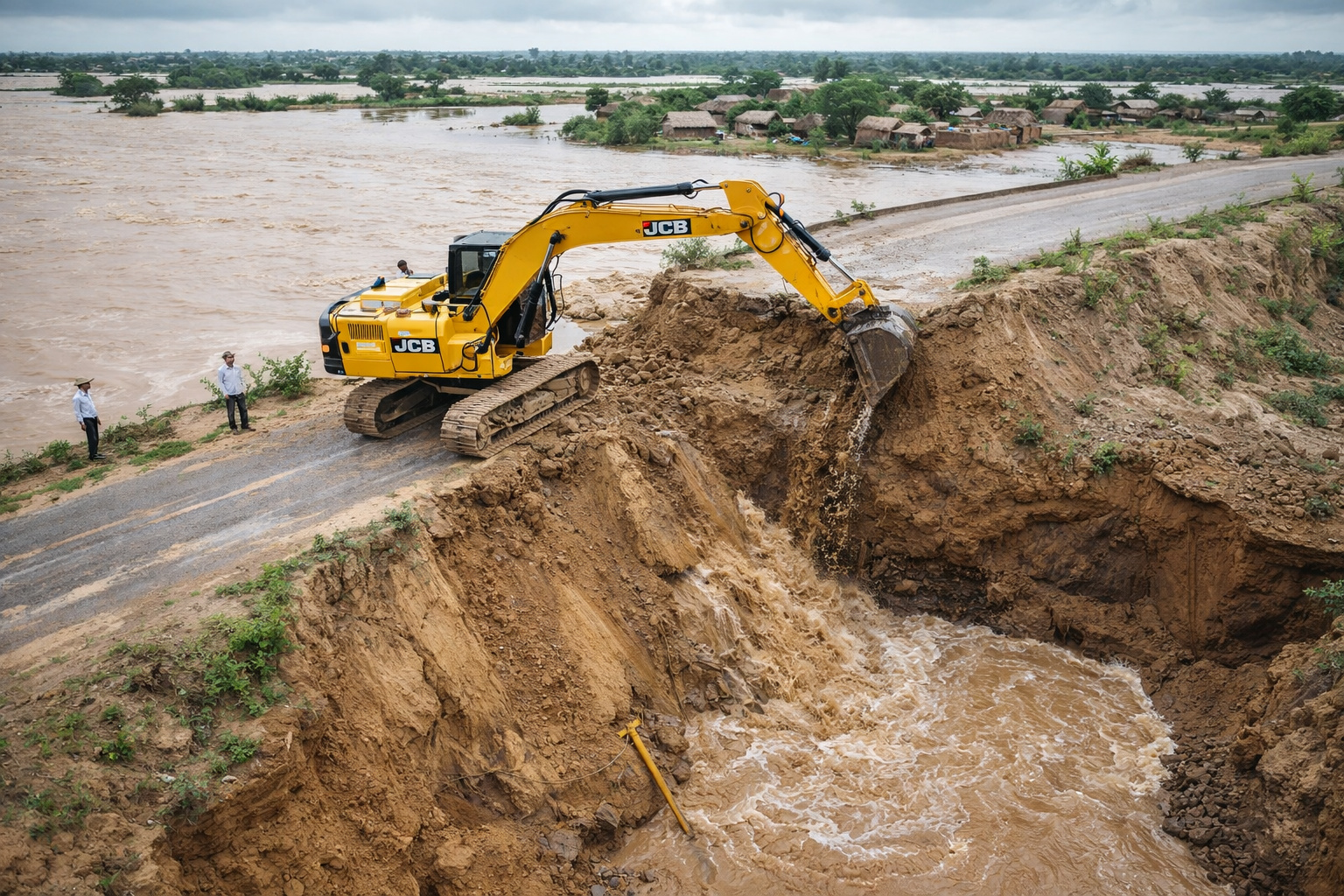
With emergency diversion to abandoned mining craters, engineers save villages from a devastating flood that was advancing through the desert and threatening to destroy entire communities in a matter of hours.
-
It seems simple, but it enriches: from R$ 500 to R$ 6,000 per piece and up to 10 days of handcrafted production, how is the couple from Praia Grande making a high income with hyper-realistic miniatures and turning a hobby into a money-making machine?


In practice, however, the scenario was different.
The kite couldn’t even fly well on its own, let alone carry an action camera hanging from the line.
The second move was to scale up.
Then came a large kite, with an area almost ten times bigger and a long tail for stability.
Without extra weight, performance improved significantly: it ascended well, gained altitude, and seemed ready to go far. But as soon as the camera was connected, the problem reappeared.
The structure did not have enough strength to support the equipment and remain stable in the air, ruining the idea of recording everything from above.
That’s when the real monstrous kite came into play.
Ordered online, it was described as capable of lifting not just one, but two cameras.
Constructed with thick carbon fiber tubes, it was designed for resilience and flexibility to withstand wind pressure at high altitudes.
On the ground, the kite stood as tall as a person. In the air, it promised to act like a flying crane.
The Engineering Of The One-Kilometer Reel

With the monstrous kite defined, the bottleneck became another: how to control a kilometer of line without turning it into chaos.
The team had ten 100-meter spools, but the first reel failed right at the test.
After a hundred meters rolled, it became clear that the second spool wouldn’t have space.
The math was simple and ruthless: ten strips of line would be needed to achieve a kilometer of stretched line. What was missing, then, was a robust solution.
Using leftover boards from building a birdhouse, they set up a kind of kite-flying station.
Between two wooden boards, they installed a threaded metal rod, reinforced with metal washers to prevent the rotation effort from destroying the setup.
Since wrapping the line directly around the metal would be a terrible idea, the group increased the contact area diameter with overlapping sections secured with copper wire.
The side received discs which served as edges to keep the line in place.
Instead of a crank, there was a screwdriver connected to the axle, transforming the reel into a semi-automatic winder.
Each 100-meter spool was transferred to the main reel, with the line tightly secured.
To avoid getting lost in all that line, they cut pieces of plastic bag and attached them at specific points along the line, marking how much was left on the reel.
From then on, each mark served as a visual ruler for the mission. When everything was ready, there was more than a kilometer of line compacted into a single homemade reel, ready to be put to the test.
Safety First: Distance From The City And An Improvised Control Center
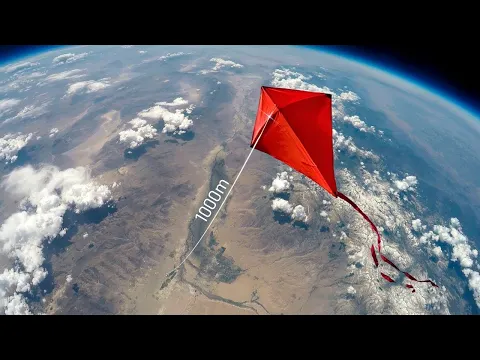

A kilometer of stretched line means a huge radius of risk in case of a fall. Therefore, the team took the monstrous kite to an open area away from the city.
The concern was straightforward: if something went wrong, a kite of this size dragging a kilometer of line over houses and wires could cause serious damage.
At the launch site, they set up a small “control center.” A folding table became the base for the reel, clipboards, and checks.
A toolbox and a backpack served as weights to prevent the kite from pulling the structure off the ground, as previous tests showed that the line’s tension was strong enough to pull everything if it escaped.
Thick gloves were mandatory. At that level of tension, the line began to “cut” the hand as if it were a stretched blade, something impossible to hold onto dry.
The platform with the two cameras was hung on the line, adjusted to keep the lenses pointed in the direction of the kite. On paper, everything was ready. In practice, problems came quickly.
First Attempt: Broken Platform, Damaged Spool, And Lost Camera
In the first minutes of flight, the monstrous kite showed its purpose. In no time, the line reached 50 meters high.
But the optimism didn’t last. The strong sideways wind completely messed up the stability of the setup.
The platform with two cameras began to suffer, swaying beyond limits.
The equipment simply couldn’t withstand the combination of weight, tension, and turbulence, and the structure of the platform fell apart mid-air.
The spool also showed failures. With the reel overloaded, components gave way, and the group decided to abort the experience before losing everything.
The kite was still relatively low, which allowed for manually pulling the line with the gloves and making an emergency landing.
One detail only became clear on the ground: one of the cameras had come loose from the magnetic support and disappeared in the direction of the field.
It took twenty minutes of search in the grass to find the equipment. The lesson was direct.
In the next attempt, no trusting only magnets. Everything needed reinforcement, from the platform to the spool.
Second Attempt: Extreme Wind, Near Fall, And Eagle Attack
Back in the workshop, the group rebuilt the platform, drilled holes to reduce weight, added a tail for stabilization, and remade the reel, rethreading all the line.
The camera was also secured with adhesive tape, minimizing the risk of another loss.
On the second day of testing, the monstrous kite jumped from the hand again and pulled the line with force, gaining height quickly.
The first 200 meters were unwound in no time. However, at that altitude, the wind behavior changed.
The kite entered a zone of very strong and turbulent winds.
In the footage captured by the camera, it was possible to see the critical trajectory: the setup dove towards the ground, disappeared from view, and passed just a few meters from tall trees, before recovering lift.
It became clear that, with two cameras, there was no margin for error.
The team pulled the kite back, removed the larger camera, and left only the smaller one, cutting the weight in half. It would be the last chance to push the experience to the limit without losing everything.
In the new attempt, the line passed 300 meters, then 500 meters, always with increasingly aggressive winds.
At one point, a huge eagle appeared and started circling the kite, as if assessing that strange object in the sky.
The team activated a drone, maneuvered the aircraft, and managed to steer the animal away from the critical airspace, avoiding another risk of fall.
A Kilometer Of Line In The Air And The Real Fear Of Losing The Monstrous Kite
With the strong wind at the top, the structure of the monstrous kite began to show signs of stress. One of the tubes looked like it was almost bending under the pressure.
The flags marking the sections of line began to come loose, cut by the very tension of the cord.
Even so, the reel kept turning.
When the mark indicated that only 200 meters of line remained, the group already had half a kilometer of cord completely suspended between the ground and the monstrous kite, traversing very different wind layers.
The drone could no longer keep up with the height.
At a certain point, the kite was practically flying on its own, out of direct visual reach, guided only by the weight sensed on the line and the marks that remained on the reel.
Until the critical moment arrived.
The last mark, visibly damaged, passed through the reel.
A few turns later, there was no more slack: a kilometer of line was completely stretched between the group on the ground and the monstrous kite lost in the sky.
The feeling was a mix of achievement and fear. The entire structure depended at that moment on a single knot, the final link between the reel and the line.
A break would mean watching the monstrous kite disappear with the camera and a thousand meters of cord, completely out of control.
And Now: Technical Limit Or The Beginning Of A New Madness?
The experience proved, in practice, that it is possible to take a kite far beyond the height of common trees and buildings, as long as one has a monstrous kite, a robust reel, and extreme care with wind, weight, and safety.
At the same time, it also made clear the size of the risk when working with long distances, constant pressure on the line, and expensive equipment hanging in the air.
The authors of the experience themselves end the account with a tone of doubt: they do not know if anyone has ever flown a kite this high, nor if it makes sense to try to go beyond this kilometer of line.
The only certainty is that each extra meter demands its price in tension, improvised engineering, and nerve.
And you, after knowing this story, would you risk flying a monstrous kite with a kilometer of line and cameras hanging, or do you think that this limit has already crossed the point of reason?





-

Uma pessoa reagiu a isso.