





 Portuguese
  English
  Spanish
  9 min of reading
  9 comments


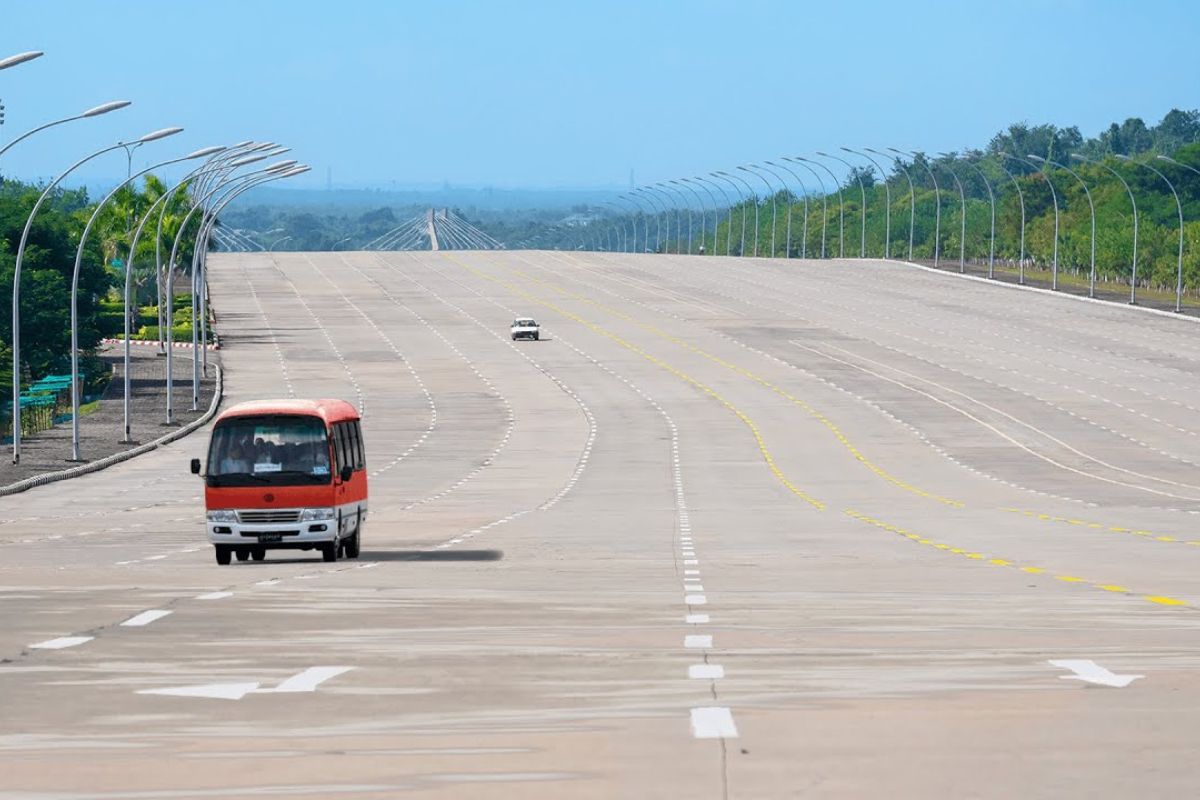


With Cities Planned for Hundreds of Thousands of People and Airports That Never Took Off, the Most Useless Megaprojects in the World Expose a Less Glamorous Side of Billion-Dollar Works That Promise Development but Deliver Waste.
Between a nuclear repository that alone consumed over US$ 17 billion and remains closed, a practically empty capital, and a smart city that was supposed to house 700,000 residents but barely reaches hundreds, the most useless megaprojects in the world help to understand how political decisions, incorrect demand calculations, and environmental pressures can turn ambition into a symbol of failure. When planning fails, the billion-dollar bill remains, while roads, airports, and entire cities stay underutilized.
The most useless megaprojects in the world did not always carry this label. In many cases, they were presented as strategic solutions for defense, mobility, tourism, geopolitical repositioning, or even for the management of nuclear waste. The problem begins when the scenario changes, the actual use does not align with the discourse, and the cost sinks into decades of controversies, delays, and changes in direction. From then on, highways, airports, capitals, and planned cities are remembered less for their potential and more for the contrast between what was promised and what was actually delivered.
Why Do Some Megaprojects Become Practically Useless
Before breaking down specific cases, it’s worth looking at the pattern that stitches together the most useless megaprojects in the world.
-
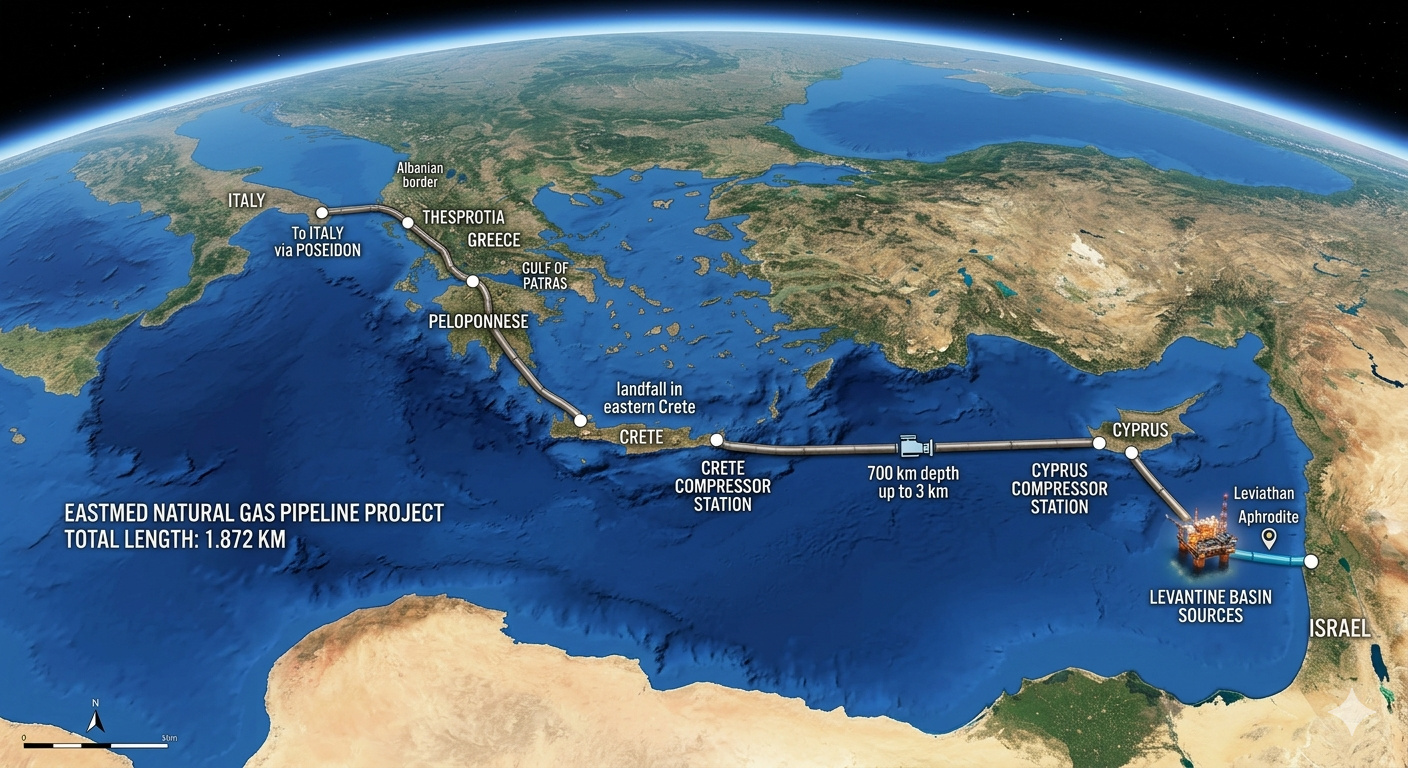
Israel, Greece, and Cyprus signed an agreement in 2020 to transport gas from the Mediterranean to Europe via a 1,872 km pipeline, but Turkey claimed sovereignty over part of the maritime route, and the project never materialized.
-
Abandoned house for 15 years disappears in the woods, shocks owner with unrecognizable scenery and is reborn in an intense transformation after almost 90 hours of work in just 10 days.
-
In just three hours, a natural stone floor transforms the entrance of the house with an organic effect, immediate drainage, and a sophisticated non-slip finish that doesn’t puddle water, dries quickly, and impresses with the final result.
-
‘Interlocking brick’ made of earth arrives in the construction industry with cost reductions of up to 40% on the project.

In general, they combine three recurring elements: overly optimistic demand estimates, political or symbolic motivations that are hard to sustain in the long term, and a large gap between who pays the bill and who directly benefits from the work.
When a project is born to meet a very specific objective, such as a military strategy from the 1960s or a futuristic city vision designed for foreign investors, any economic, political, or social change calls into question the effective use of the work.
If, at the same time, the cost runs into billions of dollars, the risk of falling onto the list of the most useless megaprojects in the world increases exponentially.
Yucca Mountain: The Nuclear Repository That Swallowed US$ 17 Billion and Never Went Into Operation

No survey of the most useless megaprojects in the world ignores Yucca Mountain in Nevada.
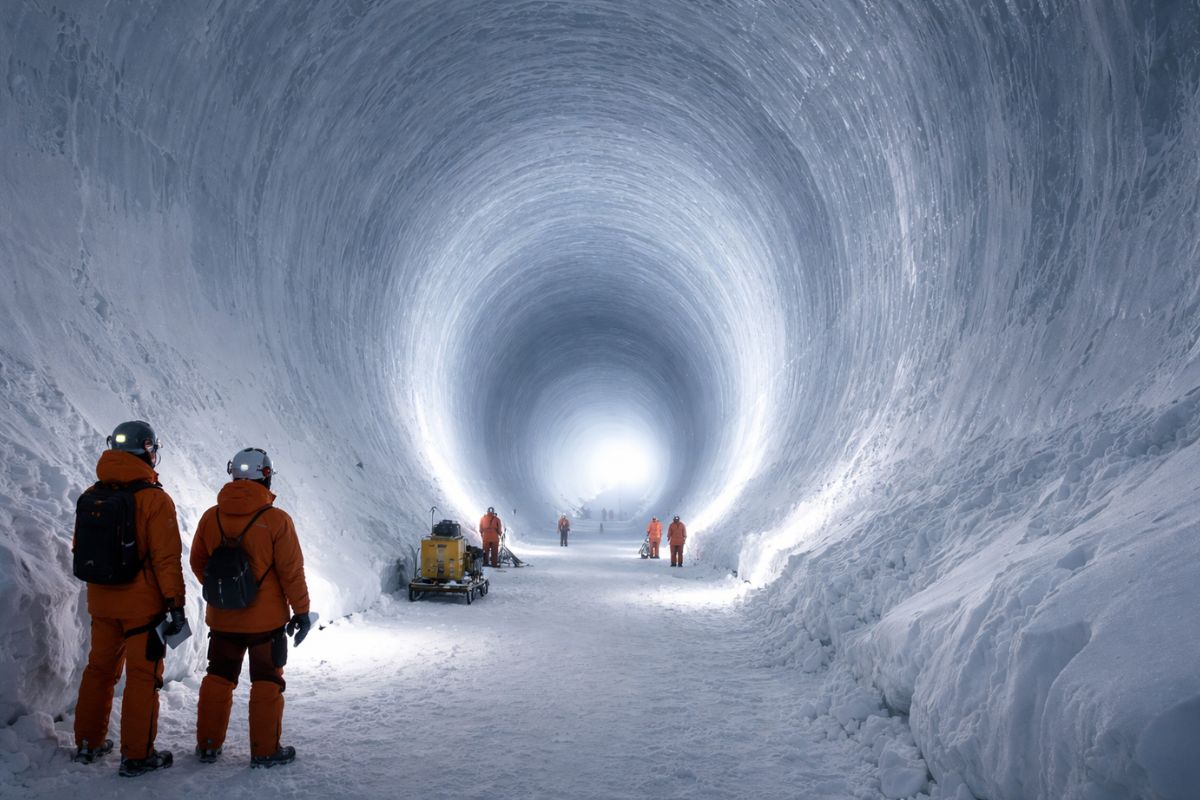
Designed as the definitive solution for nuclear waste in the United States, the project was intended to store radioactive waste deep underground in a complex of tunnels about 300 meters below the mountain.
The choice of the site considered the region’s history of nuclear testing and the fact that it was far from large urban centers.
In theory, it made sense. In practice, Yucca Mountain has become a megaproject paralyzed by decades of political disputes, local opposition, and scientific questioning.
The population of Nevada did not accept the idea of housing the country’s main nuclear waste repository, especially in a state that has no operating reactors.
Moreover, doubts arose about the risks of contamination of water sources that supply communities in the Amargosa Valley.
Even so, the project advanced in phases, consuming successive public funding.
Decades of studies, construction, legal battles, and changes in government have added up to more than US$ 17 billion spent on Yucca Mountain, without the repository being effectively utilized.
Starting in the 2010s, the project began to be considered unfeasible by federal governments, and the current position is clear: Yucca Mountain is not part of the plans for the future of American nuclear waste.
The result is emblematic. One of the most useless megaprojects in the world was born to solve a real environmental problem, consumed resources for nearly four decades, and today serves only as an example of how the absence of political and social consensus can literally bury a billion-dollar work.
Forest City: The Futuristic City That Became a Showcase of Excess and Disconnection from Reality

Another name that recurs among the most useless megaprojects in the world is Forest City in Malaysia.
The idea seemed tailor-made for innovation speeches: a smart, green, and futuristic city built on four artificial islands, surrounded by a planned forest ecosystem, and connected to neighboring Singapore in about 20 minutes.
Green roofs, vertical gardens, multi-layered streets, and fully renewable energy reinforced the narrative of a cutting-edge project.
With an estimated cost of US$ 100 billion and a projected completion date of 2035, Forest City was born to house around 700,000 residents.
The proximity to Singapore attracted wealthy Chinese investors who saw the city as a luxury alternative to the saturated real estate markets of their own country.
By 2019, about 80% of the owners were Chinese, street signs were in Mandarin, and the few local schools also focused on this audience.
This design, however, barely included the Malaysian population, who could not afford the property prices.
The political reaction came with force, classifying the project as a new form of economic colonialism.
After a change in government, the country restricted foreign ownership of properties in the city, deflating the original business model.
The pandemic exacerbated the situation, driving away new investors and causing many buyers to back out.
By early 2020, fewer than 500 people were actually living in a city designed for hundreds of thousands.
Sales of new units virtually stalled, and mass layoffs at the developer heightened the climate of uncertainty.
Even with part of the islands and buildings already constructed, Forest City remains one of the most useless megaprojects in the world, with completed infrastructure but little real use and a future that depends on a profound reconfiguration of its purpose.
Naypyidaw: The Monumental Capital That Became a Ghost Town

If there is a didactic example of how a planned capital can assume an air of an empty set, it is Naypyidaw in Myanmar.
Conceived in the early 2000s by the country’s military leadership, the new capital was built in secret to replace Yangon, a coastal city already saturated and burdened with infrastructure limitations.
The move sought a more central location, supposedly more strategic for the government.
The estimated investment has reached around US$ 4 billion.
Naypyidaw offers a 20-lane highway with virtually no traffic, over 100 luxury hotels, golf courses, museums, and monumental replicas of historical structures.
In terms of urban design, everything suggests a capital thought to receive crowds, foreign authorities, and large events.
In practice, the resident population is less than 1 million people, many of whom live in peripheral areas that already existed before the move.
The planned core coexists with empty avenues, idle shopping centers, and an airport capable of handling millions of passengers but only receiving a tiny fraction of that on the busiest days.
Naypyidaw easily made it onto the list of the most useless megaprojects in the world due to the gap between the scale of the infrastructure and the actual adoption by the population.
The reasons for the emptiness combine economic factors, lack of quality health and education services, and the absence of job opportunities compatible with life in a capital.
Some analysts point out that, with long-term population growth, the city may still gain relevance. For now, however, Naypyidaw is seen mainly as a strangely empty capital.
Ciudad Real Airport: A Billion-Dollar Hub That Became a Parking Lot for Airplanes

In Spain, the Central Airport of Ciudad Real stands out among the most useless megaprojects in the world for the way an investment in air infrastructure disconnected from geographical and operational reality.
Designed as an alternative to the congested Madrid airport, the project envisioned a runway among the largest in Europe and an initial capacity of 2 million passengers per year, with expansion plans up to 10 million.
The approximate construction cost was US$ 1.3 billion. But the location, about 200 kilometers from Madrid, contradicted the very name of “central airport.”
For most passengers, the combination of distance and additional logistics made it more rational to continue using the capital as a starting and arrival point.
Failing to attract major airlines, the airport operated with a single company in its first year, accumulating losses and debts exceeding US$ 350 million.
In 2012, the responsible company filed for bankruptcy, and the airport went to auction. It became the setting for TV shows and a symbol of waste.
Under new management, the structure gained an alternative function during the pandemic: aircraft storage on the ground, taking advantage of the dry climate, the long runway, and the available space.
In 2020, about 65 planes were parked at the location, with a planned capacity for hundreds.
This temporary reinvention, however, does not change the fact that, for the average passenger, the airport remains a megaproject with very low utility compared to the original vision, reinforcing its position among the most useless megaprojects in the world.
Interstate H-3: An Expensive, Controversial Engineering Work Rejected by Part of the Population

The H-3 interstate highway in Hawaii occupies a peculiar position among the most useless megaprojects in the world.
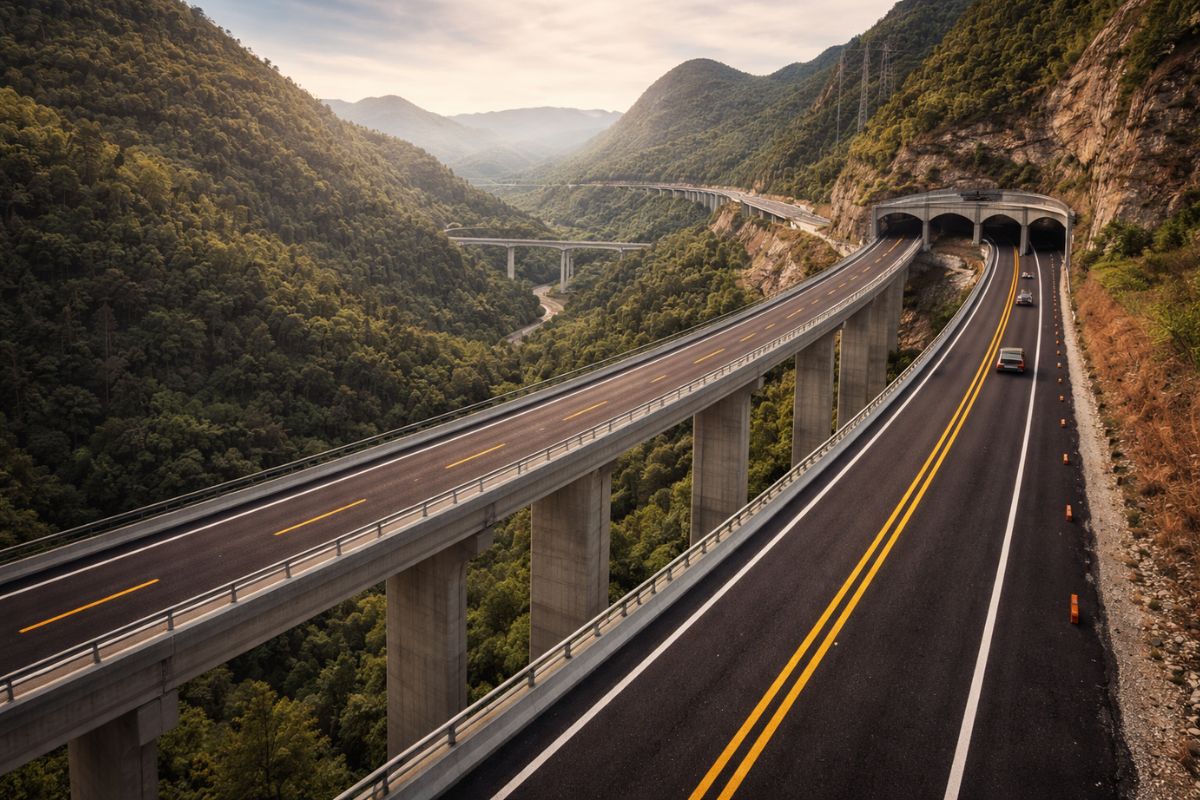
With a length of about 26 kilometers, the road cuts through one of the most impressive landscapes of the archipelago, connecting Pearl Harbor Naval Base in the south to the Marine Corps Air Station on the east coast.
In engineering terms, the work is considered remarkable, with extensive tunnels and viaducts designed to minimize impacts on valleys and ecosystems.
The problem lies in the cost and context. Proposed in the 1960s focusing on defense, the highway faced strong resistance from environmentalists and native communities who denounced the destruction of culturally and religiously significant sites.
After decades of delays, changes in route, and increasingly expensive technologies, the project was completed in 1997 with a total cost of US$ 1.3 billion, about five times the original budget and close to US$ 50 million per kilometer, one of the highest costs in the world for this type of work.
Today, critics argue that the highway fulfills a much smaller strategic function than imagined in the context of the Cold War.
Additionally, many Native Hawaiians refuse to use it, considering it cursed, which limits its role as integration infrastructure.
It is not a completely abandoned asset, but the imbalance between cost, cultural impact, and effective benefit keeps the H-3 within the debate about the most useless megaprojects in the world.
When Ambition without Adherence Turns Works into Symbols of Waste
When looking collectively at Yucca Mountain, Forest City, Naypyidaw, Ciudad Real Airport, and the H-3 in Hawaii, it is possible to see a common thread.
The most useless megaprojects in the world fail not only due to technical problems but mainly because they do not align with real use, social acceptance, and the economic dynamics of the places where they are built.
What starts as a promise of energy security, a new capital, a global tourism hub, or a sustainable city often ends up as a warning about the cost of ignoring those who will live, travel, operate, or coexist with these structures in daily life.
At the same time, some of these projects may still go through partial reinventions, like the airport that became a parking lot for airplanes, keeping the discussion open about alternatives to prevent billions from remaining idle in concrete, steel, and empty runways.
In a scenario where countries compete for investment and visibility, the list of the most useless megaprojects in the world serves as a reminder that architectural prestige and giant budgets are not enough.
What Really Defines the Success of a Megaproject is the combination of a clear purpose, ongoing utility, and legitimacy before the population that pays the bill.
And for you, which of these most useless megaprojects in the world seems to have the best chance of being repurposed in the future in a way that is useful for the population?






Falta o aeroporto de Chongoene. Um projecto inutil
Bolsonaro presidiário na ****
Tu sabe que as investigações no banco master chegaram em Temer, Lewandowski, na mulher do kbça de πrok, Jaques Wagner e mais uma renca, né!!! Pois é, uma gigantesca cortina de fumaça pra desviar o foco e manipular as investigações. Só pra enganar o tá rios como você.
Nada que o tempo não dê conta. Mas tudo é culpa do PT. Povo doente mental.