





 Portuguese
  English
  Spanish
  4 min of reading
  0 comments


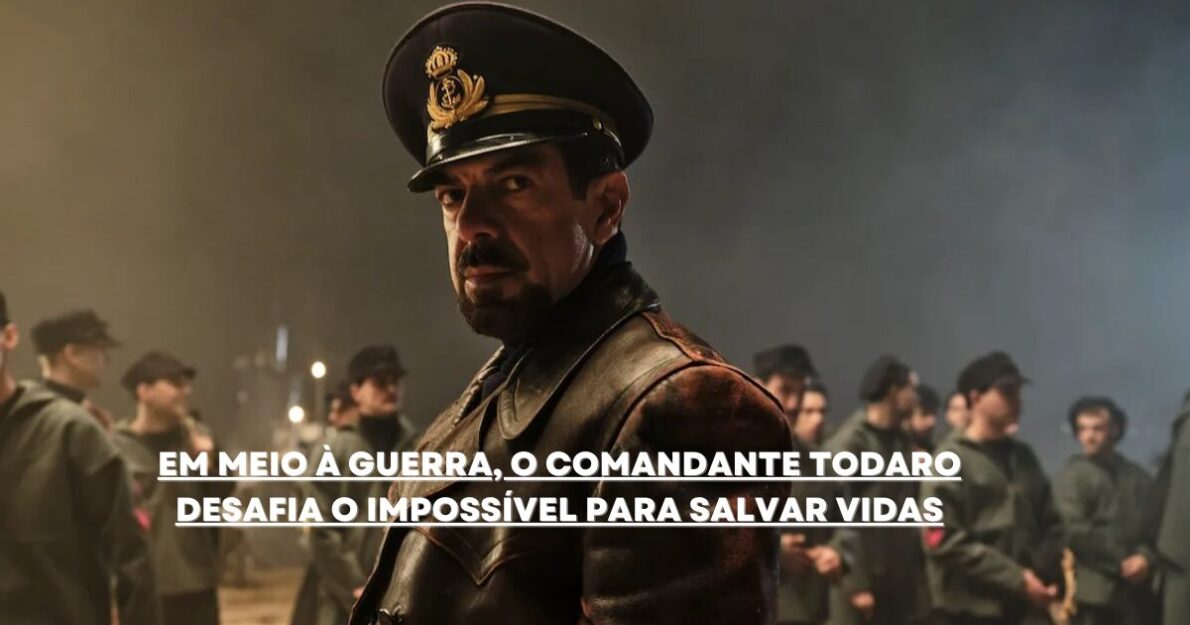
In “Commander” (2023), the true and surprising story of Captain Salvatore Todaro is told in detail. During World War II, he risked the lives of his crew to rescue shipwrecked enemies. Amid the chaos of naval combat, Todaro chose empathy, inspiring generations.
Few moments in the naval history of World War II are as surprising and dramatic as the episode of an Italian commander who, amidst chaos and the risk of British air attacks, decided to put his crew’s lives in danger to rescue enemy shipwreck survivors.
This is the backdrop of the Italian film “Commander” (2023), based on the book by Sandro Veronesi and directed by Edoardo de Angelis.
The film brings to life a real and emotional plot about war, morality, and courage, leading the audience to experience life aboard the Italian submarine Comandante Cappellini during the most devastating conflict in history.
-
Tourists were poisoned on Everest in a million-dollar fraud scheme involving helicopters that diverted over $19 million and shocked international authorities.

-
Hidden beneath the dense forest of the Sierra Nevada, Betoma emerges in a neighbor of Brazil as the greatest archaeological discovery of the century, revealing a colossal ancestral city covering over 18 km², with 8,334 stone structures and the potential to rewrite the history of South American civilizations.

-
Goodbye iron: new technology from Xiaomi promises to revolutionize the way we iron clothes with 500 kPa steam, continuous flow of 120 g/min, heating in 65 seconds, and six smart modes for different fabrics.

-
Rio Pardo, the most mysterious city in Rio Grande do Sul: untouched Pampas castle, the missing treasure of the Devil Boy, bride’s saint, invisible tunnels, and a 200-year curse today.


Salvatore Todaro and the Boldness in Command of the Cappellini
Inspired by the true story of Italian Commander Salvatore Todaro, the film reveals the intense challenges faced by the officer and his crew aboard the submarine Cappellini during the Atlantic Air-Naval War in 1940.
Born in 1908 and known for his culture and distinctive character, Todaro is portrayed in the film by actor Pierfrancesco Favino.
In an era where the war motto overshadowed any norms of humanity, Todaro displayed a type of bravery that went beyond the battlefield, risking his life to save others even those who were, in theory, his enemies.
During a patrol near the Madeira Island, the submarine Cappellini intercepted the Belgian merchant ship Kabalo.
The ship, which was carrying war materials for the British forces, sailed without any lighting, making it a potential target.
Even equipped with its own armament, the Kabalo was quickly sunk by the Cappellini, which used cannon fire to take it down.
However, Todaro did something unexpected: he ordered the rescue of 26 survivors from the Belgian ship. This rescue decision, in the midst of war, went against the military principles of the time, exposing the submarine to additional dangers.
Towing the lifeboats of the castaways, the Cappellini spent three days sailing on the surface until they left them safely on Santa Maria Island, in Portugal.
The “Don Quixote of the Sea” and the Second Rescue
The humanitarian attitude of Salvatore Todaro soon repeated itself. On another mission, he attacked and sank the merchant ship Shakespeare, but also rescued the shipwreck survivors.
They were taken to Cape Verde, in yet another risky maneuver that challenged the combat protocols of the time.
Although Todaro was highly respected by his crew and some of his peers, his behavior in battle troubled Karl Dönitz, the admiral and commander of the Nazi German submarine forces.
For Dönitz, Todaro’s actions were impulsive and inappropriate for a wartime scenario; he even nicknamed the Italian commander “Don Quixote of the Sea,” in a clear reference to the idealism considered unsuitable for the theater of operations.
Challenges and Tension Aboard the Submarine
The feature film “Commander” manages to translate the suffocating and tense atmosphere that permeated the Cappellini submarine.
The intense scenes depict the psychological impact of war on the crew, highlighting the moral and ethical dilemmas of its commander. Amid the conflict, Todaro emerges as a charismatic and determined leader whose ethics outweigh the brutality of war.
According to Veronesi, the author of the original work, Todaro had a unique worldview that led him to question the military norms which, at the time, promoted the total elimination of the enemy without any compassion.
As the film depicts, Todaro’s unique leadership inspired respect and loyalty from his subordinates, even though his actions often challenged conventional military rules.
Posthumous Recognition and Tribute by the Italian Navy
Despite the controversies and criticisms he received, Salvatore Todaro was decorated by the Italian Navy, and his courage was remembered by future generations.
The naval force of the country honored him by naming two vessels after him: the corvette F550 and the submarine S 526, in recognition of his legacy and the heroic deeds that made him an iconic figure.
For the Italian and international audience, Todaro’s journey symbolizes the conflict between military obligations and humanitarian values.
In an era marked by extremism, Todaro opted for actions that many of his contemporaries would consider reckless but which, in reality, reveal a rare type of heroism.
Impactful Production and Critique of the Second World War
The film, directed by Edoardo de Angelis and released in 2023, highlights the brutality of war while contrasting it with the moral values of a commander who challenged the norms to save lives.
De Angelis worked alongside screenwriter Sandro Veronesi to bring a detailed and emotional perspective on Todaro’s role during World War II.
The plot explores not only combat actions but also the complexity of decision-making in naval scenarios, where human life is often treated as a mere statistic.
“Commander” is not just a war story; it is an invitation to reflect on the humanity that can exist amid the cruelty of conflict.
As the production indicates, the war environment reveals both the worst and the best aspects of humanity, bringing to light Todaro’s courage, empathy, and resilience.
A Story That Resonates Even Today
The story of Italian Commander Salvatore Todaro raises questions about ethics and morality in war.
Is it possible to uphold humanitarian principles amidst a devastating conflict? Todaro’s legacy suggests that it is, even if it means challenging superiors and risking one’s own life and that of his crew.







Seja o primeiro a reagir!