





 Portuguese
  English
  Spanish
  2 min of reading
  9 comments


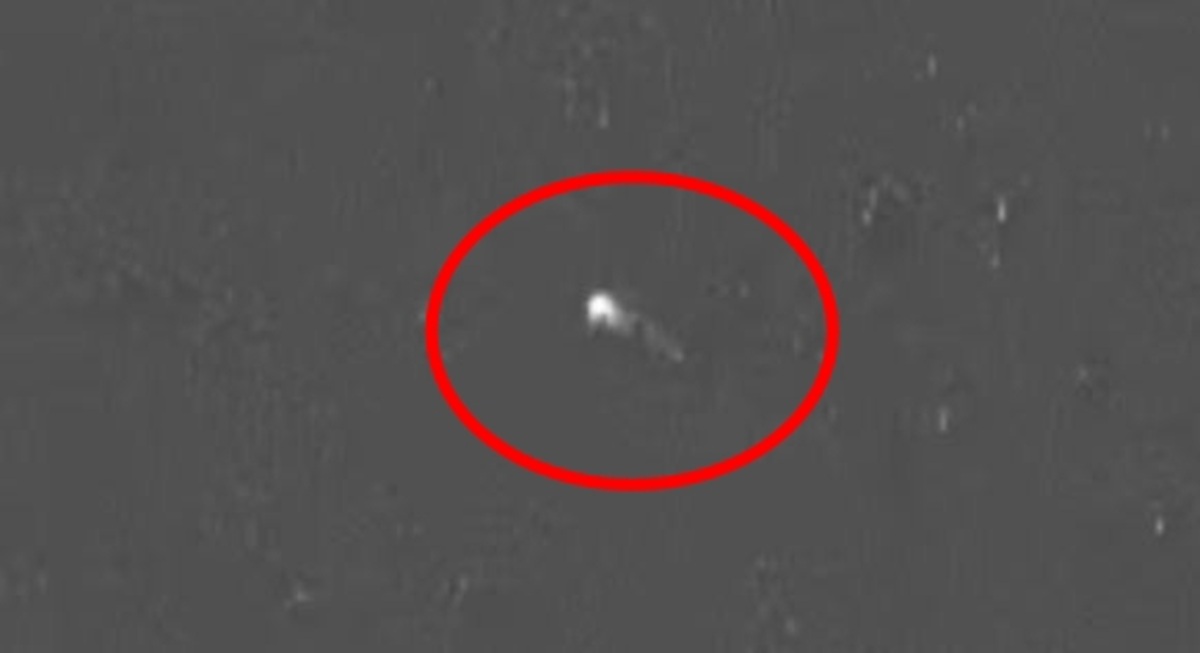


The Interstellar Comet 3I/ATLAS, Discovered in July 2025 in Chile, Had Unpublished Images Registered by the Solar Probe Parker During Its Close Passage to the Sun, in an Invisible Period for Direct Observations from Earth
The interstellar comet 3I/ATLAS had images captured by NASA’s Solar Probe Parker between October 18 and November 5, a crucial period after the perihelion on October 30, expanding observations beyond the terrestrial reach.
Discovery and Initial Trajectory of the Interstellar Object
The object was discovered on July 1, 2025, by the ATLAS survey telescope in Rio Hurtado and also received the designations C/2025 N1 (ATLAS) and A11pl3Z.
Identified coming from the direction of the constellation Sagittarius, the interstellar comet made a maximum approach to Mars at 0.194 AU on October 3, before reaching its closest point to the Sun.
-
While the world looks at oil, the war with Iran is already disrupting helium supply from Qatar, affecting car and iPhone chips, threatening AI expansion, and putting pressure on aluminum packaging at the highest value in four years.

-
Global warming will expose a treasure hidden under the ice of Antarctica and may spark an international dispute over gold and valuable minerals.

-
A street vendor from Praia Grande built a robot made of scrap from scooters and washing machines that pulls his popcorn cart on the beach, emits sounds, and interacts with customers, becoming an attraction on the coast of São Paulo.

-
The specifications of the Xiaomi 18 Pro Max have been leaked, and the highlight is a dual 200 MP camera with a new 22-nanometer technology that promises to consume less energy and capture details in shadows and bright areas using LOFIC HDR.


Image Registration by the Solar Probe Parker
The new images were obtained by the WISPR instrument aboard the Solar Probe Parker, which recorded about 10 daily images of the comet during the continuous observation period established by the scientific team.
During this period, the spacecraft was rapidly moving away from the Sun after its 25th solar flyby, performed on September 15, allowing captures at an angle impossible to obtain by terrestrial observatories.
Geometric Conditions and Observation Limitations
In the initial images, still in the calibration and processing phase, the comet appeared to be passing behind the Sun from the spacecraft’s perspective, a situation associated with its proximity to perihelion.
At that moment, the object was about 209 million km from the Sun, a positioning that left it just outside Mars’ orbit and invisible from Earth due to the apparent solar proximity.
Data Processing and Scientific Relevance
On December 19, 3I/ATLAS reached its closest approach to Earth, coming within 270 million km, increasing scientific interest in its orbital evolution and previously observed photometric behavior.
The WISPR team continues to adjust the data to remove scattered solar light and correct exposure differences that made the comet appear to vary in brightness in the preliminary images.
The final images should allow for more precise study of this interstellar visitor, providing information obtained during a critical interval when the object remained inaccessible to direct observations from Earth, despite the brief initial calibration error.










Wzb,wz,,,bgs
Consegui tirar foto dele
Se é só um cometa, porque tanto misterio?
Deve ser por falta de certeza e tentativa de novos estudos
E porque não seria outra coisa?