





 Portuguese
  English
  Spanish
  5 min of reading
  0 comments


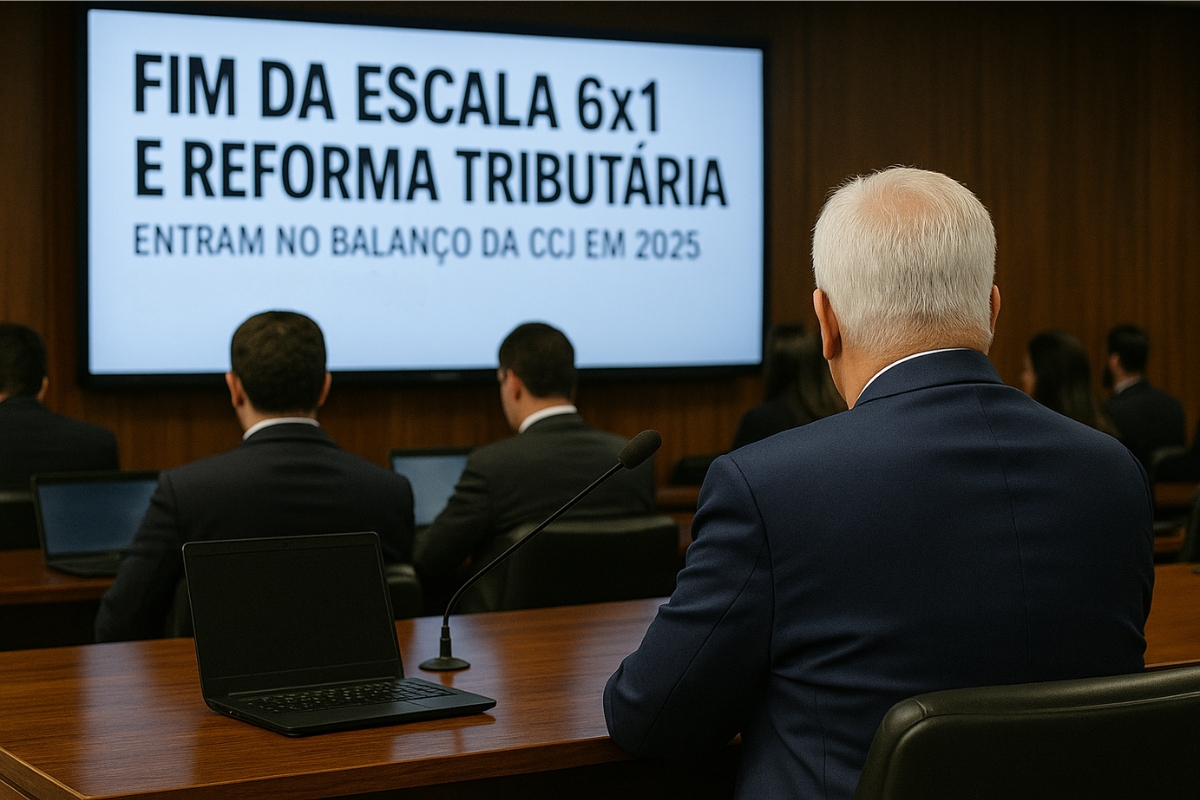
End of 6×1 Shift and Tax Reform Enter CCJ’s Agenda in 2025
The President of the Senate’s Constitution and Justice Commission, Otto Alencar (PSD-BA), presented a summary of the committee’s work throughout 2025 on Wednesday (10).
According to him, the commission held 45 meetings, voted on 87 matters including bills, proposed amendments to the Constitution, and indications of authorities, in addition to promoting 16 public hearings.
Otto stated that the numbers reflect an intense pace and attributed the results to the spirit of cooperation and respectful coexistence among CCJ members, with regular sessions on Wednesdays and some extraordinary ones.
-
The noise law will no longer be in effect at 10 PM starting in June with a new rule valid during the 2026 World Cup.

-
The Chamber opens a debate on driver’s licenses at 16 years old as part of a reform that includes around 270 proposals to change the Brazilian Traffic Code and may redesign rules for licensing, enforcement, and circulation in the country.

-
The new Civil Code could revolutionize marriages in Brazil with “express divorce” and changes that could exclude spouses from inheritance.

-
Banco do Brasil sues famous influencer for million-dollar debt and intensifies debate on delinquency, risks of seizure, and direct impact on Gkay’s credibility.


Approved Proposals Continue to Progress in Congress
In the summary, Otto highlighted three matters that passed through the CCJ and are still advancing in the National Congress: the proposal to reduce the maximum weekly working hours, the second stage of tax reform regulation, and the so-called Anti-Faction Bill.
In the case of the working hours, the approved text aims to end the 6×1 shift by reducing the maximum weekly work limit from 44 to 36 hours, with a progressive transition. The proposal will go to a vote in the Senate Plenary.
The project against factions and militias was approved in the Senate with amendments and returns to the Chamber of Deputies for further analysis.

6×1 Shift: PEC Provides for Gradual Reduction and Two Days Off
The CCJ approved this week PEC 148/2015, which progressively reduces the maximum weekly working hours in the country and guarantees two days of paid rest, preferably on Saturdays and Sundays.
According to the text, in the year following the enactment of the future law, the limit drops from 44 to 40 weekly hours. Subsequently, the limit will be reduced by one hour each year until reaching 36 hours at the end of four years.
The proposal also establishes that the reduction in working hours cannot lead to a decrease in salary. The rapporteur, Senator Rogério Carvalho (PT-SE), stated that the change responds to demands for well-being, productivity, and health.
Rapporteur Cites Fatigue, Accidents, and DataSenado Research
Rogério Carvalho mentioned that the 6×1 shift, still common in various sectors, is pointed out by experts as a factor of fatigue, increased risk of accidents, and harm to social life.
In the report, he cited a DataSenado survey indicating that 84% of workers believe that shorter shifts improve the quality of life.
The author of the PEC, Senator Paulo Paim (PT-RS), also argued that the measure could reduce dependence on overtime and promote a more balanced distribution of work.
Anti-Faction Bill Returns to Chamber with Toughening and New Instruments
The CCJ approved PL 5.582/2025, authored by the Executive Branch, creating a legal framework for combating organized crime in Brazil. With the changes made in the Senate, the text returns to the Chamber of Deputies.
The rapporteur, Senator Alessandro Vieira (MDB-SE), stated that the aim is to confront factions and militias that impose rules, intimidate residents, and block the presence of the State in communities.
The project provides for increased penalties, new tools to combat organized crime, and reinforcement of public security financing.
Tax Reform: Second Stage Advances and Addresses IBS Distribution
In September, the CCJ approved PLP 108/2024, representing the second part of tax reform regulation. The text awaits deliberation in the Chamber of Deputies.
The proposal addresses the model for distributing the resources collected from the Tax on Goods and Services (IBS), a tax that comes into effect next year.
According to the text, in addition to the IBS, the distribution between states and municipalities will also encompass financial application values, interest, and late payment fines.
The tax reform is provided for in Constitutional Amendment 132 of 2023. The first part of the regulation has already become law with Complementary Law 214 of 2025, which formally established the IBS, under state and municipal jurisdiction, and the Contribution on Goods and Services (CBS), under federal jurisdiction.
Shielding Rejected and Law Against Sexual Crimes Comes into Effect
Otto also highlighted the rejection, in September, of PEC 3/2021, known as the Shielding PEC, which required prior authorization from the Chamber or Senate to initiate criminal proceedings against parliamentarians and provided for secret voting. The CCJ unanimously approved the adverse report, with 26 votes for rejection and none against, and the proposal was archived.
Among the approvals in 2025, the committee also reviewed matters that resulted in changes to criminal legislation. One example is the project to combat sexual crimes against vulnerable individuals, transformed into Law 15.280, of December 5, 2025, which increased penalties, allowed DNA extraction from convicts, and mandated electronic monitoring for authorized exits from prison.
The new law raises, among other points, the penalties for sexual assault against vulnerable individuals to imprisonment of 10 to 18 years, for sexual assault with serious bodily injury to 12 to 24 years, and for sexual assault resulting in death to 20 to 40 years. It also increases the penalty for the corruption of minors to 6 to 14 years and establishes harsher punishments for sexual acts in the presence of minors under 14, with imprisonment of 5 to 12 years.
Indications and Political Statements Also Marked the Year
The CCJ conducted hearings and approved indications from the Presidency of the Republic for the Superior Court of Justice and the Superior Military Court, in addition to approving the reconduction of the Attorney General of the Republic, Paulo Gonet.
The committee also approved reconduction related to the National Data Protection Authority and reviewed 16 documents on indications for the National Justice Council and the National Public Ministry Council.
In the political debate, Otto rebutted comparisons between amnesties granted after the military dictatorship and the anti-democratic acts related to January 8, 2023. He also stated that Jair Bolsonaro “fought to carry out a military coup” when he was President of the Republic.










-

Uma pessoa reagiu a isso.