





 Portuguese
  English
  Spanish
  4 min of reading
  0 comments


Discover How the Brazilian Company Overcame Near Bankruptcy, Defeated International Giants, and Became a Global Leader in Aerospace Technology and Innovation.
Embraer is one of the biggest success stories in the Brazilian industry. Born in a small town in São Paulo, the company faced skepticism and deep crises. Today, it is the third largest manufacturer of commercial jets in the world. Its technology reaches over 90 countries, a symbol of Brazil’s capacity for innovation. With a production rate approaching one aircraft manufactured every 42 hours, its journey shows how a strategic vision transformed into a global aerospace power.
The Birth of Embraer From an Audacious Vision
The story of Embraer began long before its official foundation. In the 1940s and 1950s, Brazil invested in creating a knowledge ecosystem. The Aeronautics Technological Center (CTA) and the Aeronautics Technological Institute (ITA) were created to train highly qualified engineers.
The idea of building airplanes in a country that didn’t even produce bicycles seemed like a fantasy. The project was viewed with such disbelief that its creators were nicknamed “Jules Verne”, in reference to the science fiction writer.
-
Oldest tree on the planet reappears after 130 years of searches: Wattieza, 385 million years old, was 10 meters tall and had no leaves or seeds; Gilboa fossils in New York solved the mystery in 2007.

-
A 48-square-meter house assembled in hours with 4,000 bricks made of recycled plastic that does not absorb moisture, has natural thermal insulation, and costs less than 90,000 reais in a complete kit.

-
Luciano Hang revealed that Havan’s air fleet has already accumulated more than 20,000 landings, 10,000 flight hours, and 6 million kilometers traveled, and he says that without the planes, the company would never have grown so quickly.

-
A historical discovery in the Andes Mountains reveals a gold deposit valued at 770 billion reais hidden over 4,000 meters above sea level on the border between Chile and Argentina, and the whole world is watching.


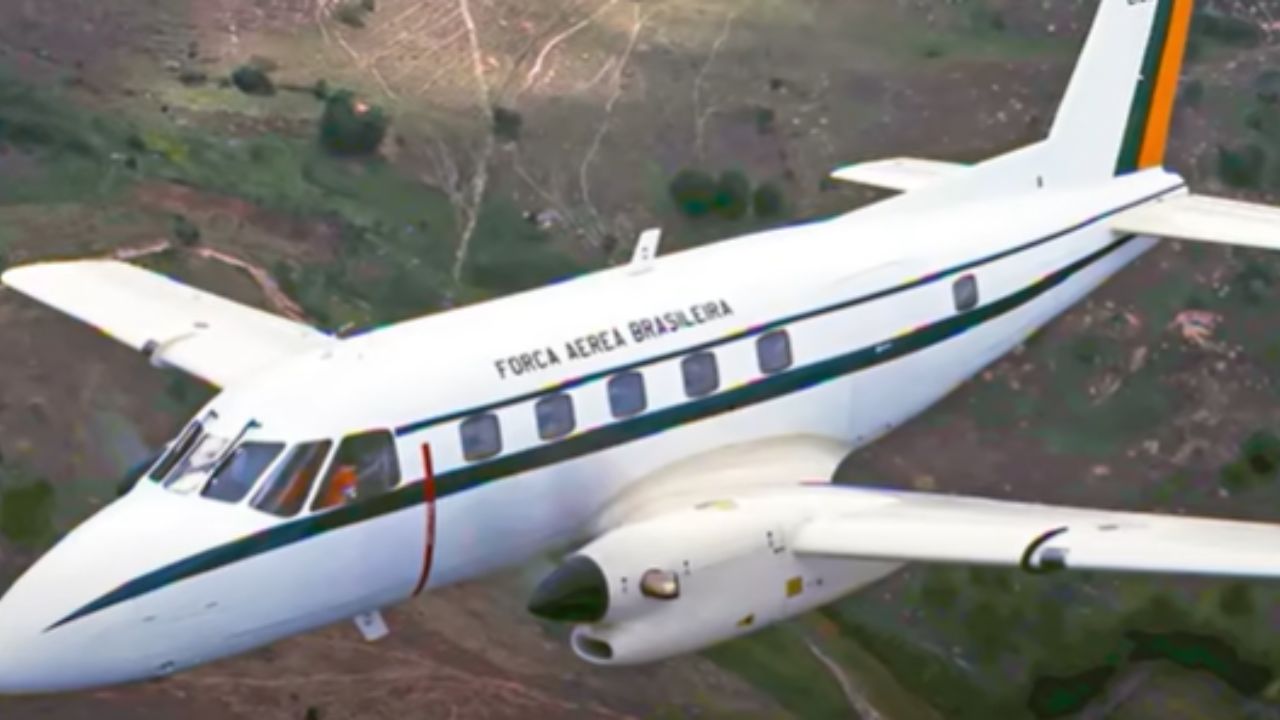
The catalyst was the Bandeirante airplane. Designed at the CTA under the leadership of Ozires Silva, it addressed a real need in Brazil: connecting small and isolated cities. The prototype’s success was so great that it demanded the creation of a factory. Thus, on August 19, 1969, the Brazilian Aeronautics Company S.A. (Embraer) was born, a state-owned company with the mission to produce the Bandeirante on a large scale.
Crisis, Privatization, and a Comeback
The 1990s were a trial by fire. A severe economic crisis in Brazil and a global downturn in aviation brought Embraer to a pre-bankruptcy situation. Government support dwindled, and the company’s survival was at stake.
The solution was privatization, which occurred on December 7, 1994. This change imposed a stringent market discipline, essential for competing globally. However, the Brazilian government retained a strategic instrument: the “golden share”. This special share gives the State veto power over critical decisions, protecting national interests and the technology developed.
More recently, in 2020, the company faced another major shock: the abrupt cancellation of a merger agreement by Boeing. The collapse, which was initially devastating, ultimately strengthened Embraer. The crisis forced the company to rise independently, reaffirming its identity and making it even more resilient.
How Embraer Won the Regional Jets War
After privatization, Embraer targeted the regional jet market. It launched the ERJ family (Embraer Regional Jet), entering direct competition with Canadian Bombardier. The rival had an initial advantage, but Embraer’s response was a masterstroke.
Instead of merely adapting an existing aircraft, the company designed the E-Jets family from a “blank slate”. The focus was on passenger comfort and efficiency. The E-Jets offered a more spacious cabin with a 2-2 seating configuration, eliminating the undesirable middle seat.
The bet on superior design paid off. The E-Jets became a global sales success. Bombardier, in turn, was forced to exit the commercial aviation market. Embraer not only won the “regional jets war” but established itself as the third largest manufacturer of commercial aircraft on the planet, behind only Boeing and Airbus.
The Strategic Diversification of Embraer


Embraer’s strength today is based on four business pillars, which ensure stability and mitigate risks.
- Commercial Aviation: It remains the backbone, with the successful ERJ and E-Jets jet families.
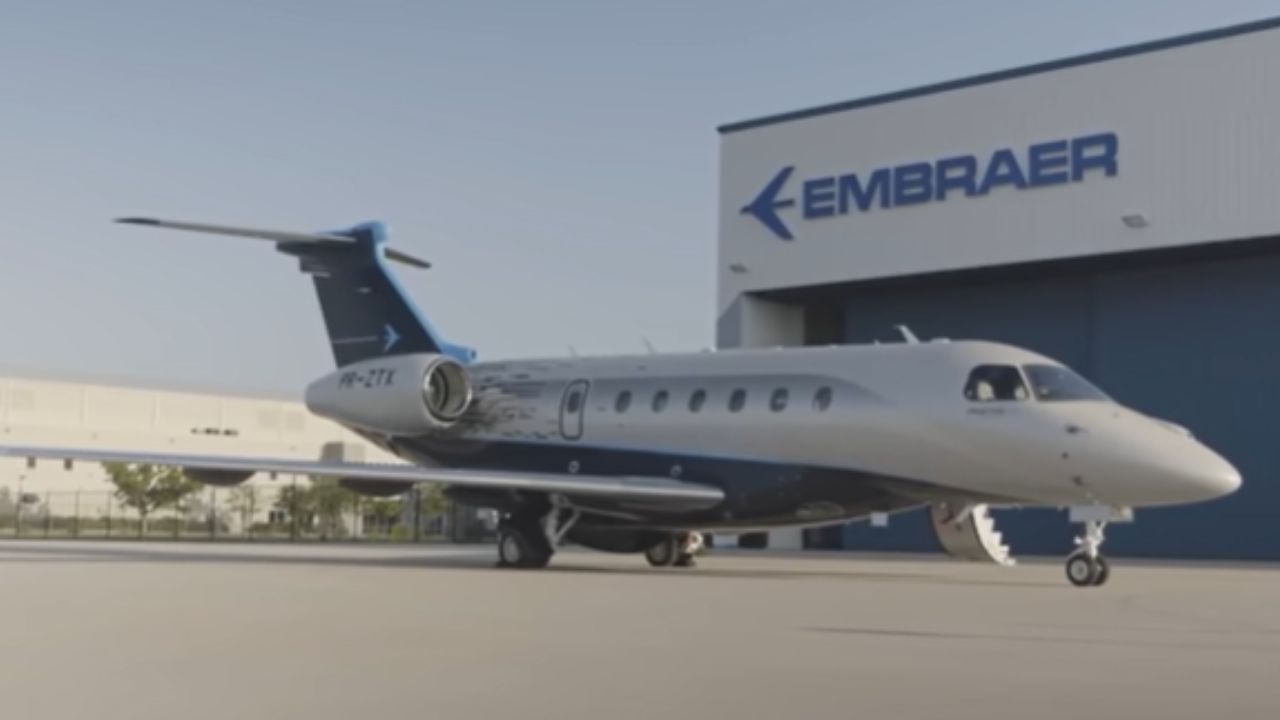
- Executive Aviation: A highly profitable segment where Embraer dominates with jets like the Phenom 300, the best-selling in its class for over a decade.
- Defense & Security: A strategic pillar with high-tech products, such as the light attack aircraft A-29 Super Tucano and the multi-mission cargo plane C-390 Millennium, ordered by NATO countries.
- Services & Support: A high-margin unit that generates recurring revenue from maintenance and support for the global fleet of Embraer aircraft.
Sustainability, “Flying Cars,” and the Next Frontier
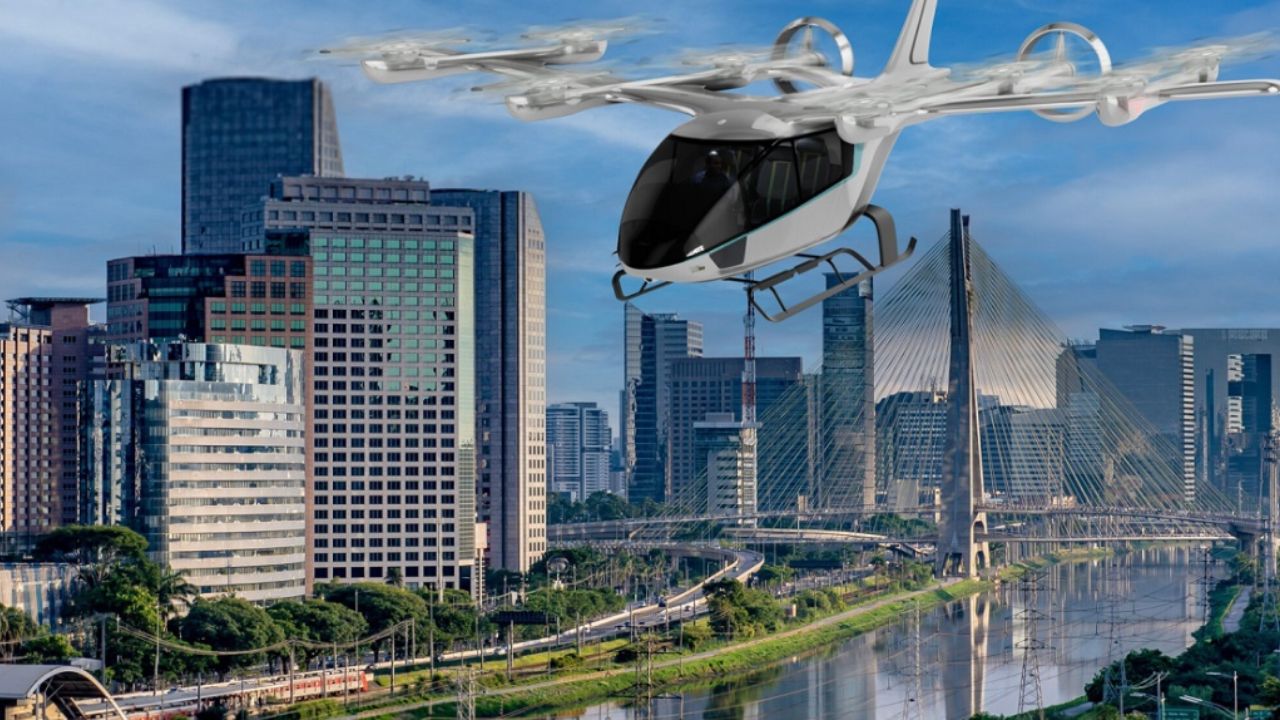
Looking ahead, Embraer is investing in technologies that will shape the future of aviation. Its boldest bet is on Eve Air Mobility, a company dedicated to developing “flying cars” (eVTOLs). Eve is not only creating the electric aircraft but also the entire ecosystem for urban air mobility.
Simultaneously, Embraer is addressing the challenge of sustainability. The “Energy Family” project explores concepts for aircraft powered by electricity and hydrogen, aiming for zero carbon emissions by 2050.
The Brazilian giant is also studying an ambitious project for a new, larger aircraft that could compete directly in the market dominated by Boeing and Airbus. Embraer’s story proves that from its roots in São José dos Campos, it has the ingenuity and resilience to continue conquering the skies of the world.






-

-

2 pessoas reagiram a isso.