





 Português
  Inglês
  Espanhol
  4 min de leitura
  0 comentários


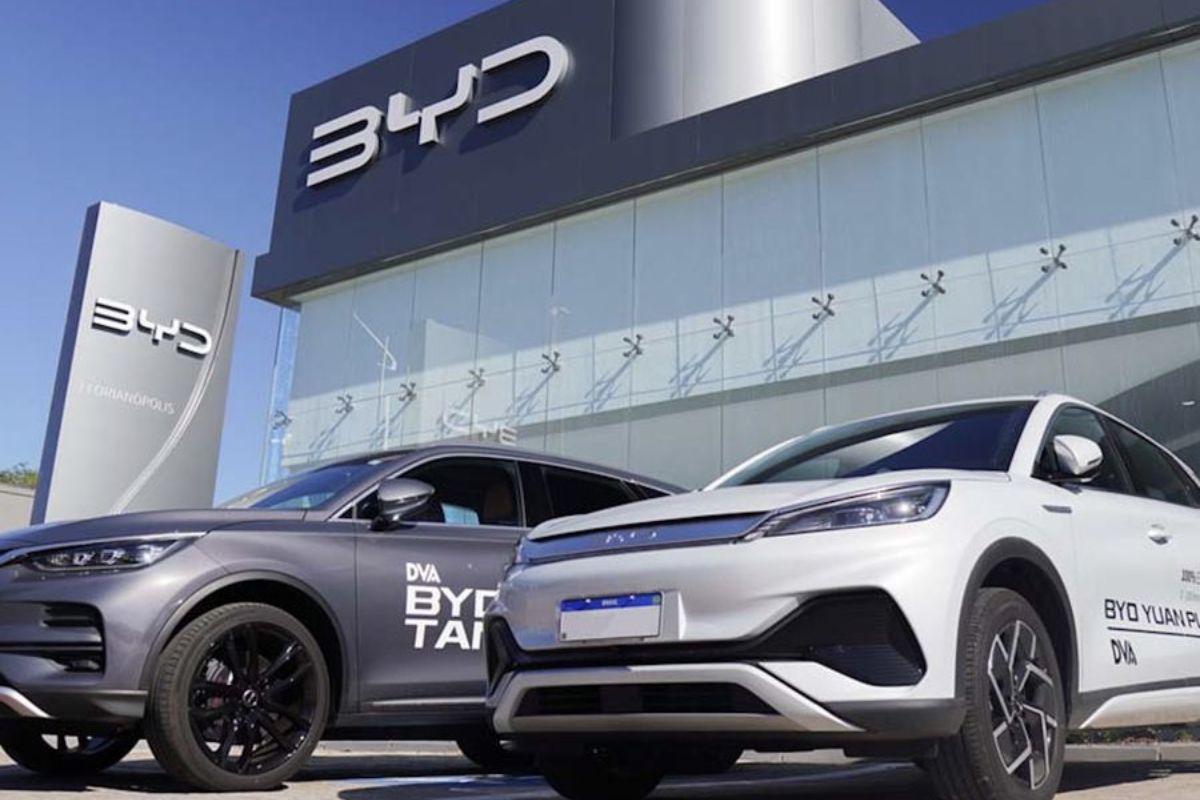
With States Offering ICMS Exemptions and the Federal Government Creating Incentive Programs, the Battle to Attract Investments in Technology, Electric Car Factories, Such as the R$ 41.4 Billion for New Manufacturers, Revives Old Problems of Brazilian Federalism
Brazil is experiencing a new version of an old problem: the “fiscal war.” States have aggressively returned to compete for large investments, offering a truckload of tax incentives. This time, the prize is no longer traditional industries, but rather electric car factories and huge data centers, key sectors of the new economy.
This movement, however, closely resembles the “Ports War” of the 1990s, which generated rampant and harmful competition for public accounts. Although the focus now is on high technology, the mechanisms and risks are the same: loss of revenue, distorted economic decisions, and the deepening of inequalities between the regions of the country.
The Ports War Like the Kandir Law of 1996 and the ICMS Incentives Started the Dispute Between States
The fiscal war became a chronic problem in Brazil starting in the 1990s. The main battlefield was ICMS (Tax on Circulation of Goods and Services). States like Santa Catarina began offering reductions and exemptions from the tax to attract importing companies, generating the so-called “Ports War.”
-
With more than 635,000 doctors, Brazil sees competition increasing in large cities, and recent graduates are competing for shifts at an accelerated pace while the countryside still faces shortages.

-
The world’s first octopus farm wants to open in the Canary Islands and is already provoking an international reaction: the plan aims to produce 3,000 tons per year.

-
Drought may be creating stronger superbugs in the soil and helping antibiotic resistance reach hospitals, warns a study highlighting a problem that could grow alongside extreme weather.

-
The biggest scam in history: Napoleon’s France deceived the United States by selling them a territory that was Spanish.


The situation was exacerbated by the Kandir Law of 1996. Although its goal was to modernize the ICMS, a presidential veto removed from the text the articles prohibiting the fiscal war. As a result, states felt free to continue the competition, which harmed the national industry and led to numerous legal disputes that drag on to this day.
The R$ 41.4 Billion Electric Car Factories of BYD, GWM, and Volkswagen

The new phase of the fiscal war targets the high-technology industry. The automotive sector, for example, announced investments of R$ 41.4 billion in Brazil by 2032, focusing on electrification.
The Chinese BYD is investing R$ 5.5 billion to establish a complex of three factories in Camaçari (BA), in the former Ford plant, with production scheduled to begin in mid-2025.
The also Chinese GWM will invest R$ 10 billion over 10 years to reactivate the former Mercedes-Benz factory in Iracemápolis (SP), with production beginning in July 2025.
Volkswagen announced a total investment of R$ 16 billion by 2028, and General Motors (GM), R$ 7 billion in the same period.
This race for electric car factories is encouraged by both state ICMS benefits and new federal programs.
From the Federal Programs Mover and Redata, Created Between 2023 and 2025, to the States’ Battle for ICMS
Unlike the 90s, the federal government is now trying to coordinate the incentives. The Mover program, launched at the end of 2023, aims to encourage sustainability in the automotive industry. Meanwhile, Redata, launched in May 2025, offers federal tax exemptions for the installation of data centers.
However, competition between states remains strong. At least seven Brazilian states, including Rio Grande do Sul, Rio de Janeiro, and Espírito Santo, are studying exempting ICMS for data center equipment, showing that the dispute for regional development still goes through tax waivers.
Why the Battle for Investments Still Harms the Country’s Finances?
Despite the focus on technology, the consequences of the new fiscal war are the same as those of the old one. Rampant competition leads to a decline in tax revenue for all states and for the country as a whole. The money that is not collected could be used for essential services, such as health and education.
Furthermore, the fiscal war distorts the economy. Companies often choose where to locate based on taxes, rather than on factors such as better logistics or more qualified labor. In the end, it is the large corporations that benefit the most, while small and medium enterprises lose competitiveness.
The End of the Fiscal War? How Tax Reform Can Solve a Problem That Has Dragged On Since the 90s
The persistence of the fiscal war, whether in the “Ports War” or in the current dispute for electric car factories, has made it clear that the problem is structural. The solution, pointed out by experts and even in public debate, is a comprehensive Tax Reform.
The reform, which is underway, aims to simplify the system and, mainly, change the collection of ICMS from the place of origin to the place of destination of the product. This change, if successful, would eliminate the main incentive for the fiscal war, as it would no longer make sense for a state to lower the tax to attract a factory if the tax will be paid in the state where the product is consumed. It is the big bet to create a fairer and more rational business environment in Brazil.








-

-

2 pessoas reagiram a isso.