





 Portuguese
  English
  Spanish
  7 min of reading
  4 comments


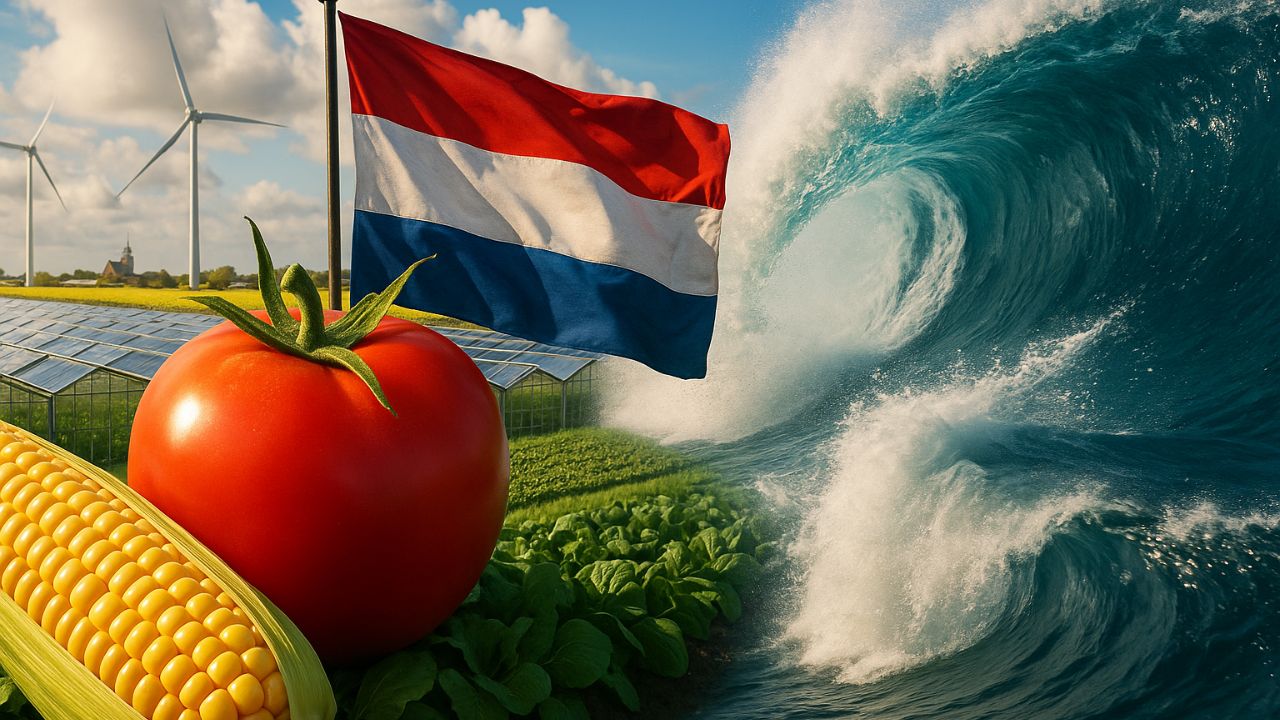


The Netherlands Turned Physical Limits, Challenging Climate, and Land Scarcity into Innovation, Productivity, and Added Value to Become a Global Agriculture Giant and a World Reference in Producing More with Fewer Resources.
The Netherlands is today a true global agricultural giant, despite being a tiny country, with part of its territory below sea level and one of the highest population densities on the planet. Instead of accepting that these obstacles would destroy its production, the country chose to face the challenge as an opportunity to reinvent the countryside.
Over the past few decades, the Dutch have combined science, technology, organization, and strategic vision to achieve something that seems impossible at first glance: producing double with half the resources, maintaining global competitiveness even with high wages, small farmland, and strong urban pressure on planting areas.
A World with More People, Less Land, and More Pressure on Food
UN projections indicate that by 2050, the planet could reach 9.7 billion inhabitants, while in 1950 this number was only two and a half billion.
-
While Russia dominates the global wheat market, Brazil emerges as an unexpected competitor in the Cerrado, offering grain available in July and August when stocks in the Northern Hemisphere are at their lowest point of the year.

-
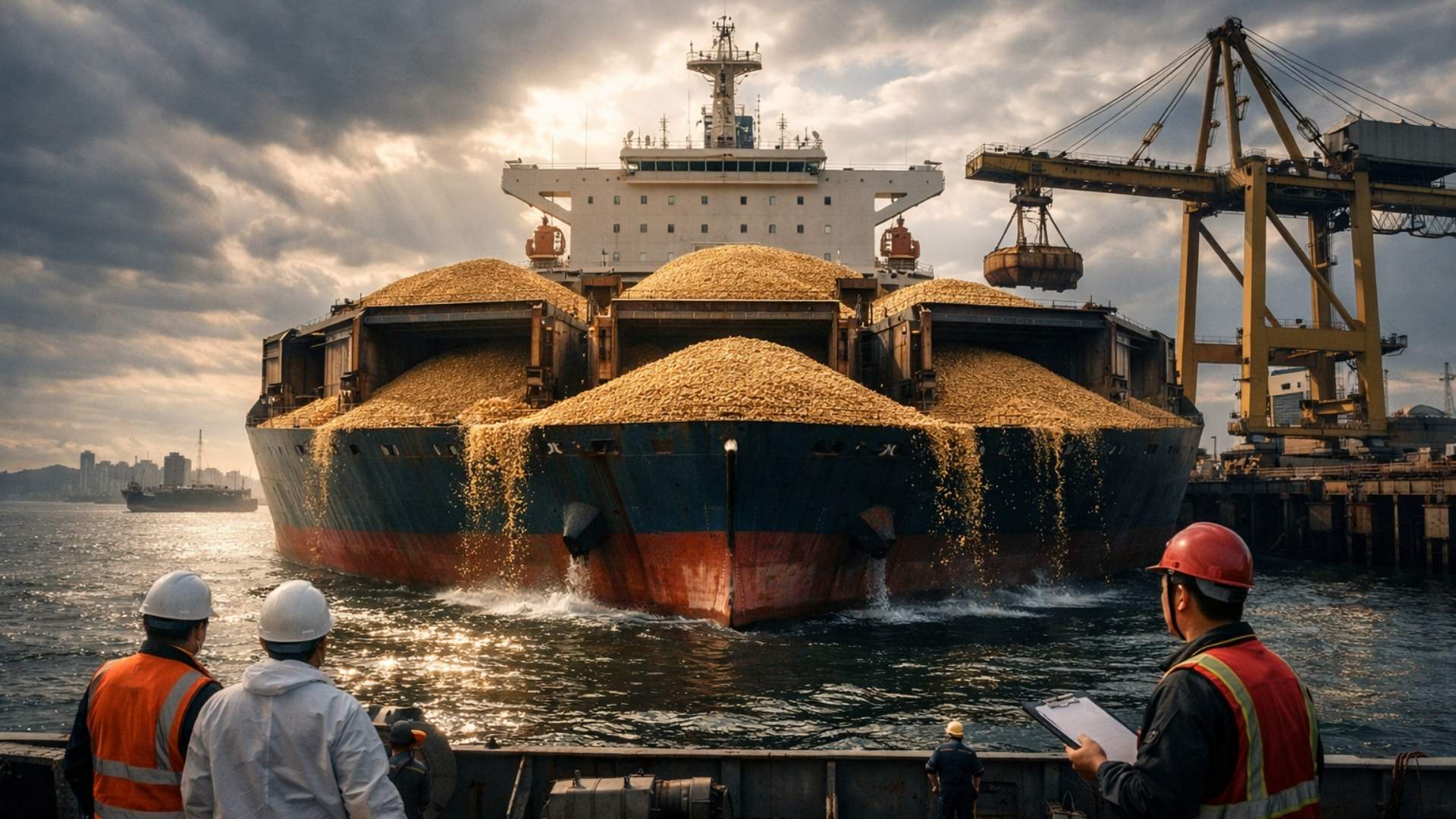
China returned almost 20 Brazilian ships with soybeans, but now everything could change: the country that buys 80% of the grain is considering relaxing regulations after impurities held up shipments of thousands of tons and caused million-dollar losses.
-
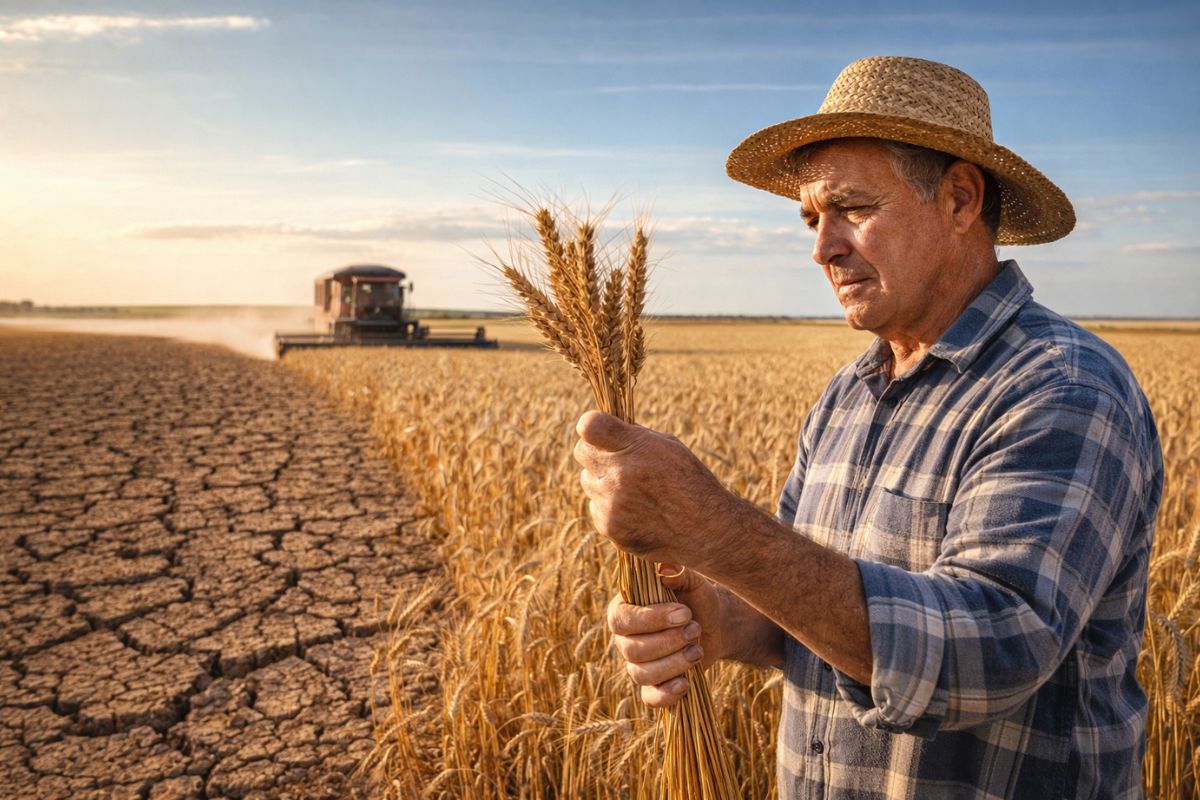
The drought of the cerrado was considered an enemy of wheat, but Brazilian scientists turned the lack of rain into a competitive advantage by creating a grain with quality that is already attracting the attention of international mills around the world.
-
THE OWNER of Brazil: a farmer who came from laundries, created an ’empire’ and today runs a company valued at R$ 42 billion after tripling its value in less than a year and receiving a billion-dollar investment from the USA.

More people mean more cities, more infrastructure, and inevitably, less space available for traditional agriculture.
This global scenario helps to understand why the Dutch experience draws so much attention.
In a context where the equation “more people and less planting area” simply does not add up, the Netherlands shows that it is possible to increase food supply without relying on the expansion of agricultural frontiers, betting on extreme efficiency, high technology, and long-term planning.
A Tiny Country, Below Sea Level and Full of Disadvantages

At first glance, the Netherlands had everything against it in agriculture. The country’s territory is a little smaller than the state of Rio de Janeiro and about 25 percent of that area is below sea level, reaching almost seven meters below at the deepest point.
As if the physical risk weren’t enough, a complex system of dikes, canals, and pumping stations had to be built just to prevent the sea from flooding the territory further.
In addition to geography, the Netherlands faces extremely high population density, which increases competition for space among cities, industries, infrastructure, and rural areas.
In such a small country, every hectare must be maximized. Nothing can be wasted.
Wealth, Multinationals, and the Flight of Youth from the Countryside
Another challenge came precisely from the country’s economic success. Since the 17th century, the Netherlands has been known as a commercial and maritime power, with a strong business tradition.
In the 20th century, names like Shell, Heineken, Philips, and other large companies offered attractive salaries and solid careers in the cities, making life in the countryside less appealing to young people.
With so many urban opportunities, agriculture began to lose labor, and keeping people in the countryside became nearly impossible. Add to that the fact that rural properties are, on average, only 7 hectares, while in Brazil the average is approximately 83 hectares, making the situation even more complicated.
With small areas, it is more difficult to spread equipment costs, invest in large structures, or compete at scale with agribusiness giants from other countries.
Small Properties, High Costs, and the Need to Change the Game

With small properties, labor fleeing, and high salaries, Dutch agricultural products naturally became more expensive than those of major international competitors. Instead of giving up food production and focusing solely on high-value products, farmers and ranchers decided to react.
Producers’ associations pressured the government, which was forced to create a strategic plan for transforming agriculture.
The central idea was clear and straightforward: instead of trying to compete only on price or area, the country would compete on productivity, technology, and efficiency in resource use, producing more per square meter and per liter of water.
Far Beyond Subsidies: Producing More with Less
In Europe, it is common to associate agricultural competitiveness with subsidies from the European Union, through the Common Agricultural Policy. However, the Netherlands is not the largest beneficiary of these resources compared to countries like Italy and Spain, and still manages to produce much more.
In other words, the secret lies not just in the money that comes in, but in how that money is applied.
Instead of focusing solely on direct transfers, the country structured a model of personalized technical advising to farmers, helping each producer to invest precisely in the equipment, technologies, and improvements that would yield greater returns.
As a result, each euro invested generates greater productivity, reduces waste, and deepens technological transformation in the countryside.
Food Valley: When the University Becomes the Engine of the Agricultural Revolution
The turning point was the decision to elevate agriculture to the level of a national innovation project.
The government set the goal of producing double with half the resources and chose as a starting point a university fully focused on themes related to the countryside, food, and the environment.
This region became known as a sort of “Food Valley”, an analogy to Silicon Valley, but focused on agriculture.
Just as Stanford propelled the technological revolution in California, this Dutch university became the world’s leading agricultural research center, attracting students from various countries and concentrating public and private investments.
The big idea was to bring together universities, companies, and farmers, directing research towards real problems, such as climate, water scarcity, animal health, pest management, and increasing productivity in small areas.
High-Tech Greenhouses, LED, and Microclimates Under Millimetric Control
One of the most impressive results of this integration was the development of highly technological greenhouses, equipped with LED lights and microclimate control systems.
Within these structures, it is possible to adjust light, temperature, humidity, and nutrients in a millimetric manner, regardless of the external weather.
Thanks to this technology, the Netherlands has become a powerhouse in tomato production, something that, given the country’s natural conditions, seemed unviable some time ago.
While in other countries up to 200 liters of water are needed to produce 1 kilogram of tomato, recent experiments in the Netherlands have managed to reduce that number to about 9 liters, generating enormous economic and environmental gains.
Drones, Monitoring, and Reduction of Pesticides and Antibiotics
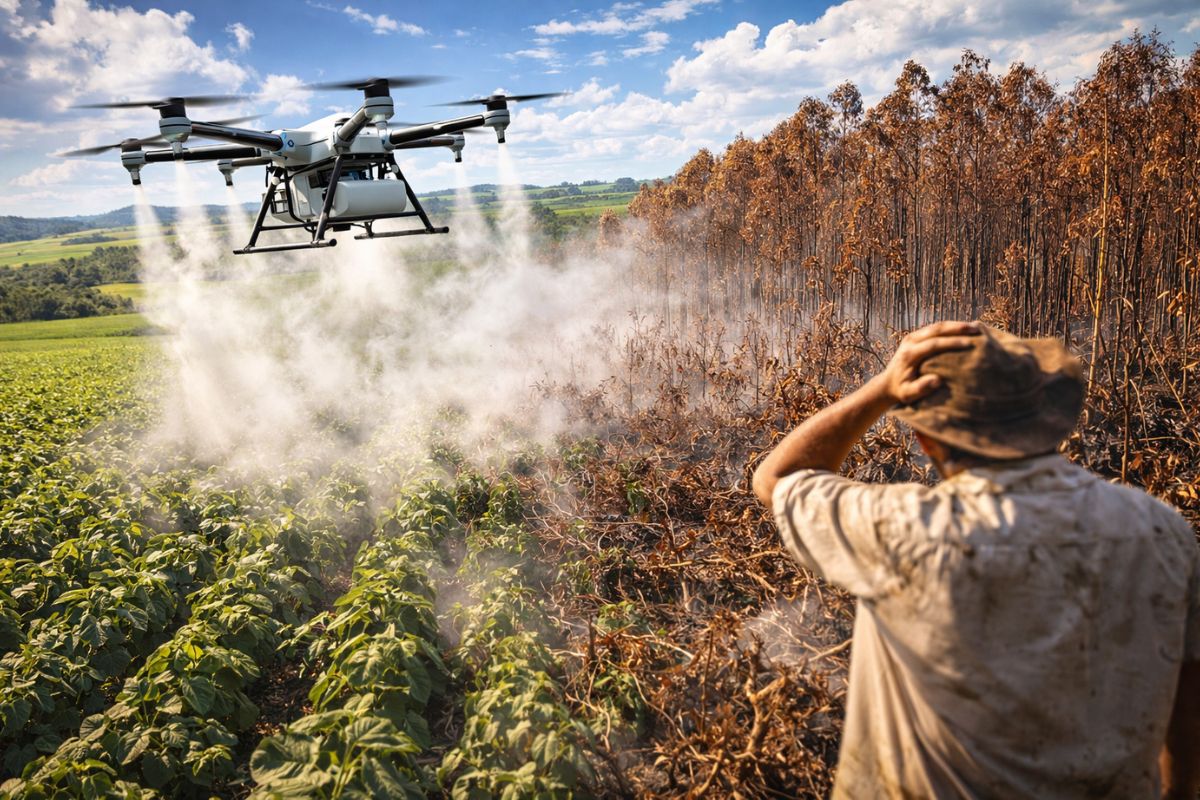
Modernization has not been restricted to greenhouses. The Netherlands has incorporated drones and advanced monitoring systems to keep track of crops and livestock in real time.
As a result, farmers can identify the occurrence of pests, diseases, or failures in specific locations, intervening only where necessary.
The result is significant reduction in the use of pesticides, as it is not necessary to apply products across the entire plantation when the problem is concentrated in a few areas.
In livestock farming, monitoring techniques allow predicting diseases in animals, reducing the use of antibiotics and improving the welfare of herds.
All of this strengthens the image of the Netherlands as a reference in a cleaner, more efficient, and more technological agriculture.
Exports, “Rotterdam Effect” and the Strength of Logistics
All these transformations have led the Netherlands to the second place globally in food exports, with a volume exceeding 95 billion in exported products. However, there is an important detail to these numbers: not everything is produced within Dutch territory.
As the country is one of the major trading hubs in Europe and hosts strategic ports, such as Rotterdam, some food produced in other countries passes through the Netherlands before going to other markets.
The value of these goods counts towards Dutch exports, a phenomenon known as the “Rotterdam Effect”. Still, this does not diminish the fact that Dutch agriculture and livestock are highly productive and technological.
From Food Exports to Knowledge and Technology Exports
Today, the Netherlands not only exports food. The country has become a exporter of agricultural technology and production models, providing solutions for places with limited space and severe environmental challenges.
Countries like the United Arab Emirates and Singapore, for example, are adopting Dutch technologies to build urban farms and advanced cultivation systems, bringing the concept of producing more with less to arid or extremely urbanized regions.
This movement makes the Netherlands a global giant in agriculture in both production and knowledge, increasing the sector’s share in the gross domestic product and reinforcing its role as a living laboratory for agricultural innovation for the world.
Inspirations for Brazil Without Simplistic Comparisons
It makes no sense to compare the Dutch reality with the Brazilian one directly. These are countries with dimensions, climate, land structure, and challenges that are completely different.
Brazil, for example, has Embrapa, which has played a fundamental role in the development of tropical agriculture and the expansion of national production.
Still, the attitudes of the Netherlands can inspire Brazil in key areas, such as the deep integration between universities, research centers, and agribusiness companies, the focus on technologies applicable on a large scale, and the pursuit of increasing production while consuming fewer resources.
It is also essential to look at what happens outside the farm gate, ensuring efficient logistics, smart marketing of production, and better use of added value.
If the Netherlands, small, below sea level, and full of limitations, managed to become a global agriculture giant, it is clear that strategy, science, and management can be worth more than the size of territory.
And you, do you believe that Brazil can move closer to this model of producing more food with fewer resources and cutting-edge technology, or are we still falling behind in this type of agricultural transformation?








A coisa não é bem assim não, Lula,meu presidente trabalhou, porém,as pressões internas e falta de alimentos,obrigou Trump,a recuar com as tarifas.
Não com o PT no governo . Se eles governasem a Holanda , o mar já teria invadido tudo e a Holanda não existiria .
Bom mesmo era o bestanaro,que nunca teve um projeto social ou para o desenvolmento do Brasil,essa é a realidade,obras por todo o país,esse é o trabalho de Lula,que trabalha, já o outro **** é uma piada de péssimo gosto, só isso.
Não acredito!Vivi na Holanda e entre varios empregos também trabalhei em estufas,visitei pecuárias e realmente fiquei admirada com os métodos e tecnologias que os Holandeses praticam!
O Brasil e muitos outros países precisam de aprender com os Holandeses,mandar os jovens estudar na Holanda!