





 Portuguese
  English
  Spanish
  4 min of reading
  0 comments


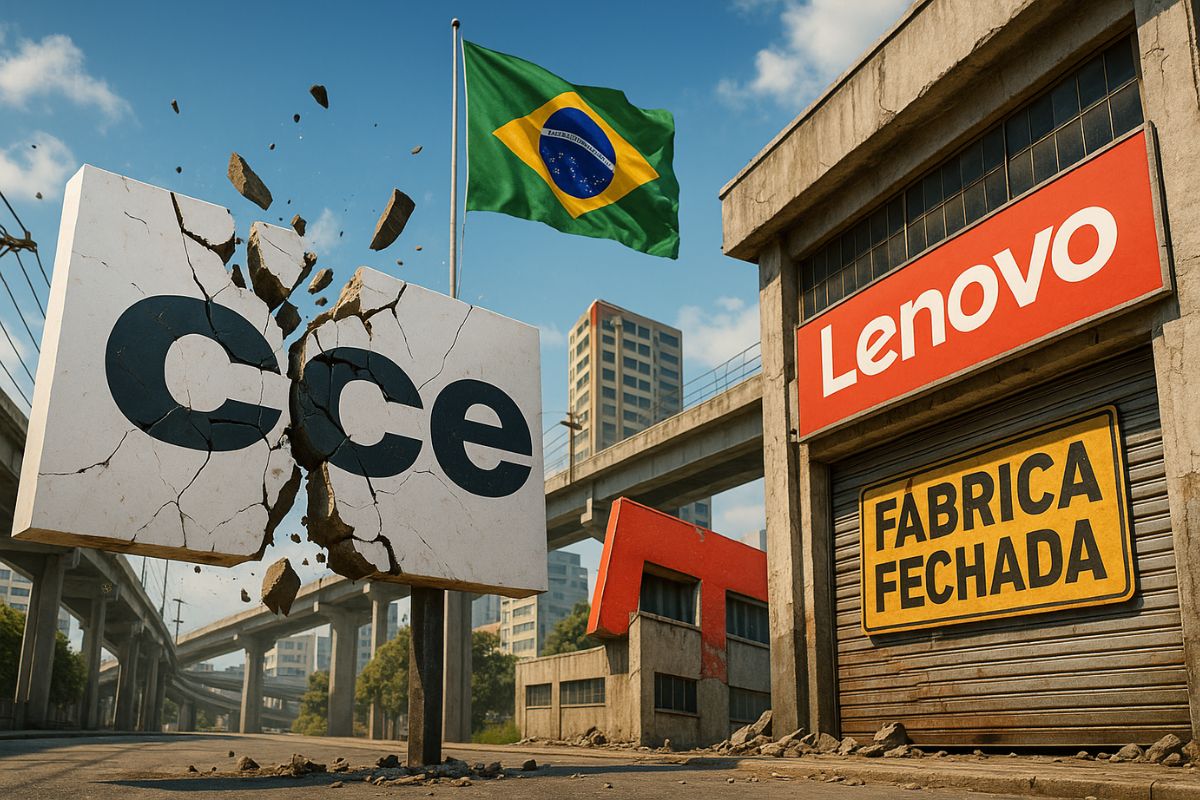
From Leading as the Largest Brazilian Electronics Manufacturer to Returning to Former Owners After Lenovo’s Acquisition, CCE’s Journey Involves Scandals, Crises, Closed Factories, and an End Without Consumer Support
The story of CCE helps explain why the largest Brazilian electronics manufacturer of the golden years disappeared from the shelves. Founded in 1964 by Isaac Sverner, the company rode the market reserve, consolidated factories in Manaus and São Paulo, and filled homes with sound systems, TVs, video games, and later low-cost computers and cell phones. Aggressive pricing, reach, and strategic partnerships formed the tripod of growth.
The same script, however, accumulated weaknesses. Reputational crises, investigations, contested industrial decisions, and competitive pressure eroded margins and trust. The sale to Lenovo in 2012 seemed like a definitive leap, but became the prelude to the denouement: return of the company, closed factories, and consumers without assistance.
From Importer to National Showcase: How CCE Grew
In the 1970s, CCE ceased to be merely an importer of components to manufacture at scale in the Free Trade Zone of Manaus, taking advantage of incentives and the import substitution policy.
-
More than one million North Americans were ordered to close their windows and stay indoors because the air in the southern United States became so toxic that pollution levels reached 18 times above the World Health Organization’s safety limit.

-
China has accumulated up to 1.4 billion barrels of oil in strategic reserves, invested 25 years in renewable energy, and purchased 80% of cheap Iranian oil: how Beijing has prepared for decades for the crisis that is now shaking the world.

-
A single lake holds 20% of the planet’s non-frozen freshwater and is also the deepest and oldest on Earth.

-
How 5,000 Indian dabbawalas manage to deliver around 200,000 lunchboxes a day in Mumbai for over 130 years using bicycles, crowded trains, and a manual system that continues to operate with impressive accuracy.


The strategy was clear: affordable products and nationwide presence, with a focus on sound systems, TVs, and the famous “three in one”.
Partnerships and equipment remanufacturing, such as cooperation with Kenwood, helped popularize audio systems that made history.
Even under recurring criticisms of durability, the volume sold ensured leadership and turned the brand into a synonym for home electronics for millions of consumers.
Market Reserve, Clones, and Risk Diversification
While imports were restricted, CCE filled gaps with lines of video games compatible with Atari and Nintendo and entry-level computers like the MC1000 and clones of the Apple II.
The focus was on price and availability, in a scenario of limited income and scarce access to imported originals.
In the 1990s and 2000s, the company expanded to LCD/LED TVs, microwaves, refrigerators, and air conditioning, creating sub-brands and licenses.
The turn of the millennium also brought an investment in PCs and notebooks, with lines like Win and presence at innovation fairs.
For a few months in 2014, CCE reached the top of the computer market, before being overtaken by competitors.
The Turning Point: Scandals, Investigation, and Restructuring
The company went through investigations regarding imports and tax benefits, which affected its image and required asset sales and portfolio adjustments.
Even while operating, the brand carried reputational liabilities that increased credit costs and reduced consumer tolerance for new defects.
This silent erosion opened space for rivals with similar value propositions.
To regain momentum, CCE reorganized its business and laid off employees, but was already facing loss of traction in cell phones and tougher competition in TVs and computing.
The low-cost, high-volume machine began to creak under growing demands for quality and after-sales service.
The Purchase by Lenovo and the Beginning of the End
In 2012, Lenovo sought a quick entry into Brazil.
After a billion-dollar offer rejected by another national manufacturer, it closed a deal with CCE for around R$ 300 million, paid in installments, conditioning the final transfer to full payment.
There was modernization of manufacturing and new launches, but the returns did not come as expected.
In 2014, with the acquisition of Motorola, Lenovo shrunk the smartphone division inherited from CCE and prioritized premium lines of its own brand.
Complaints and fines piled up, the reputation worsened, and the buyer did not pay the final installment. Under the contract, CCE was returned to the former owners in 2015, already with a weakened operation.
Closure, Assistance Void, and Final Wear
Without liquidity, CCE shut down operations in 2016, closed the Manaus factory, and disappeared from consumers’ radar.
The website went offline, support disappeared, and remaining stock was liquidated.
Allegations linking suppliers to frauds in incentives added another chapter to the wear and tear, although the founders had been distanced from some of these actions.
The legacy remained more in emotional memory than in retail.
Why the Largest Brazilian Electronics Manufacturer Disappeared
Three vectors combined. The business model based on price lost its advantage with the opening up and the rise of high-scale Asian competitors. Reputational shocks undermined trust and increased costs.
The attempt to leap with Lenovo did not consolidate synergies or recover the relationship with consumers. With no cash and no strong brand, the fall was rapid.
For the market, the lesson remains: volume without quality and after-sales backing incurs future penalties.
For industrial policy, incentives without governance and result measurement create fragile champions. And for the consumer, the lowest price can be costly when assistance disappears.







-

Uma pessoa reagiu a isso.