





 Portuguese
  English
  Spanish
  4 min of reading
  49 comments





CCE Was The Largest Electronics Manufacturer In Brazil. Understand How It Dominated The Market And Then Disappeared Silently.
Brand That Dominated The 90s And Early 2000s Disappeared Silently — And Few Noticed
For decades, the acronym CCE was synonymous with popular electronics in Brazil.
Present in televisions, radios, VCRs, DVDs, and later in computers and cell phones, CCE was the largest electronics manufacturer in the country and was in millions of Brazilian households.
However, over the years, the brand faded from the shelves — until it completely disappeared.
-
7.8 magnitude earthquake in Indonesia frightens the population, triggers tsunami alert, and hits an island with over 200,000 inhabitants this Thursday.

-
Google will finally let you change that embarrassing Gmail address you created in your teenage years without losing any accounts, logins, or old emails: the feature is already available in the United States.

-
Heading to Brazil in a Bonanza F33 single-engine aircraft: a couple departs from Florida on a visual flight, makes technical stops in the Caribbean to refuel and organize paperwork, and begins the staged crossing until they reach the country.

-
Unknown Brazilian rewrites one of the pillars of physics and gains global prominence: discovery made in Rio becomes central theme of the 2027 Nobel Prize.


So what happened to this Brazilian technology giant?
Why Did It Disappear From The Market?
And where are the people responsible for the brand?

A Rise Driven By Low Prices
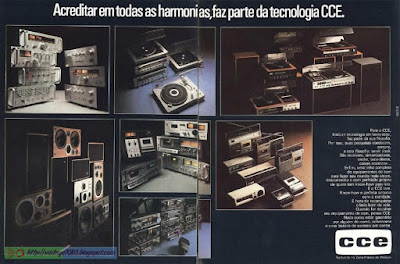
Founded in 1964 in São Paulo, CCE — short for Comércio de Componentes Eletrônicos — started small, selling electronic parts.
However, noticing the growing demand for sound and image devices, the company decided to manufacture its own equipment and found a powerful niche: affordable electronics for the Brazilian consumer.
In the 80s and 90s, with an aggressive pricing policy, CCE established itself as one of the most popular brands among middle and low-income families, who sought functional devices, even if they were not the most modern or sophisticated.
The brand’s unofficial slogan became a national joke: “CCE: Comprei, Consertei e Estraguei,” reflecting the reputation that its products didn’t have much durability.
Despite the criticisms, sales continued to soar.
The Golden Age: Leadership In The National Market
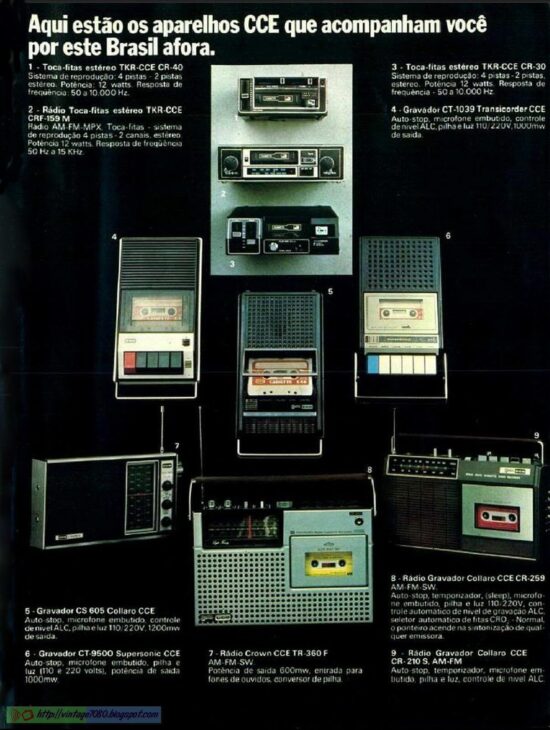
In the early 2000s, CCE diversified its product line.
It began to manufacture laptops, desktops, portable DVDs, cell phones, and flat-screen TVs.
With a total focus on national production and competitive prices, the brand remained among the sales leaders, even facing foreign brands like Sony, Samsung, and LG.
By 2006, the company employed over 5,000 people and had factories in Manaus, São Paulo, and Jundiaí.
In addition, it exported to countries in Latin America.
The strategy was simple but effective: offer technology at low cost and presence in popular stores throughout the country.
But in a rapidly changing technological world, the formula began to show signs of exhaustion.
The Start of Decline
The decline of CCE coincided with the rise of smartphones, tablets, and the popularization of high-speed internet.
The Brazilian consumer became more demanding, seeking products with better performance, refined design, and more advanced systems.
Even trying to adapt to the changes, CCE faced difficulties.
Its products were constantly criticized for low quality, inferior performance, and lack of innovation.
With a damaged image and heavy competition from Chinese and Korean brands, the company lost significant market shares.
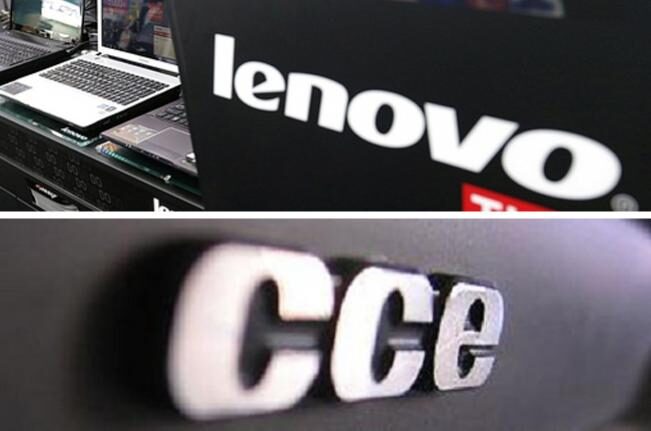
In 2012, there was an attempt at rescue: the Chinese group Lenovo announced the purchase of 100% of Digibrás, the controller of CCE, for R$ 300 million.
The intention was clear: leverage CCE’s infrastructure to expand Lenovo’s presence in Brazil, a strategic and growing market.
The Purchase By Lenovo And The End Of The Brand
Initially, the plan seemed promising.
Lenovo would use CCE’s factory in Manaus to produce laptops and cell phones, taking advantage of the tax incentives of the Free Trade Zone.
However, the marriage between Lenovo and CCE lasted little — and ended quietly.
In 2015, just three years after the acquisition, Lenovo returned control of CCE to the Saraiva family, the company’s founders.
The official justification was that business integration did not occur as expected.
The return, however, was symbolic: CCE never regained its commercial momentum and did not return to being among the sales leaders.
From that moment on, the brand simply disappeared from stores.
Without new releases, investments, or marketing strategies, CCE became a memory of the era of popular Brazilian electronics.
What Remains Of CCE?
Today, there are virtually no more signs of CCE in the market.
Its official website is down, social media accounts have been abandoned, and the last products released date back over a decade.
In online forums, consumers exchange tips about replacement parts and nostalgically (or frustratingly) remember the brand’s products.
According to records from the Federal Revenue Service, Digibrás is still active, but without relevant operations or new commercial launches.
There is no public information about a possible return of the brand or sale of its name.
Interestingly, old CCE devices are still sold on second-hand sites, such as OLX and Mercado Livre, and many of them continue to function.
This partly challenges the reputation for fragility that the brand carried.
A Lesson From The Brazilian Market
The disappearance of CCE is an emblematic example of how the electronics market in Brazil can be cruel to companies that do not keep up with technological innovations.
Despite the popularity, national infrastructure, and distribution reach, the brand could not reinvent itself at the pace the consumer demanded.
The entry of international players with greater investment power and more advanced products also accelerated the end of CCE’s trajectory.
Even with the attempt at salvation via Lenovo, the brand could not withstand the pressure of an increasingly competitive, digital, and globalized market.
For many, CCE will always be remembered as the brand that marked generations with its simple yet affordable products — and that disappeared as quickly as it became popular.
And you, have you ever had a CCE product at home? Did it last for years or did it end up on the “Bought, Repaired, and Ruined” list? Share with us in the comments!







CCE: Começou Comprando Errado, dizíamos. Mesmo assim tive um aparelho de som CCE, e até que durou…., mas era inferior comparado as outras marcas…., era o que cabia no bolso kkkkk
Tive três eletrônicos da CCE: aparelho de som três em 1, era um espetáculo! 1 rádio gravador, excelente! E um televisor que nunca deu problema. Se a marca voltasse a produzir eletrônicos com aquela qualidade, compraria de novo! Valeu CCE!…
Eu tive uma CCE durou 20 anos e nunca deu defeito até que derrubaram do móvel wue ela estava aí fim .