





 Portuguese
  English
  Spanish
  7 min of reading
  0 comments


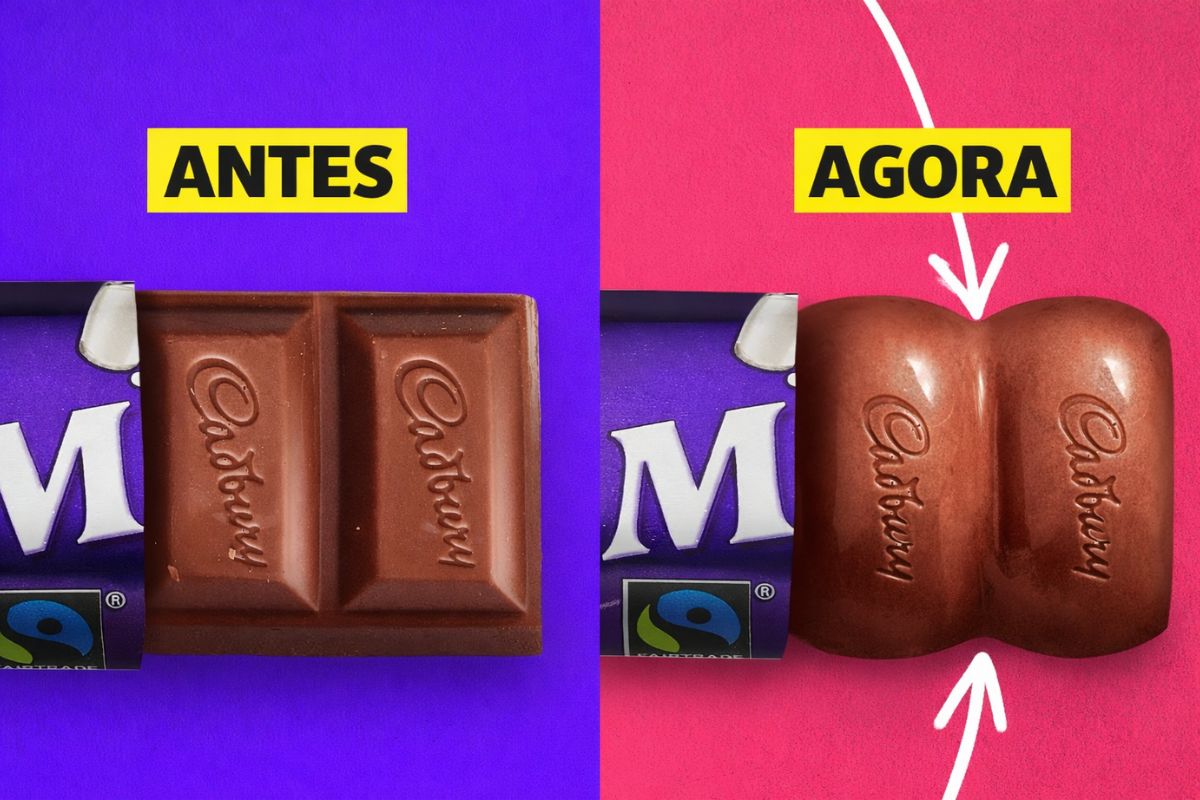
In The Routine Of The Market, Chocolate Bars Reduce Grams, Toilet Paper Loses Sheets, And Snacks Come With More Air Than Chips, While The Price Remains The Same And Shrinkflation Transforms Small Invisible Changes Into A Real Margin Increase With Every Purchase Of The Month, Pressuring Your Budget Without You Noticing Properly
Between 2012 and 2017, more than 2,500 products in the UK reduced in size without changing the price on the shelf, and between July 2020 and July 2024, inflation accumulated a rise close to 21% while corporate profits grew about 90%, nearly four and a half times faster than general indexes.
These numbers help explain why smaller chocolate bars, shorter toilet paper rolls, and snack bags with less content have become a recurring strategy. The product shrinks, the price stays the same, the margin rises, and a good portion of consumers do not realize they are paying more for less. It is the silent logic of shrinkflation, reinforced by packaging tricks and the bet that no one will have time to check the label carefully.
The Trick Of Invisible Shrinkage In Price

The central dynamic is simple: instead of raising the price on the label, the industry reduces the quantity.
-
The bluest city in Brazil has just gained a new floating bridge for the free crossing between the island and the mainland, connecting residents and visitors to the historic center of São Francisco do Sul every day of the week.

-
In a silent race, Shopee signs a mega contract in Guarulhos and accelerates the e-commerce war with faster deliveries, pressured shipping, and a new threat to rivals in Brazil.

-
Oil surged to $115 a barrel due to the war in the Middle East, and diesel in Brazil has already risen to R$ 7.45 per liter, while the United States…

-
Brazilian city bets on the business environment to generate jobs and attract investments in the energy sector — secretary reveals strategy at Macaé Energy 2026.

The consumer takes home a bar that is a few grams smaller, a bag of snacks with fewer chips, or a roll of toilet paper with fewer sheets, but continues to pay exactly the same amount at the checkout.
A noteworthy case cited by consumption specialists involves chocolate eggs that have, over the years, been quietly shrinking.
Side-by-side comparison images show a clear visual difference, even though the manufacturer has minimized the change, even suggesting that the customer “just grew,” and not that the product shrank.
It is the kind of narrative that protects the price and shifts the responsibility to the consumer’s perception.
The same reasoning appears when snack brands remove some units from the package, keeping the packaging design, logo, and price.
In a case publicly admitted by a major manufacturer, the company acknowledged that it removed “just a little of the product” to continue offering the same monetary value, emphasizing that the consumer could “continue enjoying” as before.
In practice, the cost per gram rises silently.
Chocolate Bar, Snack, And Toilet Paper: Anatomy Of A Shrinking

Shrinkage affects the shape of the product, its weight, and its apparent volume.
In chocolate bars, brands can reduce thickness, increase gaps between segments, or redesign the internal shape so that the silhouette remains similar, even with less content.
The goal is to preserve the visual feeling of value and hide that the price per unit of weight has risen.
In the world of snacks, one of the recurring criticisms from consumers arose when cans and bags were compared to older versions, highlighting shorter cans or visibly emptier bags.
In a widely discussed case, the manufacturer of a popular corn snack admitted to having reduced the quantity in the bag as a way to offset higher costs, keeping the price.
Toilet paper is another laboratory of this engineering. A major American retailer reduced the content of “Ultra Strong” rolls by dozens of sheets, while a UK chain cut about one-fifth of the sheets from its rolls.
By combining slightly smaller sheets, fewer sheets per roll, and a larger inner tube, the total volume decreases, but the roll still looks robust on the shelf, sustaining the same price.
Skimpflation: When Nothing Changes In The Price, But Quality Drops
In addition to physical shrinkage, there is the phenomenon of skimpflation, where the price and weight remain the same, but the quality of the ingredients worsens.
An example cited in market analyses shows a creamy soup that, years ago, listed potato as the first ingredient and now lists water in that position, indicating a more diluted formulation.
Another case involves a famous jar of peanut butter.
From the front, the packaging looks identical in both the old and new versions, with the same price on the shelf.
However, when turning the container, it is possible to see a recession in the plastic bottom, creating a cavity that eliminates hundreds of grams of product without altering the apparent external dimensions.
The consumer pays the same but gets up to 17 percent less, in a reduction only visible when examining the weight on the label or the internal shape of the jar.
In these cases, the label even informs the new quantity, but the combination of a busy routine, confusion in the aisle, and trust in repeated packaging makes most people not compare weight, composition, or number of servings.
The result is an indirect increase in price per unit of product, with little visible impact in day-to-day life.
What Harvard, Airlines, And Governments Say About The Price Trick
The reason shrinkflation works has been measured in academic studies.
Research linked to Harvard indicates that people are much more sensitive to changes in price than to changes in the quantity received.
In other words, a few cents increase grabs more attention than the loss of a few grams in the packaging.
This same principle has been explored in other sectors.
In the 1980s, a major American airline saved about $40,000 a year by removing just one olive from each salad served to passengers.
It’s the same reasoning applied today when companies discreetly adjust weights, fillings, or ingredients while the price appears stable on the cash register screen.
Governments are starting to react.
France already requires retailers to explicitly inform when a product shrinks while maintaining the price, and other countries are discussing similar rules.
In the United States, legislation has been proposed to prevent size reduction, in an initiative that classified the practice as “inflationary greed.”
Even then-President Joe Biden publicly criticized companies that, according to him, reduce portions “in the hope that you won’t notice.”
Meanwhile, recent data cited in economic debates show that between July 2020 and July 2024, overall inflation rose 21 percent, while corporate profits advanced 90 percent in the same period.
The difference in pace reinforces the perception that the silent shrinkage of products helps to transform cost pressure into an opportunity to expand margins without explicitly readjusting the price.
Why You Almost Never Notice Shrinkage In The Market
The psychology of perception is a central piece.
Most people first look at the large, colorful price on the shelf label.
Net weight, number of sheets, quantity of units, and the order of ingredients appear in smaller letters, often positioned in less visible areas of the packaging.
Companies systematically exploit this visual hierarchy.
They adjust the graphic art, reposition images, slightly change the package format, and use phrases like “new packaging” or “improved formula” to divert attention from the reduction in content.
While the cart rolls, the consumer compares only absolute prices between brands, not the price per gram, sheet, or serving, and that’s where shrinkage hides.
There’s also the factor of routine. Shopping done in a hurry, long lists, and distractions from phones or children make it difficult to read labels in detail.
Even when someone notices that the toilet paper seems to run out faster or that the snacks yield less, they tend to attribute the impression to higher usage, not to the change in the product.
This doubt benefits the maintenance of the price and the advancement of the strategy.
How To Defend Against Shrinkflation And Not Be A Hostage To Price Alone
Experts recommend reversing the logic of the shelf: ignore the exclusive focus on price and prioritize the unit price. Instead of just looking at the final value, the consumer should seek information on how much they pay per kilo, liter, sheet, or unit.
This metric quickly reveals if a smaller package has become relatively more expensive.
Another measure is to compare old labels with new ones whenever you notice that the packaging has changed, photographing weights and ingredients.
Complaints on social media have already led manufacturers to backtrack, as in the case of a famous triangular chocolate bar that increased the space between segments to reduce content and was later pressured to reconsider the decision after a strong public reaction.
The more visible the trick, the greater the reputational cost and the harder it becomes to continue charging the same price for less product.
For those closely following the discussion, it also makes a difference to support regulatory transparency initiatives, such as mandatory notices on shelves whenever an item changes size without altering its price tag.
Although shrinkflation is unlikely to disappear anytime soon, detailed information reduces the asymmetry between industry and consumer and allows for more conscious choices.
Given all this, the next time you grab a chocolate bar, a package of toilet paper, or a snack at the same old price, will you check the weight and the unit price, or do you still believe that the packaging alone is enough to know if the product is still worth it?










Seja o primeiro a reagir!