





 Portuguese
  English
  Spanish
  6 min of reading
  0 comments


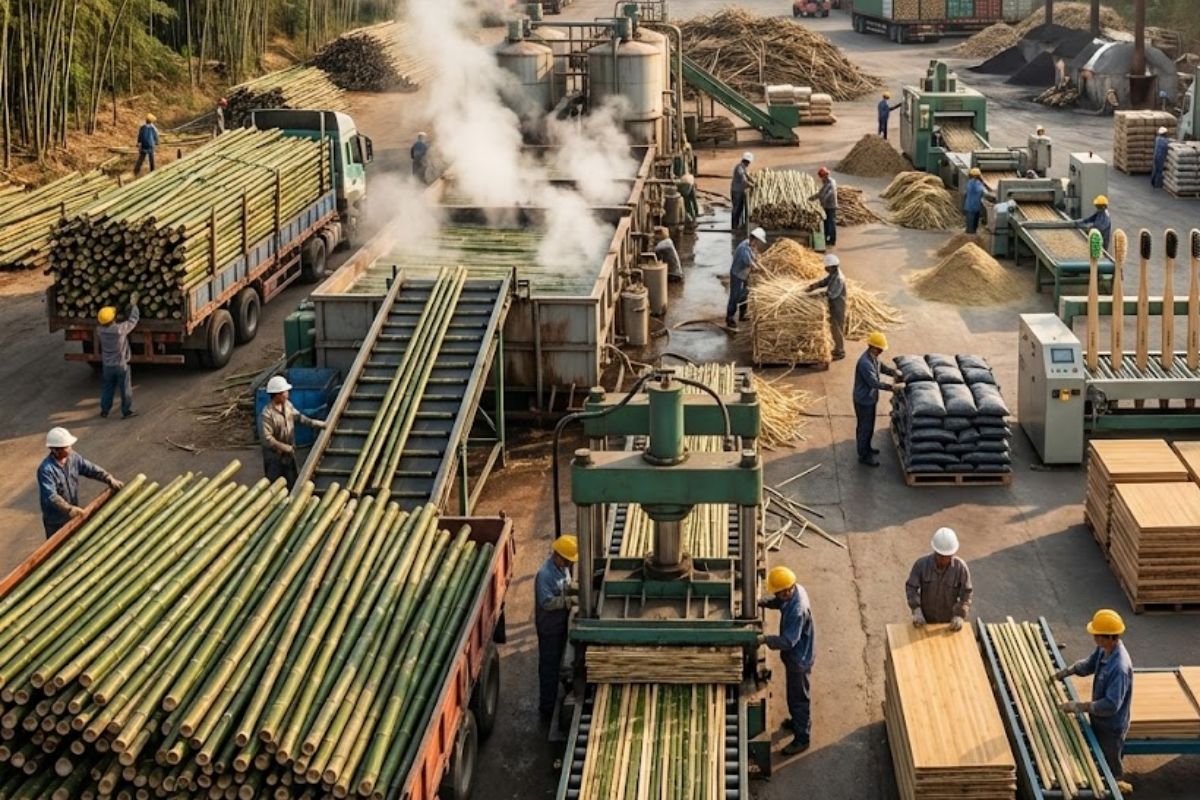
Every Year, More Than 30 Billion Bamboos Supply the Bamboo Industry, Which Cuts, Washes, Sterilizes, Dries, Presses, and Molds Canes into Eco-Friendly Daily Use Products and Structural Materials in a Market Exceeding 70 Billion Dollars, With Production Concentrated in Tropical Asia and India As Well.
Bamboos Enter a Heavy-Scale Industrial Chain. More Than 30 Billion Units Are Harvested Annually and Over 200 Million Tons Processed, With Raw Material Concentrated in More Than 35 Million Hectares of bamboo Forests in Asia. The Industry Has Grown Because the Material Matures in About Three Years, Re-grows Without Replanting, and Supports Uses Ranging from Utensils to Construction.
The Logic Is Simple: Cut the Right Cane, Send It Quickly to the Factory, Sort by Diameter and Age, Remove Impurities, Stabilize the Material, and Direct Each Batch to a Specific Line. From There, Eco-Friendly Products Come Out in Different Formats, but Almost All Follow the Same Industrial Base: Sorting, Washing, Boiling or Steaming, Drying, Pressing, Precision Cutting, Finishing, and Packaging.
Where the Industry Sources Raw Material
The Largest Productive Base Is in the Tropical Belt of Asia, Especially China, India, Vietnam, and Indonesia. In This Region, bamboos Feed an Industry That Already Moves More Than 40 Billion Dollars Just in China and Exceeds 70 Billion Dollars in the Global bamboo Material Market. This Is Not an Isolated Craft Activity. It Is Mass Production.
-
Brazil on alert? Why invading Brazil is a NIGHTMARE for the USA: 8.5 million km², 213 million inhabitants, Amazon covering 60% of the territory, trillion-dollar war, and resistance that even 13,000 aircraft could not control.

-
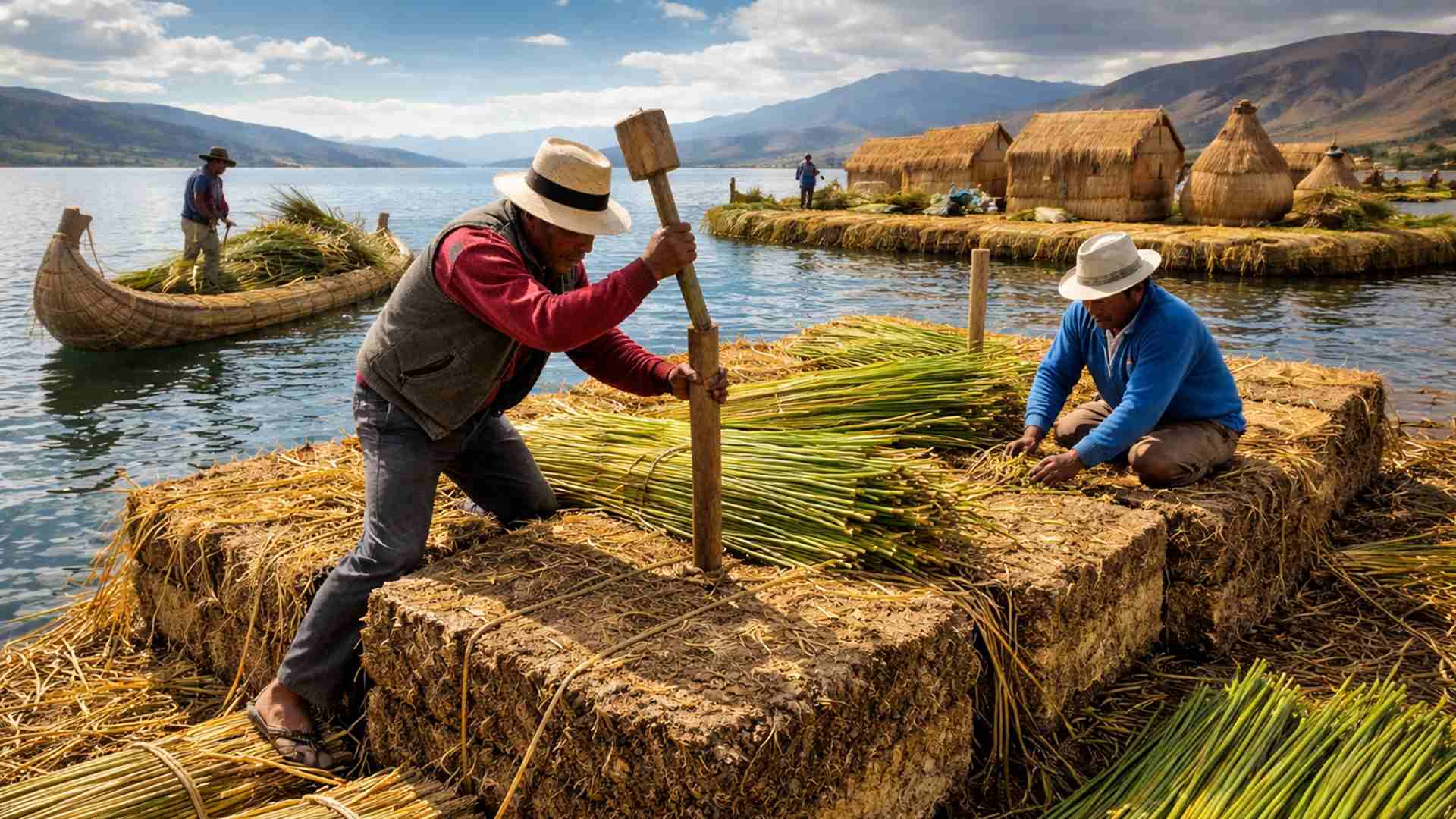
How to build a floating island from scratch with reeds, giant blocks, and stakes in the lake in a process that needs to be repeated almost every day.
-
A forgotten cord on the floor of a basement in Vienna leads a plumber to a box containing 30 kilograms of gold with Mozart’s face, hidden before World War II. The treasure, worth 2.3 million euros, was just centimeters away from a worker who ignored the sign a day earlier.

-
A couple buys an old chalet, breaks the kitchen floor for renovation, and finds over a thousand coins of gold and silver hidden since the English Civil War over 4 centuries ago.


This Advance Happened Because bamboo Combines Speed and Strength. It Can Grow More Than 30 Centimeters Per Day, Matures in Three Years and Absorbs Twice as Much CO2 Compared to Many Tree Species, Reaching Up to 200 Tons of Carbon per Hectare in 30 Years. This Helps Explain Why Eco-Friendly Products from bamboo Have Gained Market Share.
How Bamboos Are Cut and Transported to the Factory
Harvesting Primarily Occurs Between October and March, During the Dry Months. Only Canes Aged Three to Five Years Are Cut, at Which Stage the Material Is Strong Enough to Become an Industrial Piece.
In the Field, a Skilled Worker Can Harvest Between 400 and 600 Logs Per Day. The Choice of Cane Age Defines Resistance, Durability, and Industrial Destination.
In Industrial Plantations, Cutting Is Usually Horizontal and Done with Chainsaws. In Traditional Management, the Machete Is Used at a Slanted Angle to Avoid Cracking and Better Preserve the Base.
Afterward, the Bundles Are Stacked, Removed Manually or with Small Cranes, and Transported by Trucks to the Nearest Unit. The Goal Is to Reduce the Time Between Cutting and Processing, as bamboo Needs to Arrive in Good Condition to Avoid Losing Quality.
What Happens at the Entrance of the Industry
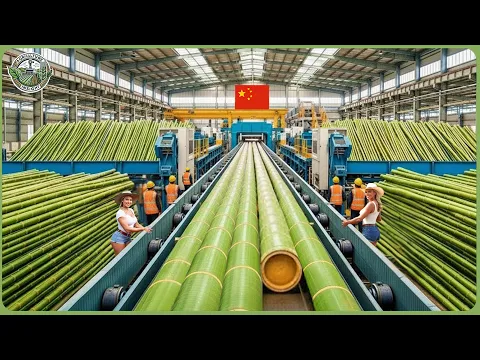

Upon Arrival, Trucks Unload, and the Material Enters the Primary Processing Zone. The Canes Are Classified by Diameter and Maturity.
The Thicker and More Solid Ones Go to Panels, Construction, and Engineered Wood. The Smaller and Finer Ones Supply Lines for Straws, Cutlery, Chopsticks, and Other Eco-Friendly Products. Sorting Determines the Value of Each Batch.
After This, Roots and Branches Are Removed, and the bamboo Is Cut into Sections of One to Two Meters. In Large Factories, Automatic Circular Saws and Conveyors Replace Almost All Manual Cutting and Process Thousands of Stems Per Hour, Resulting in Clean Edges and Low Material Loss.
Next, the Internal Nodes Are Drilled or Turned to Form Smooth Tubes, Ready for Washing and Treatment.
Washing, Sterilization, and Steaming
The Next Stage Is Crucial for Durability. Each Piece Passes Through Tanks of Water, Rotating Drums, or High-Pressure Systems to Remove Mud, Dust, Leaves, and Debris.
When the Destination Is Food Contact, Such as Straws, Spoons, and Chopsticks, bamboo May Also Soak for Four to Eight Hours in Hot Water or a Slightly Alkaline Solution with Hydrogen Peroxide or Diluted Baking Soda.
This Treatment Removes Natural Sugars and Starch, Which Favor Mold and Insects. Afterward Comes Boiling or Steaming in Stainless Steel Tanks or Heated Chambers for Six to Twelve Hours.
This Phase Increases Material Stability and Can Extend Product Lifespan to Up to 15 Years, Depending on the Application.
How Bamboo Becomes Board, Straw, Cutlery, and Brush
In Premium Boards, the Carbonized Cane Is Divided into Thin Strips and Flatted Until It Forms Even Surfaces. These Strips Receive Suitable Adhesives for Food Contact, Such as Formaldehyde-Free Resin or Eco-Friendly Biomaterial Glue, and Then They Go into a Hydraulic Press Under 80 to 120 Tons at High Temperature.
When They Come Out, They Go Through Cooling, Trimming, Sanding, and Polishing. The Result Is a Solid Panel of bamboo.
For Straws, the Selection Is Narrower. Young, Straight Bamboos of Small Diameter, Generally Between One and Two Centimeters, Are Used. Each Piece Is Cut Between 18 and 20 Centimeters, Polished Inside and Out, Sterilized, and Dried Until It Reaches About 10% Moisture.
Then, There Is Individual Inspection, Laser Cutting, Brand Engraving, and Biodegradable Packaging. Even So, Natural bamboo Straws Still Only Represent About 3% to 5% of the Market.
Cutlery and Brushes Follow a Different Logic. For Spoons and Forks, Computerized Systems Cut Molds in bamboo Sheets with Lasers or Water Jets, and Then the Finishing Rounds the Edges.
For Brushes, the Handle Is Molded and Drilled, and the Most Delicate Part Is Fixing the Biodegradable Nylon 4 or Plant-Based Bristles with Micro Stainless Steel Pins or Natural Adhesive. In Modern Factories, a Line Can Produce About 3,000 Brushes Per Day.
The Most Valuable Material Is Not the Utensil, but the Structural One
One of the Most Advanced Versions Is Woven Bamboo. In This Case, the Cane Does Not Become a Traditional Strip. It Is Shredded or Separated into Long Fibers, Then Dried, Mixed with Bio-Based Adhesive or Heat-Resistant Resin, and Layered Crosswise.
Everything Then Goes into a High-Temperature Hydraulic Press Until It Forms Dense Blocks. Here, Bamboo Stops Being Just a Utensil and Becomes Engineering Material.
According to Reported Data, This Material Can Have Mechanical Strength Up to 25% Higher than Oak or Teak, with High Resistance to Cracking, Warping, and Moisture. The Average Price Quoted Ranges from 1,800 to 2,000 Dollars per Cubic Meter.
Therefore, the Bamboo Industry Has Been Pushing the Material into Industrial Floors, High-Quality Furniture, and Sustainable Architecture, Where the Margin Is Higher Than for Disposable Items.
How the Industry Utilizes Waste
The Chain Attempts to Operate with Minimal Waste. Bamboo Dust, Fine Powder, and Fragments Left After Cutting, Turning, and Polishing Are Collected, Dried, and Ground to Achieve Particles Between 80 and 120 Microns.
Then, This Material Is Mixed with Corn Starch, Minerals, and Bio-Adhesives to Form New Bio-Based Compounds. The Residue Returns to the Production Line as Secondary Raw Material.
This Stage Is Important Because Scale Generates High Volume Leftovers. Without Reutilization, the Environmental Footprint Worsens.
With Reutilization, the Industry Expands the Supply of Eco-Friendly Products and Reduces Losses. But This Does Not Solve Everything, as the Safety of the Final Compound Depends on the Formula Used by Each Manufacturer.
Where the Ecological Discourse Meets Its Limits
Bamboo Grows Quickly, but Continuous Exploitation Comes at a Cost. After Many Consecutive Harvest Cycles, Soil Organic Matter Levels Can Drop Between 25% and 40% in Five to Ten Years.
In Other Words, Bamboos Are Not an Automatic Solution. Without Responsible Management, Short-Term Gains Stress the Productive Base.
There Are Also Industrial and Regulatory Limits. Since 2022, the European Union Has Banned the Import of Food Containers Made from Bamboo Plastic Composites Due to the Risk of Chemical Leakage Under Heat.
Moreover, Recycled Paper Still Appears as a More Efficient Option in Carbon Footprint Than Bamboo or Virgin Wood Paper. Eco-Friendly Products from Bamboo Are Advancing, but They Have Not Yet Replaced Everything.
What This Industry Has Already Proven
The Global Bamboo Industry Has Already Shown It Can Transform a Fast-Growing Cane into Straws, Brushes, Boards, Panels, Activated Charcoal, and Structural Materials on a Billion-Scale.
It Has Also Proven That Bamboo Can Compete in Price and Performance in Some Niches, Especially When It Enters Durable Products and Not Just Disposables.
The Central Point Is This: Bamboo Works Best When It Stops Being a Trend and Becomes a Well-Controlled Industrial Process. Without Proper Sorting, Sterilization, Drying, Pressing, Certification, and Soil Management, the Ecological Argument Loses Strength.
With Technical Control, Eco-Friendly Products Made from Bamboo Gain Real Space. And Then the Discussion Matters: In Your View, Will Bamboos Have a Future as a Mass Alternative or Remain Limited to More Expensive Niches?







Seja o primeiro a reagir!